
Casino Sites That Accept Amex Australia 2026: Why It Doesn't Work & What Does
 Available in AU

American Express sits in your wallet with a higher credit limit than your other cards, solid fraud protection, and perhaps a few thousand Membership Rewards points you’ve been meaning to use. You’re looking at online casino sites and wondering which ones accept Amex deposits from Australian players. The short answer is blunt: virtually none that you can actually use in 2026, and the handful that list Amex globally won’t process your Australian-issued card anyway.
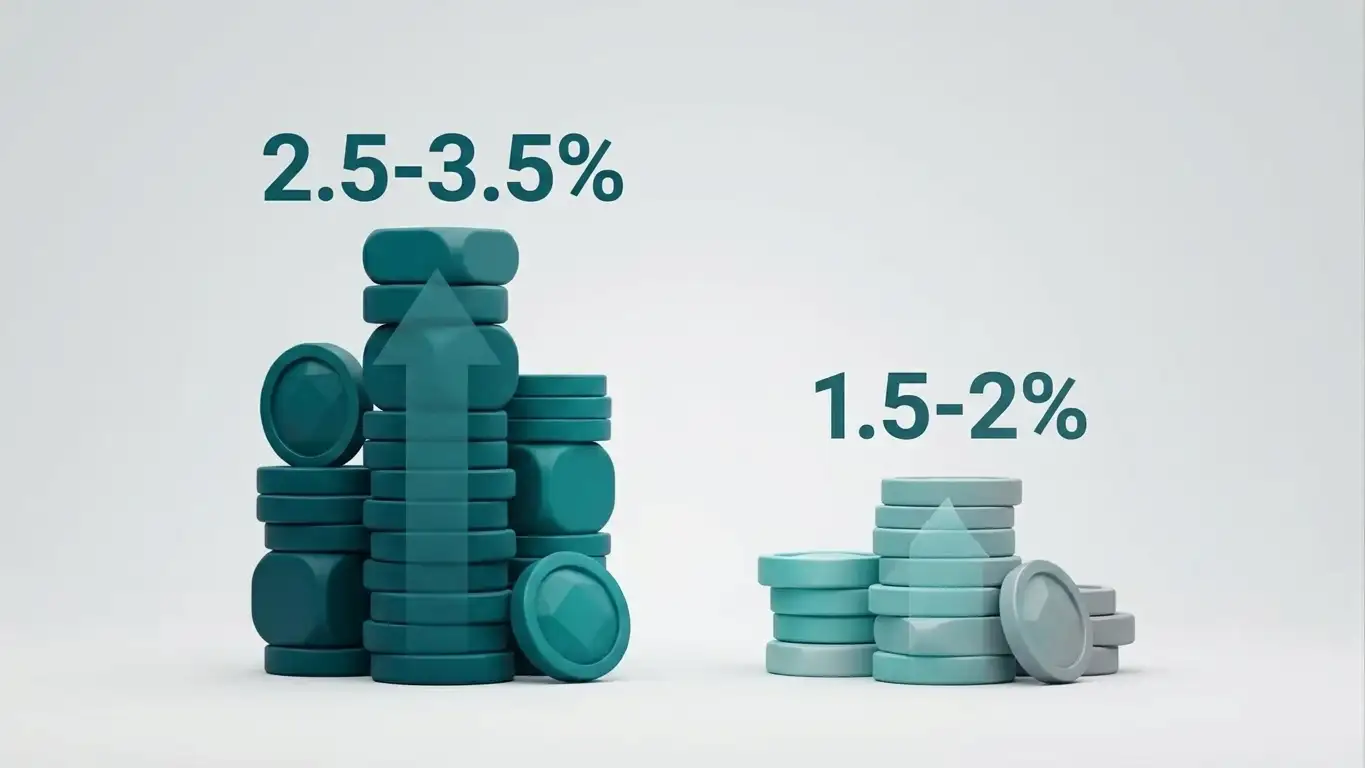
Three forces converged to kill Amex as a casino deposit method for Australians. The June 2024 credit-card ban shut the door on Amex credit cards at gambling operators. Amex Australia issues only credit and charge cards — not debit — so the “debit card exemption” doesn’t help you. Offshore operators serving Australian players dropped Amex years ago because the merchant fees (2.5–3.5% per transaction) cost them 50–100% more than Visa or Mastercard.
This guide walks through why Amex doesn’t work, what the 2024 regulatory changes mean in practice, and which payment methods Australian casino players actually use in 2026. If you came here looking for a list of Amex-accepting casinos, you’ll leave with something more useful: a map of the rails that work, the offshore operators that accept them, and the withdrawal speeds that matter more than the deposit method.
The Amex Reality for Australian Casino Players in 2026
No legal Australian-licensed online casinos exist for pokies, roulette, blackjack, or live dealer games. The Interactive Gambling Act 2001 bans them outright. The offshore operators that serve Australian players — licensed in Curaçao, Malta, Anjouan, or Costa Rica — operate outside Australian regulation. Most of those offshore sites don’t accept American Express. The few global casinos that do list Amex as a payment option won’t process deposits from Australian-issued Amex cards after June 2024.
The credit-card ban passed in 2023 and took effect on 11 June 2024. Australian banks and card issuers block credit-card transactions to gambling merchants as a matter of compliance. Your Amex Platinum or Explorer credit card will decline at checkout on any casino site, whether that site is a licensed Australian sports-betting operator or an offshore poker room in Costa Rica. The transaction never reaches the merchant; your bank stops it.
Amex issues credit cards and charge cards in Australia. It does not issue debit cards here. That’s the problem. Visa and Mastercard debit cards remain legal for online gambling deposits because they draw from funds you already have, not borrowed money. If Amex issued debit cards in Australia, you’d have a workaround. It doesn’t, so you don’t.
Offshore casino operators that target Australians have quietly removed Amex from their cashier pages over the past three years. The reason is commercial, not regulatory. Amex charges merchants 2.5–3.5% per transaction. Visa and Mastercard charge 1.5–2%. On A$50,000 in monthly deposits, an operator pays around A$750–1,000 in Visa fees or A$1,250–1,750 in Amex fees. That extra A$500–750 per month per A$50,000 in volume adds up fast for offshore operations running on thin margins. Dropping Amex is a straightforward cost cut.
The combination is final. Credit cards are banned. Amex doesn’t issue debit cards in Australia. Offshore operators don’t want to pay Amex’s merchant fees anyway. If you’re searching for casino sites that accept Amex in Australia in 2026, you’re chasing a payment method that stopped working here.
Can I use my American Express card at Australian online casinos in 2026?
No. Australian-issued Amex cards (credit and charge cards) are blocked by your card issuer for gambling transactions under the June 2024 credit-card ban. Amex does not issue debit cards in Australia, so you cannot use the debit-card exemption. Offshore casinos serving Australian players have largely removed Amex as a deposit option due to high merchant fees.
Why Amex Is Rare at Online Casinos (And Why It Doesn’t Matter in Australia)
Even before the Australian credit-card ban, Amex was the least-accepted card network at online casinos globally. Walk into the cashier page of fifty offshore gambling sites and perhaps five will list American Express. The rest offer Visa, Mastercard, and a rail of alternative methods — PayID, cryptocurrency, e-wallets, bank transfer — but Amex sits absent.
The reason is merchant processing fees. Card networks charge the business a percentage of every transaction. Visa and Mastercard typically charge online merchants 1.5–2% on consumer cards. American Express charges 2.5–3.5%, and occasionally higher depending on the card type and merchant category. Gambling merchants sit in a high-risk classification, which pushes the rate toward the top of that range.
Consider an offshore casino processing A$50,000 per month in card deposits. At 1.75% (a midpoint Visa rate), the operator pays A$875 in monthly card fees. At 3% (a typical Amex rate), the same volume costs A$1,500. The difference is A$625 per month, or A$7,500 per year, for one A$50,000 deposit stream. Scale that across a site processing millions annually and the cost gap becomes a line item worth eliminating. Operators keep Visa and Mastercard because players expect them and the acceptance gap would hurt signups. They drop Amex because fewer than 5% of depositors carry it as their only card, and the ones who do usually have a Visa or Mastercard in the same wallet.
Amex’s value proposition — premium customers, higher spending limits, strong fraud protection — works for merchants selling luxury goods or business services. It doesn’t translate to offshore gambling, where the customer base skews toward convenience and speed over prestige, and where chargebacks (which Amex historically favoured toward cardholders) represent a direct financial risk to the operator.
For Australian players in 2026, this global rarity compounds into total unavailability. The offshore sites that do list Amex globally are blocking Australian credit cards post-ban anyway. The sites targeting Australian players specifically — the ones advertising on Australian sports news sites and accepting PayID deposits — dropped Amex from their payment stack years ago.
Why don’t most online casinos accept Amex?
Merchant processing fees. Amex charges casinos 2.5–3.5% per transaction, compared to 1.5–2% for Visa and Mastercard. On A$50,000 monthly deposit volume, that difference costs an operator A$625–750 extra per month. Most offshore casinos serving Australians quietly removed Amex between 2021–2023 to cut costs, well before the 2024 credit-card ban.
The June 2024 Credit Card Ban and What It Means for Amex
The Interactive Gambling Amendment (Credit and Other Measures) Act 2023 banned credit cards, credit-related products, and digital currency for online wagering in Australia. It passed Parliament in 2023 and came into force on 11 June 2024. The ban applies to licensed Australian wagering operators — sports betting and racing — because those are the only online gambling verticals Australia licenses. Online casino games remain federally prohibited, so there’s no legal framework to regulate their payments.
The spillover effect hit offshore casinos. Australian banks implemented the ban by blocking credit-card transactions to all gambling merchants, not just licensed local operators. Your Amex credit card will decline at an offshore poker site in Curaçao the same way it declines at a licensed sports-betting app in Sydney. The bank sees a gambling merchant code and stops the transaction. You can’t call Amex and ask them to override it; the policy sits at the issuer level, and issuers enforce it to avoid regulatory attention from ACMA and AUSTRAC.
The ban carved out an exemption for debit cards. Visa Debit and Mastercard Debit still work for deposits at offshore casinos because they draw from your own funds, not borrowed money. The government’s stated reasoning was harm minimisation: gambling with money you don’t yet have is how people end up in real trouble. A debit card links to your bank balance and stops working when the account runs dry. A credit card extends a line and allows you to dig a hole.
American Express does not issue debit cards in Australia. The company offers credit cards (where you must pay the full balance each month or carry it over with interest, depending on the product) and charge cards (where the full balance is due each statement period, no option to revolve). Both are considered credit products under the 2024 ban. Amex issues debit cards in the United States and a few other markets, but not here. If you hold an Australian Amex card, it’s either credit or charge, and both are blocked for gambling.
The theoretical workaround — “just get an Amex debit card” — doesn’t exist in this market. You can’t apply for one. Amex Australia’s product line doesn’t include it. Some players have tried loading an Amex card into a digital wallet (Apple Pay, Google Pay) and using the wallet to deposit, thinking the transaction might bypass the gambling block. It doesn’t. The payment still routes through the underlying Amex credit account, the merchant code still reads as gambling, and the bank still declines it.
For anyone holding an Amex card in Australia and hoping to use it for online casino deposits in 2026: the regulatory door closed in June 2024, and the product-line door was never open to begin with.
Is there a difference between Amex credit and Amex debit for casino deposits after the 2024 ban?
Legally, yes: credit cards are banned, debit cards are not. Practically for Australian Amex cardholders, no: Amex Australia does not issue debit cards, only credit and charge cards. Both are blocked under the June 2024 ban. Visa and Mastercard issue debit cards in Australia, which is why Visa Debit and Mastercard Debit still work for casino deposits, but Amex does not offer that product here.
Amex Deposit and Withdrawal Mechanics (Where They Exist)
In jurisdictions where Amex still works for casino deposits — the United States, Canada, parts of Europe — the process mirrors any card deposit. You enter the sixteen-digit number, expiry, and CVV in the cashier, confirm the amount, and the funds post to your casino balance within minutes. The casino bills the transaction as a standard purchase. Your statement shows it as a charge from the payment processor, not the casino’s name directly. Processing times sit under five minutes for successful deposits.
The catch is withdrawals. Roughly 80–90% of online casinos that accept Amex deposits globally do not process withdrawals back to Amex. You can put money in, but you can’t take winnings out the same way. Instead, the casino asks you to nominate an alternative withdrawal method: bank transfer, e-wallet, or cryptocurrency. Some operators cap Amex withdrawals at the total amount you deposited via that card, treating payouts as refunds rather than winnings. Others disable Amex withdrawals entirely, citing card-network restrictions and chargeback risk.
The reason sits in card-network rules and acquirer policies. Gambling refunds carry strict oversight. A casino sending frequent “refunds” to the same card raises flags with the acquiring bank. If a player disputes a withdrawal processed as a refund — claiming they never authorised the original charge — the chargeback lands on the operator, and enough chargebacks can cost them their merchant account. Most operators avoid that risk by routing withdrawals through rails they control more directly: bank wire, e-wallet, or crypto, where the player’s identity is verified upfront and disputes follow a clearer process.
Fees vary by operator and card type. The casino usually charges 0% for deposits, passing the merchant fee cost into their margin. Your bank or Amex itself may charge fees on its end. Some Australian Amex cards classify gambling transactions as cash advances, triggering an immediate fee (typically A$5–10) and interest from the transaction date, even if you pay the statement in full later. Foreign transaction fees (around 2–3%) apply when the casino processes in a currency other than AUD, which most offshore operators do. Check your card’s terms before assuming a 0% deposit means no cost.
Deposit limits depend on two factors: the casino’s per-transaction cap and your Amex spending power. Casinos often set tighter caps on card deposits than on bank transfers to manage fraud and chargeback exposure. A$500–2,000 per deposit is common; a few operators allow up to A$5,000. Amex’s “spending power” fluctuates based on your payment history and current balance. Charge cards don’t have a pre-set limit, but Amex approves or declines each transaction individually. You might clear a A$2,000 deposit one day and see a A$1,500 deposit declined the next if your recent spending reduced available capacity.
Withdrawal timelines for Amex (in the rare cases where it’s supported) run 3–7 business days after the casino approves the payout. The casino’s internal processing typically takes 0–48 hours. Amex’s processing on the card side adds 2–5 business days. Cryptocurrency withdrawals, by comparison, often clear in under five hours. Bank transfers take 1–3 business days domestically. PayID in Australia is instant for deposits and often same-day for withdrawals. If Amex worked here, it would sit among the slower options.
The global withdrawal problem underscores why Amex’s unavailability in Australia is less of a loss than it appears. Even players in jurisdictions where Amex deposits work must set up an alternative rail for withdrawals. They’re maintaining two payment methods anyway. Australian players in 2026 skip that step entirely by depositing and withdrawing via PayID, crypto, or debit Visa/Mastercard — rails that handle both directions.
Can I withdraw my winnings back to my Amex card?
Globally, 80–90% of casinos that accept Amex deposits do not process withdrawals back to Amex. Winnings are paid via bank transfer, e-wallet, or cryptocurrency. For Australian players in 2026, the question is moot: Amex deposits don’t work here due to the credit-card ban and Amex Australia not issuing debit cards.
What fees apply when using Amex at an online casino?
Where Amex deposits work globally, the casino typically charges 0% at deposit but may apply a 1–3% surcharge. Your Amex card may classify the transaction as a cash advance (A$5–10 fee plus immediate interest) or charge a foreign transaction fee (2–3%) if the merchant processes in a non-AUD currency. For Australian players, these fees are hypothetical: Amex deposits are blocked under the 2024 credit-card ban.
What Australian Players Use Instead — The Payment Methods That Actually Work
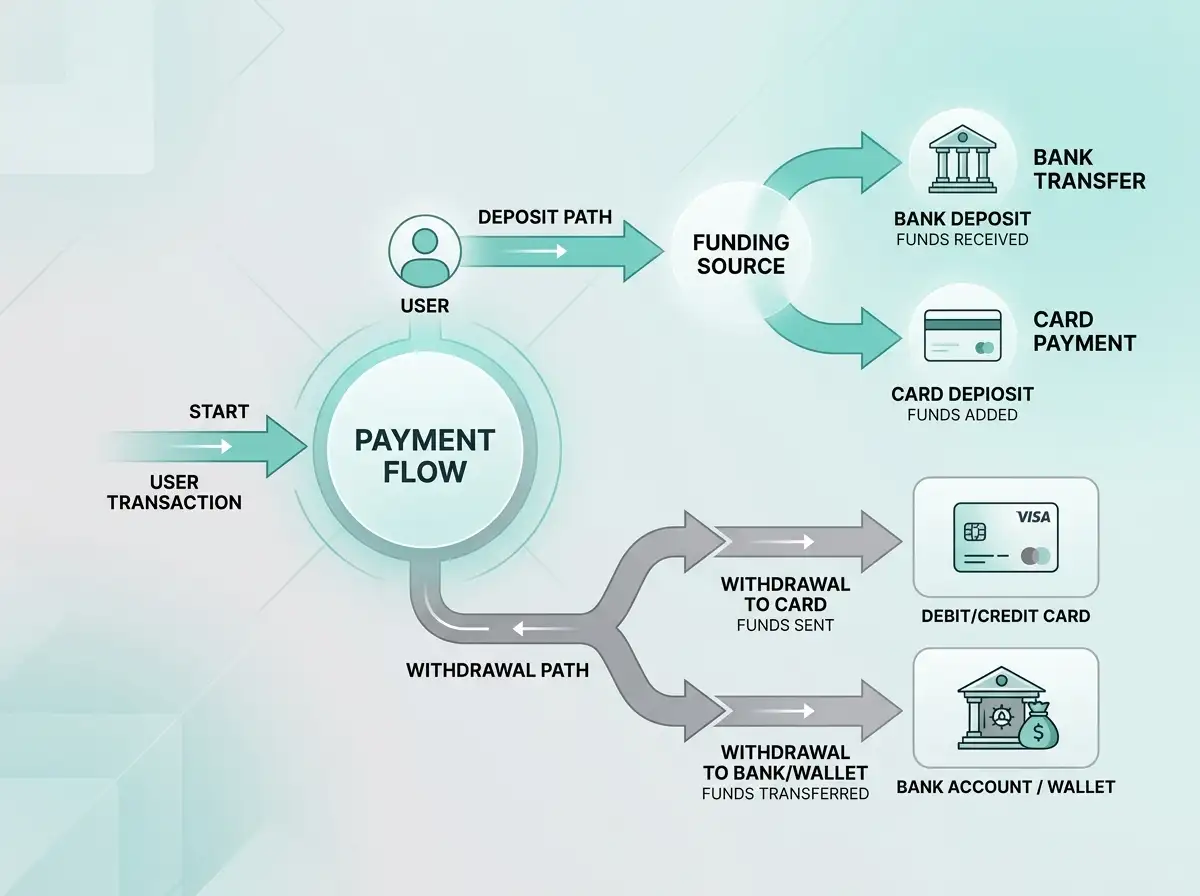
Australian offshore casino players in 2026 fund their accounts with five main rails: PayID, cryptocurrency, debit cards (Visa/Mastercard), e-wallets, and bank transfer. Neosurf prepaid vouchers sit on the edge as a sixth option, useful for players avoiding bank records but slower and less flexible than the others. PayID dominates. Crypto handles the withdrawals. Debit cards fill the gap for players who want a card-like experience without setting up a separate system.
PayID — Instant Deposits, 42% Market Share
PayID is a real-time payment identifier service running on Australia’s New Payments Platform. You link your mobile number or email address to your bank account through your banking app, and that identifier becomes a payment address. When you deposit at an offshore casino using PayID, you enter your mobile number in the cashier, the casino generates a PayID payment request, you approve it in your banking app, and the funds land in your casino balance within 60 seconds. No card numbers, no third-party processor, no intermediary holding the money for two business days.
Over 42% of Australian online casino players use PayID as their primary deposit method in 2026, according to payment-rail data from operators targeting this market. The speed matters. A Visa Debit deposit might post instantly to the casino, but the bank’s backend settles it in 1–2 business days, and if something goes wrong — a declined payment after the casino already credited your balance — the reversal takes another day. PayID settles in real time on the NPP, so the money moves once, correctly, with no trailing reconciliation.
The New Payments Platform is overseen by the Reserve Bank of Australia and operated by NPP Australia Ltd, a consortium of Australian banks. It’s not offshore infrastructure; it’s domestic banking rails extended to casino cashiers via payment-gateway partners. The casino never sees your bank details. You never leave your banking app. The transaction appears on your statement as a PayID payment to a merchant entity (usually the casino’s payment processor, not the casino’s brand name). For players concerned about banking records, that’s still a visible trail, but it’s cleaner than a card charge coded to a gambling merchant.
Withdrawals via PayID are less common but growing. Some operators process PayID withdrawals same-day if you deposited via PayID and passed identity verification. Others route all withdrawals through bank transfer regardless of deposit method, which adds 1–3 business days. The deposit speed is what sold PayID to Australian players. The fact that it works after the June 2024 credit-card ban — when Amex and all other credit cards stopped — cemented its dominance.
Minimum deposits via PayID typically sit at A$10–20. No maximum on the PayID side; the cap depends on your bank’s daily transfer limit and the casino’s per-transaction ceiling. Most operators accept PayID deposits up to A$10,000 per transaction, well above card limits. Fees are usually zero from the casino and zero from your bank for outgoing NPP payments, though some banks charge for incoming PayID receipts if you’re withdrawing.
If you came here searching for casino sites that accept Amex, PayID is what you’ll actually use instead. It’s faster, fee-free, and works in the 2026 regulatory environment. Nearly every offshore operator serving Australian players lists it in the cashier.
Cryptocurrency — Fastest Withdrawals in Under 5 Hours
Bitcoin, Tether (USDT), Ethereum, Litecoin — cryptocurrency deposits and withdrawals dominate the fast-payout segment of the Australian offshore casino market in 2026. Crypto cuts the banking system entirely. You send coins from your wallet to the casino’s wallet address, the blockchain confirms it, and your balance updates. For deposits, that process takes 10–30 minutes depending on network congestion. For withdrawals, the best operators process payouts in under five hours, and a few deliver in under one hour.
The speed advantage over traditional rails is stark. A bank-transfer withdrawal might take three business days. PayID withdrawals, where supported, run same-day to one business day. E-wallets sit at 12–24 hours. Crypto withdrawals from a competent operator land in your wallet the same day you request them, often within the hour. For players who value fast access to winnings — and many Australian players do, given the offshore context and lack of local recourse if an operator stalls — crypto is the exit rail that matters.
USDT on the Tron blockchain (TRC-20) is the cheapest on-chain option in 2026. Network fees typically run under A$1 per transaction. Bitcoin fees fluctuate with network demand, sometimes reaching A$5–15 for a standard transaction. Ethereum (ERC-20) fees can spike to A$20–50 during congested periods. Most Australian crypto casino players hold a mix: Bitcoin for larger deposits and storage, USDT on Tron for fast, cheap withdrawals.
Volatility is the trade-off. If you deposit 0.05 BTC when Bitcoin sits at A$100,000 and the price drops 10% before you withdraw, your A$5,000 deposit is now A$4,500 in fiat terms. Some operators offer stablecoin options (USDT, USDC) to mitigate that. A stablecoin pegged to the US dollar moves with the AUD/USD exchange rate but doesn’t swing 10% in a day the way Bitcoin or Ethereum can. If you’re using crypto purely as a payment rail — not an investment — stablecoins are the pragmatic choice.
Minimum crypto deposits vary by operator and coin. Bitcoin minimums typically sit at 0.001–0.002 BTC (roughly A$100–200 at 2026 prices). USDT minimums run A$10–20 equivalent. Maximums are often uncapped or set at very high levels (10 BTC, $100,000 USDT), far above what card or bank-transfer limits allow. If you’re moving large sums in or out of a casino, crypto is often the only practical rail.
Crypto eliminates the Amex problem by eliminating cards entirely. You’re not asking an offshore operator to accept a specific card network and eat 3% merchant fees. You’re sending an on-chain transfer that costs the recipient nothing to receive. The operator’s advantage is the same as yours: no chargebacks, no bank involvement, no transaction holds. That’s why crypto-friendly casinos often process withdrawals faster and set higher limits than their fiat-only competitors.
Visa and Mastercard Debit — The Card Alternative
Visa Debit and Mastercard Debit still work for deposits at Australian-facing offshore casinos in 2026 because they draw from funds already in your bank account, not borrowed money. The June 2024 ban exempted debit cards. If you hold a debit card linked to your transaction account or savings account, you can enter it in a casino cashier the same way you’d enter a credit card — sixteen digits, expiry, CVV — and the deposit posts within minutes.
The distinction between debit and credit cards matters only in regulatory and issuer terms. To the user, the experience is identical. The difference sits on the backend: a debit-card transaction pulls money from your account immediately, while a credit-card transaction adds to your balance due. For most Australians, “the card in your wallet” is now a debit card if it connects to your everyday banking, since banks issue them as default for transaction accounts.
Not all offshore casinos accept Australian-issued debit cards. Some operators restrict card deposits to credit cards only, or they block transactions from certain countries due to payment-processor rules. The casinos that do accept Australian debit cards typically cap deposits at A$500–2,000 per transaction, lower than PayID or crypto limits but higher than some players need for casual sessions.
Withdrawals to debit cards are rare. Most operators that accept card deposits route all withdrawals through bank transfer or e-wallet, for the same reasons Amex withdrawals are rare globally: card-network restrictions and chargeback risk. You deposit with your Visa Debit, but you withdraw via bank transfer to the account that card is linked to. The processing time for card-routed withdrawals, where allowed, runs 3–7 business days. Bank-transfer withdrawals typically take 1–3 business days, so the card offers no speed advantage on the way out.
Fees on debit-card deposits depend on the casino. Many charge 0%, treating cards as a customer-acquisition cost. Some apply a 2–5% surcharge to card deposits because their payment processor charges them that much, and they pass it through rather than absorb it. Foreign transaction fees from your bank (typically 2–3%) apply if the casino processes in a non-AUD currency, which most offshore operators do. Check the cashier’s fee disclosure and your bank’s fee schedule before depositing.
Debit cards serve Australian players who want a familiar payment experience without setting up PayID or buying cryptocurrency. The transaction is instant, the interface is the same as shopping online, and the method requires no additional accounts or apps. For players who already use their debit card for everyday purchases, adding a casino deposit is one extra merchant, not a new system to learn. The trade-off is lower limits, potential fees, and slower withdrawals compared to PayID or crypto.
E-Wallets (PayPal, Skrill, Neteller) — Middle-Ground Speed
E-wallets sit between instant rails (PayID, crypto) and slow traditional rails (bank transfer) in both speed and user friction. PayPal, Skrill, and Neteller are the three most common at offshore casinos serving Australians. You create an account with the e-wallet provider, fund it via bank transfer or card, and then use the e-wallet balance to deposit at casinos that accept it. Withdrawals from the casino land in your e-wallet, and you transfer the balance back to your bank account when you’re ready.
The main advantage is privacy from your bank. A PayPal deposit at a casino shows on your bank statement as “PayPal” or “PayPal transfer,” not a gambling merchant. For players who share accounts or prefer their casino activity not flagged in banking records, that layer of separation matters. The downside is added steps: you’re funding an intermediary, moving money to the casino, withdrawing to the intermediary, then pulling it back to your bank. Each step adds time and sometimes fees.
PayPal is available at some offshore casinos targeting Australians but not all. PayPal’s acceptable-use policy restricts gambling transactions in certain markets, and enforcement varies. Some operators list PayPal in the cashier; others removed it years ago after disputes with PayPal over chargebacks. Where it works, deposits are instant and withdrawals take 12–24 hours to reach your PayPal balance, then another 1–2 business days to transfer to your bank.
Skrill and Neteller were built for online gambling. Both are owned by Paysafe Group and explicitly support casino deposits and withdrawals. Deposits post instantly. Withdrawals to your Skrill or Neteller wallet typically process within 12–24 hours after the casino approves them, faster than bank transfer but slower than crypto. Fees vary: Skrill and Neteller charge 0% for deposits but around 2–5% for withdrawals, depending on your account tier and the casino’s agreement with them. Currency conversion fees (around 3–4%) apply if you’re moving between AUD and USD or EUR.
E-wallets solve no problem that PayID or crypto don’t solve faster and cheaper. PayID deposits are instant with zero fees. Crypto withdrawals clear in hours. E-wallets add an intermediary, charge fees on the withdrawal side, and still take a day to move money. The use case is narrow: players who want their bank to see “PayPal” instead of “casino” on the statement, or players who already hold balances in Skrill or Neteller from other online activity. For most Australian players starting fresh in 2026, PayID or crypto makes more sense.
Bank Transfer and Neosurf — Slowest but Universally Accepted
Bank transfer is the fallback. Every offshore casino serving Australians accepts it because the infrastructure is simple: you send money from your bank account to the casino’s nominated account, include a reference code, and the casino credits your balance once the transfer clears. Deposits take 1–2 business days. Withdrawals take 1–3 business days after the casino processes them, sometimes longer if the operator batches withdrawals weekly.
The speed penalty is the trade-off for universality. If you can’t use PayID (your bank doesn’t support it), don’t want to buy crypto, don’t have a debit card, and don’t trust e-wallets, bank transfer works. It’s also the method casinos route withdrawals through when no faster option is available. You might deposit via PayID but withdraw via bank transfer because the casino doesn’t support PayID withdrawals yet.
Fees vary. Domestic bank transfers within Australia are usually free for the sender. Some casinos charge a A$5–15 fee for bank-transfer withdrawals to cover their processing cost. International bank transfers — if the casino’s account sits offshore — can cost A$25–35 in correspondent-bank fees, and the casino might deduct those from your withdrawal. Check the withdrawal page before assuming zero fees.
Neosurf is a prepaid voucher system. You buy a voucher online or at a retail location, receive a ten-digit code, and enter that code in the casino cashier to deposit. The value of the voucher transfers instantly to your casino balance. It’s deposit-only: you can’t withdraw to a Neosurf voucher. Withdrawals go through bank transfer or another method.
Neosurf serves two groups: players who want to limit their spending by buying fixed-value vouchers (A$50, A$100, A$250), and players who want no banking records of casino activity. You buy the voucher with cash or a card, the casino never sees your bank details, and your statement shows only “Neosurf” as the merchant. The downside is inconvenience. You can’t deposit A$73.42; you deposit the voucher’s fixed value (say A$100), and any unspent balance from the voucher sits as casino credit.
Neither bank transfer nor Neosurf competes with PayID or crypto on speed, cost, or flexibility. They exist as fallbacks and niche options. For most Australian offshore casino players in 2026, these methods sit unused in the cashier menu.
| Method | Deposit Speed | Withdrawal Speed | Typical Fees | Minimum Deposit | Notes |
|---|---|---|---|---|---|
| PayID | Instant (<60 sec) | Same-day to 1 business day | 0% | A$10–20 | 42% AU market share, NPP-based, instant settlement |
| Cryptocurrency | 10–30 min | 1–5 hours | 0–2% (network fees) | A$10–20 (USDT), A$100–200 (BTC) | Fastest withdrawals, no bank involvement, volatility risk |
| Visa/MC Debit | Instant | 3–7 business days (often via bank transfer) | 0–5% | A$20–50 | Credit-ban exempt, lower limits than PayID/crypto |
| E-Wallets | Instant | 12–24 hours | 0% deposit, 2–5% withdrawal | A$10–20 | Privacy layer from bank, slower than PayID/crypto |
| Bank Transfer | 1–2 business days | 1–3 business days | 0–15 | A$20+ | Universally accepted, slowest option |
| Neosurf | Instant | N/A (deposit-only) | 0% deposit | A$50 (voucher) | Prepaid voucher, no withdrawals, anonymity option |
What are the best alternatives to Amex for Australian players?
PayID (instant deposits, 42% market share, zero fees) and cryptocurrency (fastest withdrawals under 5 hours, no bank involvement) are the two dominant rails for Australian offshore casino players in 2026. Visa and Mastercard debit cards work as a familiar card alternative but with lower limits and slower withdrawals than PayID or crypto.
Which payment method is fastest for Australian online casino players in 2026?
PayID for deposits (instant, under 60 seconds). Cryptocurrency for withdrawals (1–5 hours at competent operators, often under 1 hour for Bitcoin or USDT). Visa/MC debit and e-wallets are slower on both ends, and bank transfer is the slowest option still in regular use.
Offshore Casinos Serving Australian Players — Where the Action Is
Australian players in 2026 deposit at offshore operators licensed in Curaçao, Malta, Anjouan, or Costa Rica. These sites operate outside Australian regulation. They accept Australian players, hold AUD accounts, process deposits via PayID and crypto, and pay withdrawals faster than most fiat-only operators because crypto gives them an exit rail that bypasses correspondent banks. No domestically licensed online casinos exist for pokies or table games because federal law prohibits them.
The operators below represent the stable segment of the Australian offshore market in 2026: long operating history, documented payout speeds, clear licensing, and verified payment-rail compatibility. None accept Amex. All accept PayID, cryptocurrency, and at least one other deposit method (debit cards, e-wallets, or bank transfer). Withdrawal speeds and minimum deposits are verified from operator cashier pages and player testing as of 2026.
Joe Fortune — Longest-Running AU-Facing Operator
Joe Fortune has served Australian players since 2016. It’s part of the Bodog/Bovada network, one of the oldest offshore gambling operations targeting English-speaking markets. The casino holds a Curaçao eGaming license issued by the Curaçao Gaming Control Board. For Australian players, that license provides a legal entity to correspond with if something goes wrong, but it’s not a substitute for ACMA oversight or the consumer protections available in a domestically regulated market.
The game library runs around 2,500 titles, weighted toward pokies from Betsoft, Dragon Gaming, and Saucify. Live dealer games are present but not the focus — Joe Fortune built its reputation on pokie variety and fast crypto payouts, not live blackjack tables. The welcome bonus varies by source and changes quarterly, but the typical offer sits at A$5,000–7,500 spread across five deposits, with 30–40× wagering requirements. Read the terms before claiming. The wagering multiplier determines whether the bonus is worth chasing or better left unclaimed.
Payment methods include PayID, Bitcoin, bank transfer, and Neosurf. No Amex, no credit cards, no Visa/Mastercard debit. Joe Fortune’s payment stack leans crypto-first, reflecting its Bodog roots and the target demographic (players comfortable with Bitcoin and prioritising withdrawal speed over convenience). Bitcoin withdrawals typically process in under 12 hours after identity verification clears. Bank-transfer withdrawals take 3–5 business days.
Minimum deposits sit at A$20–25 depending on the method. Bitcoin minimum is 0.001 BTC (roughly A$100 at 2026 prices). PayID minimum is A$20. No maximum deposit listed, though your individual transaction may be capped by your payment provider. Withdrawals require identity verification on your first cashout — government-issued ID, proof of address, and a selfie holding your ID. Processing time for verification runs 24–48 hours. After that, repeat withdrawals clear faster.
Joe Fortune is where long-time Australian offshore players land when they want a known entity, crypto payouts, and a library big enough to rotate through without running out of new titles. It’s not the flashiest site, and the bonus terms are tighter than some competitors, but it hasn’t disappeared or stalled payouts, which puts it ahead of half the offshore operators that advertised to Australians in the past decade.
Ricky Casino — Fast PayID and Crypto Payouts
Ricky Casino entered the Australian market around 2020 and built its player base on PayID integration and aggressive welcome bonuses. The site holds a Curaçao license and targets Australian and New Zealand players specifically, reflected in the AUD/NZD account options, PayID acceptance, and marketing presence on Australian sports and entertainment sites.
The game library exceeds 3,000 titles, including slots from Pragmatic Play, NetEnt, Play’n GO, and live dealer tables from Evolution Gaming. Pragmatic Play’s pokie catalog alone runs over 200 titles, and Evolution’s live blackjack and roulette tables offer the closest experience to a physical casino floor available online. The welcome bonus varies by promotion but typically ranges from A$7,500 to A$10,000+ spread across multiple deposits. Wagering requirements sit at 35–40×. The headline number is large; the realistic value is lower once you account for game weightings (pokies count 100%, table games often count 10% or 0%) and time limits.
Payment methods include PayID, Bitcoin, Ethereum, Litecoin, debit cards (where available), and bank transfer. PayID deposits post in under 60 seconds. Crypto deposits clear in 10–30 minutes depending on blockchain confirmation times. Withdrawals via crypto typically process in under 24 hours after approval. PayID withdrawals, where supported, run same-day. Bank-transfer withdrawals take 1–3 business days.
Minimum deposits sit at A$10–20, among the lowest in the offshore AU market. That threshold makes Ricky Casino accessible to casual players testing the platform with small deposits before committing larger sums. Maximum deposits per transaction vary by method but generally run A$5,000–10,000 for PayID and uncapped for crypto. Withdrawal minimums sit at A$20, and maximums depend on your VIP tier (if applicable) and payment method.
Ricky Casino’s strength is payment-rail speed. If you value same-day access to winnings, Ricky’s crypto and PayID infrastructure delivers. The trade-off is a cluttered bonus structure and a platform that feels more affiliate-driven than operator-owned. The site works, the games load, the payouts process, but the experience is transactional rather than polished.
Ignition Casino — Poker + Casino, Bitcoin-First
Ignition Casino is part of the Bodog/Bovada network, like Joe Fortune, but it split off to focus on poker alongside casino games. The site targets players who want both verticals: tournament poker with decent traffic and a casino library for sessions between tournaments or when the poker tables are slow. Ignition holds a Curaçao license and has operated under various brands since 2016.
The poker side runs on proprietary software with anonymous tables (no screen names, no hand-history tracking, no seating scripts). The cash-game traffic peaks during Australian evening hours and weekends, with enough players to fill low- and mid-stakes No-Limit Hold’em and Pot-Limit Omaha tables. Tournament schedules include daily guaranteed prize pools and a Sunday major. For Australian players, the poker liquidity is better than any domestically licensed poker product (because no such product exists) and competitive with other offshore poker sites targeting this region.
The casino library sits at 200+ games, smaller than Joe Fortune or Ricky but sufficient for pokie sessions and table games. Slots come from proprietary studios and a handful of third-party providers. Live dealer games are limited. The welcome bonus for casino players reaches A$3,000 across two deposits, with 25× wagering claimed in marketing materials (verify terms at signup).
Payment methods are Bitcoin, bank transfer, and voucher services (no PayID at the time of writing). Ignition’s payment stack reflects its US roots, where crypto dominates due to banking restrictions on gambling transactions. Bitcoin deposits confirm in 10–30 minutes. Withdrawals process in 24–48 hours for Bitcoin after the first identity-verified payout, longer for bank transfer (3–7 business days).
Minimum Bitcoin deposit sits at 0.002 BTC (roughly A$200 at 2026 prices), higher than most AU-facing competitors. Minimum withdrawal is A$100 equivalent. The higher minimums reflect Ignition’s positioning toward mid-stakes players rather than casual depositors. If you’re moving A$50 in and out, Ignition isn’t built for you. If you’re depositing A$500+ and playing poker cash games or tournaments, the liquidity and payout speed make it a viable option.
Ignition’s niche is poker + casino in one account with Bitcoin-first payment rails. For players who want both verticals and prefer crypto over PayID, it works. For players who want PayID deposits and a larger casino library, Ricky or Joe Fortune fit better.
National Casino — Largest Game Library
National Casino entered the Australian market in the early 2020s and differentiates on game-library size, claiming over 5,000 titles across slots, table games, and live dealer. The site holds a Curaçao license and accepts players from Australia, New Zealand, Canada, and other jurisdictions where offshore operators face fewer restrictions. The marketing is light on brand identity and heavy on game variety and bonus headlines.
The game catalog aggregates titles from 50+ providers, including Pragmatic Play, NetEnt, Microgaming, Evolution Gaming, Quickspin, Yggdrasil, and Nolimit City. If you’re chasing a specific pokie or provider, National Casino’s library likely includes it. The trade-off is a cluttered game browser with minimal curation. You’ll scroll through pages of titles with no editorial guidance on which are worth playing. For players who know what they want, the breadth is an advantage. For players exploring, it’s overwhelming.
The welcome bonus sits at A$500–1,000 (sources vary) with 35–40× wagering. Promotions change frequently, and the site runs reload bonuses, cashback offers, and free-spin packages targeting existing players. The terms are standard for offshore operators: pokies count 100% toward wagering, table games count 0–10%, and bonuses expire if not cleared within 30 days.
Payment methods include PayID, Bitcoin, Ethereum, debit cards (where available), e-wallets (Skrill, Neteller), and bank transfer. PayID deposits post instantly. Crypto deposits clear in 10–30 minutes. Withdrawals via crypto process in 24–48 hours after identity verification. Bank-transfer and e-wallet withdrawals take 1–3 business days.
Minimum deposits start at A$10–20, in line with most AU-facing operators. Withdrawal minimums sit at A$20. Maximum deposit per transaction varies by method but generally caps at A$5,000 for cards and A$10,000+ for PayID and crypto. Withdrawal limits depend on account status and payment method, with crypto offering the highest per-transaction caps.
National Casino serves players who prioritise game selection over brand polish or standout features. The library is large, the payment rails work, and the platform processes deposits and withdrawals without significant delays. It’s not differentiated beyond volume, which is enough for some players and insufficient for others.
Wild Tornado — Debit Card Friendly
Wild Tornado launched in 2017 and targets a broader international audience than most AU-specific operators, with marketing across Europe, Australia, and North America. The site holds a Curaçao license and accepts players from jurisdictions where offshore gambling is tolerated or unregulated. Wild Tornado’s payment stack includes debit cards (Visa and Mastercard) alongside PayID, crypto, and bank transfer, making it one of the few offshore operators serving Australians where card deposits still work post-2024 ban.
The game library exceeds 3,000 titles, sourced from Pragmatic Play, Evolution Gaming, NetEnt, Microgaming, and others. Live dealer games from Evolution include blackjack, roulette, baccarat, and poker variants, with Australian-evening hours well-staffed by dealers. The pokie catalog skews toward high-volatility titles with bonus-buy features, reflecting player preferences in the markets Wild Tornado targets.
The welcome bonus varies by promotion but typically reaches A$4,000–5,500 spread across six deposits, with free-spin packages attached to early deposits. Wagering requirements sit at 35–40× depending on the specific offer. The bonus is structured to reward repeat deposits rather than front-load value on the first transaction, which works for players planning multiple sessions but adds little for one-time depositors.
Payment methods include Visa and Mastercard debit, PayID, Bitcoin, Ethereum, Litecoin, bank transfer, and CoinsPaid (a crypto-fiat bridge). Debit-card deposits post instantly where supported. PayID deposits clear in under 60 seconds. Crypto deposits confirm in 10–30 minutes. Withdrawals via crypto process in 12–48 hours. Bank-transfer withdrawals take 3–5 business days.
Minimum deposits sit at A$20 for most methods. Card minimums can be higher (A$50) depending on the payment processor’s rules. Withdrawal minimums sit at A$30. Maximum deposits per transaction run A$2,000 for cards, A$5,000+ for PayID, and uncapped for large crypto transactions. Wild Tornado’s card acceptance gives it an edge for players who prefer the card-entry experience and don’t want to set up PayID or buy cryptocurrency.
Wild Tornado’s niche is debit-card acceptance post-2024 ban combined with a large game library and crypto-friendly withdrawals. It’s not the fastest payout operator, but it covers more payment methods than most competitors, which matters for players who can’t or won’t use PayID or crypto exclusively.
BitStarz — Crypto Veterans Since 2014
BitStarz launched in 2014, making it one of the longest-running cryptocurrency-first casinos still operating in 2026. The site holds a Curaçao license and targets crypto users globally, with particular strength in markets like Australia where players adopted Bitcoin early and value fast, no-bank withdrawals. BitStarz processes over 3,000 games from 50+ providers, including slots, table games, and live dealer from Evolution Gaming.
The crypto integration is deeper than most competitors. BitStarz accepts Bitcoin, Bitcoin Cash, Ethereum, Litecoin, Dogecoin, Tether (USDT), and Tron, with instant conversion between crypto and fiat (AUD, USD, EUR) at your account level. You can deposit in Bitcoin, play in AUD, and withdraw in Ethereum if you choose. The conversion uses live exchange rates and doesn’t lock you into the deposit currency. For players who hold multiple cryptocurrencies, that flexibility matters.
The welcome bonus reaches 5 BTC or AUD equivalent plus 180 free spins, spread across four deposits. Wagering requirements sit at 40× for the bonus amount. The free spins are tied to specific pokie titles (often Pragmatic Play or NetEnt releases), and winnings from free spins carry their own wagering requirement (usually 40–50×). The bonus is large in nominal terms; the realistic value depends on how much you deposit and whether you clear the wagering before the 30-day expiry.
Payment methods are Bitcoin, Ethereum, Litecoin, Bitcoin Cash, Dogecoin, Tether (USDT), Tron, and bank cards (limited availability). No PayID support as of 2026. BitStarz’s focus is crypto, and the platform is built for players who already hold coins or are willing to buy them to access the fastest withdrawal speeds in the industry. Crypto withdrawals process in under one hour for verified accounts, often within 15 minutes. Bank-card withdrawals (where supported) take 3–7 business days.
Minimum deposits vary by coin: 0.001 BTC (roughly A$100), 20 USDT (roughly A$30), 0.01 ETH (varies with Ethereum price). Withdrawal minimums sit at 0.002 BTC or coin equivalent. Maximum deposits are uncapped on the BitStarz side, limited only by your crypto wallet’s balance and blockchain confirmation capacity. Withdrawal limits start at 1 BTC per transaction for standard accounts, higher for VIP players.
BitStarz is where Australian crypto holders deposit when they want sub-hour withdrawals, a large game library, and a platform that won’t ask for a bank statement. The trade-off is no PayID support and higher minimum deposits than fiat-first competitors. If you’re entering the offshore casino market with no crypto holdings, BitStarz requires an extra step (buying Bitcoin or USDT). If you already hold crypto, it’s the fastest exit.
| Operator | License | Deposit Methods | Withdrawal Speed | Minimum Deposit | Welcome Bonus | Distinguishing Feature |
|---|---|---|---|---|---|---|
| Joe Fortune | Curaçao | PayID, BTC, bank transfer, Neosurf | BTC: <12 hours; Bank: 3–5 days | A$20–25 | A$5,000–7,500 (5 deposits, 30–40× wagering) | Longest-running AU operator, Bodog/Bovada network |
| Ricky Casino | Curaçao | PayID, BTC, ETH, LTC, debit cards, bank transfer | Crypto: <24 hours; PayID: same-day | A$10–20 | A$7,500–10,000+ (multi-deposit, 35–40× wagering) | Fast PayID/crypto payouts, low minimum deposits |
| Ignition Casino | Curaçao | BTC, bank transfer, vouchers | BTC: 24–48 hours; Bank: 3–7 days | 0.002 BTC (~A$200) | A$3,000 (2 deposits, 25× wagering) | Poker + casino, anonymous tables, mid-stakes focus |
| National Casino | Curaçao | PayID, BTC, ETH, debit cards, e-wallets, bank transfer | Crypto: 24–48 hours; Bank: 1–3 days | A$10–20 | A$500–1,000 (35–40× wagering) | 5,000+ game library, 50+ providers |
| Wild Tornado | Curaçao | Visa/MC debit, PayID, BTC, ETH, LTC, bank transfer | Crypto: 12–48 hours; Bank: 3–5 days | A$20–50 | A$4,000–5,500 (6 deposits, 35–40× wagering) | Debit-card friendly, large game library |
| BitStarz | Curaçao | BTC, ETH, LTC, USDT, DOGE, TRX, BCH, bank cards (limited) | Crypto: <1 hour; Bank: 3–7 days | 0.001 BTC (~A$100), 20 USDT (~A$30) | 5 BTC + 180 free spins (4 deposits, 40× wagering) | Crypto veteran (2014), sub-hour withdrawals |

How to Choose a Casino When Amex Isn’t an Option
The search for casino sites that accept Amex in Australia ends with the realisation that Amex doesn’t work here. The next question is how to choose an offshore operator from the list above, or from the dozens of others advertising to Australian players. Bonus size dominates affiliate marketing and Google search results, but it’s the least useful selection criterion in practice. A A$10,000 welcome bonus with 50× wagering and a 30-day expiry is harder to clear than a A$2,000 bonus with 30× wagering and no time limit. Most players never clear their bonus. They deposit, play, and either withdraw winnings (forfeiting the bonus) or lose the balance before meeting the wagering requirement.
Withdrawal speed matters more. If an operator takes five business days to process a A$500 withdrawal, you’ll feel that delay every time you cash out. If an operator clears crypto withdrawals in under two hours, you’ll recommend them to other players. The gap between fast and slow operators is wider than the gap between large and small bonuses. Check withdrawal processing times from verified player reviews, not marketing pages. Operators claim “instant withdrawals” in their cashier but take 48 hours to approve the transaction internally before it even enters the payment rail.
Payment-rail compatibility comes next. If you don’t hold cryptocurrency and don’t want to buy it, eliminate crypto-only operators from your list. If your bank doesn’t support PayID, cross off PayID-exclusive sites. If you want debit-card deposits but most operators don’t accept Australian cards, Wild Tornado or similar card-friendly sites move up your ranking. Match the operator’s payment stack to the rails you’re willing to use.
Game library size and provider quality matter if you have specific preferences. A player who only plays Pragmatic Play pokies will check which operators carry that studio before signing up. A player who wants Evolution live blackjack tables will filter operators by live-dealer availability. A player who rotates through hundreds of different titles each month needs a large library like National Casino or BitStarz. A player who returns to the same ten games doesn’t benefit from 5,000-title catalogs.
License and operating history sit at the baseline. A Curaçao license provides a legal entity to contact if something goes wrong, though enforcement and player recourse are limited compared to domestic regulation. A site operating since 2014 (BitStarz) or 2016 (Joe Fortune, Ignition) has a longer track record than a site launched in 2024. Longevity doesn’t guarantee good service, but it filters out the operators that disappeared after a year or stalled payouts and burned their reputation.
Customer support responsiveness is harder to judge before signing up, but the pattern is predictable: operators with live chat staffed 24/7 resolve issues faster than operators with email-only support that responds in 48 hours. Test the chat before depositing. Ask a basic question about withdrawal times or bonus terms. If the agent takes ten minutes to respond or gives a generic copy-paste answer, expect the same experience when you need help with a stalled withdrawal.
Responsible-gambling tools vary by operator, but most offshore sites offer deposit limits, session time limits, and self-exclusion options in account settings. These tools are self-enforced. Unlike BetStop, which blocks access across all licensed Australian operators, offshore self-exclusion applies only to the site you set it on. If you self-exclude from Joe Fortune, you can still sign up at Ricky Casino five minutes later. For players managing gambling harm, offshore operators offer fewer structural protections than the domestic licensed market (sports betting, racing) where BetStop and national exclusion registers function.
The operator you choose depends on what you value. If you prioritise withdrawal speed, BitStarz or Ricky Casino. If you want the lowest minimum deposits, Ricky or National. If you prefer poker alongside casino games, Ignition. If you want debit-card deposits, Wild Tornado. If you want the longest operating history targeting Australians, Joe Fortune. None accept Amex, so that variable is off the table.
Do I earn Amex Membership Rewards points on casino deposits?
It depends on your card’s earn structure and how your bank codes the transaction. Many Australian Amex cards exclude gambling transactions from earning points, or the transaction is classified as a cash advance (which earns zero points). Even in jurisdictions where Amex casino deposits work, points earn is inconsistent. For Australian players in 2026, the question is moot: Amex deposits are blocked under the credit-card ban.

Legal Position and Responsible Gambling in Australia
Australia federally prohibits the provision of online casino games to persons in Australia under the Interactive Gambling Act 2001. No operator — domestic or foreign — can lawfully offer pokies, roulette, blackjack, baccarat, or live dealer games to Australian residents. Land-based casinos operate under state licenses and offer these games on their physical premises, but they cannot extend those offerings online. The only legal online gambling in Australia is sports betting and racing, licensed at the state and territory level.
The offshore casinos listed in this guide operate outside Australian jurisdiction. They hold licenses issued by Curaçao, Malta, Anjouan, or other gaming authorities, but those licenses carry no weight under Australian law. ACMA (the Australian Communications and Media Authority) enforces the IGA by blocking operator websites, pursuing payment-processor restrictions, and penalising advertisers who promote offshore gambling to Australians. Over 300 offshore operator domains have been blocked cumulatively through 2026, though operators launch new domains faster than ACMA blocks them.
Playing at an offshore casino is not illegal for the individual Australian. The IGA prohibits the provision of online casino services, not the consumption. No Australian has been prosecuted for depositing at an offshore poker site or pokie platform. The risk sits with the operator, not the player. That does not mean playing offshore is risk-free. If an offshore operator refuses to pay your withdrawal, stalls your cashout, or disappears with your balance, your legal recourse is limited. You cannot lodge a complaint with ACMA because the operator isn’t under ACMA jurisdiction. You cannot sue in an Australian court without first establishing jurisdiction over an entity licensed in Curaçao and domiciled in Cyprus or Malta. For most players, a disputed A$1,000 withdrawal is a loss, not a case.
BetStop, Australia’s national self-exclusion register, does not cover offshore operators. If you register with BetStop, licensed Australian bookmakers and racing operators block your access, but offshore casinos remain accessible. Offshore self-exclusion is site-by-site, voluntary, and unenforceable. Some offshore operators participate in international self-exclusion databases (GamStop in the UK, similar networks in Europe), but those systems don’t extend to Australian-focused platforms.
For players concerned about gambling harm, the structural protections in the offshore market are weaker than in the licensed Australian market. No mandatory pre-commitment. No BetStop integration. No regulator to escalate complaints to if an operator ignores your self-exclusion. The tools exist in account settings — deposit limits, loss limits, session reminders, self-exclusion options — but enforcement relies on the operator’s internal compliance, not external oversight.
If you’re gambling at offshore casinos, set limits before you deposit. Use the site’s deposit-limit tools even though they’re self-enforced. Keep separate banking for gambling so you don’t mix casino funds with rent money. Treat offshore gambling as entertainment spending with the understanding that winnings are uncertain and disputes are hard to resolve. If gambling stops being entertainment and starts causing financial, relationship, or mental-health harm, contact Gambling Help Online (1800 858 858) or access services through your state’s gambling support network.
Offshore casinos filled the gap left by Australia’s prohibition on online casino games. They operate in a legal grey area where individual play is tolerated but the services themselves are illegal to provide. That structure creates risks for players — limited recourse, no domestic consumer protections, and the possibility that an operator stalls your withdrawal or disappears entirely. For players who accept those risks and manage their bankroll responsibly, offshore operators offer access to games not available in Australia’s licensed gambling market. For players managing gambling harm, the offshore market offers fewer structural protections than the licensed alternative, and the lack of integration with tools like BetStop increases the risk of harm.
The question “which casino sites accept Amex in Australia” reflects a search for convenience and security through a trusted card network. The answer is that Amex doesn’t work here, the legal framework doesn’t support it, and the offshore operators serve Australian players through PayID, crypto, and debit cards instead. Choose an operator based on withdrawal speed, payment-rail compatibility, and operating history, not bonus size or brand polish. Manage your deposits deliberately. Know that the legal protections are thin and the risks are yours to carry.
Deposit Methods at Australian Online Casinos 2026 — Compared
Content created by the «Payment Methods» team