
Casinos That Accept CashToCode Australia 2026 — Guide
 Available in AU
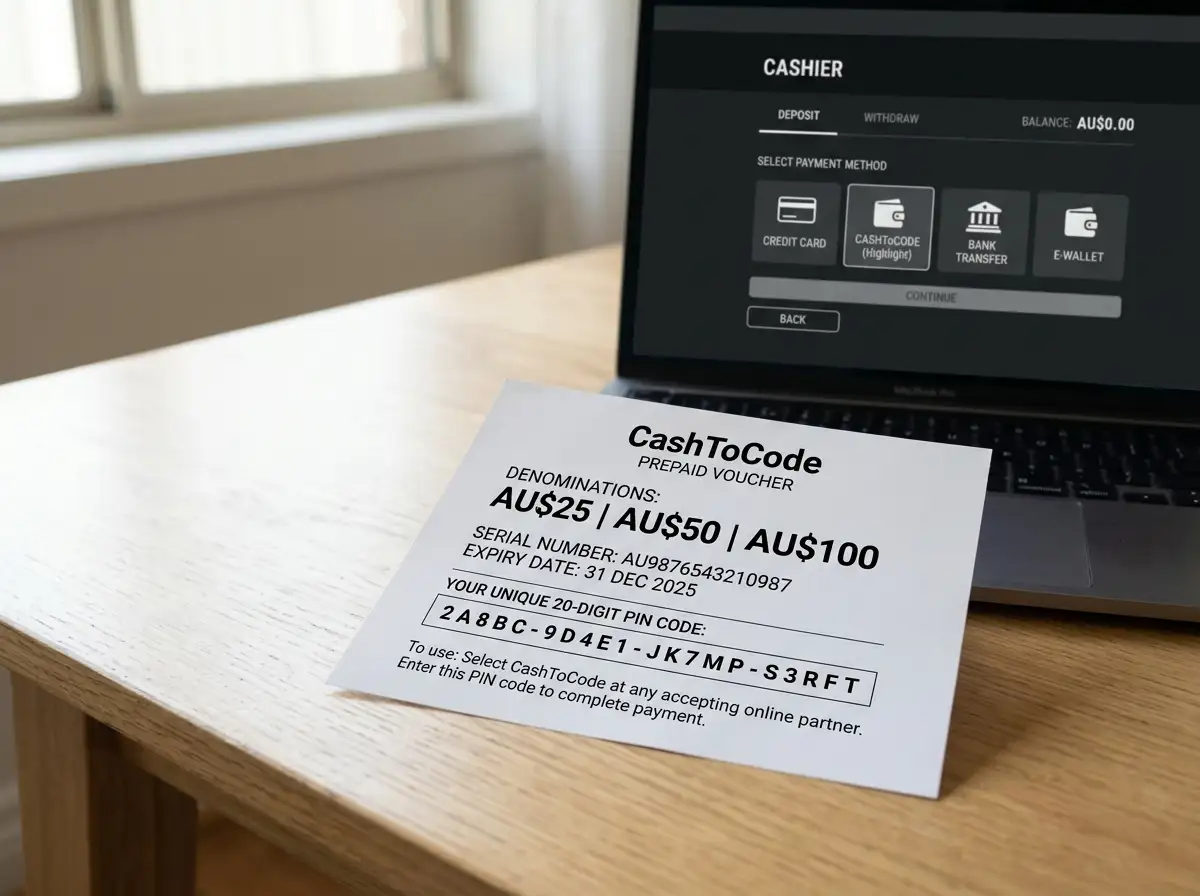
CashToCode sits in that narrow slice of the prepaid voucher market where anonymity matters more than convenience. You buy a code online, punch twenty digits into a cashier, and the deposit lands without your bank ever logging the merchant name. For Australian players accessing offshore casinos in 2026, that privacy angle is the entire pitch—alongside the reality that CashToCode only moves money one way.
This guide identifies which offshore operators accept CashToCode deposits from Australians, explains the voucher’s mechanics (denominations, validity, where to buy), lays out why withdrawals require a separate method, and frames the legal context: why every CashToCode casino targeting Australia operates under a Curaçao or Malta license rather than anything issued by ACMA or a state regulator. The 2027 payment-blocking reforms under the Interactive Gambling Amendment Act also land here, because they may reshape how voucher deposits reach offshore sites.
What Is CashToCode and How Does It Work for Australian Players?
CashToCode is a prepaid eVoucher system: you buy a voucher with a fixed Australian dollar value from an online reseller, receive a twenty-digit PIN by email, and enter that PIN at a casino cashier. The transaction processes instantly. No card details, no bank login, no record in your statement beyond whatever you paid the reseller.
The system launched in Germany in 2016 and expanded to Australia and twenty-five other currencies. It competes with Neosurf and Paysafecard in the prepaid-voucher segment, though its casino acceptance is narrower—around fifty to one hundred offshore operators support it for Australian accounts versus two hundred-plus for Neosurf.
What CashToCode Is
CashToCode AG, the operator, is based in Malta. The product is a single-use voucher: you redeem the full value in one transaction, and the code becomes worthless afterward. There’s no CashToCode account, no wallet, no partial spending. Buy a voucher, spend it, done.
The privacy model appeals to players who don’t want gambling transactions appearing in their bank statement or who prefer a fixed spending cap that’s impossible to breach once the voucher is exhausted. It’s a cash substitute for the internet, delivered as a string of alphanumeric characters.
How to Buy and Use a CashToCode Voucher in Australia
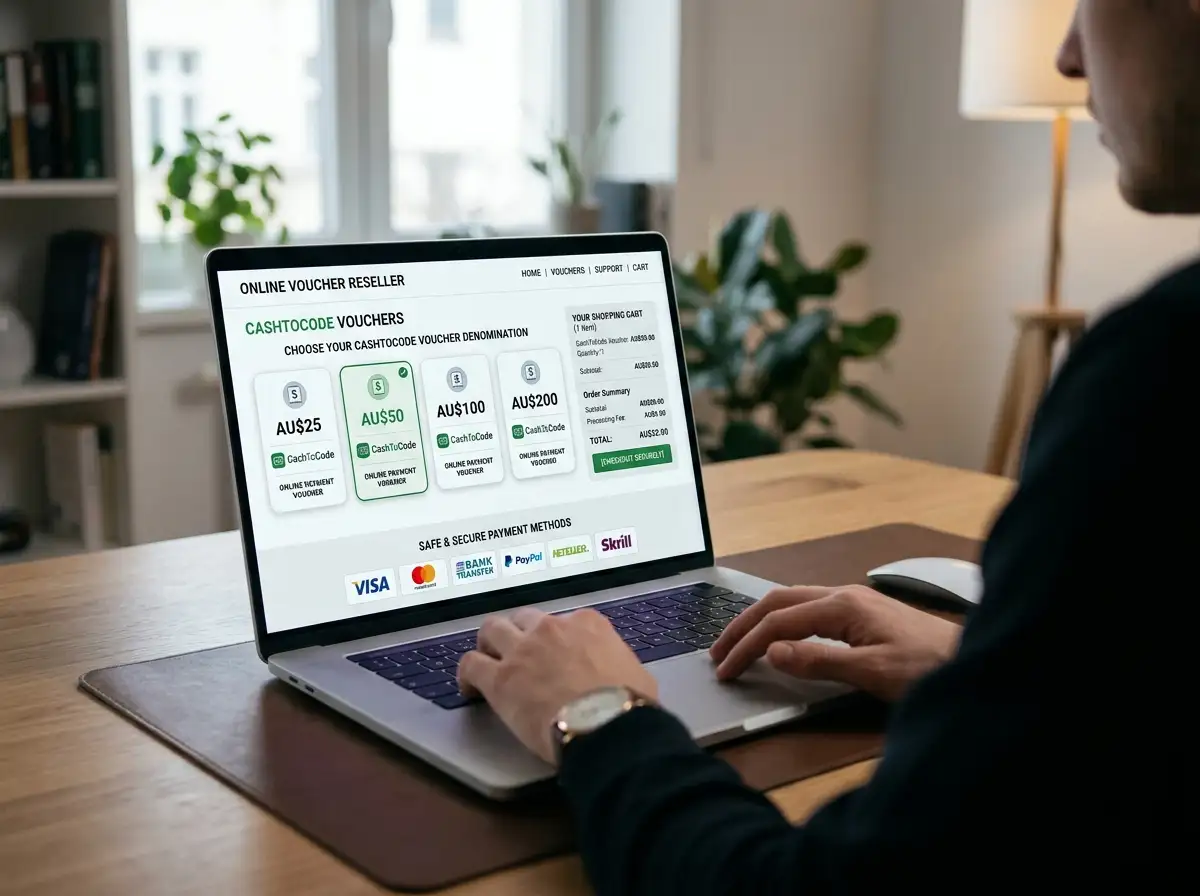
Purchase happens through authorized online resellers. In Australia, that means platforms like SEAGM, Recharge, and MyGiftCardSupply. You select the denomination, pay via card, bank transfer, e-wallet, or crypto (depending on the reseller), and the PIN arrives by email within seconds to minutes.
Physical retail purchase—paying cash at a newsagent or convenience store and receiving a printed barcode—exists in some European markets but hasn’t been confirmed as available in Australia as of 2026. The Australian CashToCode workflow is online-only: digital purchase, digital voucher, digital redemption.
Using the voucher at a casino:
- Log into your casino account.
- Navigate to the cashier or deposit section.
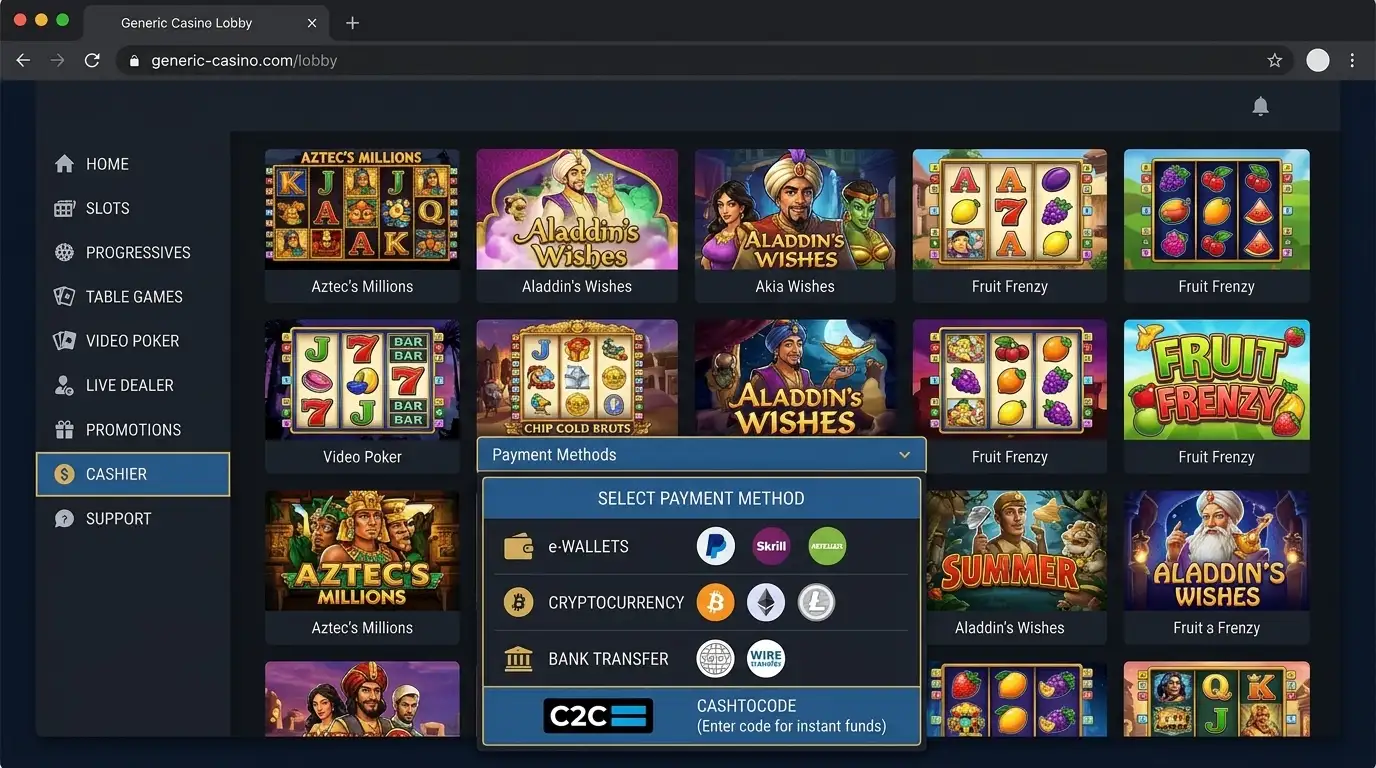
- Select CashToCode from the payment-method menu.
- Enter the twenty-digit PIN.
- Funds appear in your balance instantly.
The deposit is instantaneous in the sense that no banking intermediary introduces delay. The voucher value transfers to the casino at the moment of redemption.
Denominations, Limits and Validity
CashToCode vouchers in Australia are sold in fixed denominations: AU$25, AU$50, AU$100, AU$150, AU$200, and AU$400. Some resellers stock values up to AU$1,000 or AU$1,500, but those are rare and not standard in the Australian market.
Casino deposit minimums vary. Fair Go Casino, for example, accepts CashToCode deposits from AU$10 in some promotions and AU$20 as a standard floor. Most other offshore casinos set minimums between AU$20 and AU$30 for voucher methods. If you buy a AU$25 voucher and the casino requires AU$20, you redeem the full AU$25; the casino credits that amount, and the voucher is spent.
Vouchers remain valid for twelve months from the date of purchase. After twelve months, the code expires and the value is forfeited. There are no maintenance fees during that window—CashToCode doesn’t charge for holding an unused voucher—but the reseller you bought from might have added a markup at the point of sale.
How long does a CashToCode voucher stay valid after purchase?
Twelve months. The twenty-digit PIN you receive by email remains redeemable for one year from the purchase date. After that, the code expires and cannot be used.
What are the CashToCode deposit limits at Australian casinos?
Voucher values in Australia typically range from AU$25 to AU$400, with some resellers offering up to AU$1,000. Casino deposit minimums for CashToCode sit between AU$10 and AU$30, depending on the operator. Fair Go Casino has the lowest confirmed minimum at AU$10 to AU$20; most offshore casinos require AU$20 to AU$30 per CashToCode transaction.
Australian Online Casinos Accepting CashToCode in 2026
CashToCode acceptance among offshore casinos serving Australians is selective. Aggregator sites claim hundreds of operators support the method, but detailed cashier documentation tells a different story: most AU-facing casinos emphasize crypto, PayID, Neosurf, and cards, with CashToCode appearing infrequently.
Fair Go Casino stands out as a confirmed CashToCode operator with verifiable details. Other prominent Australian offshore casinos—Joe Fortune, Ricky Casino, 7Bit, Oshi, HellSpin—show no CashToCode mention in their 2026 payment-method listings despite appearing in some affiliate aggregator lists. This gap reflects CashToCode’s narrower market penetration compared to Neosurf or crypto.
| Operator | License | Game Library Scale | CashToCode Deposit Minimum | Withdrawal Speed (non-CashToCode) | Distinguishing Feature |
|---|---|---|---|---|---|
| Fair Go Casino | Curaçao eGaming 1668/JAZ (Deckmedia N.V.) | 280–300 RTG-only titles | AU$10–$20 | Bitcoin 24–48h, eZeeWallet 24–72h, bank transfer 3–15 days | Lowest CashToCode minimum in AU market; RTG-exclusive progressive jackpots |
Fair Go Casino — RTG Exclusivity and AU$10 CashToCode Minimum
Fair Go operates under Deckmedia N.V. with a Curaçao eGaming license (No. 1668/JAZ). The casino has been serving Australian players for over a decade, built entirely on RealTime Gaming (RTG) software. That makes it a narrow-catalog operator—around 280 to 300 titles—but with deep integration into RTG’s progressive jackpot network (Aztec’s Millions, Megasaur, Spirit of the Inca).
CashToCode deposits at Fair Go start from AU$10 in some promotional contexts and AU$20 as the standard minimum, which is the lowest confirmed floor among offshore casinos accepting the voucher. Competitors typically require AU$20 to AU$30. That AU$10 entry point matters for players testing a casino or managing a tight bankroll.
The game library is pokies-dominant (over 80%), with table games (blackjack, roulette, baccarat variants), video poker, and specialty titles (keno, bingo, scratch cards) rounding out the offering. There are no live dealer games—RTG doesn’t produce live-dealer software, so Fair Go is entirely RNG-driven.
Withdrawals from Fair Go happen via Bitcoin (AU$100 minimum, 24–48 hours, no fee), bank transfer (AU$100 minimum, 3–15 business days, AU$50 fee), or eZeeWallet (AU$50 minimum, 24–72 hours, no fee). The weekly withdrawal cap sits at AU$7,500, with individual transactions capped at AU$2,500. That structure suits casual to mid-stakes players but constrains anyone with a large win.
The welcome bonus reaches AU$1,000 across five deposits: 100% match up to AU$200 per deposit, plus 100 free spins total. Wagering sits at 30x to 35x the bonus amount, typical for RTG casinos. Fair Go’s bonus terms don’t explicitly exclude CashToCode from eligibility, but verifying that in the full terms and conditions before depositing is prudent—some casinos treat prepaid vouchers as restricted payment methods for bonus purposes.
Fair Go’s strength is operational stability and RTG’s established jackpot infrastructure. Its weakness is catalog breadth: if you want live dealer tables or games from Pragmatic Play, NetEnt, or Evolution, this isn’t the platform. For players prioritizing CashToCode’s low minimum and RTG’s progressive slots, it’s the confirmed option in the Australian market as of 2026.
The casino’s identity verification process is standard for offshore operators. On your first withdrawal request, Fair Go requires photo ID (passport or driver’s license), proof of address (utility bill or bank statement dated within the last three months), and sometimes proof of payment method (screenshot of the voucher purchase email for CashToCode, though the voucher itself is single-use and already redeemed). The KYC process takes one to three business days to clear, after which withdrawals process at the stated speeds. This verification window is non-negotiable at licensed offshore casinos—it’s mandated by Curaçao eGaming regulations to prevent money laundering and underage gambling.
Customer support at Fair Go operates 24/7 via live chat and email. Response times for live chat average under five minutes during peak hours (Australian evenings). Email responses take four to twelve hours. The support team can clarify bonus terms, expedite KYC if documents are submitted correctly, and explain why a withdrawal might be delayed (usually pending verification or a manual review of large wins). They cannot bypass wagering requirements or override the AU$7,500 weekly withdrawal cap—those are license-level constraints, not discretionary policies.
Which Australian online casinos accept CashToCode deposits in 2026?
Fair Go Casino is the primary confirmed operator accepting CashToCode deposits from Australian players in 2026, with a minimum of AU$10 to AU$20. Other offshore casinos occasionally listed in aggregator directories (7Bit, Oshi, Ricky Casino) show no CashToCode support in their detailed cashier documentation as of mid-2026, suggesting CashToCode’s casino acceptance is narrower than competitor prepaid vouchers like Neosurf or Paysafecard.
Why CashToCode Is Deposit-Only and Which Withdrawal Methods to Pair With It
CashToCode moves money in one direction: from voucher to casino. You cannot withdraw winnings back to a CashToCode code. This isn’t a policy quirk; it’s inherent to how prepaid vouchers work. The twenty-digit PIN you redeem exhausts the voucher’s value in that transaction. There’s no CashToCode wallet or account to receive money back. The payment rail doesn’t support reverse flow.
That deposit-only constraint means every CashToCode user must arrange a separate withdrawal method before playing. Choosing a casino with strong payout rails becomes critical because CashToCode’s convenience on the way in is only half the transaction.
Why CashToCode Cannot Be Used for Withdrawals
A CashToCode voucher is a single-use instrument. You buy it, redeem it, and it’s gone. There’s no account tied to your identity, no balance to refill, no mechanism for a casino to push funds back to you via the same channel.
Compare this to e-wallets (Skrill, Neteller) or crypto wallets, where the account persists and can receive deposits and withdrawals. CashToCode is closer to paying cash at a retail counter: the transaction is one-way, and once the money changes hands, that’s the end of the story.
Some players interpret “prepaid” to mean the voucher holds a balance that can go up or down. It doesn’t. The voucher holds a fixed value at purchase, you spend that value in full, and the code becomes invalid. That’s the trade-off for anonymity: no identity verification, no account, no two-way functionality.
Best Withdrawal Alternatives for CashToCode Depositors
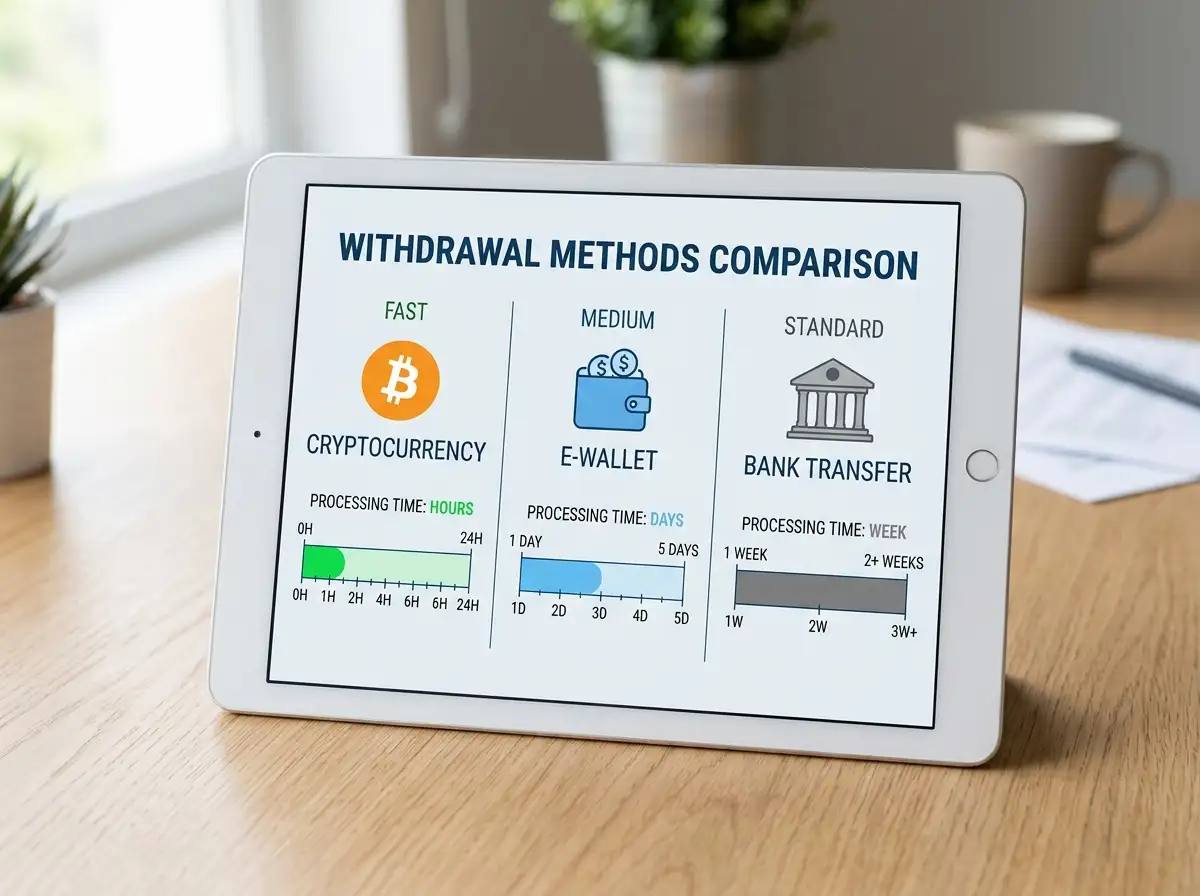
Since CashToCode only handles deposits, you need a payout method before you spin a single reel. The three main options for Australian players at offshore casinos are crypto, PayID, and e-wallets. Each has different speed and friction profiles.
Crypto (Bitcoin, Ethereum, Litecoin, USDT): The fastest withdrawal option at most offshore casinos. Fair Go processes Bitcoin payouts in 24 to 48 hours once identity verification (KYC) clears. Other operators (7Bit, Oshi, HellSpin in their marketing claims) advertise crypto settlement in under 10 to 12 hours. You need a crypto wallet—Coinbase, Binance, or a self-custody wallet like Exodus—and a basic understanding of sending/receiving addresses. Fees are minimal (network transaction fees only, typically under AU$5). The downside is volatility: if you withdraw in Bitcoin, the AUD value of your withdrawal can shift between the moment you request it and the moment you convert it back to fiat.
E-wallets (Skrill, Neteller, eZeeWallet, MiFinity, MuchBetter): The middle-ground option. Withdrawals take 24 to 72 hours, and most casinos don’t charge fees on their end (the e-wallet provider might charge a small percentage when you transfer out to your bank). E-wallets require account setup and identity verification, which removes some of CashToCode’s anonymity advantage, but they’re stable in fiat terms and widely accepted. Fair Go supports eZeeWallet with a AU$50 minimum and 24-to-72-hour processing. Skrill and Neteller appear at other offshore operators but aren’t CashToCode-deposit-specific.
Bank transfer and cards: The slowest option. Fair Go’s bank transfer takes 3 to 15 business days and incurs a AU$50 fee. Card withdrawals (Visa, Mastercard) are rare at offshore casinos because most card issuers block gambling refunds. When available, they take 1 to 5 days but often fail at the issuer level, forcing you back to another method.
PayID: The AU-Specific Fast Fiat Rail
PayID is Australia’s instant bank transfer system, built on the New Payments Platform (NPP). It’s become the preferred deposit method for AU players at offshore casinos that support it—Ricky Casino, HellSpin, and others advertise instant PayID deposits and same-day PayID withdrawals.
PayID isn’t widely paired with CashToCode-accepting casinos because the two sit at opposite ends of the privacy spectrum. CashToCode’s appeal is anonymity; PayID requires your bank account and leaves a clear transaction trail. Fair Go, the primary CashToCode operator, doesn’t list PayID in its cashier as of 2026.
If you’re using CashToCode specifically to avoid linking your bank account to a casino, PayID won’t suit you as a withdrawal method. But if you’re comfortable with bank linkage on the way out (having used CashToCode only to avoid a card decline or statement record on the deposit side), PayID is the fastest fiat option where available. Funds arrive in your Australian bank account within hours, no crypto volatility, no e-wallet intermediary.
Crypto: Sub-24-Hour Settlement
Bitcoin and other cryptocurrencies are the withdrawal backbone for offshore casinos serving Australians. Most operators process crypto faster than any fiat method because there’s no banking intermediary to slow things down.
Fair Go’s Bitcoin withdrawal completes in 24 to 48 hours once KYC is cleared. That’s mid-pack. Casinos optimized for crypto (7Bit, Oshi, HellSpin in their marketing) claim sub-10-minute Bitcoin payouts, though those figures reflect best-case scenarios after all verification is done and the withdrawal is manually approved by the casino’s finance team.
Setting up a crypto wallet takes ten minutes. Download Exodus, Electrum, or a mobile wallet app, generate a receiving address, and provide that address in the casino’s withdrawal form. The casino sends Bitcoin (or whichever coin you chose) to your wallet. You then transfer it to an exchange (Coinbase, Binance) to convert to AUD and withdraw to your bank, or hold it as crypto.
The friction points: learning curve (if you’ve never used crypto), price volatility (Bitcoin’s AUD value can swing several percent between withdrawal request and final conversion), and exchange fees (typically 0.5% to 1% to convert crypto to fiat). The advantage: speed and the fact that crypto withdrawals work at nearly every offshore casino, making them a universal fallback if e-wallets or PayID aren’t available.
A concrete example of crypto volatility: you win AU$500 at Fair Go, request a Bitcoin withdrawal. Fair Go approves it 24 hours later and sends 0.0078 BTC (Bitcoin’s price at approval: AU$64,100 per BTC). You receive the Bitcoin in your wallet 30 minutes later. Bitcoin’s price has dropped to AU$62,800 per BTC. Your 0.0078 BTC is now worth AU$489.84—you’ve lost AU$10.16 to volatility before you even reach the exchange. If you’d waited another day and Bitcoin rallied to AU$66,000, that same 0.0078 BTC would be worth AU$514.80. This is the trade-off for speed: fiat-stable methods (e-wallets, bank transfer) take longer but lock your AUD value at the moment of approval.
Some offshore casinos (not Fair Go, but others in the AU market) let you hold dual balances: AUD and Bitcoin. You deposit with CashToCode in AUD, win, and convert your balance to Bitcoin inside the casino before withdrawing. That internal conversion happens at the casino’s posted exchange rate (typically 1% to 2% worse than market rate, because the casino takes a spread), but it gives you control over when the conversion happens. If Bitcoin is rallying, you convert and withdraw immediately. If it’s dropping, you hold in AUD and convert later. Fair Go doesn’t offer this feature—it’s AUD-only, and withdrawals to Bitcoin convert at Fair Go’s rate at the moment of approval.
E-Wallets: The Middle Ground
E-wallets (Skrill, Neteller, eZeeWallet, MiFinity, MuchBetter) sit between crypto’s speed and bank transfers’ familiarity. You create an account with the e-wallet provider, verify your identity, link a bank account or card, and use the e-wallet as an intermediary.
Fair Go supports eZeeWallet for withdrawals: AU$50 minimum, 24 to 72 hours processing, no fee from the casino. Once funds land in your eZeeWallet account, you transfer them to your Australian bank account (usually another 1 to 3 business days, depending on the e-wallet’s settlement cycle).
Skrill and Neteller are more common at non-CashToCode offshore casinos but follow the same pattern: 24 to 72 hours from casino to e-wallet, another day or two from e-wallet to bank. Fees are low (often zero from the casino, a small percentage from the e-wallet provider when you cash out to fiat).
The downside is redundancy: you’ve used CashToCode to avoid sharing bank details with the casino, but now you’re sharing them with the e-wallet provider and going through identity verification there. The anonymity advantage erodes. E-wallets make sense when you want fiat stability (no crypto volatility) and slightly faster processing than a direct bank transfer, but they’re not anonymous.
Can I use CashToCode to withdraw winnings from Australian online casinos?
No. CashToCode is deposit-only. The voucher is a single-use prepaid instrument: you redeem it at the casino, and the code becomes invalid. There’s no CashToCode account or wallet to receive money back. You must arrange a separate withdrawal method—crypto, e-wallet, PayID (where available), or bank transfer—before playing.
What withdrawal methods work best for players who deposit with CashToCode?
Crypto (Bitcoin, Ethereum, Litecoin) is the fastest, with withdrawals completing in 24 to 48 hours at Fair Go and as quickly as 10 minutes at crypto-optimized casinos. E-wallets (eZeeWallet, Skrill, Neteller) take 24 to 72 hours and offer fiat stability without crypto volatility. PayID (instant bank transfer) is fastest for fiat but rare at CashToCode-accepting casinos. Bank transfers take 3 to 15 days and often incur fees.
The Legal Landscape — Why All CashToCode Casinos Are Offshore-Licensed
Every casino accepting CashToCode deposits from Australian players operates under an offshore license—Curaçao, Malta, Anjouan, Kahnawake—because no Australian regulator issues licenses for online casino operations. The Interactive Gambling Act 2001 (IGA) prohibits Australian-based operators from offering real-money pokies, blackjack, roulette, baccarat, or live dealer games to Australian residents. The Australian Communications and Media Authority (ACMA) enforces that prohibition through website blocking, operator warnings, and, from January 2027, payment-level disruption.
Understanding this legal structure matters for CashToCode users because the payment method sits in a grey zone: voucher purchases and casino deposits aren’t illegal for individuals, but the casinos themselves operate outside Australian law, and upcoming reforms may block transactions before they reach the operator.
The IGA 2001 Prohibition on Australian-Licensed Online Casinos
The Interactive Gambling Act 2001 bans Australian companies—and foreign companies targeting Australians—from providing online casino games (pokies, table games, live dealer) to people in Australia. Sports betting and racing are carved out and can be licensed by state regulators. Online casinos cannot.
ACMA doesn’t issue licenses for online casinos. It issues licenses for online sports betting and race wagering only. States and territories license land-based casinos (Crown Melbourne, The Star Sydney, SkyCity Adelaide, and others) but have no authority to license their online equivalents under the federal IGA framework.
The result: no legal domestic online casino exists in Australia. Every site offering pokies or table games online to Australians operates from offshore under a foreign license that has no legal standing under Australian law.
The IGA targets operators, not players. Playing at an offshore casino is not a criminal offense for an individual Australian. Offering those services to Australians, however, is illegal for the operator, regardless of where the operator is based or what license it holds elsewhere.
That asymmetry creates the grey zone. Players access offshore casinos via the open internet, deposit via methods like CashToCode, and gamble without legal risk to themselves. The operators face enforcement actions—ACMA has issued formal warnings to Dama N.V., TechOptions Group B.V., Hollycorn N.V., and others, and over 1,700 offshore casino domains have been referred for ISP blocking since 2019—but individual players are outside the enforcement scope.
ACMA’s stance, stated plainly in its enforcement guidance, is that there’s “little recourse for Australian customers” if something goes wrong at an offshore site. No Australian consumer protection applies. No ombudsman hears disputes. No regulator steps in if a withdrawal is delayed or an account is frozen. Players who use offshore casinos accept that they’re outside the regulatory safety net.
What Offshore Licenses Mean for Australian Players
Curaçao, Malta, Anjouan, and Kahnawake licenses govern how casinos operate in their issuing jurisdictions, but they carry no weight in Australia. A Curaçao eGaming license means the operator is authorized under Curaçao law, not that it’s legal to target Australians. The IGA prohibits the service regardless of foreign licensing.
Fair Go Casino’s Curaçao license (No. 1668/JAZ, issued to Deckmedia N.V.) allows it to operate legally in Curaçao. It doesn’t make its AU-facing operation legal under Australian law. The same applies to every other offshore operator: the license is a credential in the operator’s home jurisdiction, not a pass under the IGA.
What these licenses do provide is operational oversight in the issuing jurisdiction. Curaçao’s Gaming Control Board requires licensees to maintain fair gaming standards, publish payout percentages, and implement responsible gambling tools. Malta’s Gaming Authority (MGA) is more stringent, with stricter capital requirements, regular audits, and player-fund segregation mandates.
From a player’s perspective, a Curaçao or MGA license is better than no license, but it’s not equivalent to a regulated domestic option. Dispute resolution is handled by the issuing regulator (Curaçao Gaming Control Board, Malta Gaming Authority), not by an Australian body. If a casino refuses a withdrawal, you’re appealing to a foreign authority that may or may not prioritize player complaints from outside its primary market.
The 2027 Payment Blocking Reforms — What Changes for CashToCode Users
The Interactive Gambling Amendment (Gambling Reform) Act 2026 introduces payment-level enforcement effective January 1, 2027. ACMA will gain the power to designate offshore gambling services for payment blocking, and Australian banks, financial institutions, and payment processors will be required to take “reasonable steps” to prevent transactions to those designated services.
For CashToCode users, the mechanism matters: if ACMA designates an operator for blocking, Australian banks may be required to refuse transactions to the online resellers that sell CashToCode vouchers if those resellers are known to serve gambling purposes. Alternatively, blocking could target the casino’s payment processor at the point of voucher redemption.
The law doesn’t ban CashToCode vouchers themselves. It targets transactions to illegal gambling services. But voucher-based deposits blur the line: you’re not sending money directly to the casino; you’re buying a prepaid code from a third-party reseller and redeeming it later. Whether payment blocking will catch voucher purchases, or only direct card/bank transactions, remains to be seen in ACMA’s implementation.
ACMA has stated that enforcement will be “risk-based and proportionate,” focusing on operators with significant Australian customer bases and those that ignore warnings. Small operators or those outside ACMA’s enforcement priority may not be designated immediately. But Fair Go, as a long-established AU-facing brand under Deckmedia N.V. (a company ACMA has warned before), could be an early target.
If payment blocking disrupts CashToCode redemption, players would need to pivot to crypto (which is harder to block at the transaction level) or e-wallets (which face the same blocking risk). The 2027 reforms don’t make playing at offshore casinos illegal for individuals, but they introduce friction at the payment layer that could make voucher methods less reliable.
Is it legal for Australians to use CashToCode at offshore casinos?
Using CashToCode to deposit at offshore casinos is not a criminal offense for individual Australians. The IGA 2001 targets operators, not players. However, the casinos themselves operate illegally under Australian law, and from January 2027, ACMA’s payment-blocking powers may disrupt voucher purchases or redemptions if operators are designated for enforcement. Players have no Australian consumer protection or dispute resolution at offshore sites.
Will the 2027 Australian payment blocking laws affect CashToCode casino deposits?
Potentially. The Interactive Gambling Amendment Act 2026 gives ACMA power to designate offshore gambling services for payment blocking, effective January 1, 2027. Australian banks must then prevent transactions to those services. If ACMA designates a casino for blocking, voucher purchases from resellers (if deemed gambling-related) or voucher redemptions at the casino could be disrupted. Crypto deposits are harder to block and may become the fallback.
Comparing CashToCode Casinos — Bonuses, Games and What to Look For
With limited confirmed CashToCode acceptance in the Australian offshore market, comparing casinos becomes a matter of evaluating the operators that do support it against your priorities: bonus generosity and wagering fairness, game library breadth, mobile access, and minimum-deposit flexibility. Fair Go stands as the reference point because it’s the verifiable operator, but the comparison framework applies if other casinos add CashToCode support.
Welcome Bonuses at CashToCode Casinos — What to Watch For
Fair Go’s welcome package totals AU$1,000 across five deposits: 100% match up to AU$200 per deposit, plus 100 free spins distributed across the sequence. Wagering sits at 30x to 35x the bonus amount (not deposit plus bonus), which is standard for RTG casinos. The bonus is credited automatically on each qualifying deposit of AU$20 or more.
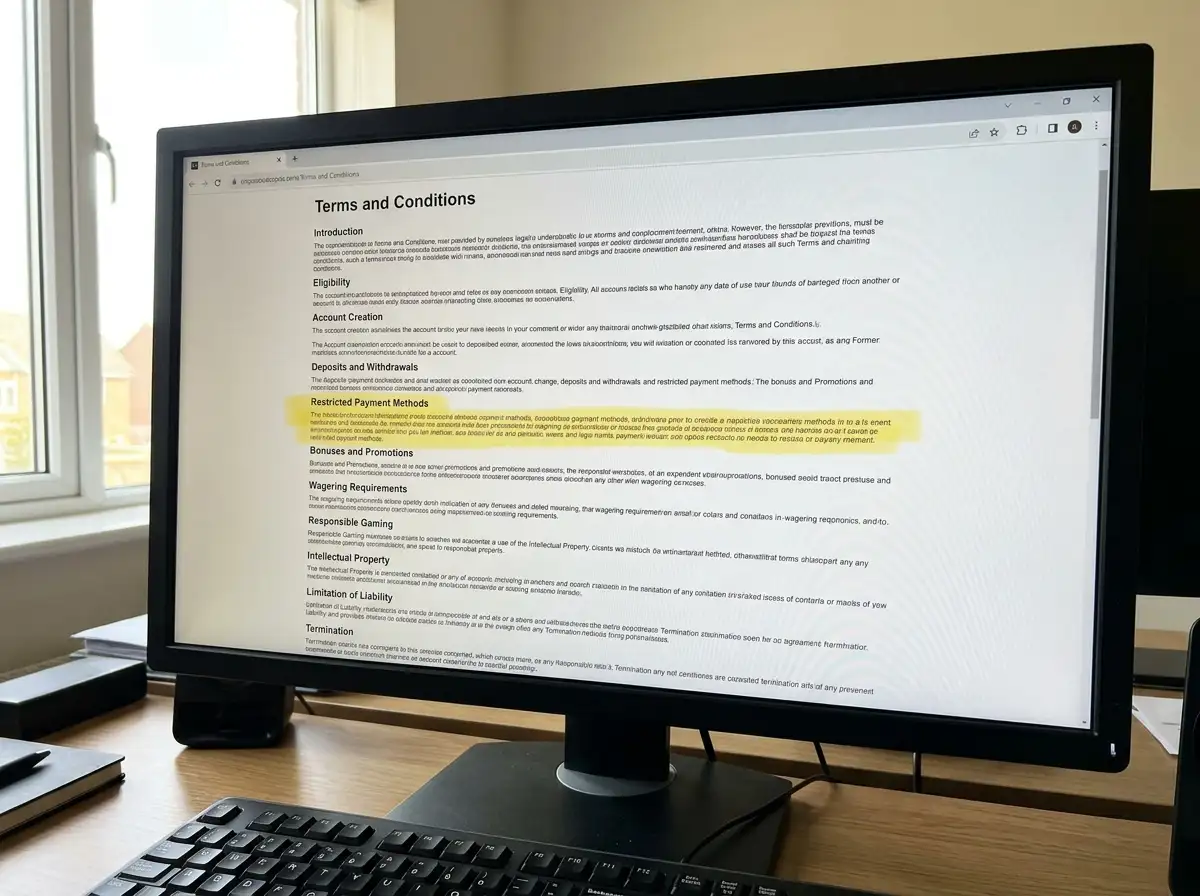
The catch: Fair Go’s terms and conditions don’t explicitly state whether CashToCode deposits qualify for the welcome bonus or are excluded as a restricted payment method. Many offshore casinos exclude prepaid vouchers (Paysafecard, Neosurf, CashToCode) from bonus eligibility or apply higher wagering requirements (40x to 50x instead of 30x to 35x). This is buried in the fine print under “restricted payment methods” or “excluded deposit methods.”
Before depositing with CashToCode to claim a bonus, read the casino’s full bonus terms. Look for a clause listing restricted methods. If CashToCode appears there, your deposit will process, but you won’t receive the bonus, and any winnings generated while you thought the bonus was active may be voided. That’s a harsh outcome for missing a single line of text.
At casinos where CashToCode deposits do qualify, compare wagering requirements and game contribution. Pokies usually contribute 100% toward wagering, table games 10% to 25%, and live dealer games often contribute nothing. If you deposit with CashToCode to play blackjack, and blackjack only contributes 10%, you’ll need to wager ten times more to clear the bonus than a pokies player would.
Maximum bet limits during wagering also matter. Many casinos cap bets at AU$5 to AU$10 while a bonus is active. Breaching that cap—even accidentally on a high-volatility pokie—can void the bonus and winnings. Fair Go’s cap is AU$10 per spin during active wagering, typical for the market.
The safest approach: if a casino’s terms are vague about CashToCode eligibility, contact support before depositing and save the chat transcript. If they confirm CashToCode qualifies, deposit. If they say it doesn’t, you’ve avoided a wasted deposit. If they won’t give a clear answer, that’s a red flag about the casino’s transparency.
Game Library Scale and Provider Diversity
Fair Go’s 280 to 300 RTG titles represent a focused catalog. You’re getting pokies (the majority), table games (blackjack, roulette, baccarat, variants), video poker (single-hand and multi-hand), and specialty games (keno, bingo, scratch cards). No live dealer games. No games from Pragmatic Play, NetEnt, Microgaming, Play’n GO, Evolution, or other providers.
RTG’s strength is progressive jackpots. Aztec’s Millions, Megasaur, and Spirit of the Inca sit in the AU$1 million to AU$3 million range regularly. The pokies are older-style (2010s design language, lower animation fidelity than current Pragmatic Play or Nolimit City releases) but carry higher RTP in some cases—RTG’s standard RTP for many pokies is 95% to 97%, competitive with industry norms.
If you want variety—hundreds of providers, thousands of titles, frequent new releases—Fair Go isn’t the platform. If you want RTG’s jackpot network and don’t mind a smaller catalog, it delivers. Other offshore casinos (Ricky, Oshi, HellSpin, 7Bit) run 4,000 to 13,000 games from 40 to 145 providers, but none have confirmed CashToCode support as of 2026.
The game-library comparison becomes relevant if more casinos add CashToCode. A player choosing between a 300-title RTG catalog and a 7,000-title multi-provider catalog will prioritize differently depending on whether they chase jackpots (RTG wins) or want novelty and provider diversity (multi-provider wins).
Mobile Compatibility and Pokies Selection
Fair Go runs entirely in-browser. There’s no native iOS or Android app. You open Safari or Chrome on your phone, navigate to the site, log in, and play. The interface is mobile-responsive, meaning it reformats for smaller screens, but it’s not optimized the way a native app would be.
Pokies dominate Fair Go’s library: over 80% of the 280 to 300 titles. That’s typical for AU-focused casinos because Australians search for “pokies” more than “slots” or “casino games.” Popular RTG pokies at Fair Go include Achilles, Caesar’s Empire, Cleopatra’s Gold, Megasaur (progressive), Aztec’s Millions (progressive), and Spirit of the Inca (progressive).
Mobile play works without friction for pokies. You tap to spin, swipe to adjust bet size, and the reels animate smoothly on recent-generation iPhones and Android devices. Table games (blackjack, roulette) are playable but less ergonomic—tapping to place chips on a roulette layout is fiddlier than using a mouse on desktop.
Other offshore casinos (HellSpin, for example) offer native mobile apps for iOS and Android. Those apps provide faster load times, push notifications for bonuses, and Touch ID/Face ID login. But again, HellSpin hasn’t confirmed CashToCode support, so the native-app advantage is moot for a CashToCode user until that changes.
Minimum Deposits and Budget-Friendly Options
Fair Go’s AU$10 CashToCode minimum (in some promotions) is the lowest confirmed floor in the Australian offshore market. Standard across most offshore casinos is AU$20 to AU$30 for voucher methods. That AU$10 entry point makes Fair Go accessible for players testing the platform or managing a small bankroll.
CashToCode’s fixed denominations (AU$25, AU$50, AU$100, AU$150, AU$200, AU$400) mean you’re always depositing in lumps, not exact amounts. If you buy a AU$25 voucher and the casino requires AU$20, you deposit the full AU$25. If you wanted to deposit exactly AU$15, you can’t—you’d need to use a different method (card, crypto, e-wallet) that accepts custom amounts.
Budget-conscious players benefit from lower minimums because they can test a casino with a AU$10 deposit (one AU$25 voucher covers two deposits at Fair Go if the AU$10 floor applies) rather than committing AU$20 or AU$30 upfront.
The fixed-denomination structure of CashToCode vouchers creates a practical constraint: you’re always rounding up. If you want to deposit exactly AU$15, you can’t—you’d need to buy a AU$25 voucher and deposit the full amount (or switch to a method that accepts custom values, like crypto or cards). This rounding works in the casino’s favor more often than the player’s, because you’re depositing slightly more than you intended. A AU$25 voucher at a AU$20-minimum casino nets the casino an extra AU$5 compared to what you might have deposited if you’d had granular control.
That rounding effect is invisible at higher stakes but meaningful for small-bankroll players. If you’re buying AU$25 vouchers week after week and depositing the full amount each time, you’re committing AU$100 per month. If you’d preferred to deposit exactly AU$18 or AU$22 per week based on how the previous session went, CashToCode’s fixed denominations remove that flexibility. Crypto and e-wallets let you send AU$17.53 if that’s what you want; CashToCode rounds you to the nearest denomination tier.
Do CashToCode deposits qualify for welcome bonuses at Australian casinos?
It depends on the casino’s bonus terms. Some casinos exclude prepaid vouchers (CashToCode, Paysafecard, Neosurf) from bonus eligibility or apply higher wagering requirements. Fair Go Casino doesn’t explicitly list CashToCode as excluded in its publicly visible terms, but verify with customer support before depositing if claiming a bonus is your goal. Always check for a “restricted payment methods” clause in the full bonus terms and conditions.
What’s the difference between CashToCode, Neosurf, and Paysafecard for Australian players?
All three are prepaid vouchers purchased online or at retail. CashToCode has the narrowest casino acceptance (~50–100 offshore operators for AU) but is available in Australian dollars with denominations from AU$25 to AU$400. Neosurf is more widely accepted (~200+ casinos) with similar denominations. Paysafecard is the oldest and most established but less common in Australia than in Europe. All three are deposit-only; none support withdrawals. For Australian players, Neosurf offers broader casino choice; CashToCode offers slightly better anonymity due to lower adoption (fewer data-sharing partnerships).
Mobile Casinos and CashToCode — What Works on Australian Devices
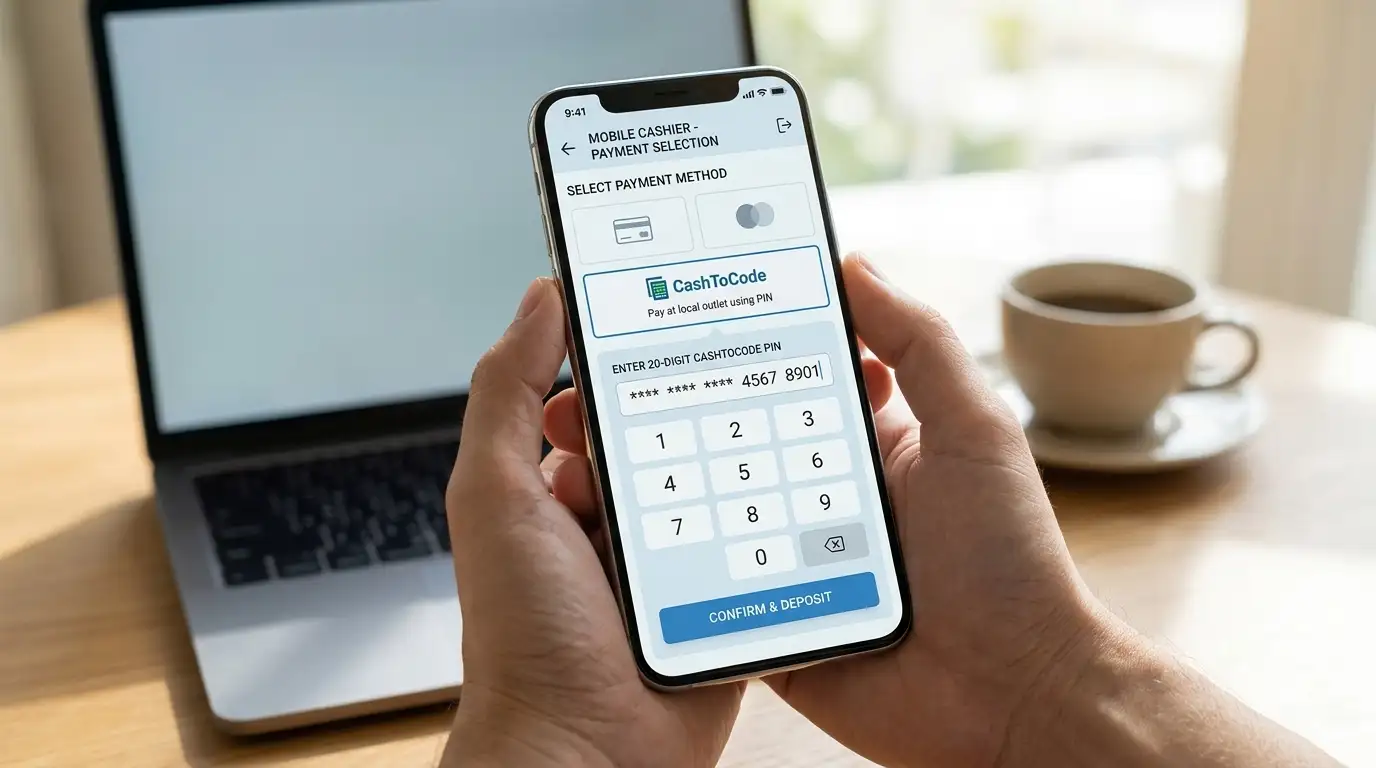
CashToCode vouchers work identically on mobile and desktop: you enter the twenty-digit PIN in the casino’s mobile cashier, and the deposit processes instantly. The payment method itself is device-agnostic. What varies is the casino’s mobile interface—browser-based responsive design versus native app—and how easy it is to copy-paste or manually type a twenty-character code on a phone screen.
Fair Go runs in-browser on mobile. You visit the site from Safari (iOS) or Chrome (Android), tap the cashier icon, select CashToCode, and paste the PIN from your email. The interface reformats for smaller screens but isn’t a native app. Load times are slightly slower than a native app would be, and you don’t get push notifications for bonuses or promotions.
Typing a twenty-digit alphanumeric code on a phone keyboard is tedious. The better workflow: open the email from the CashToCode reseller, long-press the PIN to select it, copy, switch to the casino’s mobile site, paste. That eliminates transcription errors and takes five seconds instead of thirty.
Some offshore casinos (HellSpin, for example) offer native iOS and Android apps. Those apps load faster, save your login credentials with Touch ID or Face ID, and can send push notifications. But as of 2026, the casinos with native apps (HellSpin, Ricky, others) haven’t confirmed CashToCode support, so the app advantage doesn’t help a CashToCode user yet.
Mobile play is smooth for pokies. Tap to spin, swipe to adjust bet size, pinch to zoom if you want a closer look at the paytable. RTG’s pokies at Fair Go—Achilles, Caesar’s Empire, Cleopatra’s Gold, the progressive jackpot titles—all run in HTML5 and work on any modern smartphone. Table games (blackjack, roulette) are less ergonomic: tapping small chip denominations or roulette numbers on a five-inch screen is fiddlier than using a mouse, but it’s functional.
The main friction point for CashToCode on mobile is buying the voucher in the first place. If you’re purchasing from an online reseller (SEAGM, Recharge, MyGiftCardSupply), you’re navigating their mobile site or app, paying via card or another method, waiting for the email, then switching to the casino. That’s three or four apps/browser tabs in sequence. It’s not broken, but it’s not seamless either.
Can I use the same CashToCode voucher at multiple casinos?
No. CashToCode vouchers are single-use. When you redeem the twenty-digit PIN at a casino, the voucher’s full value is applied to that transaction, and the code becomes invalid. You cannot split a AU$100 voucher across two AU$50 deposits at different casinos. Each deposit requires a separate voucher.
Live Dealer, Roulette and Game Variety at CashToCode Casinos
Live dealer availability at CashToCode-accepting casinos depends on the operator’s software partnerships. Fair Go, as an RTG-exclusive casino, has no live dealer games—RTG doesn’t produce live-dealer software. Multi-provider casinos (7Bit, Oshi, Ricky, HellSpin) offer Evolution Gaming, Pragmatic Play Live, Ezugi, and other live-dealer studios, but none have confirmed CashToCode support as of 2026.
If live dealer games are a priority, you’re currently choosing between CashToCode’s anonymity (and Fair Go’s RNG-only library) or switching to a different deposit method (crypto, PayID, Neosurf, cards) at a casino with Evolution’s live blackjack, roulette, baccarat, and game shows. That trade-off may shift if multi-provider casinos add CashToCode, but as the market stands in 2026, CashToCode users are limited to RNG games.
Roulette at Fair Go is RNG-driven: European Roulette (single-zero, house edge 2.7%) and American Roulette (double-zero, house edge 5.26%). Both are RTG products, playable in-browser, with standard betting layouts. No live-dealer roulette with a human croupier spinning the wheel. No immersive or speed variants from Evolution. Functional, but not the live-casino experience that some players prefer.
Game variety beyond pokies and roulette includes blackjack (Classic Blackjack, European Blackjack, Perfect Pairs, Face Up 21), baccarat (standard and mini-baccarat), video poker (Jacks or Better, Deuces Wild, Aces and Eights, multi-hand variants), craps, keno, bingo, and scratch cards. RTG’s specialty-game suite is dated—2010s design, low animation fidelity—but it covers the basics.
Progressive jackpot variety at Fair Go is stronger than most RTG casinos because it taps the full network: Aztec’s Millions (regularly AU$2 million to AU$3 million), Megasaur (AU$1.5 million to AU$2.5 million), Spirit of the Inca (AU$1 million to AU$2 million), and smaller progressives like Shopping Spree and Jackpot Pinatas. If chasing jackpots is the goal, Fair Go delivers. If you want live dealer, it doesn’t.
Deposit Methods at Australian Online Casinos 2026 — Compared
Content created by the «Payment Methods» team