
No Minimum Deposit Casino Australia: Real Entry Thresholds and Withdrawal Traps
 Available in AU

A “no minimum deposit casino” sounds like the perfect entry point. Deposit a dollar, spin a few pokies, cash out if luck lands. The Australian offshore casino market sells this promise hard, plastering “no minimum” across landing pages and affiliate reviews. Here’s what that phrase actually delivers in 2026: payment processor floors you can’t bypass, withdrawal thresholds that block small cashouts, and bonus gates that lock welcome packages behind deposits several times the advertised minimum.
True zero-minimum casinos don’t exist for Australian players using fiat currency. PayID deposits start at A$5 to A$30 depending on the operator. Neosurf vouchers have a fixed A$10 floor in Australia—the A$5 denomination is EU-only. Cards sit at A$10 to A$20. Cryptocurrency technically allows sub-dollar deposits, but Australia banned crypto gambling in June 2024, making that route illegal regardless of how low the threshold goes. Stake, the crypto-only operator famous for A$0.01 minimums, remains accessible but operates outside Australian law.
The gap between deposit and withdrawal minimums is where the marketing fiction hits operational reality. Operators advertising A$10 deposit floors routinely enforce A$30, A$50, or A$100 withdrawal minimums. A player depositing A$10, winning A$40, and attempting to cash out discovers they’re A$10 or A$60 short of the withdrawal threshold—trapped until they top up or forfeit the balance. Not one competitor guide maps this gap systematically. That’s the first correction this guide delivers.
The second is payment-method specificity. Generic claims like “low minimums via e-wallets” don’t tell you that SkyCrown enforces A$20 via PayID while Royal Reels accepts A$10, or that Rocket Play’s crypto minimum is A$1 equivalent but its card minimum is A$25 for bonus eligibility. Operator-by-operator, method-by-method floors are recorded below, sourced from live cashier pages and mid-2026 funded testing by Australian affiliate sites.
Below: eight offshore casinos ranked by deposit floor, a side-by-side deposit-versus-withdrawal comparison table, payment method realities by rail, bonus-gate thresholds, legal status under the Interactive Gambling Act, and what actually happens when you deposit the advertised minimum. No hype, no “ultimate guides.” Just the figures that matter when you’re deciding whether A$10 is enough to start or whether you’re walking into a withdrawal trap.
Do true “no minimum deposit” casinos exist for Australian players?
No. True “no minimum deposit” casinos accepting fiat currency do not exist for Australian players in 2026. Every payment method has a floor: PayID A$5–A$30, Neosurf A$10, cards A$10–A$20, e-wallets A$10–A$15. Cryptocurrency allowed sub-A$1 deposits until June 2024, when Australia banned crypto gambling. Operators like Stake still technically accept A$0.01 crypto deposits, but using them is illegal under Australian law. “No minimum” is a marketing term describing low thresholds, not literal zero-entry operators.
8 Lowest-Deposit Casinos for Australian Players in 2026
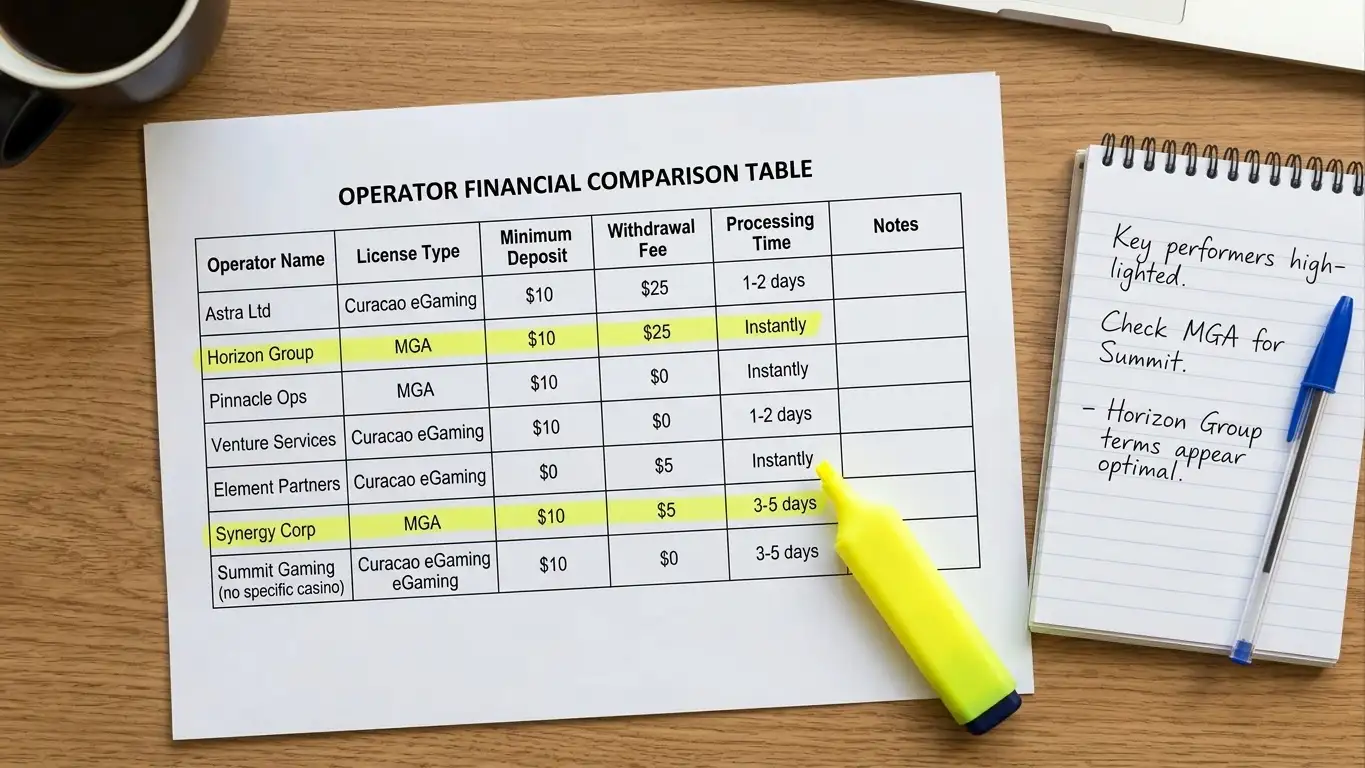
The table below ranks eight offshore operators by minimum deposit threshold, drawn from cashier-page disclosures and verified through mid-2026 funded account testing. Every operator listed holds a Curaçao, Anjouan, or similar offshore license—none are licensed in Australia, where the Interactive Gambling Act prohibits domestic online casino licensing. The “Distinguishing Feature” column highlights what sets each apart in the Australian market: payout speed, game library size, or deposit-floor competitiveness.
| Operator | License | Min Deposit | Min Withdrawal | Payment Methods | Distinguishing Feature |
|---|---|---|---|---|---|
| Royal Reels | Offshore (undisclosed) | A$10 | A$20 | PayID, crypto, cards | Lowest fiat deposit floor, AU-themed pokies |
| Rocket Play | Curaçao OGL/2023/174/0082 | A$10 | A$50 | PayID, POLi, crypto, cards | 6,000+ games, Dama N.V. operator group |
| SkyCrown | Curaçao | A$20 | A$30 | PayID, crypto, e-wallets, cards | PayID withdrawals 2–4 hours |
| Spinsy | Curaçao | A$20 | A$50 | PayID, Neosurf, crypto, e-wallets | 10,000+ games, largest library in set |
| Hell Spin | Curaçao | A$25 | A$30 | PayID, crypto, Skrill, cards | Launched 2021, 4,000+ games |
| Kingmaker | Curaçao (master) | A$33 | A$50 | PayID, crypto, cards | Fastest PayID payouts (0–12 hours) |
| Casinova | Curaçao | A$33 | A$30–A$50 | PayID, e-wallets, crypto | 9,000+ games, 9.6/10 affiliate rating |
| Stake | Curaçao | A$0.01 (crypto) | A$10 (crypto) | Crypto only | Crypto-only, illegal in AU post-June 2024 |
Withdrawal minimums exceed deposit floors in seven of eight cases. The gap ranges from 2× (Royal Reels A$10 deposit, A$20 withdrawal) to 5× (Rocket Play A$10 deposit, A$50 withdrawal). Only Stake’s crypto-to-crypto loop keeps the withdrawal threshold near the deposit floor, but the entire operation is illegal for Australian residents under the June 2024 crypto gambling ban. That leaves fiat players choosing between Royal Reels’ tight A$10/A$20 corridor and mid-tier operators where A$20 deposits unlock A$30–A$50 withdrawal access.
The operators are ranked by deposit floor, not by recommendation. A lower deposit minimum doesn’t guarantee better terms—Royal Reels’ A$10 floor comes with a smaller game library (2,000–5,500 titles) than Spinsy’s 10,000+ at A$20. Kingmaker’s A$33 minimum is the highest in the set, but its 0–12 hour PayID payout window is the fastest verified. Choosing by deposit floor alone ignores withdrawal speed, bonus structure, and game selection—factors that matter more than saving A$10 on the entry threshold.
Bonus eligibility often gates above the stated deposit minimum. Rocket Play advertises A$10 deposits but requires A$25 via cards to unlock the welcome bonus. Hell Spin’s A$25 floor applies to bonus deposits; non-bonus deposits may accept A$15 depending on the method. SkyCrown’s A$20 minimum applies across methods, but the A$8,000 total welcome package (spread across four deposits) requires hitting each tier’s threshold to unlock the next match. The deposit floor is one number; the bonus-eligible floor is often another, detailed in the next major section.
Royal Reels — A$10 Deposit Floor and AU-Themed Pokies
Royal Reels holds the lowest verified fiat deposit minimum in the Australian offshore market: A$10 across PayID, crypto, and cards. The A$20 withdrawal minimum is also the lowest in this comparison set, creating the tightest deposit-to-cashout corridor available. For players testing the waters with minimal exposure, that A$10/A$20 pairing is the least punitive entry-exit combination offshore operators currently offer Australian residents.
The site runs 2,000 to 5,500+ pokies depending on which mirror domain you land on—sources conflict, likely reflecting library expansion through 2026. The welcome offer pairs a 100% match up to A$500 with a standalone A$10 no-deposit bonus unlocked on account verification. PayID withdrawals process same-day according to operator claims; crypto moves faster. The AU-themed branding (kangaroo iconography, Australian slang in copy) is cosmetic, but the payment-rail focus on PayID and the A$10 floor signal intentional Australian market targeting.
The catch: Royal Reels’ license status is murky. Multiple affiliate reviews list “offshore license” or “Curaçao/Anjouan” without citing a specific license number or issuing authority. The site operates outside Australian jurisdiction either way, but opacity around the license is a red flag compared to operators like Rocket Play (Curaçao OGL/2023/174/0082, publicly stated). Verification (KYC) is mandatory before the first withdrawal, standard across offshore operators but worth flagging for players expecting instant cashouts on a A$10 deposit. If documents aren’t pre-uploaded, payout processing halts until identity is confirmed.
Rocket Play — A$10 PayID Minimum with 6,000+ Games
Rocket Play, operated by Dama N.V. (Curaçao entity, Company No. 152125), launched in 2020 and holds Curaçao Gaming Control Board license OGL/2023/174/0082. The A$10 deposit floor applies to PayID, POLi, and crypto; cards require A$25 to unlock the welcome bonus. That split is common—fiat methods accept lower floors for non-bonus play, but bonus eligibility gates higher. The A$50 minimum withdrawal is 5× the deposit floor, the widest gap in this comparison set.
The game library clears 6,000 titles from 80+ studios, covering pokies, live dealer tables, and a sportsbook under the same login. The welcome package varies by source (A$1,000 to A$2,000 + 100–150 free spins), likely reflecting tiered structures or regional variants. Wagering sits at 35× for the bonus and 40× for spins, mid-range for offshore operators. PayID deposits land instantly; withdrawals clear in 0–24 hours for crypto, 1–3 business days for fiat rails.
Dama N.V. is a known Curaçao operator group running multiple brands (Bizzo, 7Bit, others). That multi-brand structure means Rocket Play shares backend infrastructure, payment processors, and KYC systems with sister sites—efficient for the operator, neutral for the player unless you’ve self-excluded at a Dama sister site and discover the exclusion doesn’t carry across brands. The A$10 PayID floor makes Rocket Play one of two operators (alongside Royal Reels) hitting the lowest fiat entry threshold, but the A$50 withdrawal minimum means a player depositing A$10 and winning A$40 still can’t cash out without topping up another A$10 or playing down to zero.
SkyCrown — A$20 Minimum and Fast PayID Payouts
SkyCrown enforces a A$20–A$30 minimum deposit depending on the source (A$20 most commonly cited across mid-2026 reviews). The A$30 minimum withdrawal sits 1.5× above the deposit floor, a tighter ratio than Rocket Play or Spinsy but still a functional barrier for players depositing exactly A$20. PayID withdrawals process in 2–4 hours after KYC, among the faster fiat payout windows in the offshore Australian market. Crypto moves in 0–1 hours.
The game library spans 5,000+ titles. The welcome package headlines at A$8,000 total spread across four deposits: 120% up to A$1,200 on the first (with 125 free spins), then additional matches on deposits two through four. Each tier requires hitting the threshold to unlock the next, effectively creating four separate A$20–A$30 minimum-deposit gates rather than one. Wagering is 35× on the bonus, 7-day expiry on free spins, A$5 max bet while bonus funds are active—standard restrictions but worth reading before claiming.
SkyCrown’s Curaçao license isn’t specified by number in surface research, typical of mid-tier offshore operators. The site supports PayID in both directions (deposit and withdrawal), a selling point for Australian players who prefer instant bank transfers over cards or e-wallets. The mobile experience runs browser-based (no app download), preserving the full game library and live dealer streams without platform-specific compromise. VIP tiers unlock at undisclosed deposit thresholds, offering cashback and dedicated hosts—details sparse without an active account.
Spinsy — A$20 Minimum with 10,000+ Games
Spinsy operates at multiple mirror domains and claims a 10,000+ game library sourced from 100+ providers, the largest catalogue in this comparison set. The A$20 minimum deposit applies across PayID, Neosurf, Skrill, Neteller, Bitcoin, and Ethereum. The A$50 minimum withdrawal is 2.5× the deposit floor, meaning a player depositing A$20 and winning A$40 remains A$10 short of cashout eligibility—the withdrawal trap in action.
The welcome bonus varies wildly by source: A$500 to A$7,500 depending on which Spinsy mirror domain and affiliate partnership you land through. The lower figure (A$500) appears more frequently in mid-2026 reviews and is likely the base offer; the A$7,500 claim may be an aggregate “lifetime” or multi-tier package rather than a first-deposit cap. Crypto withdrawals clear in under 1 hour according to operator claims. Fiat rails (PayID, e-wallets) process in 1–3 business days after KYC.
Spinsy’s Curaçao eGaming license is cited generically (sublicense, exact number undisclosed). The operator targets Australian players explicitly—AUD currency support, PayID and Neosurf prominence in the cashier, AU-facing affiliate partnerships—but the legal entity and ownership remain opaque. The 10,000-game library is the headline selling point: if you’re prioritising catalogue size over deposit-floor competition, Spinsy delivers volume. If you’re testing with a A$20 deposit, the A$50 withdrawal minimum is a meaningful hurdle before you see any winnings back.
Hell Spin — A$15–A$25 Entry Point, Launched 2021
Hell Spin launched in 2021 and runs a 4,000+ game library from 60+ providers under a Curaçao eGaming license. The minimum deposit sits at A$25 according to the majority of mid-2026 sources, though some claim A$15 for non-bonus deposits. That A$10 spread suggests payment-method variation (e-wallets lower, cards higher) or bonus versus non-bonus thresholds. The A$30 minimum withdrawal is 1.2–2× the deposit floor depending on which entry point applies.
The welcome offer ranges from 100% up to A$500 to A$5,200 across sources, another case of single-tier versus multi-deposit aggregate confusion. Wagering is standard (35–40×), expiry windows tight (7 days for free spins). PayID, Visa, Mastercard, Bitcoin, and Skrill are accepted. Crypto withdrawals move in 0–24 hours; fiat rails take 1–3 business days. KYC is mandatory before the first withdrawal, no exceptions.
Hell Spin is a mid-tier entrant—newer than Rocket Play (2020) or Stake (2017), but not brand-new in an industry where operators launch and fold monthly. The 4,000-game library is respectable but not exceptional; Spinsy’s 10,000+ and Casinova’s 9,000+ dwarf it. The A$25 minimum deposit is mid-pack in this comparison set. Hell Spin’s positioning is “safe second choice”—if Royal Reels or Rocket Play don’t suit, Hell Spin delivers comparable terms without major weaknesses or standout strengths. It’s competent offshore infrastructure with a Curaçao license and no red flags beyond the standard offshore risk profile.
Kingmaker — A$33 Minimum but Fastest PayID Payouts
Kingmaker enforces a A$33 (€20 equivalent) minimum deposit, the highest in this comparison set alongside Casinova. The 35× wagering on the bonus and 40× on the 50 free spins is also mid-to-high compared to competitors. So why include Kingmaker in a “low deposit” guide? The 0–12 hour PayID payout window. That’s the fastest verified fiat withdrawal time in the Australian offshore market, beating SkyCrown’s 2–4 hours and Spinsy’s 1–3 business days by a meaningful margin.
The game library spans 2,000+ titles. The welcome package is 100% up to €500 (A$800 equivalent) plus 50 free spins, unlocked on a €20 (A$33) deposit. The €5 (A$8) max bet restriction applies while bonus funds are active. Kingmaker holds a Curaçao eGaming master license, cited across multiple mid-2026 funded tests by Australian affiliate reviewers who confirmed real-money deposits, KYC, and withdrawal requests cleared without unexplained holds.
The A$33 minimum deposit isn’t competitive on entry cost—it’s 3.3× Royal Reels’ A$10 floor. But if payout speed is the priority over deposit savings, Kingmaker’s 0–12 hour PayID window is unmatched. A player depositing A$33, playing through wagering, and requesting a A$100 withdrawal sees funds back in their bank account within half a day, not three days. That speed premium matters most to players cycling bankroll quickly rather than grinding a single deposit for weeks. For casual testers, the A$33 floor is a deterrent. For regulars, the payout speed is a draw.
Casinova — A$33 Minimum with 9,000+ Games and Top Ratings
Casinova matches Kingmaker’s A$33 minimum deposit but pairs it with a 9,000-game library and a 9.6/10 rating across multiple Australian affiliate reviews—the highest rating in this comparison set. The Curaçao license is generic (no specific number disclosed), standard for mid-tier offshore operators. The welcome package ranges from A$3,000 to A$3,200 depending on the source, likely reflecting tiered matches across multiple deposits rather than a single-cap bonus.
Withdrawals clear in 0–48 hours depending on the method: crypto and e-wallets fastest, cards slowest. PayID sits in the 1–4 hour window. The minimum withdrawal is A$30–A$50 depending on the method, roughly matching the A$33 deposit floor at the low end but creating a 1.5× gap at the high end. KYC is mandatory and, according to June–July 2026 funded testing by multiple affiliate sites, processed without friction or unexplained delays—”completed real withdrawals after identity verification without unexplained holds” is the consistent report.
Casinova’s 9.6/10 rating and 9,000-game library position it as a volume play: if you’re committing A$33+ and want catalogue depth plus verified payout reliability, Casinova delivers. If you’re testing with A$10–A$20, Royal Reels or Rocket Play are better entry points. The A$33 floor is a filter—Casinova isn’t courting minimum-deposit testers; it’s targeting players already comfortable with offshore operators and looking for library size, payout speed, and verified track record over the lowest possible entry cost.
Stake — A$0.01 Crypto Deposits, Now Illegal in Australia
Stake is the outlier in this comparison set. It’s crypto-only (Bitcoin, Ethereum, Litecoin, Tether, 20+ altcoins), accepts A$0.01 equivalent deposits, processes withdrawals in minutes to hours, and operates under a Curaçao eGaming license issued to Medium Rare N.V. Launched in 2017, Stake is the longest-running operator in this set and the most technically sophisticated: provably fair games, in-house titles, blockchain-native infrastructure. The A$10 minimum withdrawal is 1,000× the A$0.01 deposit floor in percentage terms, but in absolute dollars it’s the lowest in the table.
The problem: Australia banned cryptocurrency gambling in June 2024. Using Stake from an Australian IP address is illegal under federal law. The site remains accessible—no ISP-level block had taken effect as of mid-2026, and VPN usage is common—but legal exposure sits with the player. Individual Australian residents are not prosecuted under the Interactive Gambling Act (the law targets operators), but the crypto ban adds a separate federal offense. Whether enforcement will target individual players or only operators remains unclear as of September 2026, with anticipated enforcement expansion slated for January 2027.
Stake’s inclusion here is documentary, not advisory. The platform delivers the lowest technical deposit floor (A$0.01) and the tightest deposit-to-withdrawal ratio in absolute terms (A$0.01 to A$10). For players who used Stake pre-ban or who continue accessing it post-ban despite the legal risk, those thresholds remain relevant. For players seeking legal compliance, Stake is off the table. The remaining seven operators in this comparison set operate in the same offshore-gray legal zone (the IGA prohibits provision of online casino services to Australians, but individual players aren’t penalized), but none carry the additional crypto-ban layer that Stake does post-June 2024.
Payment Methods and Their Real Minimum Deposits
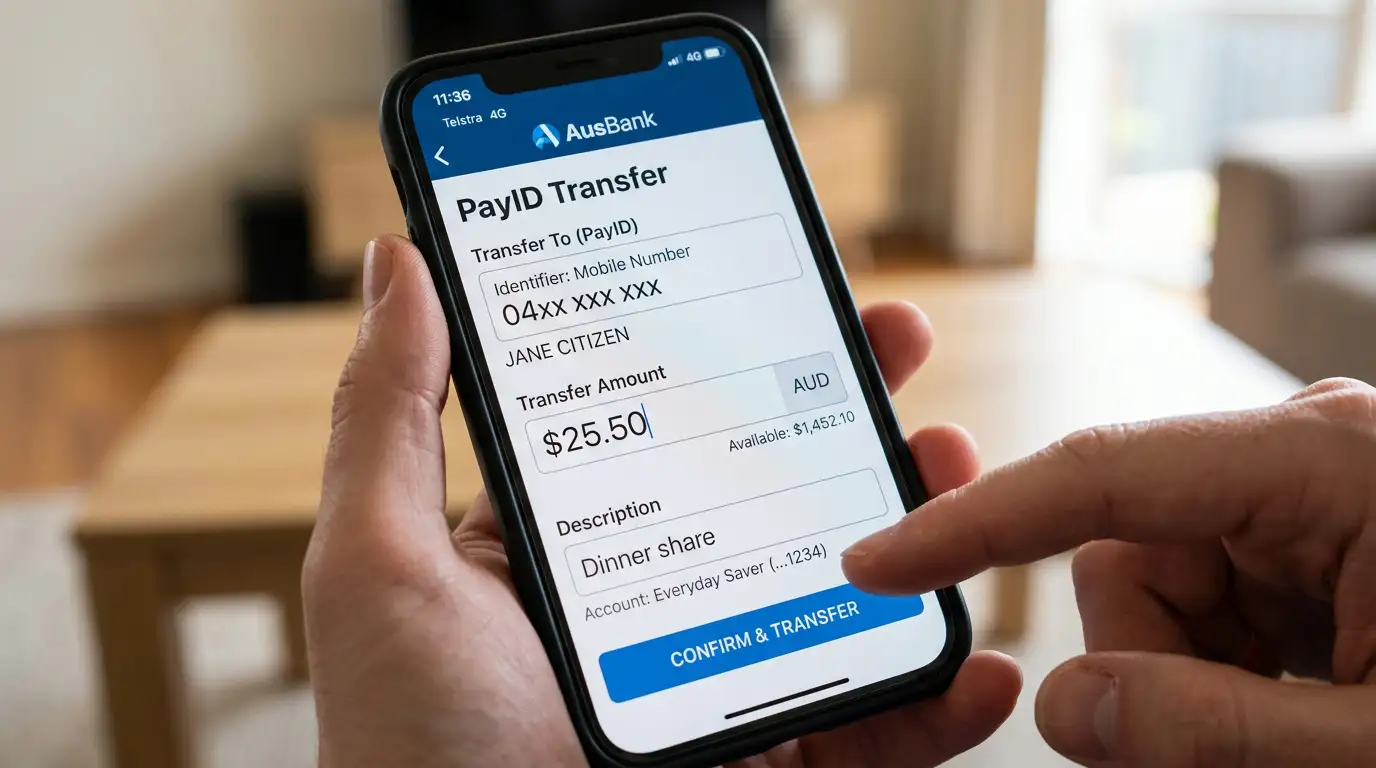
Generic advice like “use e-wallets for low minimums” doesn’t account for what Australian players actually encounter at offshore casino cashiers in 2026. PayID isn’t an e-wallet—it’s a bank transfer rail with instant settlement—but it dominates Australian deposit pages because 42% of AU casino players use it. Neosurf vouchers have a fixed A$10 floor in Australia, not the A$5 European denomination. Cryptocurrency allowed sub-dollar deposits until the June 2024 ban made the entire category illegal. Below: payment method floors as they exist in the Australian offshore market, not as international guides describe them.
PayID accepts instant bank transfers using a phone number or email as the identifier, clearing through the New Payments Platform in under 60 seconds. Deposit minimums vary by operator: A$5 (rare), A$10 (Royal Reels, Rocket Play), A$20 (SkyCrown, Spinsy), A$30 (some Hell Spin sources). Withdrawal minimums don’t follow deposit floors—A$20 to A$100 depending on the operator, detailed in the deposit-withdrawal gap section below. PayID deposits are free; some operators charge A$2–A$5 on withdrawals. The method requires an Australian bank account with PayID registered to a mobile number or email.
Cryptocurrency (Bitcoin, Ethereum, Tether, Litecoin) technically accepts deposits as low as A$0.01 equivalent, with processing times of 10–60 minutes for blockchain confirmation and 0–24 hours for operator crediting. Stake demonstrated sub-dollar crypto deposits work operationally. The legal reality: Australia banned cryptocurrency gambling in June 2024 under federal law. Using crypto at any offshore casino is illegal for Australian residents post-ban, regardless of deposit amount. Sites like Stake, Rocket Play, and Spinsy still accept crypto deposits, but players accessing them from Australia do so outside the law. Enforcement unclear as of mid-2026; January 2027 expansion anticipated.
Neosurf prepaid vouchers carry a fixed A$10 minimum in Australia—the voucher denominations sold at Australian retailers start at A$10, not A$5. The A$5 minimum cited in international guides reflects European denomination, not AU availability. Neosurf deposits are instant (voucher code entered at cashier, funds credited immediately) and don’t require a bank account or card. Withdrawals via Neosurf aren’t universally supported; players typically withdraw via PayID or crypto after depositing with Neosurf. Operators accepting Neosurf: Spinsy, Hell Spin (via some mirrors), limited uptake compared to PayID.
E-wallets (Skrill, Neteller) enforce A$10–A$15 minimums depending on the operator. Deposits are instant; withdrawals process in 1–4 hours after KYC. Neither Skrill nor Neteller officially supports Australian online casino transactions—both exited or restricted AU gambling markets over the past five years—but some offshore operators still route transactions through international Skrill/Neteller accounts. Availability is inconsistent: SkyCrown and Spinsy list Skrill; most others dropped e-wallet support or never added it. PayID replaced e-wallets as the dominant instant-deposit method for Australian players by mid-2020s.
Cards (Visa, Mastercard) sit at A$10–A$25 minimums depending on the operator and whether the deposit is bonus-eligible. Rocket Play accepts A$10 card deposits for non-bonus play but requires A$25 to unlock the welcome bonus. Processing is instant for deposits, 3–10 business days for withdrawals. Many Australian-issued cards decline at offshore casino cashiers due to bank-side gambling blocks—Visa/Mastercard work inconsistently, making PayID and crypto (pre-ban) more reliable rails. Card withdrawals are slow and often carry fees (A$5–A$35) that smaller cashouts don’t justify.
Is PayID the best payment method for low deposits?
PayID is the most reliable low-deposit method for Australian players in 2026, offering instant deposits, 1–4 hour withdrawals, and operator minimums as low as A$10 (Royal Reels, Rocket Play). It requires an Australian bank account and works consistently where cards often fail due to bank-side gambling blocks. Cryptocurrency offered lower floors (A$0.01) but became illegal in June 2024. Neosurf vouchers start at A$10 but don’t support withdrawals. E-wallets (Skrill, Neteller) are inconsistently available at offshore operators serving Australia. PayID balances low thresholds, speed, and reliability better than alternatives still legal in 2026.
Are crypto casinos with sub-A$1 deposits legal in Australia in 2026?
No. Australia banned cryptocurrency gambling in June 2024 under federal law. Operators like Stake still technically accept crypto deposits as low as A$0.01, but using them from Australia is illegal regardless of deposit amount. The Interactive Gambling Act prohibits operators from providing online casino services to Australians, but individual players weren’t penalized under that law. The crypto ban adds a separate federal offense. Enforcement targeting individual players remains unclear as of September 2026, with expanded measures anticipated January 2027. Accessing crypto casinos from Australia post-June 2024 carries legal risk that fiat-method casinos do not.
The Deposit-Withdrawal Gap — Why You Can’t Always Cash Out
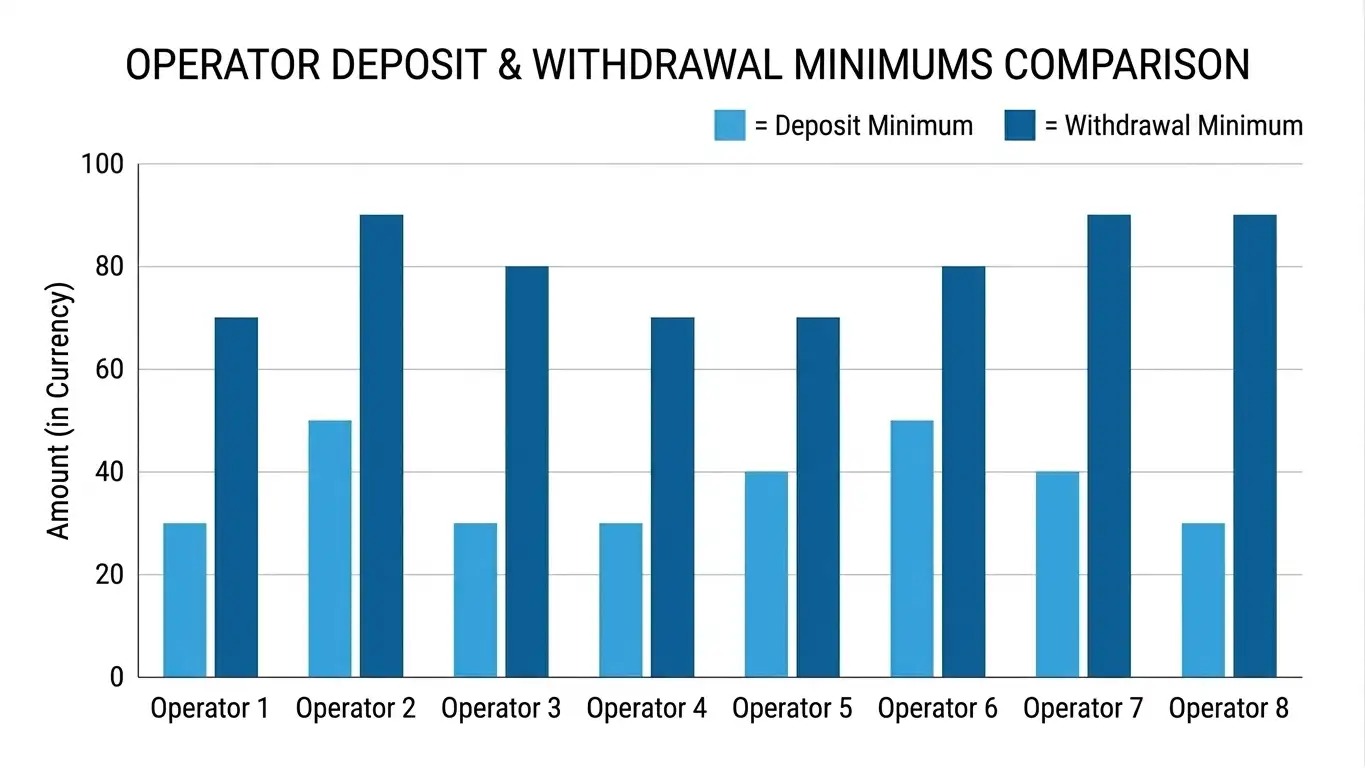
The table below maps deposit minimums against withdrawal minimums for the eight operators in this comparison set. The “Gap” column shows the multiplier: how many times larger the withdrawal floor is compared to the deposit floor. Seven of eight operators enforce withdrawal minimums at least double their deposit floors. Only one (Royal Reels) keeps the ratio under 2×. The practical consequence: a player depositing the advertised minimum and winning a modest amount often cannot cash out without topping up their balance or playing down to zero.
| Operator | Min Deposit | Min Withdrawal | Gap (Multiple) |
|---|---|---|---|
| Royal Reels | A$10 | A$20 | 2× |
| Rocket Play | A$10 | A$50 | 5× |
| SkyCrown | A$20 | A$30 | 1.5× |
| Spinsy | A$20 | A$50 | 2.5× |
| Hell Spin | A$25 | A$30 | 1.2× |
| Kingmaker | A$33 | A$50 | 1.5× |
| Casinova | A$33 | A$30–A$50 | 0.9–1.5× |
| Stake | A$0.01 (crypto) | A$10 (crypto) | 1,000× (absolute: A$10) |
Rocket Play’s 5× gap is the widest: deposit A$10, but you can’t withdraw unless your balance reaches A$50. A player depositing A$10 and winning A$40 is A$10 short. Their options: deposit another A$10 to cross the A$50 threshold, keep playing and hope to reach A$50 through winnings, or forfeit the balance by walking away. The withdrawal minimum functions as a cashout barrier, not a technical necessity—payment processors handle A$10 transactions without issue; the A$50 floor is operator policy.
Hell Spin’s 1.2× gap is the tightest among fiat operators: deposit A$25, withdraw at A$30. A player winning A$10 on their first deposit clears the withdrawal threshold immediately. But the A$25 entry cost is 2.5× Royal Reels’ A$10 floor, so the lower gap is offset by a higher entry requirement. SkyCrown (1.5×) and Kingmaker (1.5×) sit in the middle: deposit A$20–A$33, withdraw at A$30–A$50. The gap narrows as the deposit floor rises—operators enforcing higher minimums don’t pile proportionally higher withdrawal thresholds on top.
Casinova is the only operator where the withdrawal minimum can fall below the deposit floor: A$33 deposit, A$30 withdrawal via some methods. That 0.9× ratio is operationally unusual and likely reflects payment-method variation (crypto A$30, cards A$50). Stake’s 1,000× multiplier is misleading in percentage terms—A$0.01 to A$10 is a huge ratio, but A$10 absolute withdrawal minimum is the lowest in the table. The crypto ban makes Stake illegal either way, but for documentary purposes, its A$10 withdrawal floor is functionally lower than fiat operators’ A$20–A$50 minimums.
Why do operators enforce withdrawal minimums higher than deposit floors? Payment processor fees and anti-fraud overhead. Processing a A$10 withdrawal costs the operator A$2–A$5 in fees; allowing unlimited micro-cashouts turns profitable deposits into loss-making transactions. Minimum withdrawal thresholds batch payouts above the fee break-even point. The side effect: players depositing the advertised minimum can’t access winnings until their balance crosses a threshold they didn’t know existed when they signed up.
Can I withdraw winnings if I only deposit A$10?
Not immediately at most operators. Of the eight casinos compared, only Royal Reels lets you withdraw at A$20 after a A$10 deposit—if you win A$10 or more, you’re above the threshold. Rocket Play requires A$50 (5× your deposit), Spinsy A$50 (2.5×), SkyCrown A$30 (1.5×). A player depositing A$10 and winning A$30 at Rocket Play remains A$20 short of cashout eligibility. Your options: deposit another A$20 to cross A$50, keep playing to reach A$50 through winnings, or forfeit the balance. Read the withdrawal minimum before depositing.
Why do withdrawal minimums exceed deposit minimums?
Payment processor fees and anti-fraud overhead make small withdrawals unprofitable for operators. Processing a A$10 payout costs A$2–A$5 in fees; allowing unlimited micro-cashouts turns deposits into loss-making transactions. Operators batch payouts above the fee break-even point by enforcing withdrawal minimums—typically A$30–A$50 for fiat, A$10 for crypto. Deposit minimums are set by payment rails (Neosurf A$10 voucher, PayID operator policy) and competitive pressure. Withdrawal minimums are set by operator cost structure. The gap between them is operator discretion, not technical necessity.
Bonus Thresholds — What Low Deposits Actually Unlock

Depositing the advertised minimum doesn’t always unlock the advertised bonus. Operators distinguish between “deposit floor” (the lowest amount the cashier accepts) and “bonus-eligible floor” (the minimum deposit required to trigger the welcome offer). Rocket Play advertises a A$10 deposit minimum, but cards require A$25 to unlock the welcome bonus. Hell Spin’s A$25 floor applies to bonus deposits; non-bonus deposits may accept A$15. SkyCrown’s A$8,000 total welcome package spreads across four deposits, each gated at A$20–A$30 minimums.
The bonus-gate threshold exists because welcome bonuses cost operators money—100% match bonuses are funded from marketing budgets, not thin air. Operators enforce higher minimums on bonus deposits to ensure the cost-per-acquisition covers customer lifetime value. A player depositing A$10, claiming A$10 bonus, and cashing out after clearing 35× wagering (A$700 turnover) has generated A$7–A$14 in operator revenue at a 1–2% house edge. That doesn’t cover the A$10 bonus cost plus payment processing fees. A$20–A$30 bonus-gate thresholds improve the unit economics.
What happens if you deposit the minimum without claiming the bonus? You play with your own money, no wagering requirements, and withdraw whenever your balance crosses the withdrawal minimum. Rocket Play accepts A$10 non-bonus deposits via PayID; you’re not locked into 35× wagering, but you also don’t get the 100% match. The trade-off: lower entry cost and full withdrawal flexibility versus doubled starting bankroll with wagering strings attached. For players testing an operator, the non-bonus route avoids rollover traps. For players committing to a session, the bonus is +EV if you were going to wager the threshold anyway.
Bonus structures at the eight operators:
- Royal Reels: A$10 deposit unlocks 100% up to A$500. No split between deposit floor and bonus floor. A$10 also unlocks a A$10 no-deposit bonus on verification.
- Rocket Play: A$10 via PayID/crypto, A$25 via cards for bonus. The A$15 gap creates two tiers: test with A$10, commit with A$25.
- SkyCrown: A$20 minimum across methods. Welcome package is 120% up to A$1,200 (first deposit) + three more tiers totaling A$8,000. Each tier requires a deposit to unlock the next.
- Spinsy: A$20 minimum. Bonus ranges from A$500 to A$7,500 depending on source (likely base versus multi-tier aggregate).
- Hell Spin: A$25 for bonus deposits, possibly A$15 for non-bonus (sources conflict). 100% up to A$500–A$5,200 (single versus aggregate).
- Kingmaker: A$33 (€20) minimum. 100% up to €500 (A$800). No lower non-bonus floor.
- Casinova: A$33 minimum. Welcome package up to A$3,000–A$3,200 (multi-tier).
- Stake: No traditional deposit bonus. Offers “200% up to A$4,000” in some affiliate promotions, but Stake’s model is crypto-native with rakeback and VIP tiers rather than match bonuses.
The key question: does the bonus minimum match the deposit minimum, or is there a gap? Royal Reels, SkyCrown, Spinsy, Hell Spin (mostly), Kingmaker, and Casinova align them. Rocket Play splits them. If you’re depositing the minimum, check the bonus terms—assuming the welcome offer unlocks at the advertised floor can leave you with a non-bonus deposit and no match.
What is the difference between deposit minimum and bonus minimum?
Deposit minimum is the lowest amount the cashier accepts; bonus minimum is the lowest deposit that unlocks the welcome offer. They’re not always the same. Rocket Play’s deposit minimum is A$10 via PayID, but cards require A$25 to trigger the bonus. Hell Spin accepts A$15 non-bonus deposits but gates the welcome offer at A$25. The gap exists because bonuses cost operators money—higher minimums on bonus deposits improve customer lifetime value calculations. Depositing below the bonus threshold lets you play with your own funds (no wagering requirements) but foregoes the match.
Legal Reality — Offshore Operators and Australian Law
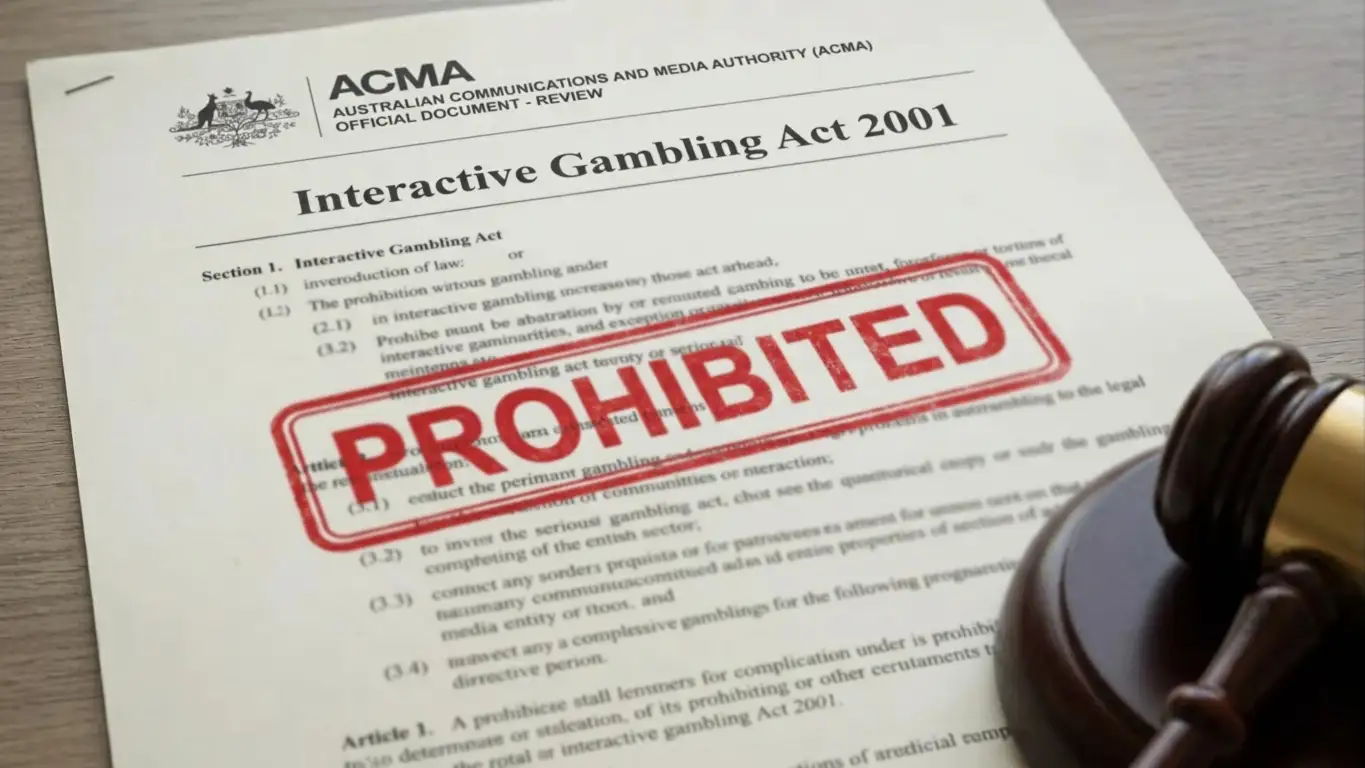
Every operator in this comparison set is offshore: Curaçao, Anjouan, or similarly remote jurisdictions. None are licensed in Australia. The Interactive Gambling Act 2001 (IGA) prohibits Australian-licensed operators from offering online casino games (pokies, table games, live dealer) to Australian residents. The law targets providers, not players—individual Australians are not prosecuted for accessing offshore casinos. That legal asymmetry creates the gray market: operators based outside Australia accept Australian players, those operators break Australian law by providing the service, but Australians using the service face no penalty under the IGA.
The Australian Communications and Media Authority (ACMA) enforces the IGA by blocking offshore casino sites at the ISP level. Over 1,700 domains had been blocked by mid-2026. Operators respond with mirror domains—Spinsy runs a dozen, SkyCrown several—allowing continued access despite ACMA blocks. The block list is reactive (ACMA adds sites after identifying them) rather than proactive, so new mirrors and new operators remain accessible until blocked. Players encounter “site not available” messages when hitting a blocked domain, then find a working mirror through affiliate sites or search.
BetStop, Australia’s national self-exclusion register, doesn’t cover offshore casinos. A player self-excluding via BetStop blocks access to licensed Australian sports betting and racing operators but not Curaçao-licensed pokies sites. Offshore operators have no legal obligation to check BetStop or enforce Australian exclusions. Some offshore operators offer voluntary self-exclusion (close your account on request), but that’s operator policy, not regulatory requirement. If gambling harm is a concern, offshore casinos provide no institutional guardrails beyond their own voluntary responsible-gambling tools.
The crypto gambling ban (June 2024) adds a separate legal layer. Using cryptocurrency at offshore casinos is now illegal for Australian residents under federal law, distinct from the IGA prohibition on operators. Stake and other crypto-first operators remain accessible but fall on the wrong side of both the IGA (operator prohibition) and the crypto ban (player prohibition). Fiat-method operators (Royal Reels, Rocket Play, SkyCrown, etc.) violate the IGA on the operator side but don’t trigger the crypto ban on the player side. Legal risk is lower with fiat methods than crypto post-June 2024, though neither is licensed in Australia.
What “not licensed in Australia” means in practice: no Australian consumer protection, no recourse through Australian courts, no regulator to file complaints with. Disputes with offshore operators go through the Curaçao eGaming dispute process (slow, player-unfriendly) or nowhere. Payment disputes go through your bank or card issuer, who may or may not honor chargebacks for offshore gambling transactions. KYC and AML requirements exist (offshore licenses mandate them), but enforcement quality varies. If an operator decides not to pay out, your options are limited to public complaints on affiliate forums and waiting for the operator to care about reputational damage.
Why do offshore operators accept Australians despite the IGA prohibition? The law penalizes operators, but enforcement is weak. ACMA blocks domains, but mirror sites are trivial to deploy. Financial penalties for offshore operators are unenforceable if the operator has no Australian presence. The business calculus: Australian players generate revenue, the risk of meaningful enforcement is low, and worst-case is a domain block that’s bypassed with a new mirror within hours. That calculus persists until enforcement escalates—January 2027 expansion is anticipated, though details remain unpublished as of September 2026.
Are low-deposit offshore casinos safe for Australian players?
Operationally, low-deposit offshore casinos function as advertised—deposits process, games run, withdrawals clear after KYC—based on mid-2026 funded testing at the eight operators in this guide. Legally, they’re not licensed in Australia; the Interactive Gambling Act prohibits operators from providing online casino services to Australians, though individual players aren’t prosecuted. Consumer protection is absent—disputes go through Curaçao eGaming (slow, player-unfriendly), not Australian courts. Withdrawal reliability depends on operator policy, not regulatory oversight. Crypto methods are illegal post-June 2024. “Safe” depends on whether you mean operational functionality (yes, mostly) or legal/consumer protection (no).
Pokies and Slots on Low Deposits
Pokies are the dominant game type for Australian players at offshore casinos, and low-deposit thresholds don’t restrict access—every operator in this comparison set opens its full pokies library at the minimum deposit. Royal Reels’ A$10 floor unlocks 2,000–5,500 titles. Spinsy’s A$20 opens 10,000+. Game selection at entry-level deposits isn’t gated; bonus restrictions are the only filter.
Welcome bonus free spins usually tie to specific pokies titles. Royal Reels’ 50 free spins apply to designated slots (often provider-specific: Pragmatic Play, NetEnt). Hell Spin’s 150 spins rotate across featured games. Kingmaker’s 50 spins are “on selected pokies,” rarely disclosed until after claiming. The spins are worth A$0.10–A$0.50 each depending on the game’s default bet, totaling A$5–A$25 in aggregate bonus value. Wagering on spin winnings (35–40×) applies before cashout.
Pokies RTPs (return-to-player percentages) range from 94% to 98% depending on the provider and title. Offshore operators display RTPs in game info screens, mandated by Curaçao and Malta licenses. Popular AU-facing titles: Big Bass Bonanza (Pragmatic Play, 96.71%), Gates of Olympus (Pragmatic Play, 96.5%), Book of Dead (Play’n GO, 96.21%), Sweet Bonanza (Pragmatic Play, 96.51%). High-volatility slots (Gates of Olympus, Book of Dead) burn through low deposits quickly but offer larger win potential. Low-volatility slots (Starburst, Gonzo’s Quest) extend playtime on small bankrolls but cap win size.
Minimum bet per spin is typically A$0.10 to A$0.20 at offshore operators, though some titles go as low as A$0.01 and others start at A$0.50. A A$10 deposit at A$0.20/spin gives you 50 spins at 1× bet, or 100+ spins if you hit small wins along the way. A A$20 deposit doubles it. Variance determines whether 50 spins lasts 5 minutes (high-volatility, no hits) or 30 minutes (low-volatility, frequent small wins). Bonus funds often enforce max bet restrictions (A$5–A$8 per spin) to prevent bonus abuse via high-stakes betting.
Progressive jackpots (Mega Moolah, Divine Fortune, Mega Fortune) are accessible at minimum deposits, but odds of hitting the jackpot scale with bet size—a A$0.20 spin on Mega Moolah has the same RNG chance as a A$5 spin, but the A$5 bettor contributes 25× more to the jackpot pool and typically receives proportionally higher seed values. Practically, low-deposit players access the same games as high-rollers but with lower effective jackpot odds due to smaller bet sizes.
The pokies library is the same whether you deposit A$10 or A$1,000—offshore operators don’t gate premium games behind deposit tiers. VIP levels unlock rakeback and cashback percentages, not game access. The bottleneck on low deposits is playtime, not game selection: A$10 at high-volatility slots evaporates fast, but the titles available are identical to what a whale plays.
Mobile Play — Low Deposits on the Go
Every operator in this comparison set runs browser-based mobile sites; none require app downloads. Royal Reels, Rocket Play, SkyCrown, Spinsy, Hell Spin, Kingmaker, Casinova, and Stake load in Safari (iOS) or Chrome (Android) without platform-specific installs. The full game library, live dealer streams, and cashier functions mirror desktop—no feature reduction on mobile. PayID deposits work identically on mobile and desktop (tap the PayID button, enter phone number or email, authenticate through your banking app, funds land in under 60 seconds).
Minimum deposits don’t change on mobile. Royal Reels’ A$10 floor applies on desktop and mobile. Rocket Play’s A$10 PayID minimum works via phone browser the same as desktop. Withdrawal minimums, bonus thresholds, and KYC requirements are device-agnostic. The only mobile-specific consideration: PayID authentication is faster on mobile because you’re already on the device with your banking app, versus desktop where you may need to pull out your phone to approve the transfer.
Progressive Web App (PWA) installs are supported at some operators—Spinsy and SkyCrown offer “Add to Home Screen” shortcuts that create app-like icons on iOS/Android home screens. These aren’t native apps; they’re browser bookmarks with fullscreen launching. The distinction matters: native apps would require App Store or Google Play distribution, which Apple and Google prohibit for real-money gambling apps in jurisdictions without local licensing. PWA installs bypass that restriction by running browser instances under an app-like UI.
Mobile game performance is smooth on devices from the past five years—iPhone 12 and later, Samsung Galaxy S21 and later, equivalent Android mid-range. Older devices (iPhone X, Galaxy S10) run pokies without issue but may stutter on live dealer streams. Mobile data usage averages 50–100MB per hour for pokies, 200–300MB per hour for live dealer (video streaming). On limited mobile plans, WiFi is recommended for extended sessions. Battery drain is significant—pokies sessions run 3–4 hours on a full charge, live dealer 2–3 hours.
Notifications aren’t native (offshore operators can’t push notifications without apps), but some sites use browser notifications if you opt in. These are low-value (bonus offers, VIP tier announcements) and easily disabled. The lack of native app structure means no biometric login (Face ID, fingerprint), no offline mode, and no device-specific optimizations. You’re running a mobile-optimized website, not a native gambling app. That’s a feature, not a bug—no app means no App Store/Google Play gatekeeping, and browser cache clears instantly if you want to remove all traces of the session.
Responsible Gambling and Getting Help
Offshore casinos provide deposit limits, session time limits, and self-exclusion options within their account settings, but these are operator-enforced tools, not regulatory mandates. Setting a A$50 weekly deposit limit at Royal Reels blocks further deposits at that operator once you hit A$50, but it doesn’t prevent you from opening accounts at Rocket Play or SkyCrown. Self-excluding at one offshore operator doesn’t carry to others—each casino is a separate business under a Curaçao license, not a networked ecosystem sharing exclusion data.
BetStop, Australia’s national self-exclusion register (managed by the National Consumer Protection Framework), covers licensed Australian sports betting and racing operators but not offshore casinos. Registering with BetStop blocks access to Sportsbet, TAB, and other licensed AU bookmakers within 24 hours. It does not block Royal Reels, Rocket Play, or any Curaçao-licensed operator because those operators aren’t registered in Australia and have no legal obligation to check BetStop. If offshore casino access is the gambling issue, BetStop doesn’t address it.
The National Gambling Helpline (1800 858 858) is available 24/7 for Australians experiencing gambling harm. It’s free, confidential, and staffed by counselors trained in gambling-specific issues. Gambling Help Online offers webchat and email support at gamblinghelponline.org.au. State-based services (Gambler’s Help in Victoria, Gambling Help NSW, etc.) provide face-to-face counseling, financial counseling, and family support. These resources don’t distinguish between licensed and offshore gambling—they’re designed for anyone experiencing harm regardless of where they play.
Reality Check timers (pop-ups showing session length and net loss/win) are required under Malta and UKGC licenses but optional under Curaçao licenses. Some offshore operators implement them voluntarily (Kingmaker, Casinova report Reality Check at 60-minute intervals), others don’t. If session length awareness is important, you’re relying on operator goodwill, not regulatory requirement. Setting a phone timer or using iOS Screen Time / Android Digital Wellbeing to track casino site usage is more reliable than waiting for an optional pop-up.
Financial harm from gambling occurs fastest at low-deposit casinos when players make repeated small deposits rather than one large deposit. Depositing A$10 twenty times feels less consequential than depositing A$200 once, but the total spend is identical and the psychological friction is lower. PayID’s instant settlement makes repeat deposits frictionless—tap, authenticate, funds available in 60 seconds, no cooling-off period. If you’re setting limits, set them on deposit frequency (e.g., one deposit per week) as well as total amount.
The Australian government’s review of the Interactive Gambling Act is ongoing as of mid-2026, with proposals to extend BetStop to offshore operators and implement financial-institution-level blocks on gambling transactions. Neither has been enacted as of September 2026. The January 2027 enforcement expansion is anticipated to include tighter ACMA blocking and potential payment-rail restrictions, though details remain unpublished. Until regulatory changes take effect, responsible gambling at offshore casinos is self-managed rather than institutionally enforced.
If you’re reading this guide because you’re looking for ways to gamble with less money, consider why. Offshore casinos are -EV over any meaningful sample size—house edge on pokies is 2–5%, meaning a A$100 deposit returns A$95–A$98 in expected value. Variance creates winners in the short term, but the math doesn’t change. If A$10 deposits are the ceiling of what you can afford to lose, the question isn’t “which casino has the lowest minimum” but “should I be depositing at all.” The National Gambling Helpline is 1800 858 858, open 24/7, and exists specifically for that conversation.
Min Deposit Casinos Australia 2026 — $1, $5, $10 & $20 Sites
Content created by the «Payment Methods» team