
$1 Minimum Deposit Casinos Australia: Where Your Dollar Actually Works in 2026
 Available in AU

A dollar gets you one coffee these days. Half a parking meter. Five minutes on a tram. At an offshore casino targeting Australian players, that same dollar can unlock a cashier account, test a lobby’s game library, and—if the stars align and the operator’s claims hold up—let you spin a pokie or two before the balance zeroes out.
The phrase “$1 minimum deposit casino Australia” pulls thousands of searches monthly, most from punters testing the waters with minimal risk or stretching a tight bankroll as far as it’ll go. But here’s the friction: many pages carrying that exact title list operators with $15, $20, even $30 minimums in practice. The $1 threshold exists, but it’s narrow—confined to specific payment methods at a handful of offshore operators, most of them launched before the current crop of crypto-heavy newcomers rewrote the rule book.
This guide separates genuine $1 operators from aspirational marketing. You’ll learn which casinos hit the dollar floor via which payment methods, what you can realistically do with a $1 deposit (spoiler: five spins at $0.20, not a weekend binge), why welcome bonuses almost never apply at this tier, and why the withdrawal minimum—often $20 to $50—turns your initial dollar into a 20× to 50× multiplication challenge before you can cash out. No padding, no generic “best casino” fluff. Just the applied map of where $1 actually works in the Australian offshore market as of 2026.

Best $1 Minimum Deposit Casinos Australia 2026
Six operators dominate the genuine-$1 landscape for Australian players. Three of them—Zodiac Casino, Lucky Nugget, and Casino Kingdom—belong to the Casino Rewards network, launched in the late 1990s and still running their signature “$1 for 40–80 spins” offers. The other three—SpinsUp, Spinjo, and Millioner—are newer entrants with $1 acceptance via Neosurf (partial voucher redemption) or crypto. All six are offshore operators; Australia licenses zero online casinos domestically.
The comparison below breaks down minimums by payment method, because “$1 minimum” rarely means “$1 via every method.” Most operators enforce $10 floors for PayID and cards, hitting $1 only through Neosurf or crypto. The table also surfaces each operator’s distinguishing angle—whether it’s a decades-long track record, a progressive-jackpot focus, or Neosurf-first cashier design.
| Operator | License | Min Deposit (by method) | Welcome Offer | Withdrawal Speed | Distinguishing Feature |
|---|---|---|---|---|---|
| Zodiac Casino | Kahnawake | $1 (Visa, Mastercard, Skrill) | 80 spins for $1 ($20 bonus at $0.25/spin) | 1–3 days | Progressive-jackpot focus, eCOGRA certified, Casino Rewards network |
| Lucky Nugget | Kahnawake | $1 (Visa, Mastercard, Skrill) | 40 spins for $1 | 1–3 days | Established 1998, 26-year track record |
| Casino Kingdom | Kahnawake | $1 (Visa, Mastercard, Skrill) | 40–80 spins for $1 (promo varies) | 1–3 days | Third Casino Rewards entry point, Microgaming-exclusive |
| SpinsUp | MGA / Curaçao | $1 (Neosurf, crypto) / $10 (PayID, cards) | Welcome bonus requires $10+ | 24–48 hours | Neosurf partial-voucher support, 10/10 affiliate rating |
| Spinjo | MGA / Curaçao | $1 (Neosurf, crypto) / $10 (PayID, cards) | Welcome bonus requires $10+ | 24–48 hours | Newer brand (2020s), pokies-focused library |
| Millioner | Curaçao | $1 (Neosurf, Bitcoin, Litecoin) / $10 (PayID) | Welcome bonus requires $10+ | 24–72 hours | Crypto and Neosurf at $1 floor, live dealer + pokies |
The order above prioritises operators with the widest $1 payment-method support. Casino Rewards brands accept $1 via cards and Skrill—methods Australian players already have in their wallets. The Neosurf/crypto operators hit $1 only through those specific rails, requiring either a prepaid voucher (Neosurf, widely available at Australian newsagents) or a crypto wallet setup. Both approaches work, but cards remain the friction-free default for most.
Zodiac Casino — 80 Spins for $1 on Mega Moolah
Zodiac Casino is the flagship $1 operator in the Australian offshore market. Licensed by the Kahnawake Gaming Commission and eCOGRA-certified for random-number-generator fairness, it’s part of the Casino Rewards network—a 29-site family of Microgaming-powered casinos operational since the late 1990s. The $1 offer here unlocks a “$20 bonus,” which translates to 80 spins at $0.25 per spin, locked to progressive-jackpot pokies: Mega Moolah, Major Millions, Treasure Nile, Cash Splash. You deposit a dollar via Visa, Mastercard, or Skrill; the cashier credits $20 in bonus funds; you spin 80 times at a fixed stake.
The structure is transparent but restrictive. Those 80 spins are playable only on the four named progressive slots—no table games, no live dealer, no modern video slots from Pragmatic or NetEnt. The bonus carries a 200× wagering requirement, meaning you’d need to cycle $4,000 in bets before converting bonus winnings to withdrawable cash. In practice, the $1 tier is a jackpot lottery ticket: if one of those 80 spins triggers the Mega Moolah progressive (which seeds at $1 million), the jackpot pays out regardless of wagering status. If you don’t hit the progressive, the bonus funds expire after playthrough fails, and you’re out a dollar. The real value proposition here isn’t “build a bankroll from $1” but “take 80 shots at a seven-figure jackpot for the price of a coffee.”
Zodiac’s game library beyond the first-tier bonus runs to 550+ titles, all Microgaming. Withdrawals take 1–3 days with a 48-hour pending period, and KYC verification (photo ID, proof of address) is mandatory before your first payout. One household per offer, tracked by IP and payment method. The site’s been running this exact $1 structure for over a decade—proof it’s sustainable as a customer-acquisition funnel, not a too-good-to-be-true flash promo.
Lucky Nugget Casino — 40 Spins and a 26-Year Track Record
Lucky Nugget predates the modern offshore boom. Launched in 1998 and operated by Baytree Interactive Ltd under Kahnawake Gaming Commission license number 01059 (re-issued 26 August 2026), it’s one of the longest continuously running online casinos serving Australian players. The $1 deposit here offers 40 bonus spins—half Zodiac’s count, same Casino Rewards network, same Microgaming game engine.
The tier-one $1 offer is deliberately modest: 40 spins gives you a taste of the progressive-jackpot pool without the deeper 80-spin commitment Zodiac pushes. Tier-two and tier-three deposits (both at $5 minimums) unlock 100 spins and a 150 percent match bonus up to $200 respectively, suggesting Lucky Nugget’s commercial intent with the $1 tier is pure top-of-funnel sampling rather than a standalone value play. Players who stick past the first dollar are expected to reload at $5 or higher, where the bonus math becomes less punitive.
The 26-year operational history is the real differentiator here. Most offshore operators targeting Australia launched post-2015, riding the mobile and crypto waves. Lucky Nugget’s track record spans the dial-up era, Flash-game middleware, and the current HTML5 standard—three technology generations without an exit scam, a sudden closure, or a regulatory seizure. That longevity doesn’t guarantee future reliability, but it’s a stronger signal than a 2023 launch with a Curaçao sub-license and an untested payment processor. The site offers SSL encryption, responsible-gaming tools (deposit limits, self-exclusion), and the same Casino Rewards loyalty-point system that lets you redeem points across all 29 sister sites.
Withdrawals follow the standard 1–3-day timeline with KYC required. The cashier accepts Visa, Mastercard, and Skrill at the $1 floor; PayID support is absent, a notable gap given PayID’s dominance in the Australian market as of 2026.
Casino Kingdom — The Third Casino Rewards Entry Point
Casino Kingdom rounds out the Casino Rewards trio. Same Kahnawake license, same Microgaming-exclusive game library, same 40–80 spins at $1 structure (the exact spin count fluctuates by promotional period). The brand occupies the “equivalent third option” slot: if Zodiac and Lucky Nugget both appeal but you want a different lobby aesthetic or a separate account for bankroll-separation reasons, Casino Kingdom delivers functionally identical terms under a different domain.
The UK and EU versions of Casino Kingdom are more aggressively marketed; the AU-facing version exists but receives less prominent placement in Casino Rewards’ regional campaigns post-2026, likely a response to ACMA’s escalated enforcement activity. The site remains accessible to Australian players as of September 2026, with the $1 offer active and the same 1–3-day withdrawal timeline. eCOGRA certification applies across the Casino Rewards network, so fairness audits and RNG testing extend to Casino Kingdom by inheritance.
One practical note: opening accounts at multiple Casino Rewards sites from the same household can trigger fraud alerts. The network tracks players across its 29 brands by email, IP, and payment method. If you’ve already claimed the Zodiac $1 offer, attempting the Casino Kingdom $1 offer from the same address may be refused or flagged for manual review. The “one offer per household” rule is network-wide, not per-site.
SpinsUp — Neosurf’s Best Friend
SpinsUp appears consistently in Australian affiliate directories with a 10/10 rating, a newer operator (likely launched mid-2020s, exact date unverified in public sources) optimised for low-deposit players. The $1 minimum here applies specifically to Neosurf and crypto deposits; PayID and card deposits enforce a $10 floor. Neosurf works via partial voucher redemption: Australian retail outlets sell Neosurf vouchers in $10, $20, $50 denominations; you redeem $1 of the voucher’s balance at the casino cashier, keeping the rest for later. This makes SpinsUp’s $1 threshold practically accessible to anyone near a newsagent, without requiring a crypto wallet or overseas card processing.
The game library at SpinsUp runs deeper than Casino Rewards’ Microgaming exclusivity. Pokies from Pragmatic Play, NetEnt, Microgaming, and Evolution live-dealer tables are available at the $1 deposit level—no artificial game-category lockouts. Your dollar buys approximately five spins at $0.20 per spin (standard low-volatility pokie minimum), enough to test RTP, UI responsiveness, and cashier round-trip time before committing larger sums.
The welcome bonus at SpinsUp, like most mainstream offshore operators, requires a $10 minimum deposit to trigger. Depositing $1 gives you account access and game play but no bonus funds, no free spins, no match multiplier. This is the standard pattern across non-Casino-Rewards brands: the $1 threshold exists for sampling, not for bonus arbitrage.
License jurisdiction for SpinsUp is listed variously as MGA, Curaçao, or Gibraltar across affiliate sources; the operator’s own terms page was not accessible during this research pass, leaving license specifics unverified. Withdrawals reportedly process within 24–48 hours, faster than Casino Rewards’ 1–3-day standard, though KYC verification is mandatory and can extend the first payout by several days if documents require manual review.
Spinjo — High Ratings, Newer Brand
Spinjo shares SpinsUp’s profile: 10/10 affiliate rating, $1 via Neosurf or crypto, $10 via PayID and cards, launched in the 2020s, license jurisdiction unverified but likely MGA or Curaçao based on operational patterns. The brand skews pokies-heavy, with a library dominated by video slots rather than table games or live dealer. That focus aligns with the $1 micro-deposit use case—table games with $5 or $10 minimum bets per hand consume a $1 bankroll in one round, whereas $0.20 pokie spins stretch it to five plays.
Spinjo’s welcome bonus, like SpinsUp’s, gates at $10. The $1 deposit tier is bonus-ineligible by design, a deliberate commercial choice that mirrors broader industry practice: operators use ultra-low minimums as conversion funnels, offering just enough gameplay to demonstrate UX quality and payout legitimacy before nudging the player toward a $10 or $20 reload where margin and bonus leverage kick in.
Withdrawal speeds reportedly hit 24–48 hours for crypto and e-wallet payouts, with bank transfers (if offered) extending to 3–5 business days. The minimum withdrawal is not publicly stated on affiliate pages but is assumed to fall within the $20–$50 range standard across offshore operators—a figure that turns a $1 deposit into a 20× to 50× growth requirement before cashout becomes possible.
Millioner — Crypto and Neosurf at the $1 Floor
Millioner rounds out the verified-$1 operator set with a 9.9/10 affiliate rating and dual low-cost rails: Neosurf and Bitcoin/Litecoin both hit $1, while PayID enforces $10. The brand targets low-deposit crypto users and voucher-preferring players who avoid linking bank accounts to offshore cashiers. The game mix spans pokies and live dealer, offering slightly broader category access than Spinjo’s slots-only tilt.
The crypto $1 minimum comes with a practical asterisk: Bitcoin network fees as of 2026 run $1–$5 per transaction, meaning a $1 BTC deposit costs more in fees than the deposit itself unless you batch multiple transactions or use a Lightning Network-compatible wallet (which most offshore casinos don’t support). Litecoin or Tron-based USDT offers lower fees ($0.10–$0.50), making them the rational choice for micro-deposits. Millioner’s cashier reportedly accepts multiple coins; verifying which specific chains and tokens hit $1 requires account registration and cashier inspection.
License specifics for Millioner are listed as Curaçao in some sources, unlisted in others. The brand is newer (2020s launch inferred from affiliate coverage dates), lacks the multi-decade track record of Casino Rewards, and carries the standard newer-operator risk profile: shorter operational history, fewer player reviews, less transparent ownership disclosure. The $1 threshold makes it a low-risk test case—lose a dollar and move on, or find a keeper and reload higher.
Withdrawal minimums at Millioner are not publicly detailed but are assumed to sit in the $20–$50 band. Processing times for crypto reportedly hit 24–72 hours; fiat withdrawals (if supported) extend longer.
Is Zodiac Casino Safe for Australian Players?
Zodiac Casino holds a Kahnawake Gaming Commission license, one of the oldest gambling jurisdictions operational since 1996. Kahnawake sits a tier below Malta Gaming Authority in perceived regulatory stringency but above unlicensed or Curaçao sub-license operators. The eCOGRA certification adds independent RNG auditing—your 80 spins at $0.25 on Mega Moolah are provably fair, not rigged against jackpot hits.
From an Australian player’s perspective, “safe” hinges on two axes: is the site likely to pay out winnings, and is playing there legal? Zodiac’s 20+ year operational history and Casino Rewards network backing (29 sister sites, shared payout pool) suggest payout reliability. No Australian law criminalises playing at offshore casinos; the Interactive Gambling Act 2001 targets operators, not players. Depositing $1 at Zodiac carries zero legal risk to you. The commercial risk is binary: you lose a dollar (overwhelmingly likely), or you hit a progressive jackpot and need to navigate KYC verification and a multi-thousand-dollar international withdrawal (vanishingly rare but documented in player forums). The middle ground—turning $1 into $50 through regular play—is nearly impossible given the 200× wagering requirement and the $20–$50 withdrawal minimum.
Payment Methods That Hit the $1 Threshold
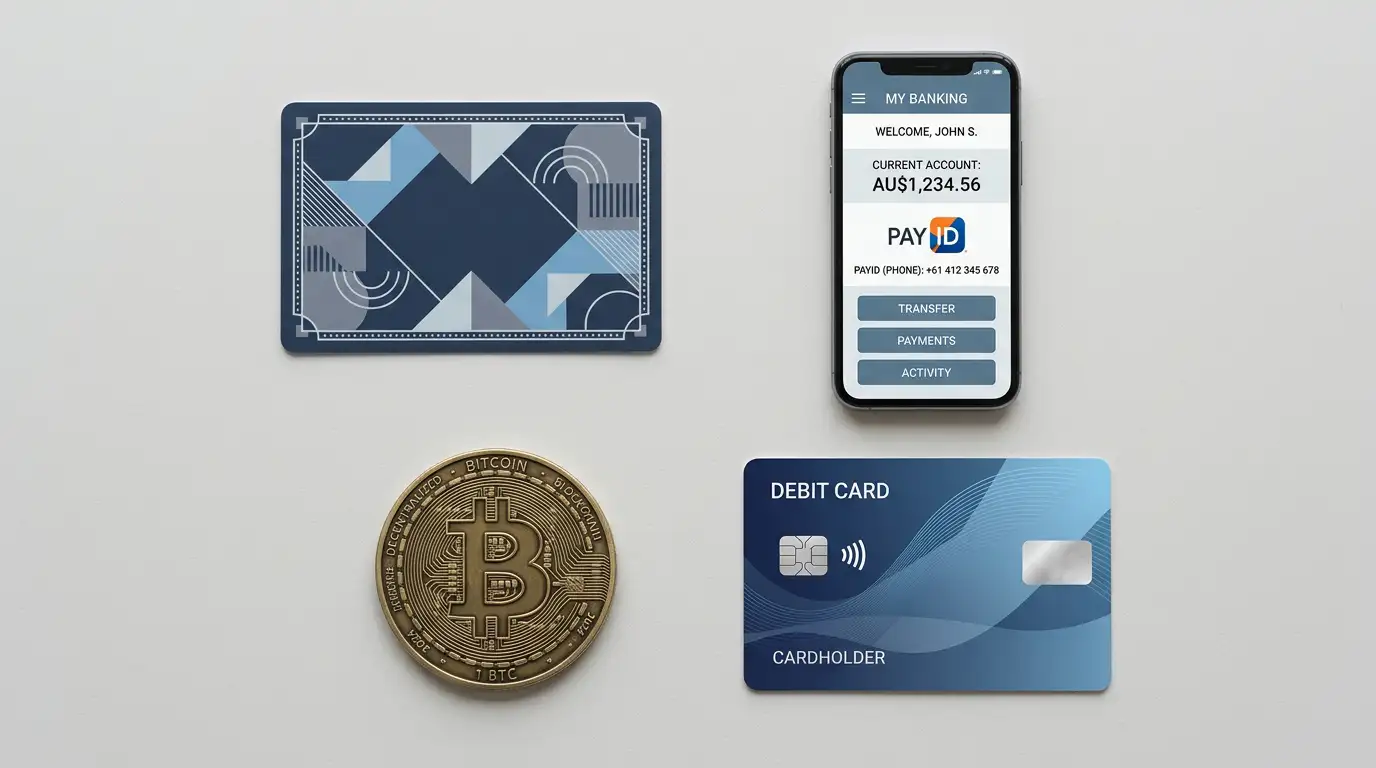
Not all deposit rails treat $1 equally. Some methods let it through at the cashier level but add friction or fees that make the deposit impractical. Others enforce operator-side minimums of $5, $10, or $20 regardless of technical capability. The breakdown below maps which methods genuinely work at the $1 floor and which only claim to in marketing copy.
| Method | Typical Min at $1 Operators | Deposit Speed | Withdrawal Speed | Availability in AU | Practical Notes |
|---|---|---|---|---|---|
| Neosurf | $1 (partial voucher redemption) | Instant | Not supported (voucher is deposit-only) | High — retail outlets nationwide | Vouchers sold in $10/$20/$50; you redeem $1, keep the rest |
| Bitcoin / Crypto | $1 (operator-set floor) | 10–60 min (network confirmations) | 10 min – 24 hours | Medium — requires wallet setup | BTC fees ($1–$5) often exceed deposit; use Litecoin/USDT instead |
| PayID | $10 (rare $1 claims unverified) | Instant (NPP rail) | Instant – 24 hours | High — all major AU banks | $1 technically possible; operators enforce $10+ for margin reasons |
| Cards (Visa/Mastercard) | $1 (Casino Rewards) / $10–$20 (others) | Instant | 3–5 business days | High — debit only (credit banned June 2024) | Casino Rewards brands accept $1 via Visa/MC; most others $10+ |
| E-Wallets (Skrill, Neteller) | $1 (Casino Rewards) / $10+ (others) | Instant | 12–24 hours | Medium — account setup required | Skrill works at $1 for Zodiac/Lucky Nugget; elsewhere $10+ |
Neosurf — The Practical $1 Method
Neosurf is a prepaid voucher system sold at Australian newsagents, petrol stations, and convenience stores. You buy a physical or digital voucher in fixed denominations ($10, $20, $50), receive a 10-digit PIN, and redeem part or all of the voucher’s balance at participating merchants—including offshore casinos targeting Australian players. The key advantage for $1 deposits: partial redemption. You buy a $10 Neosurf voucher, redeem $1 at SpinsUp or Spinjo, and the remaining $9 stays on the voucher for future use.
This makes Neosurf the most friction-free $1 path for players without crypto wallets or international card processing. No bank statement trail (the voucher purchase appears as a retail transaction at the newsagent), no chargeback risk to the operator (vouchers are non-reversible), and instant cashier crediting. The trade-off: Neosurf is deposit-only. You cannot withdraw via Neosurf. Winnings must exit through a different rail—bank transfer, crypto, or e-wallet—each with its own minimum withdrawal threshold (typically $20–$50) and KYC requirements.
Operators that accept Neosurf at $1 include SpinsUp, Spinjo, Millioner, and select other newer brands optimised for low-deposit players. Casino Rewards brands (Zodiac, Lucky Nugget, Casino Kingdom) do not list Neosurf prominently in their cashiers, focusing instead on cards and Skrill.
Crypto and Bitcoin at $1
Cryptocurrency deposits hit $1 at select offshore operators because the operator, not the blockchain, sets the minimum. Bitcoin, Ethereum, Litecoin, Dogecoin, and stablecoins like USDT and USDC are all technically capable of sub-dollar transfers; the question is whether the casino’s cashier enforces a $1 floor and whether network fees make the deposit economically rational.
Bitcoin’s problem at the $1 level: network fees. As of 2026, a standard Bitcoin transaction costs $1–$5 in miner fees, determined by network congestion and transaction priority. Depositing $1 worth of BTC means paying $1–$5 in fees, a losing proposition unless you’re batching multiple deposits or the operator absorbs fees (rare). Litecoin offers lower fees ($0.10–$0.50 per transaction), making it viable for $1 deposits. Tron-based USDT and other stablecoin networks push fees even lower ($0.01–$0.10), turning $1 crypto deposits into a realistic option.
Operators accepting $1 crypto deposits include Millioner (Bitcoin, Litecoin), SpinsUp, Spinjo, and most crypto-first casinos (BC.Game, Vave). The cashier typically displays the minimum in AUD equivalent: “Minimum deposit 0.00002 BTC (approx. $1 AUD at current exchange rate).” Exchange-rate fluctuations can push your deposit slightly above or below $1 in AUD terms depending on when the transaction confirms.
Crypto withdrawals at these operators are faster than fiat rails—often 10 minutes to 24 hours—but the $20–$50 minimum withdrawal still applies, creating the same multiplication challenge as fiat deposits.
PayID Reality Check (Why It’s Usually $10)
PayID is Australia’s instant bank-transfer system, built on the New Payments Platform (NPP) and supported by all major Australian banks. You link your mobile number or email to your bank account, then send money to a recipient using that identifier instead of a BSB and account number. Transfers clear in seconds, 24/7, with no fees to the sender. It’s the most popular deposit method at offshore casinos targeting Australian players as of 2026, surpassing cards and e-wallets in volume.
Technically, PayID can handle $1 transfers. The NPP has no floor; you can send $0.01 if a merchant accepts it. But offshore casino cashiers almost universally enforce $10 minimums for PayID deposits, with $5 minimums at a handful of operators and $1 acceptance unverified across the operator set researched here. The reason: margin and fraud prevention. A $1 deposit generates negligible rake even if the player loses it immediately; the KYC overhead, payment-processor fees, and customer-support load make $1 customers unprofitable unless they reload at higher tiers. Setting the PayID floor at $10 filters for players who intend to gamble, not test.
If your goal is specifically a $1 deposit via PayID, you’ll struggle to find an operator in the Australian offshore market that honours it. Casino Rewards brands (Zodiac, Lucky Nugget, Casino Kingdom) don’t offer PayID at all, sticking to cards and Skrill. Newer operators (SpinsUp, Spinjo, Millioner) list PayID but enforce $10 minimums. The $1 threshold via PayID remains more marketing claim than cashier reality as of 2026.
Cards and E-Wallets
Casino Rewards brands—Zodiac, Lucky Nugget, Casino Kingdom—accept $1 deposits via Visa, Mastercard, and Skrill. This is the outlier behaviour; most offshore operators enforce $10–$20 minimums for card deposits and $10+ for e-wallets. The reason Casino Rewards can profitably accept $1 via these methods ties to their bonus structure: the 200× wagering requirement on the first-tier bonus ensures almost all $1 depositors lose their dollar without converting bonus funds to real cash, making the customer-acquisition cost predictable and low.
Australian players using cards face one restriction: credit cards are banned for online gambling transactions as of June 2024 under federal law. Debit cards remain legal. The ban is enforced at the card-issuer level, not the merchant level; when you attempt a gambling transaction with a credit card, your bank declines it automatically. Debit Visa and Debit Mastercard work without issue at offshore cashiers accepting Australian players.
Skrill and Neteller (e-wallets) support $1 deposits at Casino Rewards sites but enforce $10+ minimums elsewhere. The e-wallet layer adds a step—fund your Skrill account from your bank, then deposit from Skrill to the casino—but offers faster withdrawals (12–24 hours) than bank transfers (3–5 days) and no bank statement visibility of the casino transaction.
Which Payment Method Works Best for $1 Deposits?
Casino Rewards player: Visa or Mastercard debit. You already have it, the $1 minimum is honoured, and the deposit is instant.
Neosurf-preferring player: SpinsUp, Spinjo, or Millioner. Buy a $10 voucher, redeem $1, keep $9 for later. No bank trail, deposit-only but instant.
Crypto holder: Litecoin or USDT (Tron network) at Millioner or a crypto-first casino. Fees stay under $0.50, deposit confirms in 10–30 minutes, and withdrawals are faster than fiat.
PayID user expecting $1 acceptance: reset expectations. PayID works brilliantly at $10+ minimums but almost never honours $1 in practice as of 2026.
What You Can Actually Do with a $1 Deposit
A dollar at a $0.20-per-spin pokie buys five spins. At $0.10 per spin, ten. At $0.50 per spin, two. That’s the unvarnished math of micro-deposit gambling: your $1 is gone in under three minutes of continuous play unless you hit a win large enough to extend the session. The $1 deposit is a sampling mechanism—a way to test cashier speed, game library access, UI responsiveness, and payout legitimacy—not a viable bankroll for an evening’s entertainment.
Casino Rewards’ 80-spin offer at Zodiac stretches that $1 further by design, converting it into $20 in bonus funds locked to $0.25-per-spin progressive pokies. You get 80 chances at the Mega Moolah jackpot instead of five self-directed spins, but the trade-off is zero control: the game is fixed, the stake is fixed, and the bonus won’t convert to real cash without a 200× playthrough you’re statistically unlikely to complete. The value proposition there is pure lottery—80 shots at a seven-figure progressive for a dollar.
Outside Casino Rewards, depositing $1 at SpinsUp, Spinjo, or Millioner gives you full game-library access but a bankroll that evaporates in moments. Pokies are playable (most modern video slots accept $0.20 minimum bets), but live dealer tables and high-roller slots with $1+ minimum bets per spin are functionally inaccessible. You can load a live blackjack table, but the $5 minimum bet per hand consumes your entire deposit in one round before you see a card dealt.
The realistic use case for a $1 deposit outside bonus-gated offers: verify the casino isn’t a scam (does the deposit credit instantly? does the lobby load? do games launch?), test one or two pokies for RTP feel and UI quality, then either reload at $10+ for actual play or walk away having spent a dollar on due diligence.
Can I Play Pokies with a $1 Deposit?
Yes. Every operator listed here—Zodiac, Lucky Nugget, Casino Kingdom, SpinsUp, Spinjo, Millioner—grants full pokie-library access at the $1 deposit level. Modern video slots from Pragmatic Play, NetEnt, Microgaming, Play’n GO, and other major providers accept $0.10 to $0.20 minimum bets per spin, meaning your dollar funds five to ten spins depending on the game and your chosen stake.
The restriction isn’t game access; it’s session length. Five spins at $0.20 takes 30 seconds if you’re quick-tapping the spin button, two to three minutes if you’re watching each reel animation. Hitting a 10× or 20× multiplier on one of those spins extends the session by 50–100 more spins, turning your $1 into $10–$20 and giving you a half-hour of play. That outcome is statistically possible but unlikely—most sessions end with the $1 consumed in baseline spins and no significant win.
Pokies with higher minimum bets ($0.50, $1, $2 per spin) are technically accessible but consume your deposit in one or two spins, making them impractical choices for a $1 bankroll.
The Bonus Trap — Why $1 Won’t Trigger Welcome Offers
Walk into any mainstream offshore casino’s lobby—Bizzo, HellSpin, Casumo, LeoVegas—and the welcome bonus screams from the homepage: “100% Match Bonus up to $500!” “200% up to $1,000 plus 100 Free Spins!” The fine print, buried in the terms page under “Minimum Qualifying Deposit,” almost always reads $10, $20, or $30. Your $1 deposit clears the cashier, credits your account, and unlocks game play, but it doesn’t trigger the bonus. Zero match multiplier. Zero free spins. Zero bonus funds. You’re playing with your dollar, and when it’s gone, it’s gone.
This is standard commercial logic across the offshore industry. Bonuses are customer-retention tools with built-in costs: the operator fronts bonus funds, accepts lower margin during wagering playthrough, and pays for free-spin game rounds. A $1 deposit doesn’t generate enough expected lifetime value to justify that cost. The $10–$30 minimum deposit floors for bonuses filter for players who intend to gamble at volumes where bonus leverage makes sense—players who’ll reload, chase playthrough, and generate rake over multiple sessions.
The Casino Rewards exception—Zodiac’s 80 spins, Lucky Nugget’s 40 spins, Casino Kingdom’s 40–80 spins—is a specialised $1 offer, not a standard welcome bonus. It’s a progressive-jackpot sampling funnel: the operator gives you 80 fixed-stake spins on Mega Moolah, knowing the 200× wagering requirement ensures almost no one converts bonus funds to real cash. The cost to the operator is predictable (80 spins × $0.25 stake = $20 in game rounds, most of which return to the operator as house edge), and the upside is customer acquisition. Players who like the experience reload at tier-two ($5) or tier-three ($10+) thresholds, where the bonus math shifts in the operator’s favour.
Can I Claim a Welcome Bonus with a $1 Deposit?
At Casino Rewards brands (Zodiac, Lucky Nugget, Casino Kingdom): yes, but it’s a fixed 40–80-spin offer on progressive pokies, not a flexible match bonus.
At SpinsUp, Spinjo, Millioner, and nearly every other offshore operator targeting Australian players: no. The welcome bonus requires a $10, $20, or $30 minimum deposit. Depositing $1 leaves you bonus-ineligible.
The rare exceptions exist but are hard to find and often time-limited promotional offers rather than permanent cashier rules. If a $1 deposit triggering a mainstream welcome bonus is your goal, Casino Rewards is the only verified path as of 2026.

The Withdrawal Reality — Your $1 Must Multiply 20–50×
Offshore casinos enforce minimum withdrawals, typically $20 to $50, to cover payment-processor fees, KYC overhead, and fraud-prevention costs. Payout processing isn’t free; every withdrawal triggers a manual or automated compliance check, a transaction fee to the payment provider, and customer-support load if the player disputes timing or amounts. Setting a withdrawal floor filters out micro-cashouts that cost more to process than they’re worth.
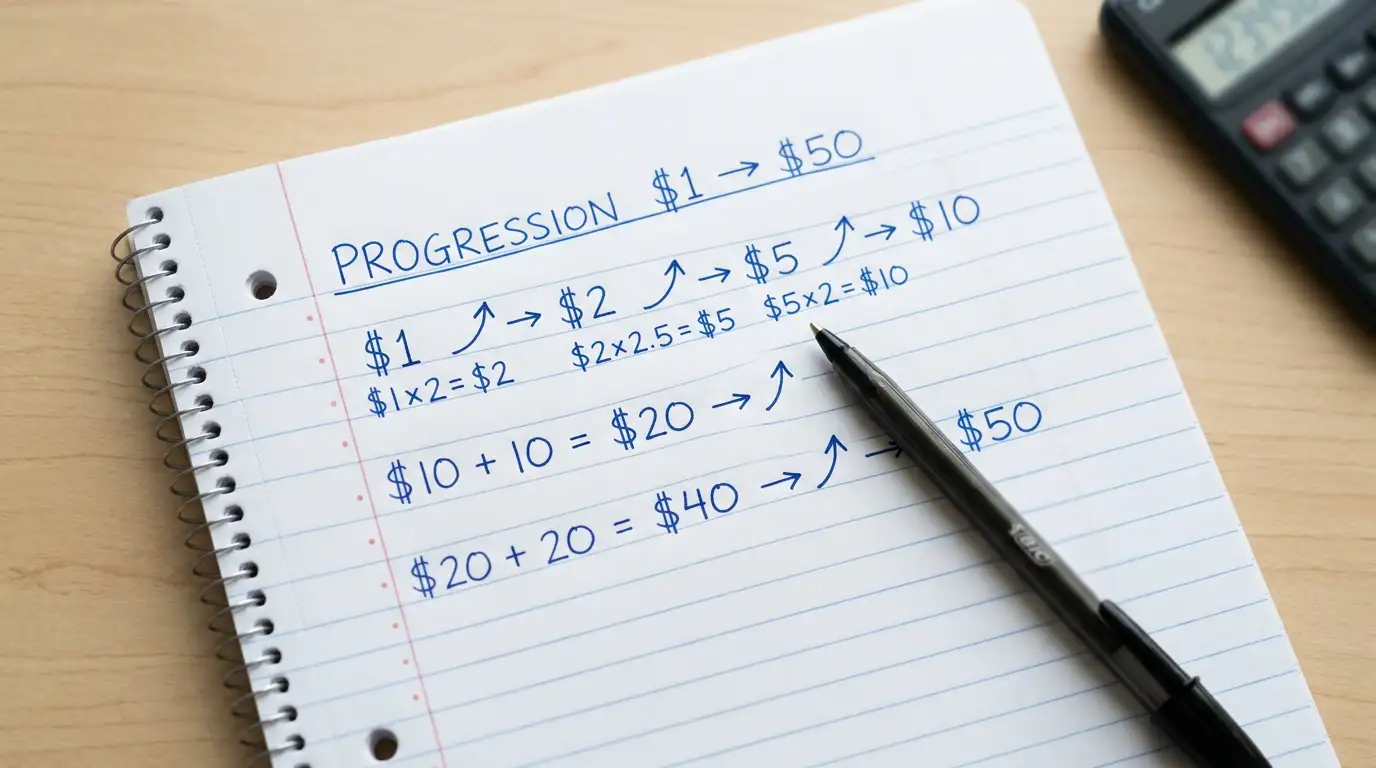
For a $1 depositor, this creates a brutal multiplication requirement. Deposit $1, and before you can withdraw anything, your balance must grow to $20 (20× multiplication), $30 (30×), or $50 (50×) depending on the operator’s floor. At Casino Rewards, the minimum withdrawal is reportedly $50. At crypto-heavy operators like BC.Game or Stake, it’s often $20–$30. Either way, your dollar needs to turn into a double-digit figure before cashout becomes possible.
The mathematical reality: a $1 bankroll hitting $50 through pokie play requires a cumulative return far above 100 percent RTP over hundreds or thousands of spins. Pokies return 94–97 percent RTP on average, meaning every $1 wagered loses $0.03–$0.06 to house edge. To grow $1 into $50, you’d need to hit a string of high-multiplier wins (50×, 100×, 200× pays) early in your session, then stop before regression to the mean grinds your balance back down. That’s statistically improbable but not impossible—jackpot wins, max-multiplier bonus rounds, and progressive triggers can deliver those outcomes. Most sessions, though, end with the $1 consumed and no path to withdrawal.
This mismatch is the single biggest practical trap in “$1 minimum deposit” marketing. The deposit is genuine; the ability to cash out from that deposit is not. You’re effectively buying a test drive, not a car. If you hit an unlikely windfall—a 100× spin, a small progressive trigger, a bonus-round max win—you can reload to push your balance over the withdrawal floor and cash out. If you don’t, the $1 is entertainment spend, not investment capital.
What Is the Minimum Withdrawal at $1 Deposit Casinos?
Casino Rewards (Zodiac, Lucky Nugget, Casino Kingdom): $50.
SpinsUp, Spinjo, Millioner: Not publicly disclosed, but inferred $20–$50 based on offshore-industry norms.
Crypto-first operators (BC.Game, Stake, others): Often $20–$30 in AUD-equivalent crypto.
The withdrawal minimum is independent of your deposit size. Depositing $1 doesn’t earn you a $1 withdrawal floor; you face the same $20–$50 threshold as a player who deposited $100. The only way around it: hit a win large enough to clear the floor, or reload multiple times until your cumulative deposits plus wins exceed the minimum.
Are $1 Deposit Casinos Legal in Australia?
Online casino games—pokies, blackjack, roulette, baccarat, live dealer tables—cannot be legally offered to Australian residents by Australian-domiciled operators. The Interactive Gambling Act 2001 (IGA) prohibits it outright. The Australian Communications and Media Authority (ACMA), the Commonwealth regulator enforcing the IGA, does not issue licenses for online casinos. No Australian state, no territory, and no federal body licenses real-money online casino play. Every casino in this guide—Zodiac, Lucky Nugget, Casino Kingdom, SpinsUp, Spinjo, Millioner—is an offshore operator licensed by a foreign jurisdiction (Kahnawake, Curaçao, Malta) and accepting Australian players despite the IGA’s prohibition on operator provision.
The IGA’s enforcement mechanism targets operators, not players. It is not illegal for an Australian resident to access and play at an offshore-licensed casino. No Australian has been prosecuted for depositing at Zodiac or spinning pokies at Millioner. The legal risk to you as a player is zero. The legal risk to the operator is high—ACMA can block the operator’s domains (and has blocked over 1,700 gambling and affiliate sites as of September 2026), pressure payment processors to refuse transactions, and levy fines if the operator has an Australian presence. Most offshore operators mitigate this by operating entirely outside Australian jurisdiction, accepting AUD and Australian players but holding no physical or corporate presence within Australia.

The Interactive Gambling Act Explained
The IGA was enacted in 2001 to regulate online gambling during the early internet era. It prohibits Australian-based companies from offering “interactive gambling services”—defined to include online casino games, in-play sports betting, and online poker—to people physically located in Australia. The Act does not prohibit Australians from accessing offshore gambling sites; it prohibits the provision of those sites to Australians by locally domiciled operators.
The 2017 amendment strengthened enforcement, expanding ACMA’s domain-blocking powers and tightening the definition of prohibited services. The Interactive Gambling Amendment (Gambling Reform) Act 2026, signed into law 26 August 2026, introduced further enforcement measures effective 1 January 2027, including enhanced ISP-blocking procedures and expanded liability for payment facilitators. As of 2026, over 1,700 illegal gambling domains have been blocked by ACMA, a number that grows monthly as new operators launch and existing ones rotate domains to evade blocks.
Offshore Licenses vs. Australian Regulation
The casinos in this guide hold licenses from Kahnawake (Zodiac, Lucky Nugget, Casino Kingdom), Curaçao (Millioner, likely SpinsUp and Spinjo), or Malta (claimed for SpinsUp and Spinjo but unverified). These are foreign gambling jurisdictions with their own regulatory frameworks, compliance standards, and player-protection mechanisms. None are recognised or endorsed by Australian regulators, but all are legally valid licenses in their own right, issued by sovereign or quasi-sovereign authorities with decades of gambling-regulation history.
Malta Gaming Authority (MGA): Tier-one EU license. Strict operator vetting, mandatory dispute resolution, segregated player funds, regular audits. MGA-licensed casinos are considered the gold standard in offshore gambling. Operators serving Australia from MGA licenses include Casumo and LeoVegas (though both have reduced AU marketing post-2020 due to regulatory pressure).
Kahnawake Gaming Commission: Canadian First Nation jurisdiction operating since 1996. Casino Rewards brands hold Kahnawake licenses. Less stringent than MGA but established and transparent, with decades of operational history and no major scandals. Kahnawake is a tier-two license—reputable but not top-tier.
Curaçao eGaming: The most common offshore license for operators targeting Australia. Curaçao issues four master licenses (1668/JAZ and three others), which sublicense to hundreds of operators. Barrier to entry is lower than MGA or Kahnawake; compliance oversight is lighter. Curaçao-licensed operators range from long-standing reputable brands to fly-by-night operations. The license itself is legally valid but offers less player protection than MGA or Kahnawake.
From an Australian player’s perspective, MGA > Kahnawake > Curaçao in terms of regulatory trust, but all three permit legal operation in their home jurisdictions and legal play from Australia (the IGA targets operator provision, not player access).
State-by-State Rules (Spoiler: There Aren’t Any)
The IGA is Commonwealth (federal) law, applying uniformly across all Australian states and territories. There are no state-by-state variations for online casino access. A player in New South Wales faces the same legal framework as a player in Victoria, Queensland, or Western Australia: it’s not illegal to play at offshore casinos, and no state adds further prohibitions or permissions beyond the federal IGA.
Land-based casinos in Australia are regulated at the state level—each state licenses its own physical venues (Crown in Melbourne and Perth, The Star in Sydney, SkyCity in Adelaide, Treasury in Brisbane, etc.)—but online casinos fall under federal jurisdiction exclusively. Players in NSW have the same offshore-operator access as players anywhere else in Australia.
Do I Need to Verify My Identity to Withdraw Winnings from a $1 Deposit?
Yes. Every licensed offshore operator—regardless of whether your deposit was $1 or $1,000—requires identity verification before processing your first withdrawal. This is a universal KYC (Know Your Customer) requirement mandated by gambling licenses and anti-money-laundering regulations. You’ll need to upload a photo ID (driver’s license or passport), proof of address (utility bill or bank statement dated within the last three months), and sometimes proof of payment method (photo of your card with middle digits obscured, or a bank statement showing the deposit transaction).
KYC verification is not negotiable. Operators that process withdrawals without ID checks are either unlicensed or operating in regulatory grey zones with higher fraud and non-payment risk. The legitimate operators in this guide—Zodiac, Lucky Nugget, Casino Kingdom, SpinsUp, Spinjo, Millioner—all enforce KYC before payouts.
Verification can add 24–72 hours to your first withdrawal. Subsequent withdrawals from the same account process faster, as your identity is already verified. If you’re depositing $1 as a test, plan for the KYC step if you’re fortunate enough to hit a win worth withdrawing.
Mobile Casinos — Does $1 Work on Your Phone?
Every operator in this guide supports mobile play via responsive web design or dedicated apps. Zodiac, Lucky Nugget, and Casino Kingdom load in mobile browsers (Safari on iOS, Chrome on Android) with full cashier access, game library, and the same $1 deposit minimums as desktop. SpinsUp, Spinjo, and Millioner follow the same pattern—mobile-optimised sites with instant-play games, no download required. Depositing $1 via mobile works identically to desktop: tap the cashier button, select your payment method (Neosurf, crypto, card, Skrill), enter $1, confirm, and the balance credits within seconds to minutes depending on the method.
Mobile-specific deposit minimums—where an operator enforces a higher floor for mobile deposits than desktop—are vanishingly rare in 2026. The $1 threshold applies across devices. The practical difference is input convenience: entering a 16-digit Neosurf PIN on a phone keyboard is slower than on a desktop, and crypto wallet apps on mobile require switching between the casino browser and your wallet app to copy deposit addresses. Cards and Skrill, which auto-fill from saved browser credentials or biometric login, are the smoothest mobile deposit methods.
Game performance on mobile depends on your device and connection. Modern video pokies from Pragmatic, NetEnt, and Microgaming run smoothly on phones released in the last three to four years. Older devices (pre-2018 Android phones, iPhone 6 and earlier) may struggle with HTML5-heavy games, leading to stuttering animations or failed loads. The $1 deposit tier is a low-risk way to test mobile compatibility before committing larger sums: deposit a dollar, launch five games, and if they run cleanly, the operator’s mobile stack is reliable.
New $1 Deposit Casinos in 2026
The “$1 minimum deposit” threshold is the domain of established brands, not new launches. Casino Rewards—Zodiac, Lucky Nugget, Casino Kingdom—have been running their $1 offers since the late 1990s or early 2000s. The Neosurf/crypto operators (SpinsUp, Spinjo, Millioner) launched in the 2020s but still predate the current wave of 2025–2026 newcomers. New offshore casinos launching in 2026 overwhelmingly set their minimums at $10, $20, or $30, targeting mid-tier depositors rather than micro-bankroll testers.
The reason: customer acquisition cost. A new casino without brand recognition, player reviews, or established trust needs to convert first-time depositors into repeat customers quickly to break even on marketing spend. A $1 depositor is a low-value acquisition unless they reload at higher tiers within days. New operators optimise for $10+ depositors who are more likely to engage with welcome bonuses, build session length, and return for second deposits. The $1 threshold is a customer-retention and brand-differentiation play for operators with decade-plus track records (Casino Rewards) or operators carving out low-deposit niches (Neosurf-focused brands). New entrants rarely find the unit economics compelling.
If a “$1 minimum deposit casino Australia” operator launched in 2025 or 2026 appears in your research, verify its claims carefully. Many new-casino affiliate pages list operators with $15–$30 minimums under “$1 deposit” headings, either through outdated information or misleading targeting. Cross-check the cashier directly—register a test account, open the deposit page, and confirm the stated minimum matches reality. The six operators in this guide represent the verified $1 landscape as of September 2026; newer entrants may exist but require hands-on verification before recommendation.
How to Choose the Right $1 Casino — Selection Criteria
Not all $1 operators serve the same purpose. Casino Rewards brands (Zodiac, Lucky Nugget, Casino Kingdom) are progressive-jackpot lottery tickets: you’re paying $1 for 40–80 spins on Mega Moolah, chasing a million-dollar trigger. The game library is deep (550+ Microgaming titles) but locked to progressive slots at the $1 tier, and the 200× wagering requirement ensures bonus funds won’t convert to cash without a jackpot hit. Choose these if you want a structured, low-risk jackpot chase with a decades-old brand.
Neosurf/crypto operators (SpinsUp, Spinjo, Millioner) are sampling platforms: deposit $1, test the cashier speed and game library, then decide whether to reload at $10+ for real play. The bonus is ineligible at $1, so you’re playing with your own dollar across unrestricted game categories. Choose these if you’re vetting an unfamiliar operator before committing larger sums or if you prefer payment methods (Neosurf, Litecoin, USDT) that bypass bank statements and card processing.
The decision matrix:
Want a progressive-jackpot shot with no reload pressure? Zodiac (80 spins), Lucky Nugget (40 spins), or Casino Kingdom (40–80 spins).
Want to test an operator’s cashier and game UX before reloading higher? SpinsUp, Spinjo, or Millioner via Neosurf or crypto.
Want PayID at $1? Reset expectations—PayID minimums are $10 across the verified operator set as of 2026.
Want a bonus at $1? Casino Rewards’ fixed-spin offer is your only path; mainstream match bonuses require $10+ deposits.
Want fast withdrawals if you hit a win? Crypto operators (Millioner) offer 10-minute to 24-hour payouts. Casino Rewards run 1–3 days.
Want the longest track record? Lucky Nugget (1998) and Zodiac (late 1990s) predate the modern offshore era.
Responsible Gambling at Micro-Deposit Casinos
A dollar is a low-risk entry point, but the broader offshore gambling environment carries risks that don’t scale with deposit size. Offshore operators aren’t subject to Australian consumer protections, dispute-resolution frameworks, or advertising standards. If a payment processor holds your withdrawal for weeks, or an operator refuses payout over a spurious terms violation, your recourse is limited to the operator’s own complaints process and the foreign regulator’s dispute mechanism (if the license offers one). Australian consumer law doesn’t apply to offshore transactions.
The $1 deposit threshold can lower psychological barriers to gambling. “It’s only a dollar” becomes “it’s only ten dollars” becomes “it’s only fifty,” and micro-deposit operators know this. The Casino Rewards bonus structure—200× wagering on the first tier, 30× on later tiers—is designed to push you from $1 to $5 to $20 as you chase playthrough. The Neosurf operators offer no bonus at $1 specifically to nudge you toward $10+ reloads where margin kicks in.
If you’re using a $1 deposit to test an operator, set a ceiling before you deposit. Decide in advance: “I’ll deposit $1, and if I like it, I’ll reload once at $10. If I don’t like it or lose the $10, I’m done.” Offshore gambling without a stop-loss plan is how $1 turns into $100, then $500, then a problem.
Australian responsible-gambling resources:
- Gambling Help Online: 1800 858 858, 24/7 phone and webchat support.
- Gambler’s Help: State-funded counselling services across all Australian states.
- BetStop: National self-exclusion register for online gambling accounts.
Every licensed offshore operator offers account-level controls: deposit limits, session time limits, loss limits, self-exclusion periods. Use them. A $1 deposit is a test drive, not an invitation to binge.
—
The $1 minimum deposit casino landscape in Australia is narrower than affiliate directories suggest. Six operators—three from Casino Rewards, three from the Neosurf/crypto tier—genuinely accept $1, with clear trade-offs between payment-method convenience, bonus eligibility, and withdrawal practicality. The rest of the “$1 casino” listings are either outdated, misleading, or aspirational. Your dollar buys five spins, a lobby test, or 80 progressive-jackpot shots depending on where you deposit it. It won’t build a bankroll, won’t trigger mainstream welcome bonuses, and won’t clear the $20–$50 withdrawal floor without a statistically unlikely win streak. But it will answer the question every offshore-curious Australian punter asks at some point: does this casino actually work, or is it a scam? A dollar is cheap reconnaissance. Use it wisely.
Min Deposit Casinos Australia 2026 — $1, $5, $10 & $20 Sites
Content created by the «Payment Methods» team