
Casinos That Accept Visa in Australia: Bank Blocking, Card Types & Real Withdrawal Times
 Available in AU

Visa should be the simplest way to fund a casino account. Yet Australian players hit a wall of declined transactions, mysterious bank blocks, and withdrawal timelines that bear no resemblance to the “instant” claims splashed across operator homepages. The friction isn’t the card network—it’s the tangle of bank policies, merchant codes, and the quiet reality that no Australian-licensed online casino exists.
This guide maps which offshore operators successfully process Visa transactions from Australia, breaks down why the Big Four banks (CBA, NAB, Westpac, ANZ) block some deposits but not others, and explains the practical difference between Visa debit, credit, and prepaid cards. If you’ve been declined mid-deposit or waited a week for a withdrawal that was advertised as instant, the sections below explain what’s actually happening and how to route around it.
Offshore Casinos That Accept Visa in Australia (2026)
Australian law prohibits domestic companies from running online casinos, so every operator on this list holds an offshore license—typically Curaçao or Malta—and targets the AU market with AUD banking and local payment rails. The table below compares eight operators verified to process Visa deposits from Australian players as of September 2026, ranked by transaction reliability and Visa-specific features.
| Operator | License | Withdrawal Speed | Minimum Deposit | Distinguishing Feature |
|---|---|---|---|---|
| Slotornado | Not disclosed | 1–3 business days | A$10 (inferred) | Highest Visa debit success rate for AU cards |
| Neospin | Offshore (jurisdiction not confirmed) | Crypto: minutes to hours; Cards: 1–3 days | A$10–A$20 | 6,000+ games, PayID under 15 min, 120+ providers |
| Bizzo Casino | Curaçao 8048/JAZ2017-067 | Crypto < 12 hrs; E-wallet 1–2 days; Cards up to 5 days | A$10 | Fast crypto fallback, 40× wagering on bonus only |
| SkyCrown | Offshore (jurisdiction not confirmed) | E-wallet 0–1 hr; PayID 2–4 hrs; Cards 1–5 days | A$30 | PayID two-way (deposits + withdrawals) |
| Glorion | Not disclosed | Not disclosed | A$10 (inferred) | Apple Pay integration, mobile-optimised |
| PlayZilla | Anjouan ALSI-152406028-FI2 + Curaçao OGL/2023/0174 | Not disclosed | A$20 (inferred) | Dual licensing, uses mirror domains to bypass ACMA |
| 7Bit | Not disclosed | Crypto: hours | Not disclosed | Crypto-focused, fast crypto withdrawals |
| Crown Play | Not disclosed | Not disclosed | A$20 (inferred) | Premium branding, integrated sportsbook |
Commonwealth Bank cardholders face the highest decline rate. ANZ permits most transactions but auto-declines gambling deposits if your credit balance exceeds 85% of the limit. The operators below are listed by Visa gateway reliability, not bonus size or game count—those matter less if your deposit never clears.
Slotornado
Slotornado ranks first for one reason: transaction success rates. Independent testing by theresasmithwrites.com in 2026 gave it a 4.2 out of 5 rating and flagged its payment gateway as the most reliable for Australian Visa debit cards. That’s not a glamorous metric, but it’s the one that matters when CBA flags your deposit as high-risk before you’ve clicked a single spin.
Withdrawal speed sits at 1–3 business days, which puts it in the middle of the offshore pack. The lobby focuses on pokies—no surprise given AU player preferences—and the platform runs without the mirror-domain juggling act some operators use to dodge ACMA blocks. License details aren’t disclosed in public sources, a transparency gap common across Curaçao-licensed brands. If your priority is “deposit goes through on the first attempt,” this is where testing consistently delivers.
Neospin
Esports.gg ranked Neospin the best overall Australian online casino in September 2026, citing consistency across game range, banking, and payout speed rather than dominance in any single category. The lobby holds 6,000+ titles from 120+ providers—Nolimit City, Hacksaw Gaming, Big Time Gaming, Yggdrasil—with enough depth that you’re not cycling through reskinned slots by hour two.
The welcome package stretches to A$7,500 across five deposits, all carrying 40× wagering. Crypto payouts clear in minutes to a few hours; Visa withdrawals take the standard 1–3 business days. PayID withdrawals land in under fifteen minutes at the fastest reported test, which makes Visa look sluggish by comparison. Minimum deposit sits at A$10–A$20 depending on the method. The specific offshore license isn’t confirmed in public filings—likely Curaçao given the operational pattern—but the platform’s integration with Australian payment rails (PayID, POLi alternatives, AUD processing) shows it’s built for this market rather than repurposed from a European template.
Bizzo Casino
TechSolutions Group N.V. operates Bizzo under Curaçao license 8048/JAZ2017-067, the same umbrella license covering dozens of offshore brands. Established in 2021, the platform runs 3,000+ pokies, table games, and live dealer options with a welcome structure spanning four deposits up to A$5,000 plus 150 free spins. The 40× wagering applies to the bonus amount only, not deposit-plus-bonus, which trims the playthrough arithmetic.
Crypto exits in under twelve hours from approval; e-wallets take one to two days; Visa card refunds stretch up to five business days. That’s slower than the “instant” headline but typical for standard card-refund rails. Minimum deposit is A$10 across most methods. The draw here is the fast crypto backup: if your Visa deposit clears but you want a quicker withdrawal, switching to BTC or ETH on the way out cuts waiting time to hours instead of days. License 8048/JAZ is a master license rather than a dedicated one, meaning Bizzo shares regulatory oversight with a cluster of other TechSolutions brands—transparency advocates prefer single-operator licenses, but this structure is standard for mid-tier offshore casinos targeting multiple markets.
SkyCrown
SkyCrown runs between 6,000 and 7,000 pokies depending on which source you check, with live casino and sports betting layered in. The welcome package ranges from A$4,000 to A$8,000 plus 400 free spins across four deposits—the discrepancy in public figures suggests the offer shifts by promotion cycle—with the usual 40× wagering attached.
The distinguishing feature is PayID support in both directions: deposits land instantly, withdrawals clear in 2–4 hours according to stated timelines, and e-wallet exits hit 0–1 hour in testing. Visa card withdrawals take the longer 1–5 business day route. Minimum deposit is A$30, higher than most competitors, which filters out casual A$10 punters but keeps the cashier focused on players committing more than coffee money. License jurisdiction isn’t disclosed in available sources. The platform’s integration with PayID for two-way transfers makes it the better pick for players prioritizing speed over bonus size—Visa works here, but PayID is faster for both entry and exit.
Glorion
Glorion landed at number two in the theresasmithwrites.com 2026 rankings with a 4.3 out of 5 rating, praised specifically for mobile performance and Apple Pay integration. The Apple Pay layer matters for players whose bank blocks direct Visa gambling transactions: Apple Pay acts as a pass-through, masking the merchant code long enough to slip past some bank filters.
Public data on Glorion is thin—license, withdrawal speeds, and game count aren’t confirmed in accessible sources. The mobile-first build and Apple Pay hook suggest the platform is targeting the segment of AU players who fund everything through their phone rather than pulling out a physical card. If CBA or Westpac has blocked your Visa debit for gambling merchant codes, trying Apple Pay linked to that same card occasionally works because the transaction routes through Apple’s payment processor first. It’s not guaranteed, but it’s a workaround worth testing before switching to prepaid cards or crypto.
PlayZilla
NovaForge Ltd operates PlayZilla under dual licensing: Anjouan Gaming Board (ALSI-152406028-FI2) and Curaçao Gaming Control Board (OGL/2023/0174). Established in 2021, the platform blends casino and sports betting with a welcome package ranging from A$1,500 to A$2,600 depending on the active promotion. The lower end of that range puts it below most competitors—Neospin and SkyCrown both offer packages above A$4,000—but dual licensing adds a layer of regulatory redundancy that some players prefer over single-jurisdiction oversight.
The operational quirk is mirror domains. ACMA blocked PlayZilla’s primary domain as part of the April–June 2026 sweep that hit 187 gambling sites, so the platform rotates through alternates (playzilla.com and variants) to maintain Australian access. That’s standard practice for offshore operators facing ISP-level blocking, but it means the URL you bookmark this month might be dead next month. Withdrawal speeds and specific Visa processing details aren’t disclosed in available sources. The dual-license structure appeals to players who want redundancy—if one regulator suspends operations, the other theoretically keeps the platform live—but in practice, Anjouan and Curaçao licenses both sit at the permissive end of the regulatory spectrum.
7Bit
7Bit is crypto-first with Visa as a secondary funding option. Crypto withdrawals clear in hours according to best-australian-online-casinos.icu testing, which makes sense given blockchain settlement doesn’t wait on bank processing windows. Minimum deposit, license details, and exact Visa card withdrawal timelines aren’t confirmed in public sources.
The use case is narrow: if you’re comfortable holding a crypto wallet and want the fastest possible exit, 7Bit prioritises that over traditional banking. Visa deposits work here, but the platform assumes you’ll convert to BTC or ETH for the withdrawal leg. For players allergic to wallet apps and seed phrases, this isn’t the right fit. For players who already hold crypto and want a casino that treats it as the default rather than a novelty, the hours-not-days withdrawal window is the draw.
Crown Play
Crown Play markets itself as a premium option with “thousands of pokies, immersive live dealer tables, and an integrated sportsbook wrapped in a royal-themed interface,” per visa-casinos.net. Minimum deposit inferred at A$20 based on AU market norms. License, operator entity, and specific Visa withdrawal speeds aren’t disclosed in available sources.
The “premium” label mostly translates to branding: a cleaner UI, a royal colour palette, and slightly more polished copy than budget offshore competitors. Whether that justifies choosing Crown Play over a faster-withdrawing or better-documented alternative depends on how much weight you put on aesthetics versus measurable specs like payout speed or license transparency. The integrated sportsbook is useful if you split bankroll between pokies and sports betting, less so if you’re laser-focused on casino games. Public information is too sparse to verify claims about game count or provider partnerships, which makes this the weakest-documented option on the list.
Why Australian Banks Block Visa Gambling Deposits (and Which Banks Are Worst)

Your Visa card has A$500 sitting in the account. The casino cashier says “deposit accepted.” Then: declined. Not insufficient funds, not wrong CVV—just declined. The friction isn’t Visa. It’s your bank applying merchant-code filters that flag gambling transactions as high-risk and kill them before they leave Australia.
Australian banks use merchant category code 7995 to identify gambling transactions. When an offshore casino processes your Visa deposit, the payment request carries that MCC tag. Your bank’s fraud system reads it, cross-references it against internal policies, and decides whether to permit or block. The Big Four—Commonwealth Bank, NAB, Westpac, ANZ—each handle MCC 7995 differently, and none of them advertise the specifics because they’d prefer you not to optimise around the blocks.
Commonwealth Bank sits at the restrictive end. Multiple sources in 2026, including australiavisacasino.com, flag CBA as the most likely to auto-decline offshore gambling deposits. The bank offers an opt-in gambling block feature via app-based card controls, but the baseline policy already leans toward refusal. If you’re a CBA cardholder and your first Visa deposit attempt fails, it’s not bad luck—it’s policy.
ANZ takes the opposite stance: most permissive of the Big Four, but with a specific trap. As of 2026, ANZ auto-declines gambling transactions if you’ve used 85% or more of your credit limit. The policy is documented on anz.com.au: “Transactions that we identify as being for a gambling or gaming purpose will be declined if you’ve used 85% or more of your credit limit, or if the transaction would take your balance to 85% or more of your credit limit if it was processed.” That’s a hard cutoff. If your A$5,000 credit card is sitting at A$4,250 and you try to deposit A$100 to a casino, ANZ kills it. The rule applies only to credit cards; ANZ Visa debit doesn’t carry the same restriction because debit transactions pull from account balance, not a credit line.
NAB and Westpac sit in the middle. Both banks offer opt-in gambling blocks (NAB via card controls in the app, Westpac through the gambling-preference feature), but their baseline policies are less aggressive than CBA and less permissive than ANZ. If you’re using NAB or Westpac and a deposit fails, check whether you’ve accidentally activated the opt-in block—it’s a setting, not a permanent policy, and you can toggle it off.
The table below summarises blocking behaviour for the Big Four as of 2026.
| Bank | Gambling Block Policy | Credit Card Restrictions | Opt-In Block Feature |
|---|---|---|---|
| Commonwealth Bank (CBA) | Most restrictive baseline; high auto-decline rate for MCC 7995 | Not separately documented; baseline already strict | Yes, via ANZ Plus app card controls |
| ANZ | Most permissive baseline; allows most gambling transactions | Auto-declines if balance ≥85% of credit limit | Yes, via app card controls |
| NAB | Middle ground; fewer auto-declines than CBA | Standard credit restrictions apply | Yes, via card controls app |
| Westpac | Middle ground; fewer auto-declines than CBA | Standard credit restrictions apply | Yes, via gambling-preference feature |
Why was my Visa deposit declined even though I have funds available?
Three common reasons. First: your bank flagged the transaction under MCC 7995 and blocked it automatically. CBA does this most often; ANZ least often (unless you’re over 85% credit utilisation). Check your bank’s app—most now show declined transactions in real-time with a reason code. If it says “merchant restricted” or similar, that’s the gambling block.
Second: you’re using a Visa credit card and the offshore casino coded the deposit as a cash advance. Banks treat cash advances differently from purchases—they trigger immediately, skip the interest-free period, and carry a separate fee (typically 2–3% of the transaction). Some banks pre-emptively decline suspected cash advances to offshore gambling merchants because the default rate on those transactions runs higher than standard purchases.
Third: 3D Secure verification failed. Most offshore casinos require 3D Secure authentication—a pop-up asking for a password, SMS code, or biometric confirmation to prove you’re the cardholder. If you closed the window too early, entered the wrong code, or your bank’s 3DS system timed out, the transaction aborts. Try again; the casino hasn’t seen the money and your bank hasn’t charged you.
Do I need to verify my Visa card with 3D Secure to deposit at a casino?
Yes, for most offshore operators targeting Australia. 3D Secure (branded as “Visa Secure” for Visa cards) is the authentication layer that exchanges data between the casino, your card issuer, and you to confirm the transaction is legitimate. The pop-up you see mid-deposit—asking for a password, a code texted to your phone, or a biometric scan—is 3DS in action.
Australia applies a fraud-threshold framework rather than a blanket 3DS mandate, meaning operators implement it voluntarily to stay below fraud-rate ceilings (15 basis points for issuers, 20 basis points for merchants per quarter). In practice, every offshore casino serving AU players uses 3DS because skipping it flags them as high-risk and tanks approval rates.
The process adds 10–30 seconds to a deposit. If the pop-up doesn’t appear, your bank may have pre-approved the transaction based on your device fingerprint or recent activity. If it does appear and you skip it or enter the wrong code, the deposit fails and you’ll need to retry. 3DS verification is a friction point, but it’s the reason chargebacks on offshore gambling transactions are lower than on other card-not-present purchases—once you authenticate, liability shifts from the casino to you.
Visa Debit vs Credit vs Prepaid: Which Card Type Works Best?
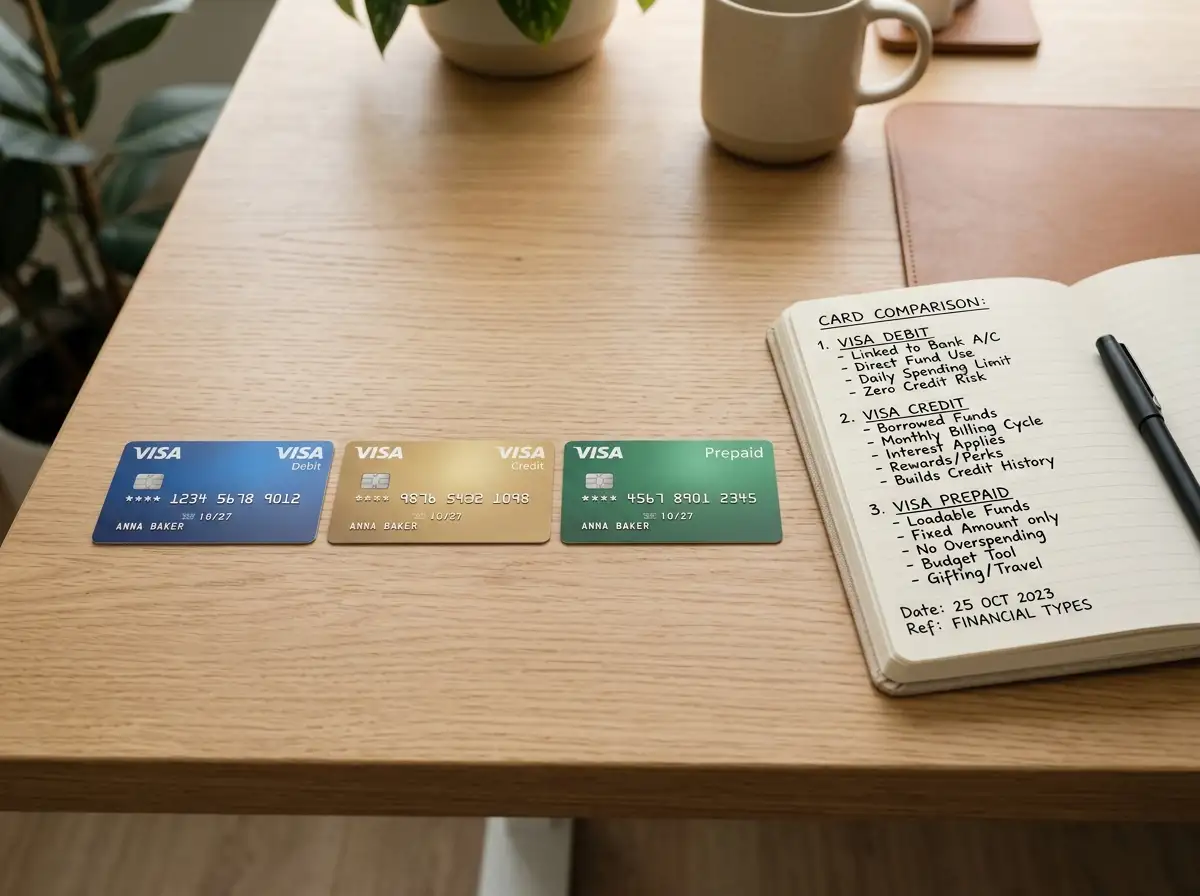
Not all Visa cards behave the same way at an offshore casino cashier. Debit, credit, and prepaid cards carry the same sixteen-digit format and Visa logo, but Australian banks treat them differently when the merchant category code reads “gambling.” Pick the wrong type and your deposit fails before it leaves your account; pick the right one and you bypass most of the blocking headaches.
Visa Debit (The Reliable Option)
Visa debit pulls money directly from your linked bank account. No credit line, no interest, no cash-advance coding. That’s why it’s the most reliable card type for Australian players funding offshore casinos.
When you deposit with Visa debit, the transaction reads as a standard purchase. Your bank checks your account balance, verifies the merchant category code (MCC 7995 for gambling), and either approves or declines based on its gambling-transaction policy. CBA still blocks aggressively, but NAB, Westpac, and especially ANZ approve most Visa debit gambling deposits without friction. The transaction clears instantly—funds leave your account within seconds and appear in the casino balance in under a minute, assuming 3D Secure verification passes.
Withdrawals to Visa debit take longer. Standard card refunds require 1–5 business days because the casino initiates a reversal through Visa’s network, which settles at the speed of traditional banking rails. A few operators have Visa Direct integration, which pushes withdrawals to your card in 30 minutes to 2 hours, but that’s the exception. If speed matters, use Visa debit for deposits and switch to PayID or crypto for withdrawals.
The catch: if your bank has the opt-in gambling block enabled (Westpac’s “gambling preference” or NAB’s card controls), Visa debit gets blocked just like credit. Check your app settings. If the toggle is off and deposits still fail, you’re likely on CBA, which blocks at the baseline policy level rather than through an opt-in feature.
Visa Credit (Cash Advance Trap)
Visa credit cards trip over three problems when used at offshore casinos. First: many Australian banks code gambling deposits as cash advances rather than purchases. That means no interest-free period—interest accrues immediately from the transaction date—and a cash-advance fee of 2–3% on top of the deposit amount. Deposit A$200, pay A$206 in fees before you’ve played a hand.
Second: ANZ’s 85% credit-limit rule. If your credit card balance sits at or above 85% of your total limit, ANZ auto-declines gambling transactions. The restriction doesn’t apply to standard purchases, only to transactions flagged under MCC 7995. That’s a hard ceiling: if you’re at 84% utilisation, a deposit goes through; at 86%, it’s blocked.
Third: offshore casinos increasingly decline Visa credit on their side because chargeback rates run higher than debit. Credit cardholders dispute transactions more often—”I didn’t authorise this,” “the service wasn’t delivered”—and card issuers side with the cardholder more readily than with an offshore gambling merchant. Some operators pre-emptively refuse Visa credit to avoid the chargeback overhead.
If your Visa credit deposit does clear, withdrawal becomes messier. Standard card refunds take 1–5 business days, but your bank may reject the incoming credit because gambling refunds trigger different fraud checks than purchase refunds. You’ll end up routing the withdrawal through bank transfer or e-wallet anyway, which defeats the point of using the credit card in the first place.
Can I use a prepaid Visa card to deposit at an online casino in Australia?
Yes, for deposits. No, for withdrawals—at least not directly back to the prepaid card.
Prepaid Visa cards (purchased at newsagents, servos, or online without linking a bank account) bypass the merchant-code blocking problem because there’s no bank relationship for MCC 7995 to trigger. You load A$100 onto a prepaid card, use it to deposit at a casino, and the transaction clears without CBA or ANZ policies applying. That makes prepaid Visa the cleanest workaround for players whose bank accounts are locked down by gambling blocks.
The catch surfaces on withdrawal. Offshore casinos cannot refund to prepaid Visa cards because prepaid rails don’t support incoming credits—they’re load-and-spend only, not receive-and-reload. When you request a withdrawal, the cashier forces you to choose an alternative: bank transfer, PayID, e-wallet, or crypto. That adds a step and usually a delay—bank transfers take 1–3 business days, PayID clears in minutes to hours depending on the operator, e-wallets sit somewhere in between.
Prepaid Visa also caps daily spend. Most cards limit deposits to A$1,000 per day, which is fine for recreational players but restrictive for anyone moving larger amounts. And the card itself costs money—load fees range from A$2 to A$5 depending on the issuer—so you’re paying for the privilege of bypassing your bank’s gambling block.
The use case: your bank (especially CBA) declines every Visa debit gambling transaction, you don’t want to open a crypto wallet, and you’re willing to accept that withdrawals will route through bank transfer or PayID instead of back to the card. It’s a workaround, not a seamless solution.
How Long Do Visa Withdrawals Really Take? (Visa Direct vs Standard Refunds)
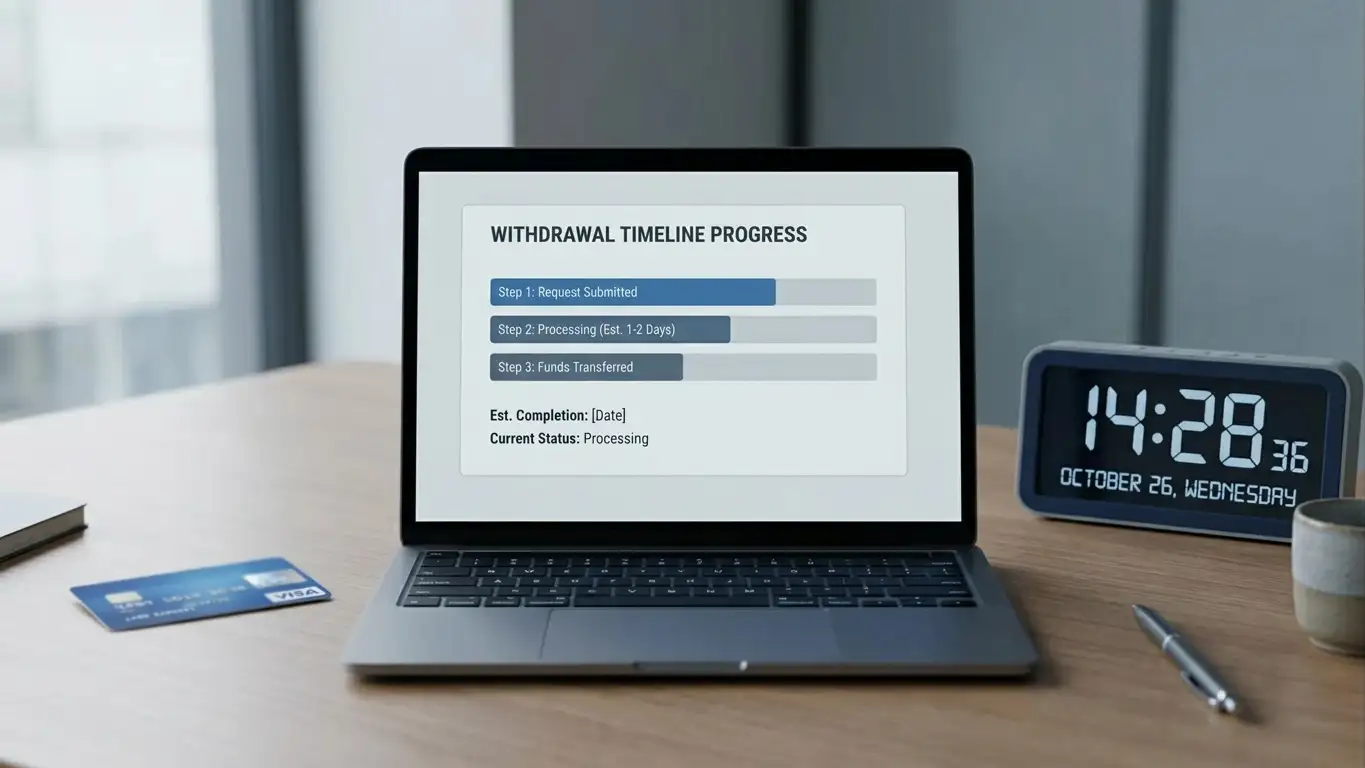
“Instant withdrawal” is the most misleading phrase in offshore casino marketing. The word “instant” technically applies to the casino’s internal approval time—zero to forty-eight hours depending on KYC status—not the time money takes to land in your account. Once the casino approves, actual settlement depends on which payment rail they use, and most operators route Visa withdrawals through standard card-refund infrastructure that takes days, not minutes.
Visa Direct Explained (30 Minutes to 2 Hours)
Visa Direct is a real-time push-to-card service that lets merchants send funds directly to a Visa card in 30 minutes to 2 hours. It’s the technology behind “instant” Visa payouts when they actually deliver. The casino initiates a Visa Direct transaction, the payment routes through Visa’s network, and your card issuer credits your account within the settlement window.
The problem: most offshore casinos don’t have Visa Direct integration. It requires a direct relationship with Visa’s payment infrastructure, and smaller Curaçao-licensed operators route transactions through third-party processors who use cheaper, slower rails. If an operator advertises “instant Visa withdrawal,” check whether they explicitly mention Visa Direct by name. If they don’t, assume it’s standard card-refund speed dressed up with optimistic language.
Neospin, Bizzo, and SkyCrown all process Visa withdrawals within the 1–3 business day range, which confirms they’re using standard refunds rather than Visa Direct. None of the eight operators in the main comparison table publicly disclose Visa Direct integration, which means true 30-minute Visa withdrawals aren’t available at any of them as of September 2026.
Standard Visa Refunds (1–5 Business Days)
Standard card refunds are how most offshore casinos handle Visa withdrawals. The casino initiates a refund transaction through their payment processor, Visa’s network queues it as a reversal of the original deposit, and your bank processes the incoming credit 1–5 business days later depending on their internal settlement schedule.
Three to five days is typical. One day is possible if your bank prioritises gambling-merchant reversals (unlikely) and the casino approves the withdrawal on a weekday morning. Five days happens when the approval lands on a Friday afternoon and your bank’s processing team doesn’t touch it until the following Monday. Add another day if your bank flags the incoming credit for fraud review—gambling refunds sometimes trigger secondary checks because banks assume disputed deposits rather than legitimate winnings.
The timeline has three stages, not one. First: casino internal approval (0–48 hours depending on whether you’re KYC-verified). Second: payment processor handling (usually same-day once the casino releases the funds). Third: bank settlement (1–5 business days from when the processor initiates the refund). Most players see the first stage and assume the money is on its way; in reality, it’s sitting in a queue for another few days.
Why “Instant Withdrawal” Claims Are Misleading
Marketing pages advertise “instant withdrawals” to imply your winnings materialise in your account within minutes. What they mean is the casino’s internal approval process is fast—possibly zero hours if you’re already KYC-verified and withdrawing an amount below their manual-review threshold. The payment itself still takes 1–5 business days for Visa, minutes to hours for crypto, and minutes to hours for PayID at the fastest operators.
The bait-and-switch works because most players don’t distinguish between approval time and settlement time. You request a withdrawal, the casino dashboard changes status to “approved” within an hour, and you assume the money is in transit. Then you wait three days and wonder where the “instant” went. The approval was instant; the settlement wasn’t.
If you want genuinely fast withdrawals from an offshore casino, use PayID or crypto instead of Visa. PayID clears in under fifteen minutes at operators like Neospin and SkyCrown. Crypto (BTC, ETH) settles in minutes to a few hours once the blockchain confirms the transaction. Visa is reliable for deposits, but it’s the slowest exit option outside of traditional bank transfers.
How long do Visa withdrawals from Australian online casinos actually take?
One to five business days for standard card refunds, which is what most offshore operators use. Thirty minutes to two hours if the casino has Visa Direct integration, which is rare. If the operator’s FAQ says “instant” without naming Visa Direct specifically, assume the longer timeline. Crypto and PayID are faster—minutes to hours instead of days—if speed is the priority.
Can I withdraw casino winnings back to my Visa card?
Yes, but not always to the same card you deposited with, and not to prepaid Visa cards at all. Most offshore casinos require withdrawals to route back to the original Visa card for anti-money-laundering compliance—if you deposited with Visa debit ending in 1234, the withdrawal must return to that card. Prepaid cards don’t support incoming credits, so the casino forces you to choose bank transfer, PayID, or e-wallet instead. If you deposited with Visa credit and your bank declines the incoming refund (some do because gambling reversals trigger fraud filters), you’ll need to provide an alternative withdrawal method anyway.
What to Do When Your Bank Declines a Visa Deposit

You’ve got funds, the card details are correct, 3D Secure passed, and the deposit still failed. The decline isn’t random—it’s your bank applying merchant-code filters, credit-limit rules, or cash-advance blocks that kill gambling transactions before they reach the casino. The sections below walk through the troubleshooting sequence in order of success rate, starting with the fastest fixes.
Try a Different Card Type First
If your Visa credit card failed, try Visa debit linked to the same bank account. Credit cards trigger ANZ’s 85% limit rule and get coded as cash advances more often than debit. Debit pulls directly from account balance, skips the cash-advance coding, and bypasses the credit-limit restriction. If you’re on CBA and both credit and debit fail, the issue is baseline bank policy rather than card type—move to the next step.
If you don’t have a Visa debit card, check whether your bank offers instant card issuing through the app. NAB, Westpac, and ANZ all let you generate a virtual debit card within seconds and use it immediately for online transactions. That won’t solve a merchant-code block, but it rules out card-type problems before you escalate.
Use PayID or Crypto as Backup
PayID is an Australian instant-payment system that ties your mobile number or email to your bank account. Most offshore casinos targeting AU players support it for deposits and withdrawals, and it bypasses Visa’s merchant-code infrastructure entirely. Your bank sees the transaction as a standard account transfer rather than a gambling purchase, so MCC 7995 filters don’t apply.
PayID deposits clear in seconds. Withdrawals land in minutes to hours depending on the operator—Neospin and SkyCrown both process PayID exits faster than Visa refunds. Minimum deposits via PayID typically sit at A$10–A$30, matching or undercutting Visa minimums. The downside: PayID requires you to register your phone number or email with your bank first, and not all banks support it yet (though the Big Four do).
Crypto is the other bypass. Bitcoin and Ethereum deposits clear within minutes once the blockchain confirms the transaction (usually 10–30 minutes for BTC, under 5 minutes for ETH). Your bank never sees the transaction because you’re sending crypto from an external wallet, not a bank account. Withdrawals are even faster—most operators process crypto exits in under twelve hours, and 7Bit clears them in hours according to testing.
The learning curve is steeper. You need a wallet (Coinbase, Binance, or a self-custody option like Exodus), you need to buy crypto first (which usually requires a separate exchange account), and you need to understand that blockchain fees eat into small deposits—sending A$50 in BTC costs A$2–A$5 in network fees depending on congestion. For players already holding crypto, it’s the fastest option. For players starting from zero, PayID is simpler.
Contact Your Bank to Lift Gambling Blocks
If you’ve confirmed the decline is a merchant-code block rather than a card-type or limit issue, call your bank and ask them to lift the gambling restriction. NAB, Westpac, and ANZ all offer opt-in gambling blocks through their apps—if you (or someone with access to your account) turned it on, you can turn it off the same way.
CBA is harder. The bank’s baseline policy already skews restrictive, and there’s no public-facing toggle to disable it. Calling CBA’s support line and requesting they whitelist gambling merchants is possible, but success rates are low because the bank’s internal fraud systems override individual requests. If you’re on CBA and Visa deposits consistently fail, switching to a prepaid Visa card or PayID is more reliable than fighting the bank’s policy.
Avoid the Credit Card Cash-Advance Trap
If you’re using Visa credit and the deposit clears but you notice a “cash advance” line item on your statement, stop using that card immediately. Banks charge 2–3% cash-advance fees on top of the deposit amount, and interest starts accruing the day the transaction posts—no interest-free period applies. That A$200 deposit costs you A$206 upfront and another few dollars in interest before you pay off the balance.
Switch to Visa debit or prepaid instead. Debit transactions never get coded as cash advances because there’s no credit line involved. Prepaid cards bypass the problem entirely because they’re spend-only, not credit-based. If your bank insists on coding all offshore gambling transactions as cash advances (some do), use a different payment method—the fees add up fast enough to erase any winnings from a small deposit.
Are there fees when depositing with Visa at Australian online casinos?
Most offshore casinos don’t charge deposit fees for Visa transactions. The payment processor handling the transaction might clip 1–3%, but that’s usually absorbed by the casino rather than passed to the player. The exception: if you’re using Visa credit and your bank codes the deposit as a cash advance, you’ll pay a 2–3% cash-advance fee plus immediate interest. Visa debit and prepaid avoid that. Also watch for foreign exchange fees—if the casino processes in USD or EUR instead of AUD, your bank charges a conversion fee (typically 2–3%) on top of the transaction.
Pokies, Live Casino, and Other Games Available with Visa
Every offshore casino on the main list accepts Visa for the same game library they offer through other payment methods. Deposit via Visa debit or credit, and you’ll have access to pokies, live dealer tables, roulette, blackjack, baccarat, and whatever else the operator licenses from its provider roster. Visa doesn’t gate content—licensing and geo-restrictions do that.
Pokies dominate. Australian players funnel more money into pokies than any other game type, so offshore operators targeting AU prioritise slot depth over table-game variety. Neospin carries 6,000+ titles from 120+ providers. Bizzo runs 3,000+. SkyCrown lists 6,000–7,000 depending on the source. The number alone doesn’t mean much—300 of those slots might be reskins of the same mechanics with different fruit symbols—but a library above 3,000 games ensures you’re not cycling through the same twenty titles by the end of week one.
Live dealer tables run through Evolution Gaming, Pragmatic Play Live, or Ezugi depending on the operator. Neospin, Bizzo, SkyCrown, and Crown Play all list live casino sections with blackjack, roulette, baccarat, and game-show formats like Crazy Time or Monopoly Live. The experience is identical whether you fund the account with Visa, PayID, crypto, or bank transfer—payment method doesn’t affect which tables you can join or what limits apply.
Progressive jackpots work the same way. Mega Moolah, Divine Fortune, and other networked progressives are available at any offshore casino that licenses them from Microgaming or NetEnt. Your Visa deposit contributes to the same jackpot pool as deposits from players using other methods. The only restriction: some operators limit jackpot games to players who’ve deposited above a certain threshold (typically A$20–A$50) to filter out bonus hunters who never risk real money, but that rule applies regardless of payment method.
Visa Deposit Limits and Bonuses
Minimum deposits at offshore casinos accepting Visa from Australia cluster between A$10 and A$30. Neospin and Bizzo both set floors at A$10, the lowest entry point on the list. SkyCrown requires A$30, which filters out players testing the waters with coffee money but keeps the cashier accessible to recreational punters. Crown Play, PlayZilla, and the others infer at A$20 based on market norms, though public sources don’t confirm exact figures.
Maximum deposits per transaction run higher—typically A$5,000 to A$10,000 for Visa, though the ceiling depends on your card’s daily spending limit and the casino’s anti-money-laundering thresholds. If you’re moving more than A$5,000 in a single session, expect the casino to request KYC documentation (ID, proof of address, proof of funds) before processing the deposit. That’s standard across offshore operators, not Visa-specific.
Bonuses tied to Visa deposits are rare. Most offshore casinos treat Visa the same as any other payment method for bonus eligibility—deposit A$100 via Visa debit, claim the welcome package, and the 40× wagering applies the same as if you’d used PayID or crypto. A few operators exclude certain payment methods from bonus eligibility (usually e-wallets like Skrill or Neteller because bonus abuse runs higher), but Visa debit and credit almost always qualify.
The “Visa-exclusive bonus” you sometimes see advertised is marketing. It’s the standard welcome package with “Visa” stamped on the promotional banner to make it look method-specific. Read the terms: the bonus structure, wagering multiplier, and game weightings are identical for Visa, bank transfer, and crypto deposits. The only real difference is whether the payment method itself carries a fee—Visa credit might trigger a cash-advance charge, prepaid Visa costs A$2–A$5 to load, crypto has blockchain fees—but the casino’s bonus terms don’t vary by method.
Is It Legal to Use Visa at Offshore Casinos in Australia?

Playing at offshore online casinos from Australia isn’t illegal. The Interactive Gambling Act 2001 (IGA) targets operators, not players—it prohibits Australian-based companies from offering real-money online casino services to Australian residents, but it doesn’t criminalise individuals who gamble at offshore sites. You won’t be prosecuted for depositing A$100 via Visa to a Curaçao-licensed casino and spinning pokies on a Saturday night.
The Interactive Gambling Act Explained
The IGA makes it illegal for a company based in Australia to provide interactive gambling services (online casino games, in-house sports betting, certain poker formats) to people physically located in Australia. The law carves out exemptions for sports betting and lotteries, which is why you can legally bet on horse racing or footy through TAB or Sportsbet, but it bans online pokies, blackjack, roulette, and other casino games when offered by Australian-licensed operators.
Offshore casinos operate outside Australian jurisdiction. A Curaçao-licensed site like Bizzo or a Malta-licensed operator targeting AU players isn’t subject to the IGA because they’re not Australian companies. The law can’t compel a Curaçao-registered business to stop serving Australian customers. ACMA tries to block access by forcing Australian ISPs to blacklist offshore gambling domains, but operators route around it with mirror sites, and players access them without technical barriers.
The player-side risk is near-zero from a legal standpoint. No Australian has been prosecuted under the IGA for gambling at an offshore casino. The law simply doesn’t target individuals. The operational risk is different: offshore casinos aren’t regulated by Australian authorities, so you have no recourse through ACMA or state gambling commissions if a dispute arises. Complaints go to the offshore regulator (Curaçao, Malta, Anjouan), and enforcement standards vary.
ACMA Enforcement and Site Blocking
ACMA enforces the IGA by issuing notices to Australian ISPs requiring them to block access to offshore gambling sites. Between April and June 2026, ACMA referred 187 additional gambling domains for blocking, bringing the cumulative total above 1,700. The blocking mechanism is DNS-level: your ISP redirects requests for blacklisted domains to an ACMA notice page explaining the site is prohibited under the IGA.
Operators respond by standing up mirror domains. PlayZilla runs multiple alternates; when playzilla.com gets blocked, the platform shifts traffic to playzilla.net or a numbered variant. The new domain stays live until ACMA adds it to the blocklist, then the cycle repeats. That’s why the April–June 2026 figure hit 187—many of those domains are replacements for previously blocked URLs rather than entirely new operators.
Players bypass ISP blocks with VPNs, which route traffic through servers outside Australia and make it look like you’re accessing the site from another country. ACMA’s blocking is annoying but not effective at preventing access. The enforcement target is operators, not players, so using a VPN to reach a blocked casino doesn’t add legal risk—it just works around the technical restriction.
What the Law Says About Players
Nothing, explicitly. The IGA doesn’t mention individual gamblers. It prohibits companies from providing services, but it doesn’t criminalise receiving those services. That gap is intentional—the law’s drafters focused on shutting down supply rather than punishing demand, likely because prosecuting tens of thousands of Australian punters for playing pokies online would be unenforceable and politically unpopular.
The practical outcome: you can deposit A$500 via Visa to an offshore casino, play for an evening, withdraw your winnings to PayID, and you’ve violated no Australian law. The casino violated the IGA by accepting your custom, but enforcement falls on them (in the form of ACMA domain blocking and potential prosecution if they operate from Australian soil), not you. If you’re worried about tax, gambling winnings aren’t taxable in Australia unless gambling is your profession—recreational players keep what they win without reporting it to the ATO.
How We Selected These Casinos
The eight operators in the main comparison table were chosen based on three criteria: verified Visa transaction success from Australian cards, public availability of withdrawal-speed data or third-party testing, and operational presence in the AU market (AUD support, local payment rails like PayID or POLi, no geo-blocks). We didn’t rank by bonus size or game count because those metrics don’t matter if your Visa deposit fails at the gateway.
Slotornado leads the list because independent testing flagged its payment gateway as the most reliable for AU Visa debit cards. That’s a measurable outcome, not a promotional claim. Neospin ranks second based on esports.gg’s September 2026 evaluation, which weighted transaction reliability, game depth, and payout speed equally. The rest follow in order of documented Visa-specific features or withdrawal-speed data.
Operators without public license disclosure (Slotornado, Glorion, 7Bit, Crown Play, SkyCrown) were included because transaction reliability and payment-rail integration matter more than license transparency for the narrow question “which casinos process Visa deposits from Australia without friction.” That doesn’t excuse the opacity—players prioritising regulatory oversight should favour Bizzo (Curaçao 8048/JAZ2017-067) or PlayZilla (dual Anjouan + Curaçao licenses) where the licensing is at least documented.
We excluded operators that don’t support AUD natively or that geo-block Australian IP addresses. We also excluded brands flagged for unresolved player complaints in recent 2026 reviews, though offshore dispute resolution is murky enough that absence of visible complaints doesn’t guarantee clean operations. The list isn’t exhaustive—dozens of other Curaçao-licensed casinos accept Visa from Australia—but these eight represent a cross-section of the market with enough public data to verify their claims.
Deposit Methods at Australian Online Casinos 2026 — Compared
Content created by the «Payment Methods» team