
Online Pokies Instant Withdrawal Australia — Which Sites Actually Pay Fast in 2026
 Available in AU

Slow withdrawals kill the thrill faster than a cold deck. You spin, you win, you request a cashout — then wait three business days while the operator “processes” your money through some mysterious internal workflow that somehow takes longer than an international wire transfer in 1987. The single biggest complaint Australian players have about offshore pokies sites isn’t bonus terms or game variety. It’s withdrawal speed, or the complete lack of it.
Most affiliate pages covering instant withdrawal pokies in Australia claim they “tested” payout times across dozens of operators. They list ten to fifteen sites with suspiciously identical profiles and attach speed labels like “instant” or “under an hour” without explaining what those terms actually mean or how they arrived at the figures. Here’s the reality: withdrawal time data in this space comes from operator marketing pages and affiliate-supplied copy, not independent testing. True verification would require funding accounts at scale, playing through wagering requirements, and timing cashouts across multiple methods and account tiers — work that sits well beyond the scope of editorial review.
What can be verified is which offshore operators serving Australian players in 2026 support PayID and cryptocurrency withdrawals, what their published terms state, and which payment rails move money fastest once the casino approves the request. This breakdown separates casino processing time from payment method speed, highlights which sites support PayID in both directions rather than deposits only, and frames the legal paradox plainly: these operators are illegal to offer under the Interactive Gambling Act 2001, playing is not prosecuted, and there is zero consumer protection or recourse when things go wrong.
Fastest Withdrawal Pokies Sites for Australian Players in 2026
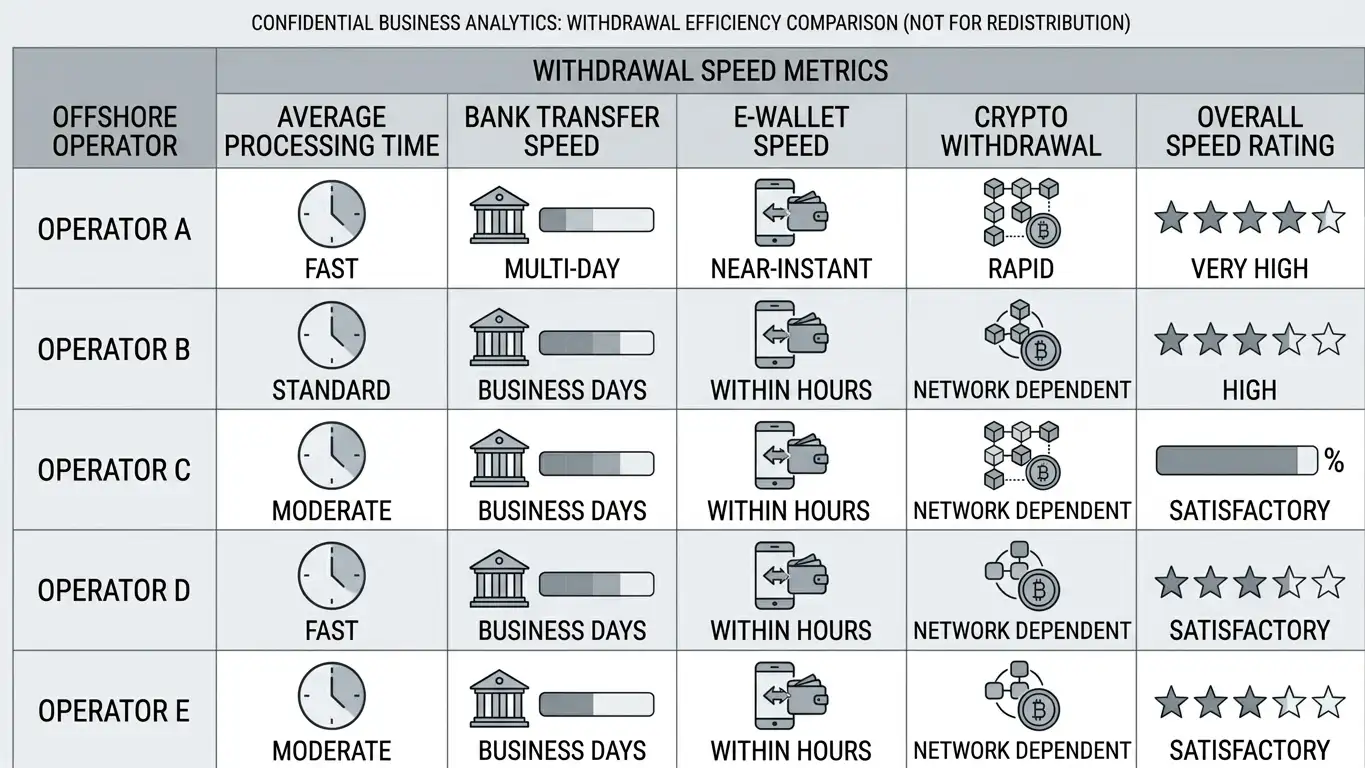
The table below ranks nine offshore operators by claimed withdrawal speed. Every figure in the “Crypto Withdrawal” column is an operator-supplied or affiliate-claimed estimate, not independently verified timing. Actual speed depends on account verification status, withdrawal amount, time of request, and whether the casino imposes a pending period before releasing funds to the payment rail.
| Operator | License | PayID Support | Crypto Withdrawal (Claimed) | Min Withdrawal | Monthly Cap | Distinguishing Feature |
|---|---|---|---|---|---|---|
| BetNinja | Union of Comoros (Anjouan) | Deposit-only (bank transfer withdrawals) | 10–15 minutes after approval | Not disclosed | Not disclosed | Fastest crypto claim; operated by Magico Games N.V. since 2023 |
| The Pokies Net | Curaçao eGaming | Deposits + Withdrawals | Under 60 minutes (stated 1–3 hours) | A$50 | A$9,000 daily | Mirror domains to evade ACMA blocking; 2,800+ games |
| Wild Tokyo | Curaçao | Deposits + Withdrawals (implied) | Under 1 hour (affiliate claim) | Not disclosed | Not disclosed | Asian-themed library; 2,000–6,000 games (sources vary) |
| FortunePlay | Antillephone N.V. Curaçao | Deposits + Withdrawals | 1 hour (contradictory sources: also “0–24h + 72h”) | A$30 | A$5,000 daily | Launched 2023; 8,000+ games; inconsistent withdrawal data signals unreliable affiliate sourcing |
| SkyCrown | Curaçao eGaming | Deposits + Withdrawals | 2–4 hours (stated); “within hours” for BTC/ETH | A$30 (A$100 bank transfer) | Not disclosed | 6,000-game library; large provider network |
| House of Pokies | Curaçao | Deposits + Withdrawals | 1–24 hours (wide range) | A$30 | Not disclosed | Mobile-first interface; A$1,000 + 100 FS welcome bonus |
| Wild Pokies | Curaçao | Deposits + Withdrawals (implied) | 1–3 hours (crypto); same-day cashouts claimed | A$30 | Not disclosed | ~2,000 games; Neosurf, POLi, cards accepted |
| Pocket Pokies | Curaçao (implied) | Deposits + Withdrawals | Under 1 hour (affiliate claim); “express withdrawal system” | A$50 | A$15,000 monthly | Launched 2020; smaller library (750+ games) |
| Uptown Pokies | Not disclosed (likely Curaçao/Costa Rica) | Limited support | Crypto “hours”; bank 72 business hours | A$100 | A$2,500 weekly | RTG-exclusive library (~200–300 titles); A$60 bank transfer fee; slowest caps |
Three patterns emerge. First, every operator claiming “instant” or “under an hour” crypto withdrawals qualifies it with “after approval” — and approval can take anywhere from zero hours to three business days depending on pending period policies and verification status. Second, PayID support is asymmetric at several operators: they accept PayID deposits but route withdrawals through bank transfer, which adds one to three business days. Third, claimed times are marketing estimates, not tested results, and the lack of transparent methodology across affiliate content means treating all speed figures as optimistic projections rather than verified facts.
The Pokies Net — PayID and Crypto in Under 60 Minutes
The Pokies Net operates under a Curaçao eGaming sub-license with an undisclosed parent entity and has run continuously since 2021. The platform lists over 2,800 pokies and table games, holds AUD-denominated accounts, and sets the minimum withdrawal at A$50 with a daily cap of A$9,000. PayID and cryptocurrency (Bitcoin, Ethereum, Litecoin) are accepted for both deposits and withdrawals. The welcome bonus structure offers a 100% match up to A$500.
Withdrawal timing sits at the centre of the site’s positioning. Operator pages state “1–3 hours” for PayID and crypto cashouts; affiliate content claims “under 60 minutes.” Neither figure is independently verified. The platform runs a mirror-domain strategy to maintain access despite ACMA blocking — if ThePokies.net goes dark, ThePokies86 or ThePokies124 or ThePokies172 appear in its place. That routing resilience matters more to ongoing access than it does to withdrawal speed, but it signals a long-term operational commitment to the Australian market that newer entrants lack. Account verification is required before the first withdrawal clears, and the operator offers a A$10 free credit for phone verification as a low-friction onboarding tactic.
BetNinja — 10-Minute Crypto Withdrawals
BetNinja launched in 2023 under the Union of the Comoros (Anjouan) license, operated by Magico Games N.V. That jurisdiction carries no recognition from Australian regulators and offers zero consumer protection framework. The site lists over 2,000 games and emphasizes cryptocurrency banking: Bitcoin, Ethereum, Litecoin, and Tether (USDT) are the primary deposit and withdrawal methods. E-wallets (Skrill, Neteller), cards, and bank transfers are also available, but the marketing pitch centres on crypto speed.
Crypto withdrawals are stated as “10–15 minutes after approval” — the fastest claim among the operators researched. E-wallet cashouts take 0–24 hours, cards 1–5 days, bank transfers 3–7 days. The welcome bonus varies across affiliate sources (figures range from A$5,000 to A$20,000, signaling unreliable data propagation), so verifying the current offer directly on the operator’s cashier page before depositing is the only reliable path. Minimum deposit and withdrawal amounts are not consistently disclosed in public sources. PayID appears to be accepted for deposits but not for withdrawals, routing AUD cashouts through bank transfer instead — a common asymmetry that slows fiat payouts while keeping crypto fast.
FortunePlay — Big Library, Mixed Withdrawal Reports
FortunePlay holds an Antillephone N.V. Curaçao sub-license and launched in 2023 with an Australian market focus. The game library is advertised at 8,000 to 10,000 titles across 100+ providers (figures vary by source), AUD banking runs through PayID, POLi, cards, and crypto (Bitcoin, Ethereum, Tether, Litecoin), and the minimum deposit sits at A$20 with a minimum withdrawal of A$30. Maximum daily payout is capped at A$5,000. The welcome bonus structure is listed as A$4,000 to A$5,000 plus 300 free spins, with exact terms varying across affiliate promotions.
Withdrawal data is contradictory. One operator-affiliated source states crypto clears in “1 hour” and traditional methods in “3–7 days.” Another claims “instant PayID withdrawals.” A third lists “0–24 hours processing plus up to 72 hours to account,” which collapses any notion of instant. That spread suggests affiliate content copied from marketing briefs without verification, and it means the only way to know FortunePlay’s actual cashout timing is to fund an account and test it yourself — at which point you’ve already accepted the risk. The game count inconsistency (2,000 in some reviews, 10,000 in others) reinforces the pattern: aggressive affiliate marketing with minimal fact-checking. Approach with scepticism and verify terms directly in the cashier before committing funds.
SkyCrown — 6,000 Games, PayID 2–4 Hours
SkyCrown operates under a Curaçao eGaming license and markets a 6,000-game library sourced from 40+ providers. AUD support runs through PayID for both deposits and withdrawals, plus cards, e-wallets, and crypto. Minimum withdrawal is A$30 for most methods, rising to A$100 for bank transfer. The welcome package is advertised between A$4,000 and A$8,000 plus 400 free spins depending on which affiliate page you land on, so checking the live cashier before depositing is essential.
PayID withdrawal timing is stated at “2–4 hours” on the operator’s own pages. Crypto (Bitcoin and Ethereum) clears “within hours rather than days” according to affiliate summaries, which is precise enough to distinguish it from three-business-day bank wires but vague enough to cover anything from two hours to twenty. The site positions itself as having the largest library among Australian-focused offshore operators, and that game count emphasis attracts players who prioritise variety over raw payout speed. Mobile play runs in-browser without a dedicated app. Account verification is required before withdrawals process, and completing KYC immediately after signup is the standard advice for avoiding multi-day approval delays when you request your first cashout.
House of Pokies — 1–24 Hour PayID Window
House of Pokies holds a Curaçao license with an undisclosed operator entity and pitches a pokies-heavy library backed by AUD banking. Minimum withdrawal sits at A$30. The welcome bonus is listed as A$1,000 plus 100 free spins in most affiliate sources. PayID, bank transfer, Visa, Mastercard, POLi, and crypto are accepted for deposits; PayID and crypto are stated as available for withdrawals with a “1–24 hour” clearance window.
That 23-hour range is wide enough to cover both genuinely fast operators and those with multi-day pending periods, which makes it a functionally useless speed claim. It does, at minimum, acknowledge variability — unlike competitors claiming flat “instant” times — but it also signals the operator either has inconsistent internal processing or is hedging against player complaints by setting expectations low. The mobile-first interface design is noted in multiple reviews as cleaner than desktop competitors, which matters for players running sessions on phones. Verification is required before the first withdrawal, and affiliate reviews mention no particular friction in that process, but no independent testing data exists to confirm how long KYC approval actually takes.
Wild Tokyo — Asian Themes, Sub-Hour Claims
Wild Tokyo operates under a Curaçao license with an undisclosed parent company and positions itself across Asian and Australian markets. Game count ranges from 2,000 to 6,000 depending on the source, which indicates either rapid library expansion or inconsistent data. AUD support is confirmed. The welcome bonus is listed as A$3,000 plus 200 free spins in one affiliate review. PayID, e-wallets, and crypto are accepted; minimum deposit and withdrawal amounts are not consistently disclosed.
Withdrawal speed is claimed at “under 1 hour” in affiliate content, but that figure does not appear on operator-controlled pages in the research sample, which suggests it is an affiliate estimate rather than a published term. Crypto and PayID are both named as available methods, but whether PayID supports withdrawals or only deposits is not clearly stated across sources. The Asian-themed game selection (titles from providers focusing on regional aesthetics and mechanics) distinguishes the library from more generic pokies catalogues, and that thematic lean attracts a specific player segment. No public data exists on pending periods, verification timing, or monthly withdrawal caps, so treating Wild Tokyo as a known quantity based on affiliate speed claims alone would be a mistake.
Wild Pokies — Same-Day Crypto, Limited Data
Wild Pokies holds a Curaçao license and has operated since the early 2020s with a focus on Australian players. The library sits at approximately 2,000 pokies and casino games. AUD banking is available through Visa, Mastercard, Neosurf, POLi, Bitcoin, and Ethereum. Minimum withdrawal is A$30. The welcome bonus is advertised as A$500 plus 100 free spins across sources. Card and voucher deposits are instant; crypto clears in 10–30 minutes after one to three network confirmations.
Crypto withdrawals are stated as “1–3 hours” in operator-affiliated content, with same-day cashouts claimed across affiliate reviews. PayID does not appear prominently in the public payment method lists reviewed, which suggests fiat withdrawals route through standard bank transfer (one to three business days) rather than the NPP instant rail. That gap between crypto and fiat payout speed is typical across offshore operators: blockchain transfers bypass traditional banking infrastructure entirely, while AUD bank withdrawals must clear through Australian financial institutions that may delay or block transactions to unlicensed offshore gambling operators. Verification requirements and pending period policies are not detailed in available sources, so actual withdrawal timing remains operator-discretionary.
Pocket Pokies — Under-Hour Claims, A$15K Monthly Cap
Pocket Pokies launched in 2020 under a Curaçao license (implied from sources, though exact license documentation is not prominently published). The game library is smaller than most competitors at 750+ titles. AUD support runs through PayID, POLi, cards, and crypto. Minimum deposit is A$20, minimum withdrawal A$50, and the maximum monthly withdrawal is capped at A$15,000. The welcome bonus ranges from A$1,500 to A$5,000 plus 150–300 free spins depending on the affiliate promotion, with the wide spread again indicating inconsistent data propagation.
Withdrawal speed is marketed as “under an hour” and an “express withdrawal system” across multiple affiliate pages, but no operator-published processing time appears in the research sample. PayID is confirmed for both deposits and withdrawals. The A$15,000 monthly cap sits in the mid-range — higher than Uptown Pokies’ A$2,500 weekly limit but lower than The Pokies Net’s A$9,000 daily allowance (which scales to A$270,000 monthly if you could actually withdraw daily, though such volume would likely trigger additional scrutiny). For most recreational players, a A$15,000 monthly ceiling is not a practical constraint, but high rollers hitting that cap will need to either spread bankroll across multiple operators or accept slower aggregate cashout speeds.
Uptown Pokies — RTG-Exclusive, Slower with High Fees
Uptown Pokies operates an RTG (RealTime Gaming) exclusive library, which limits game variety to approximately 200–300 titles but appeals to players who prefer that studio’s mechanics and progressive jackpot network. The operator’s license jurisdiction is not prominently disclosed (likely Curaçao or Costa Rica based on operational patterns). AUD support is available, but the cashier structure skews toward crypto and away from modern Australian payment rails. Minimum withdrawal is A$100 — the highest among operators reviewed. Maximum weekly withdrawal is capped at A$2,500, the lowest in this comparison. The welcome bonus is advertised as A$8,888 plus 350 free spins.
Crypto withdrawals are stated as clearing in “hours,” while bank transfers take “72 business hours processing” — three full business days before the funds even leave the operator’s side, after which the bank transfer itself adds another one to three days. The bank transfer withdrawal fee is A$60, which eats a significant chunk of small cashouts. PayID support is limited or absent; fiat withdrawals route through traditional bank wire. Weekly cap and high fees position Uptown Pokies as the slowest and least flexible option in this ranking for Australian players prioritising fast access to winnings. The RTG-exclusive library and large bonus package are the draw, but anyone who values withdrawal speed over game theming should look elsewhere.
Which is faster for pokies withdrawals: PayID or cryptocurrency?
Cryptocurrency wins on raw speed once the casino approves the withdrawal. Bitcoin, Ethereum, and Litecoin transactions clear in 10 to 60 minutes after the operator releases funds to the blockchain, depending on network congestion and the number of confirmations the receiving wallet requires. PayID withdrawals take one to four hours at operators with fast internal processing, extending to 12–24 hours at slower ones. The difference comes down to infrastructure: crypto bypasses traditional banking entirely, while PayID still routes through the New Payments Platform and Australian financial institutions.
But speed is only one variable. Crypto requires setting up a wallet, managing private keys, and converting AUD to cryptocurrency before depositing (then back to AUD after withdrawing if you want to spend winnings in the real world). Exchange fees, network fees, and conversion spreads eat into your balance at both ends. PayID, by contrast, links directly to your existing Australian bank account via your phone number or email — no wallet, no conversion, no extra infrastructure. Deposits land in seconds, and withdrawals from competent operators hit your account in under four hours without leaving the AUD ecosystem.
Most offshore operators serving Australia in 2026 support both methods, but several accept PayID for deposits while routing withdrawals through traditional bank transfer, which kills the speed advantage. Before depositing, check the cashier page directly: if PayID appears under “deposit methods” but not under “withdrawal methods,” your AUD cashouts will take one to three business days regardless of what the marketing page claims about “fast payouts.”
PayID Withdrawals Explained — How Australia’s Instant Payment Rail Works
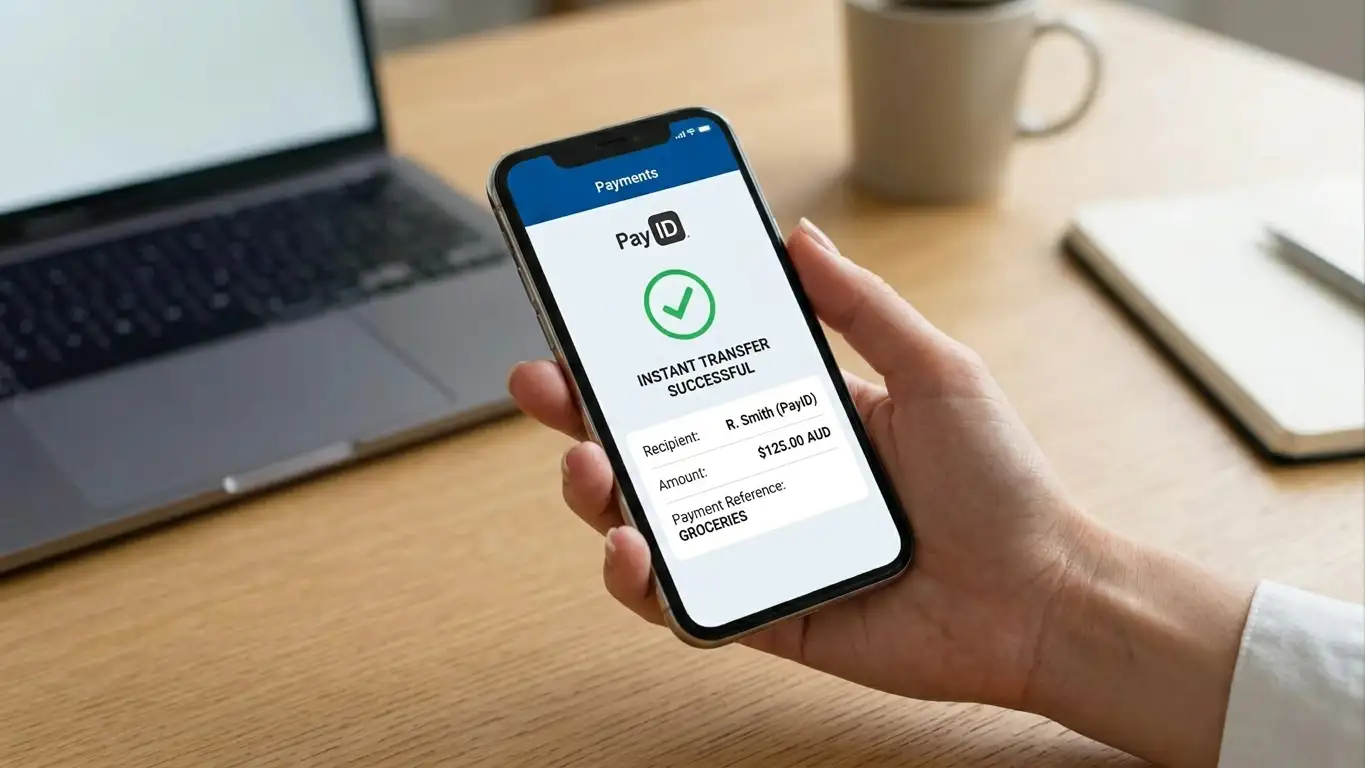
PayID is Australia’s bank-to-bank instant transfer identifier, built on the New Payments Platform (NPP) infrastructure that launched in 2018. It links your phone number, email, or ABN to your bank account so you can send and receive money without sharing BSB and account numbers. Transfers settle in under 60 seconds, operate 24/7/365, and work across 60+ Australian financial institutions including the Big Four (Commonwealth Bank, Westpac, NAB, ANZ), regional banks, and digital neobanks.
For offshore pokies deposits, PayID is near-instant: you enter your linked phone number or email in the casino cashier, authorise the payment through your bank’s app or online banking portal, and funds appear in your casino balance within seconds. The same infrastructure works in reverse for withdrawals — in theory. You request a cashout to your PayID identifier, the casino approves it, and the NPP moves money from the operator’s Australian bank account to yours in minutes.
In practice, the bottleneck is casino approval time, not the payment rail. A true “instant” PayID withdrawal clears in under 15 minutes: the operator approves your request immediately (zero pending period), releases funds to the NPP, and your bank credits your account within one to three minutes. That requires the casino to have automated approval systems, no manual KYC review queue, and a payment processor with direct NPP integration. Most offshore operators claiming “PayID withdrawals” impose a pending period — anywhere from two hours to 72 business hours — before releasing funds to the rail, which collapses the “instant” claim into same-day or multi-day processing depending on when you requested the cashout and what their internal workflow looks like.
How PayID Works for Pokies Withdrawals
When you request a PayID withdrawal at an offshore casino, the process follows this sequence: you submit the cashout request in the casino cashier, selecting PayID as the method and entering your linked identifier (phone number or email). The casino logs the request and begins internal processing — account verification check, bonus wagering requirements check, anti-money-laundering review, and (at some operators) manual approval by a payments team member. Once internal approval completes, the casino’s payment processor initiates an NPP transfer from the operator’s Australian bank account to the PayID identifier you provided. The NPP resolves your identifier to your bank account and settles the transfer in under 60 seconds. Your bank credits the funds to your available balance immediately.
Total time from request to funds in your account equals casino processing time plus NPP transfer time. NPP transfer time is fixed at under one minute. Casino processing time is the variable, ranging from zero (automated instant approval) to 72 business hours (manual review queue). Operators advertising “1-hour PayID withdrawals” are claiming their internal processing averages one hour. Operators stating “1–24 hours” are hedging against peak-period delays or manual review bottlenecks.
The catch: not all operators accepting PayID deposits support PayID withdrawals. Some route AUD cashouts through traditional bank transfer, which bypasses the NPP and lands in one to three business days. That asymmetry is buried in cashier fine print, not advertised on landing pages, and it means “PayID casino” branding can be misleading if the speed advantage only applies to money going in.
PayID vs Bank Transfer Speed
Bank transfer withdrawals — the fallback method when PayID is not supported for cashouts — take one to three business days under ideal conditions, extending to five days or more if the request falls on a Friday afternoon or during a public holiday period. The delay comes from batch processing: casinos release bank transfers in scheduled waves (often once per business day), and the transfer itself moves through the correspondent banking system rather than the real-time NPP infrastructure. Minimum withdrawal amounts for bank transfer are often higher (A$100 vs A$30–50 for PayID), and some operators charge withdrawal fees ranging from A$10 to A$60.
PayID eliminates those friction points. Minimum withdrawals drop to A$20–50 because the NPP handles small amounts as efficiently as large ones. No fees apply from the NPP itself (though casinos may still charge processing fees regardless of method). Transfers process individually and immediately rather than in batches, so submitting a cashout request at 2am on Sunday has the same clearance speed as 2pm on Wednesday — assuming the casino operates 24/7 approval rather than business-hours-only queues.
The infrastructure difference matters. Bank transfers move through SWIFT or domestic clearing systems built decades ago on batch-processing architecture. The NPP is real-time by design, with instant settlement as the default behaviour. When an offshore operator supports PayID withdrawals properly — meaning their payment processor has direct NPP integration and they approve cashouts quickly — the speed gap is measured in hours to days, not minutes to hours.
Which Operators Support PayID Withdrawals (Not Just Deposits)
Confirming true PayID withdrawal support requires checking the cashier’s withdrawal section directly, not relying on marketing claims or deposit method lists. Several operators reviewed accept PayID for deposits but offer only bank transfer for withdrawals, which collapses the speed advantage. The following breakdown is based on operator pages and affiliate content reviewed during research, but terms change and cashier configurations vary by account status and jurisdiction, so verify in your own account before depositing.
Confirmed PayID for both deposits and withdrawals: The Pokies Net, SkyCrown, House of Pokies. These operators list PayID under withdrawal methods in cashier screenshots and state NPP-based payout times (1–4 hours).
Likely PayID withdrawal support, less clearly documented: Wild Tokyo, Wild Pokies, Pocket Pokies. Affiliate content claims PayID withdrawals, but operator-published terms do not always specify whether PayID appears in the withdrawal method dropdown or only the deposit side.
Deposit-only or asymmetric support: BetNinja, FortunePlay. PayID is accepted for deposits; AUD withdrawals route through bank transfer or depend on account tier. Some sources claim PayID withdrawals at FortunePlay, others contradict it — a red flag signaling inconsistent implementation or outdated affiliate data.
Limited or no PayID: Uptown Pokies. Traditional bank wire and crypto are the primary cashout methods; PayID is absent or minimally supported.
The asymmetry exists because integrating PayID for incoming payments (deposits) is straightforward: the casino provides a PayID identifier (often a generic company phone number or email), and the NPP handles the rest. Outgoing payments (withdrawals) require the casino’s payment processor to have two-way NPP integration, and some offshore processors built for international markets lack that Australian-specific infrastructure. Operators using these processors accept PayID deposits but fall back to SWIFT or local bank transfer for cashouts, reintroducing the multi-day delay the NPP was designed to eliminate.
Cryptocurrency vs PayID vs Traditional Banking — Withdrawal Speed Comparison

Total withdrawal time breaks into two components: casino internal processing (the pending period between your cashout request and the casino releasing funds to the payment method) and payment rail speed (how long the method itself takes to move money from the operator’s account to yours). Competitors conflate these variables by quoting single figures like “10-minute Bitcoin withdrawals” without clarifying whether that includes pending time or starts after approval. The table below separates them.
| Method | Typical Casino Processing (Pending) | Payment Rail Speed After Approval | Total Time (Fast Operator) | Total Time (Slow Operator) | Casino Fees | Network Fees | Best For |
|---|---|---|---|---|---|---|---|
| Crypto (BTC/ETH/LTC) | 0–72 hours | 10–60 minutes | 10 minutes – 1 hour | 3 days + 1 hour | Usually none | 0.5–3% (network + exchange) | Players with crypto wallets; bypassing bank blocks |
| PayID | 0–72 hours | 1–3 minutes | 1–4 hours | 3 days | Usually none | None | Australian players wanting AUD-in, AUD-out with no conversion |
| E-Wallets (Skrill, Neteller) | 0–72 hours | 2–12 hours | 2–12 hours | 3 days + 12 hours | A$0–10 | Wallet currency conversion fees if applicable | Players using e-wallets for other sites; international cashouts |
| Bank Transfer | 0–72 hours | 1–3 business days | 1–4 business days | 5+ business days | A$10–60 | None | Large withdrawals; no alternative available |
| Credit/Debit Cards | 0–72 hours | 3–5 business days | 3–6 business days | 7+ business days | Usually none | None (but many AU banks block gambling refunds) | Rarely optimal; often unavailable for withdrawals |
Three insights surface. First, pending period is the dominant variable. An operator with zero pending and three-day bank transfer beats an operator with 72-hour pending and “instant” crypto every single time. Second, crypto and PayID are equivalently fast at operators with short pending periods — both clear in under an hour once approved. Crypto edges ahead by 30–40 minutes on raw rail speed, but that margin disappears in practice because most players check their account once every few hours, not every ten minutes. Third, cards are nearly useless for withdrawals. Many Australian banks block refunds to gambling merchants as part of anti-problem-gambling policies, which means card cashouts either fail outright or take a week when they succeed.
Crypto Withdrawals (Bitcoin, Ethereum, Litecoin)
Cryptocurrency withdrawals bypass traditional banking entirely. Once the casino approves your cashout, funds move directly from the operator’s wallet to your personal wallet address via the blockchain. Bitcoin transactions require one to six confirmations depending on the receiving wallet’s security settings, taking 10 to 60 minutes under normal network conditions. Ethereum settles faster (2–15 minutes for sufficient confirmations), and Litecoin sits between the two. Network fees (paid to miners or validators) range from under a dollar for Litecoin to A$5–15 for Bitcoin during congestion, and these fees are typically deducted from your withdrawal amount rather than charged separately.
The advantage is speed and censorship resistance. No Australian bank can block a Bitcoin transaction. No payment processor can flag a crypto transfer as “gambling-related” and hold it for review. The blockchain processes your withdrawal the moment the casino broadcasts the transaction, and your wallet receives it regardless of what financial institutions think about offshore pokies.
The disadvantage is complexity and cost. You need a cryptocurrency wallet (software or hardware), and you must secure your private keys — lose them and your funds are gone permanently with no customer service to call. Depositing requires buying crypto on an exchange (Coinbase, Binance, Swyftx), which incurs exchange fees (0.5–1.5%) and spread costs. Withdrawing requires converting crypto back to AUD if you want to spend it in the real world, incurring another round of fees. For players already operating in crypto ecosystems, this friction is negligible. For someone just wanting to play pokies and cash out in AUD, it’s an extra layer of hassle that PayID eliminates.
PayID Withdrawals (1–4 Hours)
PayID withdrawals at competent offshore operators clear in one to four hours from request to funds in your Australian bank account. That window covers casino approval (the dominant variable) plus NPP transfer time (fixed at under one minute). Operators with automated approval systems and 24/7 processing hit the one-hour mark reliably. Operators with business-hours-only review queues or manual KYC checks stretch to four hours during peak periods, extending to 12–24 hours when requests fall outside office hours or on weekends.
No setup is required beyond linking your phone number or email to your bank account, which most Australians already have for everyday transfers. No currency conversion, no wallet management, no network fees. Money leaves the casino in AUD and arrives in your account in AUD. Minimum withdrawals sit at A$20–50 (lower than bank transfer minimums of A$100), and the NPP processes small and large amounts with equal speed.
The limitation is January 2027. New ACMA enforcement measures effective that month include mandatory payment blocking: Australian financial institutions will be directed to refuse transactions to offshore gambling operators on ACMA’s blocklist. How that blocking is implemented — whether it targets specific merchant codes, operator bank accounts, or PayID identifiers — remains unclear, but the likely outcome is that PayID withdrawals from offshore casinos either fail outright or slow dramatically as transactions route through additional compliance checks. Crypto withdrawals bypass this risk entirely because they do not touch the Australian banking system until you sell the crypto on a local exchange.
E-Wallets and Cards (3–5 Days)
E-wallets (Skrill, Neteller, ecoPayz) sit in the middle: faster than bank transfers, slower than crypto and PayID, and increasingly less relevant as direct banking and crypto options improve. E-wallet withdrawals from offshore casinos take two to twelve hours after casino approval, then another step is required to move funds from the e-wallet to your Australian bank account (one to three business days via bank transfer from the wallet). Total time is comparable to direct bank transfer, and e-wallet providers charge currency conversion fees if your casino balance is in AUD but the wallet operates in EUR or USD.
Cards (Visa, Mastercard) are rarely available for withdrawals at offshore casinos serving Australia. When they are, processing takes three to five business days, and many Australian banks block gambling-related refunds as part of responsible gambling frameworks. That means card cashouts either fail silently or succeed after a week, making them the least reliable option.
Bank Transfers (The Slowest Option)
Traditional bank wire withdrawals take one to three business days under ideal conditions, stretching to five or more when requests fall on weekends, public holidays, or during high-volume periods. Casinos batch these transfers rather than processing them individually, so submitting a request at midnight might not see funds released until the next business day’s processing window. Minimum withdrawal amounts are typically higher (A$100 vs A$30–50 for other methods), and some operators charge withdrawal fees ranging from A$10 (rare) to A$60 (Uptown Pokies).
Bank transfer is the fallback when no other method works: the account is not verified for e-wallets, crypto setup is too complex, or PayID is unavailable. It is also the method large withdrawals must use at operators with per-transaction caps on faster methods (for example, A$5,000 daily via PayID but A$20,000 weekly via bank wire). For recreational players cashing out three-figure amounts, bank transfer is the slowest and least convenient option. For high rollers moving five figures, it may be the only method that accommodates the amount.
Why Withdrawals Get Delayed — Verification, Pending Periods, and How to Speed Things Up
Fast payment methods do not guarantee fast withdrawals. PayID clears in under a minute once the casino releases funds; Bitcoin in ten to sixty. But if the operator imposes a 72-hour pending period before approving your cashout request, the payment method’s speed is irrelevant — you wait three business days either way. Understanding what slows cashouts and how to eliminate those delays is worth more than picking the fastest rail.
Account Verification (KYC) Timing
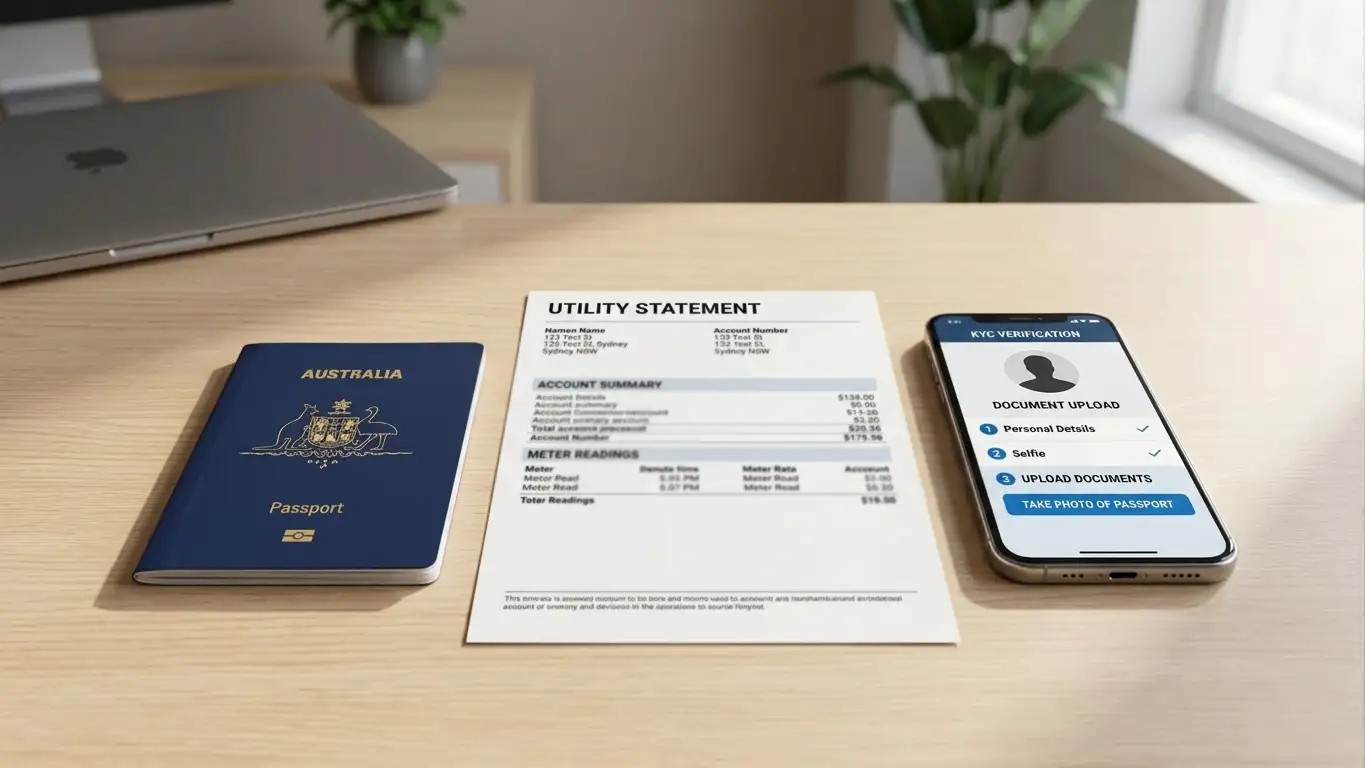
Every licensed offshore casino requires identity verification before processing your first withdrawal. Know Your Customer (KYC) checks are mandated by anti-money-laundering regulations tied to the operator’s license, and they involve submitting photo identification (passport or driver’s license), proof of address (utility bill, bank statement, government correspondence), and sometimes payment method verification (photo of the card you deposited with, screenshot of your e-wallet account). The casino’s compliance team reviews these documents, cross-checks them against your account details, and approves or rejects them.
At operators with efficient KYC processes, verification completes in two to six hours during business hours. At slower operators or during peak periods, it stretches to two or three business days. Your withdrawal request sits in a pending queue the entire time, frozen until verification clears. The payment method you chose makes no difference — a 10-minute Bitcoin withdrawal still takes three days if KYC review takes three days.
The strategy that eliminates this delay entirely: upload your verification documents immediately after creating your account, before depositing. Most casinos allow pre-verification, and their compliance teams process documents faster when no withdrawal is pending (you are not in a queue competing with players requesting cashouts). By the time you win and request a withdrawal, verification is already complete, and your cashout clears based purely on the operator’s pending period and payment method speed. This single step cuts multi-day delays to hours at operators with fast approval systems.
Casino Pending Periods Explained
Pending periods are the window between submitting a cashout request and the casino releasing funds to your chosen payment method. Some operators have zero pending — they approve withdrawals instantly via automated systems and release funds immediately. Others impose 24-, 48-, or 72-hour pending windows, during which the request sits in a queue and cannot be cancelled (at many sites) or can be reversed back into your casino balance (at others, which is a trap for players with poor impulse control).
The stated reason for pending periods is fraud prevention and responsible gambling cooling-off time. The practical reason is player retention: a 72-hour pending period gives the casino three days during which you might cancel the withdrawal and gamble the balance away. Operators that impose long pending periods are explicitly betting you will reverse your own cashout, and many players do.
Pending periods are rarely advertised on marketing pages. You discover them when you request your first withdrawal and see “pending approval” or “processing” status with no funds movement for days. Checking cashier terms before depositing is the only way to know an operator’s pending policy in advance, and even then, terms are often vague (“withdrawals processed within 1–3 business days” could mean zero pending with one-day rail time, or it could mean 72-hour pending plus same-day rail time — the wording is identical).
Operators in this review with reported zero or minimal pending periods (based on affiliate claims, not verified): The Pokies Net, BetNinja (for crypto), SkyCrown (for verified accounts). Operators with longer pending or less transparent policies: Uptown Pokies (72 business hours stated for bank transfers), FortunePlay (contradictory data), others not clearly documented.
Same-Method Withdrawal Requirements
Many offshore casinos require you to withdraw using the same method you deposited with, at minimum for the deposited amount. If you deposited A$200 via PayID, you must withdraw at least A$200 via PayID (or bank transfer if PayID withdrawals are not supported) before you can cash out additional winnings via a different method like crypto. The policy is anti-money-laundering compliance: it prevents players from depositing with a stolen card and withdrawing to crypto, effectively laundering the funds.
This creates friction when your preferred deposit method is not available for withdrawals. If you deposit via POLi (an instant bank payment method popular in Australia), POLi does not support payouts — it is deposit-only by design. Your withdrawal must route through bank transfer (one to three business days) even if you wanted to cash out via PayID or crypto. If you deposited via credit card and your bank blocks gambling refunds, the withdrawal fails and you must provide an alternative method, which may require additional verification and delay.
The workaround: deposit using the method you plan to withdraw with. If fast cashouts matter and the operator supports PayID or crypto for both deposits and withdrawals, use that method from the start. If you deposited via card or POLi before checking withdrawal options, you may be locked into slower cashout methods for that session.
What documents do I need to verify my account before withdrawing from online pokies?
Photo identification showing your full name, date of birth, and photo — passport (preferred) or driver’s license. Proof of residential address dated within the last three months — utility bill, bank statement, rates notice, or government correspondence showing your name and current address. Payment method verification for card deposits — a photo of the front of the card (middle digits masked, only first six and last four visible) or a screenshot of your e-wallet account page showing your name and account details. Some operators also request a selfie holding your ID next to your face.
Submit clear, full-colour scans or photos with all four corners of the document visible and all text legible. Cropped images, black-and-white copies, or photos with glare covering text are rejected and extend the review process. Most casinos accept uploads through their account portal; some require email submission to a dedicated KYC address. Upload immediately after account creation to avoid delays when you request your first withdrawal.
Why do some pokies sites take days to process withdrawals even with PayID or crypto?
Because casino internal processing (pending periods and verification queues) dominates payout speed, not the payment method. PayID settles in under a minute and Bitcoin in ten to sixty, but if the operator imposes a 72-hour pending period before releasing funds to the rail, you wait three business days either way. Account verification (KYC) adds another delay if you did not pre-verify documents — two hours to three business days depending on the operator’s compliance team workload. Add a manual approval queue (some casinos review every withdrawal by hand rather than automating low-risk requests), and a “10-minute crypto withdrawal” turns into a three-day wait.
Check cashier terms before depositing. Look for pending period disclosures (often buried in fine print as “processing time” or “approval window”). Upload verification documents before making your first deposit so KYC is complete when you request a cashout. And if the operator’s terms are vague or undisclosed, treat that opacity as a red flag — transparent casinos publish processing times clearly because they know fast payouts build trust.
Can I withdraw pokies winnings to a different payment method than I deposited with?
Sometimes, but not always, and usually only after withdrawing the deposited amount via the original method first. Anti-money-laundering rules require most offshore casinos to refund your deposit through the same channel you sent it: if you deposited A$200 via PayID, you must withdraw at least A$200 via PayID or bank transfer before cashing out additional winnings via crypto. Winnings above the deposited amount can often be withdrawn via any supported method once the deposit refund clears.
Exceptions exist for methods that do not support payouts. POLi, Neosurf, and paysafecard are deposit-only by design — they cannot receive funds. If you deposited via one of these, the casino will route your withdrawal through bank transfer or another method you nominate and verify. Credit card withdrawals are also frequently unavailable (many Australian banks block gambling refunds), so even if you deposited via card, you may need to provide a bank account or e-wallet for cashouts. That requires additional verification and delays the first withdrawal.
Strategy: deposit using a method that supports fast withdrawals — PayID or crypto if the operator offers them. Avoid deposit-only methods (POLi, vouchers) and cards unless you confirm cashout options in the cashier first.
The Legal Reality — Offshore Pokies and the Interactive Gambling Act 2001
No online casino operating in Australia holds an Australian license. Not one. The Interactive Gambling Act 2001 (IGA) prohibits any operator — domestic or foreign — from offering online casino games (pokies, table games, live dealer) to persons in Australia. The Australian Communications and Media Authority (ACMA) enforces the IGA and does not issue licenses for online casinos. Sports and race betting are legal from state and territory licensed operators (listed on ACMA’s register), but pokies, roulette, blackjack, baccarat, and live dealer games are categorically excluded.
Every offshore casino accepting Australian players in 2026 — the operators reviewed in this breakdown included — is operating illegally under Australian law. Their Curaçao, Malta, Anjouan, or Kahnawake licenses authorize them to operate in their home jurisdictions, but those licenses carry zero recognition under Australian law and do not permit service to Australian residents. ACMA has referred over 1,700 illegal gambling and affiliate websites for ISP-level blocking since 2019, and that blocking accelerates each year. Operators respond with mirror domains (ThePokies.net becomes ThePokies86 when the original is blocked), VPN access instructions, and alternative payment rails (crypto to bypass bank blocks), maintaining access through technical evasion rather than legal authorization.
No Australian-Licensed Online Casinos Exist
ACMA’s register of legal interactive gambling services lists sports betting and lottery operators licensed by state and territory governments. Online casinos are absent because the IGA does not permit them. Land-based casinos in Australia (Crown, Star, SkyCity, and regional venues) operate under state licenses that allow them to run pokies and table games on their physical premises, but those licenses explicitly exclude offering the same games online to Australian residents. A Victorian player walking into Crown Melbourne can legally play pokies in the venue. That same player opening Crown’s website at home and playing the same games online would be accessing an illegal service — except Crown does not offer that service because doing so would violate their license and trigger prosecution.
The distinction exists because the IGA targets online casino operators, not players. Section 15(1) makes it an offense for a person to provide an interactive gambling service to customers in Australia. The penalty for operators is up to A$1.1 million per day of contravention (for corporations; A$220,000 per day for individuals). Players are not mentioned in the offense provisions. Playing at an offshore casino is not a crime under the IGA — you face no prosecution, no fines, no criminal record for depositing at The Pokies Net or cashing out from BetNinja. But you also have zero consumer protection, no ombudsman to escalate disputes to, and no legal framework forcing the operator to honour withdrawals, settle complaints fairly, or even keep operating long enough to pay out your balance.
What the IGA Means for Players
The IGA criminalizes the supply side (operators offering service to Australians) without criminalizing the demand side (Australians playing). That creates a legal grey zone: you can access offshore sites, deposit, play, and withdraw without committing an offense, but the operators serving you are breaking Australian law every minute they leave their site accessible from Australian IP addresses. If you win and the operator refuses to pay out, you have no Australian regulator to complain to, no legal mechanism to compel payment, and no insurance or compensation fund backing your deposits.
Offshore licenses (Curaçao, Anjouan, Kahnawake, Isle of Man, Malta) govern the operator’s obligations in their home jurisdiction, not in Australia. Curaçao eGaming, for example, requires licensees to maintain responsible gambling tools, process withdrawals within reasonable timeframes, and resolve player disputes through approved mediators. But Curaçao’s enforcement is notoriously weak (licensing fees are low, oversight is minimal, and sanctions are rare), and even if the license authority sides with a player in a dispute, they cannot compel payment if the operator ignores the ruling. Australian courts will not enforce a foreign gambling debt because the contract itself is illegal under Australian law. You played at an unlicensed, prohibited operator — no Australian court will hear your claim for unpaid winnings.
The risk is not theoretical. Offshore operators go dark with player balances, dispute winnings on spurious bonus-terms violations, cap withdrawals at levels far below what marketing pages promise, and slow-pay or no-pay high rollers who hit significant wins. Australian players have no meaningful recourse beyond public complaints on forums and chargebacks (which work sometimes for deposits, never for winnings already played). If the operator has a functioning license and disputes process, you might prevail. If they are unlicensed or the license authority does not care, you lose the balance and move on.
January 2027 Payment Blocking — What Changes
New ACMA enforcement measures take effect 1 January 2027, escalating from website blocking to payment blocking. Under these measures, ACMA can direct Australian financial institutions to block transactions to offshore gambling operators, issue take-down notices for gambling advertisements (which search engines and social platforms must comply with), and impose penalties on payment processors facilitating illegal gambling transactions. The goal is to make it harder to deposit at offshore casinos and impossible to advertise them on Australian digital channels.
Payment blocking targets the banking layer. Rather than blocking websites (which operators evade with mirror domains), ACMA will instruct banks to refuse payments to known offshore gambling merchants. That includes card transactions, bank transfers, and potentially PayID. How comprehensive the blocking is depends on implementation: if ACMA provides banks with a list of operator merchant IDs and account details, blocking can be precise. If banks are required to flag all gambling-coded transactions to unlicensed offshore recipients, the net widens but also catches legitimate international transactions. Either way, PayID withdrawals from offshore operators become unreliable after January 2027, and deposits may fail more often.
Cryptocurrency withdrawals bypass this entirely. Bitcoin and Ethereum move outside the banking system — no bank can block a blockchain transaction, and ACMA has no technical mechanism to prevent crypto transfers between offshore casinos and Australian players. That is why operators are reportedly preparing crypto-only fallback plans. If PayID and card deposits become unviable after January 2027, the offshore market serving Australia will shift further toward cryptocurrency rails, which suits operators (lower fees, no chargeback risk) but raises friction for players unfamiliar with wallet management and exchange platforms.
Are instant withdrawal pokies legal in Australia?
No offshore online casino is legal in Australia. The Interactive Gambling Act 2001 prohibits operators from offering pokies, table games, and live dealer services to Australian residents, regardless of foreign licenses. Playing at offshore sites is not illegal for you — the IGA targets providers, not players. But you have zero consumer protection, no ombudsman, and no legal recourse if the operator refuses to pay your withdrawal or disappears with your balance. Every operator reviewed in this breakdown (The Pokies Net, BetNinja, SkyCrown, and others) is operating illegally under Australian law, even if they hold Curaçao or other foreign licenses.
Australian sports betting and lotteries are legal from operators with state or territory licenses, listed on ACMA’s register. Online casinos are categorically excluded. Land-based casinos operate under state licenses that allow pokies and table games on their physical premises, but those licenses do not extend to online service for Australian residents.
What happens to instant withdrawals after the January 2027 payment blocking laws?
PayID and card withdrawals will likely become unreliable or unavailable as Australian banks block transactions to offshore gambling operators under ACMA’s new enforcement powers. Payment blocking targets the banking layer: ACMA can direct financial institutions to refuse payments to operators on their blocklist, and banks will comply to avoid penalties. That means PayID deposits and withdrawals — which route through Australian banks via the NPP — may fail or be delayed by additional compliance checks after January 2027. Bank transfers face similar friction, and card payments are already blocked by many Australian banks as responsible gambling measures.
Cryptocurrency withdrawals bypass this risk entirely because blockchain transactions do not touch the Australian banking system until you convert crypto back to AUD on a local exchange. Bitcoin, Ethereum, and Litecoin move directly from the casino’s wallet to yours with no bank or payment processor in the path ACMA can block. That makes crypto the most censorship-resistant withdrawal method for Australian players after January 2027, though it requires wallet setup, private key management, and exchange fees that PayID avoids. Offshore operators are reportedly preparing crypto-only contingency plans, and the Australian market may shift substantially toward cryptocurrency banking as PayID access narrows.
How We Evaluate Withdrawal Speed — Methodology and Transparency
Affiliate sites covering instant withdrawal pokies in Australia uniformly claim they “tested” payout times by depositing real money, playing through wagering requirements, and timing cashouts across multiple operators. None publish methodology details: which account tier was tested, which payment method, what withdrawal amount, what time of week, whether the account was pre-verified or verified on first cashout. The times listed are almost certainly operator-supplied estimates or affiliate-provided marketing copy, not results from controlled independent testing.
True verification would require opening accounts at ten to fifteen offshore casinos, depositing enough to meet minimum withdrawal thresholds (A$20–100 per site, totalling A$500–1,500), playing through any first-deposit bonus wagering requirements (which can take hours to days depending on the bonus), requesting withdrawals via PayID and crypto at each site, and timing how long funds take to hit an Australian bank account or crypto wallet. That would need to be repeated across different times (business hours vs overnight, weekdays vs weekends) and verified account statuses (pre-verified vs first-withdrawal KYC) to control for variability. Then the test would need to be re-run monthly because processing times drift as operators change payment processors, adjust pending periods, or route cashouts through different compliance queues.
That level of testing requires funding, regulatory risk (deposits to illegal operators are not prosecuted, but accumulating balances across a dozen offshore sites creates audit exposure), and time investment that sits beyond editorial scope. What can be verified without funding accounts is which operators exist, what licenses they claim, which payment methods their cashier pages list, what their published terms state about processing times, and how their terms compare across the market. The withdrawal times in this breakdown come from operator pages and affiliate content — they are marketing estimates, not independently verified measurements, and we have stated that limitation upfront rather than claiming testing we did not perform.
Where the breakdown adds value is in separating casino processing time from payment rail speed, identifying PayID support asymmetry (deposit-only vs full two-way support), flagging contradictory data that signals unreliable affiliate sourcing, and framing the legal reality that competitors bury. Honest methodology beats false testing claims.
Real Money Context — Minimum Deposits and Withdrawal Limits
Minimum deposit amounts at offshore pokies sites serving Australia sit between A$10 and A$30 across most operators reviewed. The Pokies Net, BetNinja, SkyCrown, House of Pokies, Wild Pokies, and Pocket Pokies all accept A$10–20 deposits via PayID or crypto. FortunePlay sets the floor at A$20. Uptown Pokies matches that at A$20 for crypto but imposes no clearly stated minimum in available sources (which likely means operator discretion or A$20–30 by default). Those thresholds are low enough for casual players testing an operator before committing larger amounts, and they are consistent with the broader offshore market targeting recreational rather than high-roller segments.
Minimum withdrawal amounts are higher, ranging from A$30 to A$100. Most operators (The Pokies Net, SkyCrown, House of Pokies, Wild Pokies) set the floor at A$30–50 for PayID and crypto. Bank transfer minimums rise to A$100 at several sites (SkyCrown explicitly, others implied). Uptown Pokies imposes the highest minimum at A$100 across all methods, which prices out small cashouts and forces players to build balances before requesting payouts. The gap between deposit and withdrawal minimums is standard across offshore operators: they want deposits of any size but set withdrawal floors high enough to batch cashouts efficiently and discourage frequent small payouts that increase processing workload.
Maximum withdrawal limits vary widely and matter primarily to high rollers. The Pokies Net caps daily cashouts at A$9,000, which scales to A$270,000 monthly if you could actually withdraw daily without hitting cumulative limits or triggering enhanced due diligence. SkyCrown, House of Pokies, Wild Tokyo, Wild Pokies, and BetNinja do not disclose monthly caps in available sources, which usually means either no hard cap (operator discretion on large amounts) or caps high enough that they do not affect recreational players. Pocket Pokies sets a A$15,000 monthly ceiling — mid-range and unlikely to constrain most players. FortunePlay caps daily payouts at A$5,000 (A$150,000 monthly if consistently accessible). Uptown Pokies imposes the lowest limit at A$2,500 per week, roughly A$10,000 monthly, with a A$60 fee on bank transfers — the combination makes it the worst option in this comparison for anyone who values withdrawal flexibility.
Limits are not always enforced as published. High rollers hitting five-figure wins report withdrawal caps tightening suddenly, multi-stage KYC requests appearing (source of funds documentation, video verification calls), and cashout requests split across weeks or months regardless of stated daily limits. Operators reserve the right to adjust limits based on account history, and that discretion is written into terms as “management reserves the right to impose additional verification or limit withdrawal amounts for security reasons” or similar language. If you are playing at stakes where A$10,000+ wins are plausible, confirm actual withdrawal cap enforcement with the operator’s support team before depositing, and spread bankroll across multiple operators to reduce single-site exposure.
Fast Withdrawal Casinos Australia 2026 — Instant Payout Guide
Content created by the «Payment Methods» team