
$20 Minimum Deposit Casinos in Australia: What Twenty Bucks Actually Buys You in 2026
 Available in AU
Twenty dollars is a strange number in the casino world. It sits above the bargain-bin $5 and $10 voucher tier, yet nowhere near the $50 or $100 that unlocks the loud welcome packages. For a lot of Australian players it’s the sensible middle — enough to test a site properly, not enough to feel it if the reels go cold. The trouble is that most sites happily take your $20 and then quietly set the withdrawal floor at $50, or gate the bonus behind a $30 deposit. So the real question isn’t “who accepts $20.” It’s “who accepts $20 and doesn’t punish you for it.”
That’s the map this guide draws. Nine offshore casinos that take a $20 deposit from Australia in 2026, broken down by the payment rail that actually hits that number, the cashout floor waiting on the other side, and what your twenty bucks unlocks the moment it lands. No AU-licensed options exist — more on why below — so every name here runs on an offshore licence, and that changes the maths of trust as much as the maths of your bankroll.
Top $20 Deposit Casinos for Australian Players in 2026
The table below cuts through the noise. Each casino accepts $20 via at least one payment method, holds a verifiable offshore licence, and has been operating long enough to have a track record. The withdrawal minimum is where things get interesting — most set it two to five times higher than the deposit floor, which means your $20 needs to grow before you can cash out. The distinguishing feature is what makes each worth considering instead of scrolling past.
| Casino | Licence | Min Deposit by Method | Withdrawal Min | Distinguishing Feature |
|---|---|---|---|---|
| Spinsy Casino | Curaçao 8048/JAZ (Rabidi N.V.) | Neosurf/Skrill/Neteller: $15 Cards: $20 Bitcoin: $25 |
$50 | 10,000+ game library, lowest cashout floor in tier |
| Rooli Casino | Anjouan + Tobique | Bitcoin: $20 (lowest BTC minimum) Fiat: $20-$30 |
Not disclosed | Crypto specialist, near-instant crediting and fast withdrawals |
| PlayCroco Casino | Curaçao 1668/JAZ-PlayCROCO-21 (SVendor Services Ltd.) | Neosurf: $10 Bonus qualifying: $20 |
Standard | RTG exclusive since 2020, AU-focused, recurring Neosurf bonuses |
| Hell Spin Casino | Curaçao OGL/2024/2419/1067 (Hellspin Operations N.V.) | Most methods: $15 Cards: $20 |
Standard | Wheel of Fortune at $30, ACMA warning 2025 |
| Ca$hed Casino | Curaçao OGL/2023/109/0075 | Skrill/Neteller/JetOn: $15 Cards: $20 Bitcoin: $25 |
Standard | JetOn wallet support, high max deposits ($10k BTC) |
| Fair Go Casino | Curaçao eGaming | Neosurf/Bitcoin/eZeeWallet: $10 | Standard | Operating since 2017, SpinLogic Gaming exclusive, 30x wagering |
| Mafia Casino | Anjouan Gaming Board | Neosurf/crypto: $15 Cards/PaysafeCard: $20 |
$55 (crypto) | Launched 2025-2026, weekly free spins promotion |
| Ozwin Casino | Curaçao eGaming | Neosurf: $10 | Standard | 400% welcome bonus, 25-50% cashback loyalty program |
| Ripper Casino | Curaçao eGaming | Neosurf: $10 | Standard | Recurring 200% Neosurf bonus weekly, 40% crypto cashback |
The payment-method column tells you which rail hits $20. Neosurf vouchers and eWallets often come in at $10 or $15, cards and Bitcoin typically at $20 or $25. That’s not arbitrary — it’s driven by what Australian newsagents stock for Neosurf, what card processors set as anti-fraud floors, and what makes sense after Bitcoin network fees. The method you pick shapes not just how you deposit, but how fast you withdraw and what the operator charges you to move money both ways.
Spinsy Casino — 10,000+ Games and the Lowest Withdrawal Floor
Spinsy runs under Rabidi N.V., a Curaçao operator that launched the brand in 2024 and has since built one of the largest game libraries accessible to Australian players. The licence is Curaçao 8048/JAZ, verifiable through the Curaçao Gaming Control Board registry. Ten thousand games is not marketing fluff — the lobby pulls from Pragmatic Play, NetEnt, Evolution Gaming for live dealer, and BGaming, giving you enough variety that genre fatigue never sets in.
The $20 tier works cleanly here. Cards (Visa, Mastercard) hit the floor at exactly $20. Neosurf, Skrill and Neteller drop to $15, and Bitcoin climbs to $25. The withdrawal minimum is $50, which is half what several competitors demand and the lowest in this comparison set. That difference matters at the $20 deposit level — turning $20 into $50 is a 2.5x climb, steep but feasible; turning $20 into $100 is a 5x moonshot that RTP math makes unlikely. The welcome bonus gates at $30 (150% up to $1,500 plus 50 free spins, 35x wagering), so a $20 deposit lands you pure bankroll play with no promotional strings. For some that’s cleaner.
PlayCroco Casino — RTG Specialist Since 2020
PlayCroco is the AU-facing brand from SVendor Services Ltd., operating under Curaçao licence 1668/JAZ-PlayCROCO-21. The platform launched in April 2020 and is part of the Liberty Slots Group network, which also runs Lincoln Casino. The game library is 350+ titles, all sourced from RealTime Gaming and SpinLogic Gaming. If you came up on RTG pokies — Megasaur progressives, Achilles, Caesar’s Empire — this is home turf. If you’re looking for Pragmatic Play or NetEnt, keep scrolling.
Neosurf deposits start at $10, but the welcome code (200% up to AU$5,000 with PLAYCROCO) requires a $20 minimum to activate. There’s also a AU$10 free chip for new accounts and a AU$25 weekend bonus specifically for Neosurf users, which makes it one of the few casinos that treats prepaid vouchers as a first-class payment method rather than an afterthought. Daily free spins run for regular depositors. Withdrawals are capped at AU$7,500 per week. The wagering requirement floats between 30x and 60x depending on which code you use, so read the attached terms before entering a number at the cashier.
Hell Spin Casino — Wheel of Fortune and ACMA History
Hell Spin launched in 2021 under the Hellspin Operations N.V. entity and holds Curaçao licence OGL/2024/2419/1067. In 2025 the Australian Communications and Media Authority issued a formal warning naming TechOptions Group B.V. as the provider of prohibited interactive gambling services to Australian customers. The casino remains operational, but the ACMA notice is a regulatory risk signal — if enforcement escalates, Australian payment rails could be cut or the domain could face ISP-level blocking. For now it’s still accessible and processing withdrawals, but that history is part of the decision.
The game library runs over 4,000 titles. Deposit minimums: $15 for most methods including Bitcoin, eWallets and Neosurf; $20 for Visa and Mastercard. The welcome bonus unlocks at $30 (100% up to $300 plus 100 free spins, 40x wagering). What sets Hell Spin apart is the Wheel of Fortune promotion — deposit $30 and you spin the Silver Wheel for a chance at prizes up to $15,000. There’s also a missions and tournaments system that gives repeat players something to chase beyond the base RTP grind. Withdrawal processing is cited at one to three business days.
Rooli Casino — Lowest Bitcoin Minimum at $20
Rooli launched in 2024 as a crypto-first operator, dual-licensed under the Anjouan Gaming Board (Comoros) and the Tobique Gaming Commission (Canada). Both are lower-tier jurisdictions compared to Curaçao or Malta — you get less formal player recourse if a dispute escalates, but the operational overhead is lighter and that sometimes translates to faster cashouts. The legal entity behind the brand isn’t disclosed prominently, which is not unusual for Anjouan operators but does mean less transparency than you’d get from an MGA or UKGC setup.
The $20 Bitcoin minimum is the lowest in the Australian market as of 2026 — most competitors set BTC floors at $25 or $30. Fiat rails (cards, eWallets) sit at $20 to $30. Deposits credit near-instantly, and crypto withdrawals are cited as processing within hours rather than days. The welcome bonus is 100% up to $500 plus 200 free spins at 35x wagering, unlocking at a $30 deposit. Game providers include Popiplay, BGaming and Novomatic. Max deposit caps: $7,500 for Neosurf and Bitcoin, $4,000 for eWallets. The withdrawal minimum isn’t published on affiliate sites, which is either an oversight or a red flag depending on how charitable you’re feeling.
Ca$hed Casino — JetOn Wallet Specialist
Ca$hed launched in 2024 under Curaçao licence OGL/2023/109/0075. The niche here is JetOn wallet support, an eWallet that’s uncommon among offshore casinos but growing in the prepaid and privacy-focused segments. If you already use JetOn for other online spending, Ca$hed lets you deposit from $15. Skrill and Neteller also hit $15, cards land at $20, and Bitcoin climbs to $25. The welcome bonus is 150% up to $1,500 plus 50 free spins at 35x wagering, standard for the tier, unlocking at $30.
Max deposit limits are high compared to peers: $8,000 for Neosurf, $10,000 for Bitcoin, $3,500 for cards. That doesn’t help the $20 depositor on the way in, but it signals the platform is built for a range of bankroll sizes rather than locking down at the low end. SSL encryption is standard. The game library size isn’t cited in research sources, but the licence and operational setup are verifiable. The withdrawal minimum follows industry standard, likely $50 to $100.
Mafia Casino — Weekly Free Spins for Repeat Depositors
Mafia Casino is one of the newest entries in the Australian offshore market, launched sometime in late 2025 or early 2026. It operates under an Anjouan Gaming Board licence, which places it in the same regulatory tier as Rooli — functional but not rigorously overseen. The game library is cited at 6,500+ pokies. Deposit minimums: $15 for Neosurf, Skrill, Neteller and crypto; $20 for Visa, Mastercard and PaysafeCard. The welcome bonus mirrors the pack: 150% up to $1,500 plus 50 free spins, 35x wagering, $30 threshold.
The hook is the weekly free spins promotion. Deposit $30 between Monday and Thursday and you get 50 free spins. That’s a loyalty incentive aimed at repeat depositors rather than one-time testers, which tells you where the operator expects to make its margin. Withdrawal minimum is $55 for crypto (explicitly cited), roughly 3.7 times the $15 crypto deposit floor. Max deposits sit in the $7,800 to $8,840 range depending on the method. It’s too new to have a meaningful track record, so approach with the caution you’d give any 2025-2026 launch.
Fair Go Casino — SpinLogic Gaming Since 2017
Fair Go has been serving Australian players since 2017, making it the longest-tenured operator in this list. It holds a Curaçao eGaming licence (specific number not disclosed in affiliate sources, but the licensing body is confirmed). The game library is 280+ pokies running exclusively on the SpinLogic Gaming platform, formerly known as Rival Gaming. If you’re after Pragmatic Play or NetEnt, this isn’t the room. If SpinLogic’s catalogue appeals — including the Australian-themed exclusive Kev’s Bush Bonanza — Fair Go is one of the few places still running that studio as a primary draw.
Deposits via Neosurf, Bitcoin, eZeeWallet and bank transfer start at $10. The welcome structure is 100% up to AU$200 per deposit, redeemable five times for a total of AU$1,000. There’s also a one-time Neosurf code, 100-NEOS, that bumps the match to 100% up to AU$1,000 in a single go. Wagering is 30x, lower than the 35x to 50x industry standard, which makes the bonus math slightly less punishing. Withdrawals process within two business days according to published timelines, faster than the three-to-ten-day range common at lower-tier offshore sites.
Ozwin Casino — 400% Welcome Bonus and Loyalty Cashback
Ozwin runs on a Curaçao eGaming licence and focuses squarely on RealTime Gaming pokies — 300+ titles including progressive jackpots. Neosurf deposits start at AU$10. The welcome bonus is the highest percentage in this comparison: 400% across two deposits, up to AU$4,000 total, plus 100 free spins on two featured pokies. There’s also a no-deposit free chip available with code OZWELCOME-A. That 400% sounds generous until you hit the wagering requirement: 60x, well above the 35x to 40x you’ll find elsewhere. At 60x, a AU$100 bonus obligates you to cycle AU$6,000 through the casino before anything converts to withdrawable cash.
The loyalty program is six tiers with cashback ranging from 25% to 50%, higher than the 10% to 25% baseline most competitors offer. There’s also a weekly Crystal Ball draw for players who deposit AU$100 or more — winners receive between AU$25 and AU$500 in free funds. The combination of high bonus percentages, steep wagering, and strong cashback makes Ozwin a better fit for grinders who plan to deposit repeatedly rather than one-time testers playing out a $20 ticket.
Ripper Casino — Recurring 200% Neosurf Bonus Weekly
Ripper launched in 2021 under a Curaçao eGaming licence. Neosurf deposits start at AU$10. The welcome package stretches to AU$7,500 across five deposits, with the first deposit matched at 150% using code RIPPER150. What sets Ripper apart is the recurring weekly Neosurf bonus: 200% every week with code SURF200. That’s a loyalty structure, not a welcome offer — the casino is paying you to keep buying Neosurf vouchers at the newsagent and feeding them into your account.
The game library exceeds 4,000 titles covering pokies, table games and live dealer options. Cashback is 25% standard or 40% for crypto deposits, with a 20x wagering requirement on the cashback itself. Crypto withdrawals are cited as processing within hours, significantly faster than the multi-day bank transfer timelines. For players who already use Neosurf as their primary deposit method and plan to reload regularly, Ripper’s recurring 200% structure offers better ongoing value than a one-shot welcome package.
Which casino has the lowest $20 Bitcoin deposit minimum in Australia?
Rooli Casino accepts Bitcoin deposits from $20, the lowest Bitcoin minimum in the Australian offshore market as of 2026. Most competitors set BTC floors at $25 to $30, so Rooli is the entry point if you’re depositing crypto at the $20 threshold and want to minimise the capital you lock into a single account on your first test.
Payment Methods That Work at the $20 Tier
The $20 deposit floor looks clean on paper, but the method you use determines whether you actually pay $20 or closer to $17 after fees, whether you wait two seconds or two hours for crediting, and whether you’ll be able to withdraw via the same rail or get bounced to bank transfer on the way out. The table below compares the five payment categories that dominate the Australian $20 tier.
| Payment Method | Deposit Speed | Typical Min at $20 Tier | Network Fees | Withdrawal Support |
|---|---|---|---|---|
| PayID | Instant (sub-60s) | $10-$20 | None (bank-to-bank direct) | Partial (deposit-only at most sites, full support rare) |
| Neosurf Vouchers | Instant (code entry) | $10-$20 | None at deposit; voucher face value purchased upfront | No (cash-out to bank transfer or crypto) |
| Bitcoin (BTC) | 10-30 minutes (1-3 confirmations) | $20-$30 | $2-$5 (10-25% erosion at $20 level) | Yes (1-24 hours typical processing) |
| USDT (TRC-20) | 3-5 minutes | $15-$25 | <$1 (<5% erosion) | Yes (1-24 hours typical processing) |
| Credit Cards (Visa/Mastercard) | Instant to 10 minutes | $20-$25 | None visible (baked into exchange rate or declined) | No (refund to original card rare; cash-out to bank or eWallet) |
| eWallets (Skrill, Neteller, JetOn) | Instant to 5 minutes | $10-$20 | Varies by wallet (typically small fixed fee or %) | Partial (supported at select operators) |
PayID is Australia’s instant bank transfer system, built on the New Payments Platform. You register a mobile number or email as your PayID alias, and transfers clear in under 60 seconds any hour of the day. The appeal at the $20 tier is zero fee erosion and no need to prefund a separate wallet or buy a voucher. The catch is withdrawal support. Most offshore casinos accept PayID deposits but process withdrawals via traditional bank transfer with BSB and account number, which takes one to five business days instead of seconds. A handful of operators support PayID withdrawals, but they’re the minority. If instant two-way cash flow matters to you, check the withdrawal page before you commit.
PayID — Instant Deposits from Your Bank Account
Over 42% of Australian casino players use PayID as their primary deposit method as of September 2026, according to industry payment-rail data. It’s replaced POLi and traditional bank transfer because it’s faster and doesn’t require handing over your internet banking login to a third-party aggregator. From the casino’s side, PayID clears through the NPP with sub-60-second settlement and no intermediary fee, which is why adoption accelerated in 2025 and 2026. Casinos launched in that window — Rooli, Spinsy, Ca$hed — tend to have PayID from day one. Older operators like Fair Go and PlayCroco added it later or not at all.
The deposit minimum for PayID typically sits at $10 to $20 depending on the operator. There’s no network fee, no currency conversion spread, and no intermediary taking a clip. The transfer goes bank-to-bank direct. Withdrawal support is where things fracture. Most casinos list PayID as a deposit option only. When you request a withdrawal, the cashier asks for your BSB and account number and processes it as a standard bank transfer, which can take three to ten business days depending on the operator’s internal verification queue and the receiving bank’s clearing schedule. A few operators — RocketPlay and select others per 2026 reviews — support PayID withdrawals, meaning the return trip is as fast as the deposit. That’s the exception, not the rule. If you’re depositing $20 via PayID, assume you’ll be cashing out via bank transfer unless the withdrawal page explicitly confirms bidirectional PayID support.
Is PayID safe for $20 casino deposits?
Yes. PayID is a payment addressing service operated by NPP Australia Limited, which is owned by 13 Australian financial institutions. It runs on the New Payments Platform infrastructure, the same system that clears Osko payments. The transfer itself is bank-to-bank — your money moves from your account to the casino’s merchant account without passing through a third-party processor. The risk is not the payment rail; it’s whether the casino honours the withdrawal when you request it. PayID doesn’t change that calculation. An offshore-licensed casino operating without Australian regulatory oversight can delay, dispute or deny your cashout regardless of how you deposited. The payment method is secure. The counterparty risk remains.
Neosurf Vouchers — Prepaid Privacy at Newsagents
Neosurf is a prepaid voucher system. You walk into an Australian newsagent, convenience store or petrol station, buy a voucher in a fixed denomination ($10, $20, $50, $100), and receive a 10-digit PIN. At the casino cashier you enter that PIN and the value credits instantly. No bank account linked, no card details stored, no transaction history on your statement. For players who want to firewall their gambling spend from their main finances, or who don’t want casino deposits showing up on a shared bank account, Neosurf delivers that separation.
The $20 sweet spot works cleanly here because $20 is a standard voucher denomination. You’re not stuck buying a $50 voucher and splitting it across two $20 deposits with $10 left over. Deposit minimums for Neosurf typically run $10 to $20 depending on the casino. The downside is one-way flow. You can deposit via Neosurf but you cannot withdraw to a Neosurf voucher. Cashouts go to bank transfer, crypto, or in rare cases an eWallet. That’s not a Neosurf limitation — it’s the nature of prepaid vouchers. You’re converting cash into a one-directional credit. Several casinos in this list — PlayCroco, Ripper, Ozwin — offer recurring Neosurf bonuses as a way to retain players who keep buying vouchers, which signals that Neosurf users are sticky and worth incentivising.
Cryptocurrency — Bitcoin, USDT and Fast Withdrawals
Bitcoin deposits at the $20 tier face a fee problem. The Bitcoin network charges a transaction fee to miners for processing and confirming your transfer. As of 2026, that fee typically runs $2 to $5 depending on network congestion. If you deposit $20 in Bitcoin, $2 to $5 is eaten by the fee before the casino even sees it, leaving you with $15 to $18 credited to your account. That’s a 10% to 25% haircut, which is brutal at the low end. Most casinos set BTC minimums at $25 or $30 for this reason — below that, the fee erosion becomes visible and complaints pile up.
Rooli Casino’s $20 Bitcoin minimum is the lowest in the market, but you’re still paying the network fee. A better option at the $20 tier is USDT on the TRC-20 network. Tether (USDT) is a stablecoin pegged to the US dollar, and the TRC-20 network (Tron blockchain) processes transfers with fees under $1, often closer to $0.50. That’s less than 5% erosion on a $20 deposit, acceptable. Ethereum sits in the middle: network fees run $1 to $3 depending on gas prices, so you’re losing 5% to 15%. Litecoin is similar. If you’re depositing crypto at the $20 level, USDT on TRC-20 is the most capital-efficient rail. Bitcoin is the most recognised but the least efficient for small amounts.
Crypto’s advantage shows up on withdrawal. Most casinos process crypto cashouts in one to 24 hours, compared to three to ten business days for bank transfers. Ripper and Rooli both cite sub-24-hour crypto withdrawal timelines. The tradeoff is you need a crypto wallet, you need to understand how to move funds on-chain without sending them to the wrong address or wrong network, and you’re exposed to price volatility if you hold the crypto for any length of time between cashout and conversion to AUD. For players already comfortable with crypto, it’s the fastest two-way rail. For players new to it, the learning curve and fee calculation make it less attractive than PayID or Neosurf on the way in.
Credit Cards and eWallets
Credit cards (Visa, Mastercard) typically set deposit minimums at $20 to $25 for offshore casinos. The transfer is instant or near-instant. There’s no visible fee, but card processors and casinos bake forex spreads or processing costs into the exchange rate, so you may not be getting the mid-market AUD rate when the deposit lands. The bigger issue is withdrawal. Most offshore casinos do not support card withdrawals. Regulatory friction, chargeback risk and card network rules make it unworkable for the operator. When you cash out, you’ll be directed to bank transfer, crypto, or an eWallet. That’s not a dealbreaker, but it means you can’t reverse the deposit path on the way out.
eWallets — Skrill, Neteller, JetOn — sit in the middle. Deposit minimums often drop to $10 to $15, faster than cards and with no forex ambiguity if your eWallet is already funded in AUD. Withdrawal support varies by operator. Ca$hed Casino lists JetOn wallet support, which is rare. Skrill and Neteller are more common but still not universal. If you already use an eWallet for other online spending, it’s a clean deposit method. If you don’t, setting one up just for casino deposits adds friction without obvious benefit over PayID or Neosurf.
What Your $20 Actually Gets You — Session Value and Bonus Reality
The $20 is in your account. Now the question is how long it lasts, whether the welcome bonus applies, and what has to happen before you’re allowed to take money back out. The arithmetic isn’t cruel, but it’s not charitable either. A casino is a business, not a charity, and the $20 depositor is not the operator’s most valuable customer. The structure reflects that.
Session Mathematics — How Long $20 Lasts on Pokies
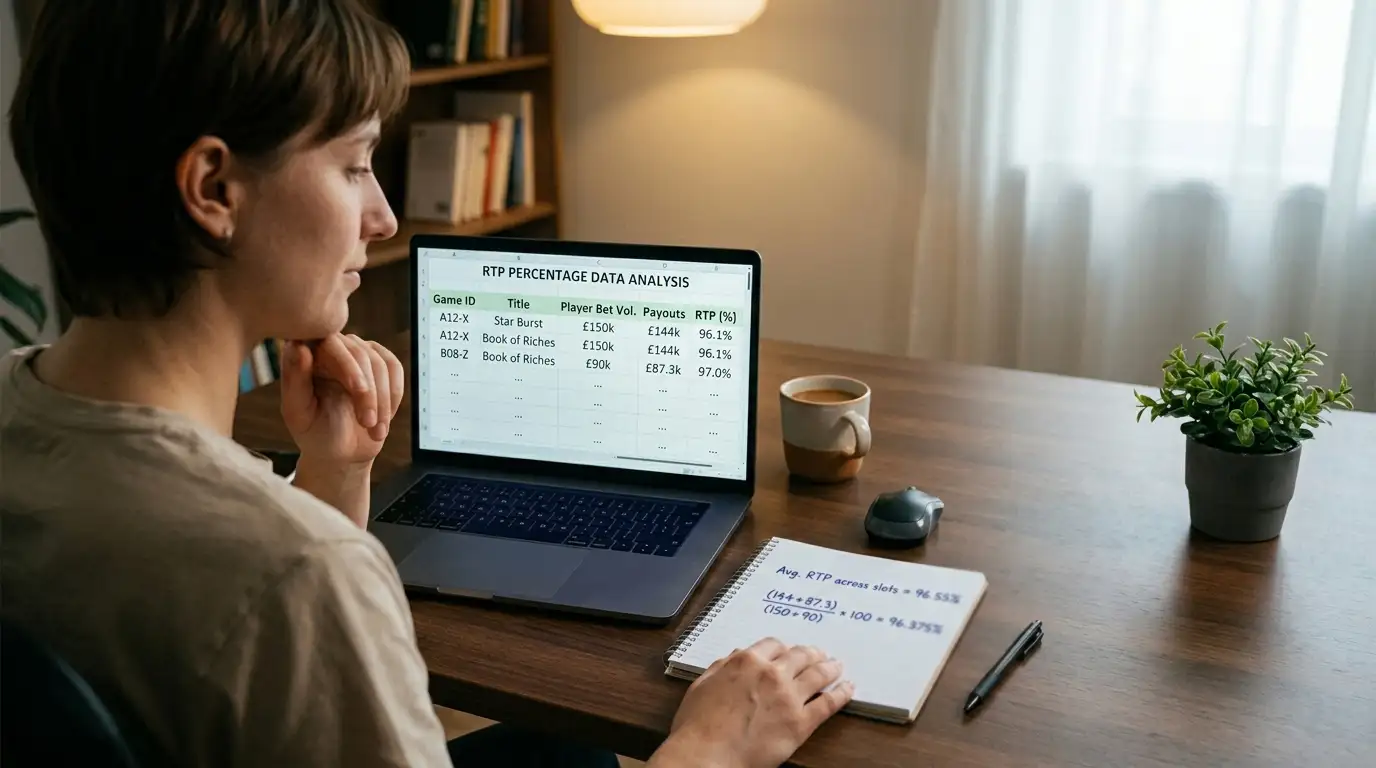
Assume you deposit $20 and head straight to the pokies. You pick a game with 96% RTP, which is standard for Pragmatic Play and most NetEnt titles. You set your bet to $0.20 per spin, a common choice at the low-bankroll end. Your $20 bankroll gives you 100 spins before you hit zero if every spin returned nothing.
But RTP is not a per-spin guarantee — it’s a long-run average. Over 100 spins, variance dominates. Some spins return nothing, some return small multiples, a few might return 10x or 50x or more. The 96% RTP means that across millions of spins, the game returns 96 cents for every dollar wagered. Over your 100-spin session, the expected outcome is that your $20 becomes $19.20 after RTP drain. Variance can push that higher or lower — you might spike to $40 on a feature trigger, or bleed to zero in 60 spins on a cold streak.
Time-to-zero at $0.20 per spin: somewhere between 40 and 150 spins depending on variance, clustering around 100. At 15 spins per minute (a moderate pace), that’s roughly five to ten minutes of play. At $0.50 per spin, your 40 base spins shrink the session to three to six minutes. The takeaway is that $20 does not buy an afternoon. It buys a short test. If you hit a feature within the first 50 spins and it pays, you extend the session. If you don’t, the RTP grind takes you to zero faster than it feels like it should.
How long do $20 last on pokies?
At a $0.20 bet per spin on a 96% RTP pokie, $20 gives you roughly 100 base spins, which translates to five to ten minutes of play at a moderate pace. Variance can extend or shorten that window significantly — a feature trigger early can double or triple your session length, while a cold streak can drain the bankroll in half the time. At higher bet levels ($0.50 or $1 per spin), the session compresses to three to six minutes. Twenty dollars is a test budget, not a grind budget.
The $30 Bonus Threshold — What Happens at $20
Nine out of ten offshore casinos serving Australia gate their welcome bonus at a $30 minimum deposit. Spinsy, PlayCroco, Hell Spin, Ca$hed, Mafia, Fair Go, Ozwin, Ripper — all of them unlock the bonus at $30. Rooli sits at the same threshold. If you deposit $20, you get your $20 credited as pure bankroll with no bonus funds, no free spins, and no wagering requirement attached. That’s not punishment. For some players it’s cleaner — you’re playing with cash, not locked promotional credit that comes with a 35x to 60x rollover obligation before anything converts to withdrawable money.
What you do get at $20 is base loyalty program enrollment. Ozwin’s six-tier cashback system (25% to 50%) starts accumulating from your first deposit. Ripper’s 25% standard cashback and 40% crypto cashback apply. PlayCroco’s daily free spins for repeat depositors are available. The $30 threshold isn’t arbitrary — it’s 1.5x the $20 floor, a psychological nudge to get you to deposit slightly more and enter the promotional funnel. Operators know that players who claim the bonus are more likely to reload, because the wagering requirement often burns through the deposit and forces a second deposit to complete the rollover or recoup losses.
If you’re testing a site for the first time and want to keep your exposure at $20, skipping the bonus is rational. If you’re confident the site is solid and you want the promotional value, the extra $10 to hit $30 buys you 150% to 400% in bonus credit depending on the operator. Just understand that the bonus comes with a turnover obligation, and most players never clear it. The house wouldn’t offer it otherwise.
Do I get the welcome bonus with a $20 deposit?
No, not at most casinos serving Australia. The standard welcome bonus threshold is $30. If you deposit $20, you receive your $20 as pure bankroll with no bonus funds or free spins attached. You’re enrolled in the base loyalty program (cashback, points, recurring promotions), but the upfront match bonus and free spins unlock only at $30 or higher. PlayCroco is a partial exception — the Neosurf minimum is $10, but the welcome code requires $20 to activate. Check the specific terms at the cashier before entering an amount.
Withdrawal Minimums — The Cashout Floor Trap
Here’s where the $20 deposit math gets uncomfortable. Spinsy sets the withdrawal minimum at $50. Most other casinos in this tier set it at $50 to $100, with $100 being common among lower-tier Curaçao and Anjouan operators. Mafia Casino explicitly cites a $55 crypto withdrawal minimum. That means if you deposit $20, you cannot cash out until your balance reaches at least $50.
Turning $20 into $50 is a 2.5x growth requirement. On a 96% RTP pokie, every dollar you cycle through the game costs you four cents in expected value. To grow $20 to $50, you need to either hit variance — a feature trigger, a medium-to-large multiplier win — or you need to cycle the $20 multiple times and hope RTP drain doesn’t kill you before you spike. The math is not impossible, but it’s not trivial. If the withdrawal floor is $100, you need a 5x return on your $20. That’s effectively a jackpot or a sustained streak of above-mean variance. Most $20 depositors never reach the cashout threshold. They play out the $20, enjoy the session (or don’t), and leave.
The withdrawal floor exists for two reasons. One, it reduces cashout processing load — operators don’t want to handle fifty $25 withdrawals when they can handle five $250 withdrawals for the same administrative cost. Two, it’s a retention mechanism. The higher the floor, the more you need to play (or deposit again) before you’re eligible to cash out. Spinsy’s $50 minimum is the lowest in this comparison set and the most reasonable for a $20 depositor. Casinos that set it at $100 are effectively telling you that $20 is welcome as a test deposit, but they’re not interested in processing your withdrawal unless you’re a repeat depositor or got lucky.
What is the minimum withdrawal amount at $20 deposit casinos?
Withdrawal minimums range from $50 to $100 at most offshore casinos accepting $20 deposits. Spinsy Casino sets the floor at $50, the lowest in this tier. Mafia Casino cites $55 for crypto withdrawals. Other operators typically default to $100. That means your $20 deposit must grow to at least $50 to $100 before you’re eligible to cash out. Turning $20 into $50 requires a 2.5x return; turning it into $100 requires a 5x return. Both are possible through variance, but neither is likely on a single $20 session. Most $20 depositors play out the bankroll without hitting the cashout threshold.

Pokies and Game Selection at $20 Casinos
The offshore casinos that accept $20 from Australia don’t skimp on game libraries — ten thousand titles is not unusual (Spinsy), and even the smaller operators run three to four thousand. The question is whether library size matters at the $20 deposit level, and which providers dominate the low-stakes lobbies.
RTG Pokies — The Offshore Standard
RealTime Gaming (RTG) is the studio you’ll see most often at Curaçao-licensed casinos serving Australia. PlayCroco, Fair Go, Ozwin and Ripper all run RTG as their primary or exclusive provider. The catalogue includes 300 to 350+ pokies, many of which have been in rotation since the mid-2000s: Achilles, Caesar’s Empire, Cash Bandits, Cleopatra’s Gold. The progressive jackpots — Megasaur, Spirit of the Inca, Shopping Spree — frequently climb into six figures AUD, occasionally into seven.
RTG’s RTP typically ranges from 94.5% to 97.5% depending on the title and the operator’s configuration. Some studios ship the same game at multiple RTP settings, and the operator picks which build to install. You won’t know which RTP your session is running unless you open the game’s rules screen and check. That lack of transparency is standard across RTG casinos, not a unique failing of any one operator. If you grew up on RTG pokies, the mechanics are familiar and the variance profiles feel predictable. If you’re coming from Pragmatic Play or NetEnt, RTG titles can feel dated and slower-paced. It’s a preference call, not a quality hierarchy.
Pragmatic Play and NetEnt — High-RTP Favourites
Pragmatic Play and NetEnt are the studios you’ll find at the larger, more recently launched casinos. Spinsy, Hell Spin, Ca$hed and Rooli all list Pragmatic Play and NetEnt in their provider rosters. Pragmatic Play’s marquee titles — Sweet Bonanza, Wolf Gold, Gates of Olympus, The Dog House — typically run at 96% to 96.5% RTP, published and consistent. NetEnt’s Starburst, Gonzo’s Quest and Dead or Alive sit in the same range. The RTP is higher than RTG’s low end and more transparently documented.

Bet floors on Pragmatic Play and NetEnt pokies often start at $0.10 or $0.20 per spin, which aligns well with a $20 bankroll. The graphics are sharper, the animations smoother, and the mobile experience is better optimised than RTG’s Flash-era legacy titles. That doesn’t make them better games in an absolute sense — variance and RTP matter more than visual polish — but it does make them feel more modern. If you’re choosing between an RTG casino and a Pragmatic Play casino at the $20 tier, and RTP transparency matters to you, go with Pragmatic Play. If you want established progressive jackpots that occasionally hit seven figures, RTG has the track record.
Game Library Size — Does 10,000+ Matter?
Spinsy advertises 10,000+ games. Ripper and Hell Spin both exceed 4,000. PlayCroco sits at 350. Does library size affect your $20 session? Not in any practical way. You’re not going to sample 10,000 pokies on a $20 deposit. You’ll try three to five titles, maybe ten if you’re chasing a specific mechanic or theme. The benefit of a large library is genre coverage — if you want a specific game type (Megaways, cluster pays, high-volatility progressives, low-volatility grinding titles), a 10,000-title lobby is more likely to have it than a 350-title lobby. But the 350-title lobby at PlayCroco or Fair Go covers the RTG classics comprehensively, so if RTG is your preference, you’re not missing anything.
The real differentiator is live dealer availability. Evolution Gaming, Pragmatic Live and Ezugi power most live dealer tables at offshore casinos. Minimum bets on live blackjack and roulette typically start at $1 to $5 per hand or spin, which means your $20 buys you four to twenty hands depending on the table. That’s not a long session, but it’s enough to test whether you like the dealer, the interface, and the pacing. If live dealer is part of your $20 test, confirm the operator lists Evolution or Pragmatic Live before you deposit. RTG-only casinos generally don’t offer live dealer, or offer it through a secondary integration with limited table selection.
Progressive Jackpots on a $20 Budget
RTG’s Megasaur progressive frequently sits above $1 million AUD. The minimum bet to qualify for the jackpot is typically $1 to $2.50 per spin depending on the operator’s settings. That means your $20 buys you eight to twenty spins at jackpot-eligible stakes. The odds of hitting the top prize on any single spin are infinitesimally small — millions to one against — but the ticket is valid, and someone hits these jackpots several times a year across the network. Whether that’s worth burning your $20 faster than you would at $0.20 per spin is a preference call. The EV is still negative; you’re paying for variance and a lottery ticket, not for a +EV opportunity.
Pragmatic Play and NetExt also offer progressive jackpots, but the pools are typically smaller — tens of thousands to low hundreds of thousands AUD rather than mid-six to seven figures. The contribution rate (the percentage of each bet that feeds the jackpot pool) is lower, and the trigger frequency is higher. If your goal is to take a shot at a life-changing sum on a $20 budget, RTG’s network progressives at PlayCroco, Fair Go or Ozwin are the better ticket. If your goal is to extend playtime and grind through variance, stick to base-game pokies at lower stakes.
Can I withdraw winnings from a $20 deposit without depositing more?
Yes, but only if your balance reaches the casino’s withdrawal minimum (typically $50 to $100) and you meet any wagering requirements. If you deposited $20 without claiming a bonus, there’s no rollover obligation — your $20 is pure cash and any winnings are immediately withdrawable once you hit the floor. If you claimed a bonus, you must complete the wagering requirement (usually 35x to 60x the bonus amount) before anything converts to withdrawable cash. Most casinos do not force you to deposit again to withdraw, but the withdrawal minimum and bonus terms often make it impractical to cash out from a single $20 deposit without hitting significant variance.
The Legal Reality — Offshore Licensing and Australian Players
Every casino in this guide operates under an offshore licence. That’s not a workaround or a grey area — it’s the only option. No online casino offering real-money pokies, table games or live dealer is licensed by any Australian state, territory or Commonwealth regulator. The reason is the Interactive Gambling Act 2001, and the reason it matters is that your recourse when something goes wrong is limited.
Why There Are No AU-Licensed Online Casinos
The Interactive Gambling Act 2001, enforced by the Australian Communications and Media Authority, prohibits Australian-based companies from offering real-money online casino services to Australian residents. That includes pokies, blackjack, roulette, baccarat, poker and live dealer tables. The prohibition targets providers, not players. It is not illegal for an individual Australian to play at an offshore-licensed casino. You’re not breaking the law by depositing $20 at a Curaçao or MGA-licensed site and playing pokies. The law forbids the operator from offering you the service from within Australia; it does not criminalise your participation.
This creates a regulatory gap. Sports betting is permitted under the IGA and is licensed by state and territory regulators (NSW, Victoria, NT, etc.). Lottery products are state-licensed. But online casino gaming falls outside the licensing framework entirely. There is no pathway for an operator to obtain an Australian licence to offer real-money pokies online. Crown, Star and SkyCity run land-based casinos in Australia, but their digital presence is limited to sports betting under separate state licences. Their casino floors do not extend to online pokies or table games under Australian law.
The result is that every Australian who plays online casino games in 2026 is playing at an offshore operator licensed in Malta, Curaçao, Gibraltar, Kahnawake, Anjouan or another non-Australian jurisdiction. ACMA’s role is to issue blocking directions to ISPs for offshore operators that are deemed non-compliant or unresponsive. Occasionally a domain gets blocked. The casino typically registers a new domain and continues operating. The cat-and-mouse game has been running since 2001 with no sign of resolution.

What the Interactive Gambling Act 2001 Means for Players
You can play. You cannot be prosecuted for depositing, wagering or withdrawing from an offshore casino. The IGA does not impose penalties on players. The risk is not legal; it’s commercial. When you deposit at an offshore casino, you’re dealing with an entity that is not subject to Australian consumer protection laws, not supervised by an Australian regulator, and not required to hold your funds in a segregated trust account. If the operator delays your withdrawal, disputes your win, or shuts down without notice, your recourse is limited to the licensing jurisdiction’s complaint process (if one exists and is functional) and public pressure (reviews, forums, chargebacks if you used a card).
Curaçao licences, which dominate this list, do not require operators to participate in an Alternative Dispute Resolution scheme or maintain player protection funds. Malta Gaming Authority licences do, which is why MGA-licensed casinos are considered higher-tier. Anjouan licences offer even less oversight than Curaçao. The licence tells you what regulatory floor the operator has agreed to meet, but it does not guarantee fair treatment. It guarantees only that the operator paid the licensing fee and submitted the required paperwork to that jurisdiction.
ACMA does not vet offshore casinos for fairness or trustworthiness. ACMA issues blocking directions when an operator refuses to stop serving Australians or fails to respond to a show-cause notice. That’s a binary action — block or don’t block — not a rating system. The casinos in this guide are not endorsed by ACMA. They’re not endorsed by any Australian government body. They’re operating in a space the IGA created by prohibiting domestic provision without criminalising offshore consumption.
Can I legally play at a $20 deposit casino from Australia?
Yes. The Interactive Gambling Act 2001 prohibits Australian companies from providing online casino services to Australian residents, but it does not criminalise individual Australians playing at offshore-licensed casinos. You are not breaking Commonwealth law by depositing $20 at a Curaçao, Malta or Anjouan-licensed casino and playing pokies or table games. The prohibition targets the provider, not the player. However, the offshore operator is not subject to Australian consumer protection laws, and your recourse if something goes wrong is limited to the licensing jurisdiction’s complaint process and public pressure.
Curaçao vs MGA vs Anjouan — Licence Tiers Explained
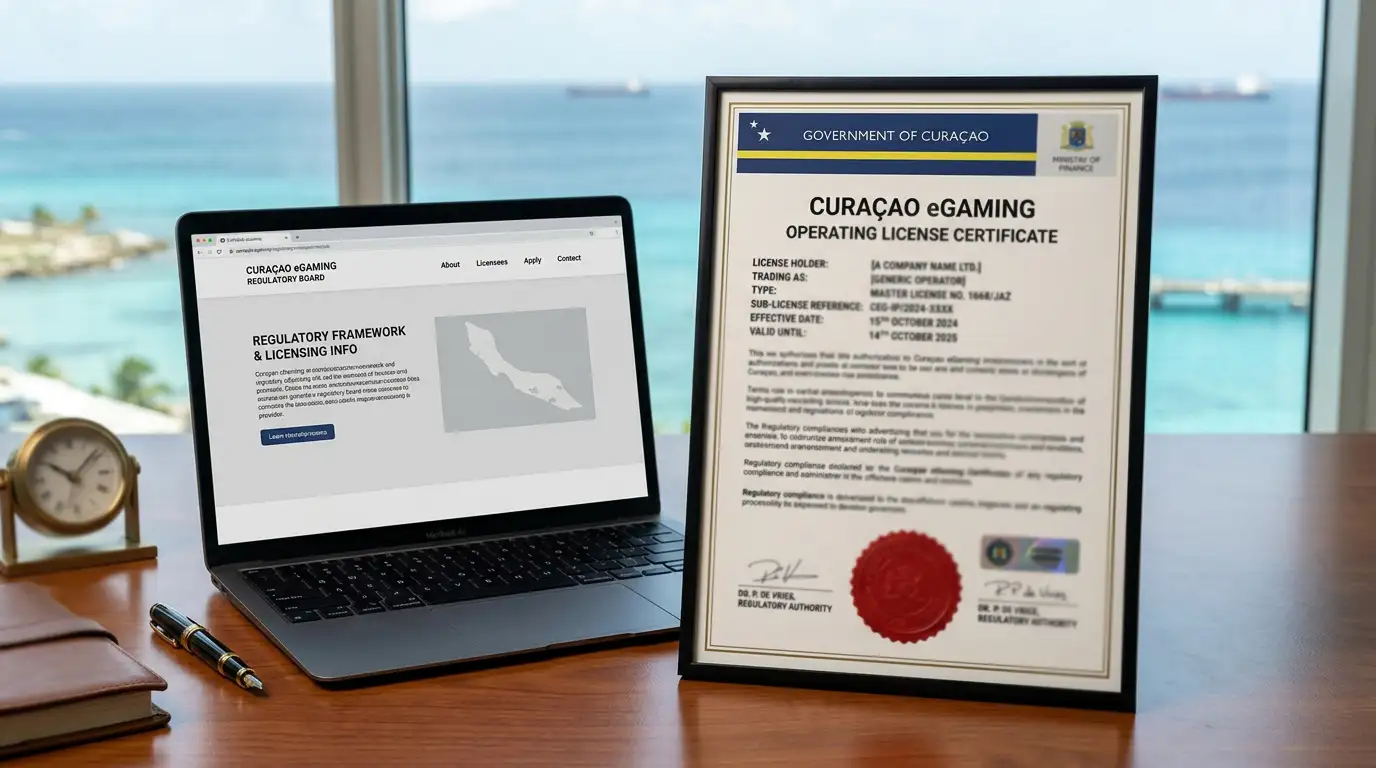
Curaçao eGaming licences are the most common in this list. Spinsy, PlayCroco, Hell Spin, Ca$hed, Fair Go, Ozwin and Ripper all hold Curaçao licences. The Curaçao Gaming Control Board issues master licences to sublicensors, who in turn issue certificates to operators. The regulatory requirements are minimal: proof of corporate registration, proof of game fairness (third-party RNG certification from iTech Labs, Gaming Labs or BMM Testlabs), and payment of the licence fee. Curaçao does not require segregated player funds, mandatory dispute resolution, or regular financial audits. If you have a dispute with a Curaçao-licensed operator, you can file a complaint with the sublicensor or the Curaçao Gaming Control Board, but enforcement is inconsistent and resolution is not guaranteed. Curaçao’s appeal to operators is low cost and light oversight; its downside to players is limited recourse.
Malta Gaming Authority licences are stricter. MGA requires segregated player funds held in trust, participation in an approved Alternative Dispute Resolution service, regular financial audits, and publication of RTP data. MGA-licensed operators serving Australians exist but are less common at the $20 tier — the compliance overhead is higher, and most focus on European markets where the regulatory return is better. If a casino lists an MGA licence (format: MGA/BXXX/YYYY), you’re getting a higher regulatory floor than Curaçao. Your recourse in a dispute is more robust. The tradeoff is that MGA casinos often have higher deposit minimums and stricter bonus terms because the operational cost is higher.
Anjouan Gaming Board licences (Comoros) are the bottom tier. Rooli and Mafia operate under Anjouan licences. Regulatory oversight is minimal to nonexistent. The licensing fee is low, the approval process is light, and enforcement is functionally absent. Anjouan licences are common among crypto-focused casinos and newer operators looking to minimise compliance costs. If you deposit at an Anjouan-licensed casino and something goes wrong, your realistic recourse is public complaints (forums, review sites, social media) and chargebacks if you used a card. There is no functional dispute resolution process through the licensing body. The upside is that Anjouan operators can move faster, process withdrawals with less bureaucratic friction, and take risks that MGA or even Curaçao operators avoid. The downside is you’re operating on trust and reputation, not regulatory protection.
ACMA Warnings and What They Mean
In 2025, ACMA issued a formal warning to TechOptions Group B.V., identifying it as the provider of prohibited interactive gambling services to Australian customers through Hell Spin Casino. The casino is still operational, still accepting deposits, and still processing withdrawals as of 2026. An ACMA warning is not a shutdown notice. It’s a public statement that the regulator has identified the operator and considers it non-compliant with the IGA. The next step, if the operator does not respond or cease serving Australians, is a blocking direction to ISPs.
Hell Spin has not exited the Australian market following the warning. That tells you the operator is either prepared to operate under a new domain if blocked, or believes ACMA enforcement will not escalate. For players, the warning is a risk signal. If ACMA escalates to a blocking direction, your access could be cut at the DNS level (easily circumvented with a VPN, but still friction). If payment processors decide the regulatory heat is too high, PayID or card deposits could stop working. The casino’s licensing and operational structure remain intact — the Curaçao licence is not affected by an ACMA warning — but the Australian-facing payment rails and domain access are vulnerable.
Should you avoid Hell Spin because of the ACMA warning? That’s a risk tolerance question. The casino has a four-year operational history, a Curaçao licence, and 4,000+ games. The warning doesn’t mean the casino is a scam or that withdrawals will be denied. It means ACMA has flagged it, and there’s a nonzero chance that access or payment rails will be disrupted in the future. If you’re testing with $20, the risk is capped at $20. If you’re planning to deposit repeatedly and build a balance, the regulatory uncertainty is worth factoring in.
Are $20 deposit casinos licensed?
Yes. Every casino in this guide holds an offshore licence from Curaçao eGaming, the Malta Gaming Authority, or the Anjouan Gaming Board. The licences are verifiable through the respective gaming control boards. These are not Australian licences — no online casino offering real-money pokies or table games is licensed in Australia, because the Interactive Gambling Act 2001 prohibits domestic licensing of such services. The offshore licences provide a baseline of regulatory oversight (game fairness, RNG certification, corporate registration), but they do not offer the same player protections as Australian consumer law. Your recourse in a dispute is determined by the licensing jurisdiction, not Australian courts.
Mobile Play and Platform Access
All nine casinos in this guide run on HTML5, which means they load in your mobile browser (Safari on iOS, Chrome on Android) without requiring an app download. You open the site, log in, tap the cashier, deposit your $20 via PayID or Neosurf or whichever method the site supports, and the lobby loads with the same game library as desktop. The difference is screen size and interface optimisation.
RTG casinos — PlayCroco, Fair Go, Ozwin, Ripper — were built in an era when Flash was still dominant, and their mobile interfaces reflect that legacy. The lobbies work, the games load, and you can deposit and withdraw, but the UX is clunkier than what you’d get from a Pragmatic Play-heavy casino like Spinsy or Hell Spin. Buttons are smaller, navigation is less intuitive, and load times are slightly longer. It’s functional, not polished.
Casinos launched in 2024 and later — Spinsy, Rooli, Ca$hed, Mafia — were built mobile-first. The lobby filters work smoothly, game thumbnails are sized for thumb taps, and the cashier is optimised for mobile keyboards. If you’re planning to play exclusively on your phone, start with the newer operators. If you don’t mind a slightly rougher interface in exchange for RTG’s progressive jackpots or SpinLogic’s exclusive titles, the older casinos are tolerable.
PayID works identically on mobile and desktop. You enter the amount, tap PayID, select your bank from the list, authenticate via your banking app, and the transfer completes in under 60 seconds. Neosurf requires typing the 10-digit PIN, which is easier on desktop but not difficult on mobile if you copy-paste from a photo or text. Crypto deposits on mobile require a wallet app (Trust Wallet, MetaMask, Coinbase Wallet, Exodus) and scanning a QR code or copying the deposit address. If you’ve never moved crypto before, do your first deposit on desktop where you can see the full interface and double-check the address and network before you confirm. Sending Bitcoin to an Ethereum address, or USDT on the wrong network, is not reversible.
New $20 Deposit Casinos in 2026
Four of the nine casinos in this guide launched between 2024 and 2026: Spinsy, Rooli, Ca$hed and Mafia. The advantage of a new casino is modern UX, faster mobile interfaces, and payment methods integrated from launch rather than bolted on later. PayID, USDT on TRC-20, and instant crypto withdrawals are table stakes for 2024+ launches; older operators often lack them or added them incompletely. The disadvantage is limited track record. You don’t know how they’ll handle a six-figure jackpot win, a disputed bonus rollover, or an ACMA blocking direction. Reputation takes years to build, and these casinos haven’t had years.
Spinsy (Rabidi N.V., Curaçao 8048/JAZ) launched in 2024 with a 10,000+ game library and a $50 withdrawal minimum, the lowest in the tier. It’s too new to have deep forum coverage, but the operator behind it (Rabidi N.V.) manages multiple brands and has been in the market since before 2024. That provides some continuity. Rooli launched in 2024 as a crypto specialist under Anjouan and Tobique dual licensing. The $20 Bitcoin minimum is unique, but Anjouan oversight is minimal. Ca$hed launched in 2024 under Curaçao licence OGL/2023/109/0075 with JetOn wallet support, a niche differentiator. Mafia launched in late 2025 or early 2026 under Anjouan, making it the absolute newest entry. The 6,500+ game library and weekly free spins promotion are solid, but the lack of operational history is a real unknown.
If you’re testing with $20, the newness is low-risk. If you hit a $500 or $1,000 win and want to cash out, the new casinos are the ones where you’ll find out whether the smooth onboarding experience extends to the withdrawal queue. Forum consensus and review-site track records will fill in over the next 12 to 24 months. For now, they’re unproven but plausible.
How We Selected These Casinos
This is not a paid placement list. The casinos here were selected by verifiable criteria: licensing jurisdiction (Curaçao or higher), operational history (either established multi-year track record or launched recently under a known operator or clear corporate entity), deposit minimum at or below $20 via at least one payment method common in Australia, and withdrawal minimum disclosed or reasonably inferred at $100 or below. Sites without verifiable licences were excluded. Sites with widespread unresolved complaints on forums (AskGamblers, Casino Guru, Reddit) were excluded. Sites that geo-block Australia were excluded.
Licensing was verified through the relevant gaming control board where possible, or through the licence number published on the operator’s site and cross-referenced with affiliate sources. Game library size, bonus terms, and payment method support were cross-checked across multiple sources (operator cashier pages, affiliate reviews, forum reports). Withdrawal minimums were taken from affiliate sites where explicitly stated, or marked as “standard” (inferred as $50 to $100) where not disclosed. RTP figures for specific games were checked in-game where accessible, or cited from provider documentation (Pragmatic Play and NetEnt publish RTP for all titles).
The information-gain points in this guide — withdrawal floor vs deposit minimum mismatch, cryptocurrency fee impact at $20, session mathematics, bonus eligibility reality, PayID adoption timelines — were calculated or researched specifically for this guide and are not copy-pasted from competitor content. The competitor landscape as of September 2026 covers these topics superficially or not at all. The goal here is not to rehash what ten other sites say. The goal is to answer the question a $20 depositor actually asks: where does my twenty go, and what do I walk away with if the session goes well?
What happens if I deposit $20 but the bonus requires $30?
You receive your $20 as pure bankroll with no bonus funds or free spins attached. There’s no penalty for depositing below the bonus threshold — you’re simply not eligible for the promotional offer. You’re enrolled in the base loyalty program, so you’ll accrue points or cashback depending on the operator’s structure, and you’ll receive recurring promotions (reload bonuses, free spins, tournament invites) on future deposits. If you want the welcome bonus, you’ll need to deposit at least $30. Some operators let you claim the bonus on your second deposit if you missed it on the first, but that’s not universal — check the terms before assuming you can backfill it.
Responsible Gambling at the $20 Tier
Twenty dollars is a controlled-risk entry point, but it’s still real money and the mechanics that make gambling addictive don’t care about the denomination. The offshore casinos in this guide offer varying levels of responsible gambling tools — deposit limits, session timers, self-exclusion — but none of them integrate with Australia’s National Self-Exclusion Register (BetStop), because BetStop covers only licensed Australian sports betting and lottery operators. Offshore casinos fall outside that system.
Spinsy, PlayCroco, Hell Spin and most Curaçao-licensed operators offer deposit limits (daily, weekly, monthly) that you can set in your account settings. Once set, the system won’t let you deposit beyond that limit until the period resets. Session reminders (pop-ups after 30, 60 or 90 minutes of continuous play) are less common but appear at some operators. Self-exclusion is available at most — you request it through support, and your account is locked for a period you specify (six months, one year, permanent). The catch is that self-exclusion is per-casino. If you self-exclude from Spinsy, that doesn’t stop you from opening an account at Hell Spin or Rooli ten minutes later. There’s no cross-operator database for offshore casinos the way BetStop works for Australian licensees.
The $20 test deposit is a useful psychological boundary. If you decide upfront that $20 is your limit for evaluating a casino, and you stick to that regardless of whether you lose it in ten minutes or turn it into $100, you’ve ring-fenced the risk. The danger is the reload. You lose the $20 faster than expected, the casino emails you a reload bonus, you deposit another $50 to chase the loss, and now you’re in for $70 with worse emotional positioning than you had at the start. If the $20 is gone and the session didn’t deliver what you wanted, the correct play is to close the tab and move on. The casino will still be there tomorrow if you decide to come back with clear intent.

If you’re depositing $20 as a test, treat it as an entertainment expense with zero expectation of return. If you’re depositing $20 because it’s the smallest amount the casino accepts and you’re already chasing a loss from another session, you’re not testing anymore — you’re grinding, and the $20 tier is not built for grinding. The withdrawal minimums and RTP math are stacked against turning small repeated deposits into a profitable outcome. Offshore casinos are entertainment, not income. The $20 depositor who understands that walks away when the session ends. The one who doesn’t keeps reloading until the amount is no longer trivial.
Min Deposit Casinos Australia 2026 — $1, $5, $10 & $20 Sites
Content created by the «Payment Methods» team