
$5 PayID Casino No Deposit Bonus Australia: Which Operators Accept Ultra-Low Deposits and NDBs?
 Available in AU
The pitch sounds clean: drop five dollars via instant bank transfer, claim a no-deposit bonus, spin real-money pokies without risking much. The reality splits three ways. Most offshore casinos advertising “$5 PayID deposits” enforce ten-dollar minimums at the cashier. No-deposit bonuses exist but carry 40x–60x wagering requirements and cashout caps so tight that clearing one takes five hours of focused play with a bust probability near 70%. And the operators accepting Australians in 2026 sit offshore under Curaçao licenses, which means zero local consumer protection and a payment-blocking regime starting January 2027.
This guide addresses what actually works. Eight offshore casinos accept PayID deposits starting at ten dollars — only one drops to five, and only for crypto. Four operators run active no-deposit bonuses for Australians right now, with claim friction ranging from email delivery to mobile verification. The intersection between ultra-low deposits and no-deposit offers is narrower than affiliate blogs suggest, and understanding where these two promotional angles overlap requires looking past the headlines into cashier minimums, bonus-eligibility thresholds, and promo-stacking rules that most sites never mention.
What You’re Actually Looking for — PayID, $5 Deposits, and No-Deposit Bonuses Explained
Three angles converge in this search: a payment method, a deposit threshold, and a promotional offer. PayID is the instant bank-transfer layer built on Australia’s New Payments Platform, clearing funds in under 60 seconds using a phone number or email as your account identifier instead of BSB and account number. Zero fees from the NPP side, available 24/7 including weekends. The appeal for online casino deposits is speed and directness — money moves from your bank account to the operator’s AUD cashier without card details, without crypto wallets, without POLi’s clunky redirect flow.
The five-dollar deposit angle is marketing fiction more often than reality. Affiliate sites list dozens of “$5 PayID casinos” based on payment-method minimums advertised on landing pages, but the cashier floor sits at ten or twenty dollars once you log in. A ten-dollar Neosurf voucher works at five dollars nominal value, but the casino’s own deposit interface won’t accept anything under its stated minimum. The gap between what a payment rail technically supports and what an operator’s cashier enforces creates the confusion. FairGO Casino accepts five-dollar crypto deposits but twenty for cards. Bizzo Casino takes ten-dollar deposits but requires twenty-five to unlock the welcome bonus. These distinctions matter when you’re trying to stretch a limited bankroll.
No-deposit bonuses are the operator’s lowest-risk promotional line. You register, verify your email or mobile, and receive 10–100 free spins or a ten-to-fifty-dollar cash chip without funding the account. The “free” qualifier has limits: wagering requirements run 30x–60x the bonus amount, max-bet rules cap spins at 50 cents or a dollar, game weighting restricts play to pokies at 100% contribution while table games contribute nothing, and cashout caps lock winnings at 50 to 200 dollars regardless of what you actually win during the bonus round. Expiry windows give you 3–14 days to clear the wagering or forfeit everything.
What is the difference between a no-deposit bonus and a $5 deposit bonus?
A no-deposit bonus requires no payment and carries steep wagering with tight cashout caps, designed to let you test the platform without operator risk. A five-dollar deposit bonus (where it exists) asks for real money upfront and typically offers a 50–100% match with lower wagering and higher cashout potential, though bonus-eligibility minimums often sit higher than the advertised deposit floor.
Offshore Casinos Accepting PayID with Low Deposit Minimums (The Realistic Picture)
Verified cashier minimums for 2026 show that the “$5 threshold” is rare and conditional. Most offshore operators accepting PayID enforce ten-dollar minimums for cards and e-wallets, with crypto sometimes dropping to five-dollar equivalent. Bonus eligibility adds another tier: Bizzo accepts ten-dollar deposits but gates the 125% welcome bonus at twenty-five dollars. RocketPlay lists a ten-dollar PayID minimum but requires twenty-five for the matched bonus. The distinction between “what you can deposit” and “what qualifies for a promo” is the first gap competitors ignore.
| Operator | License | Min Deposit PayID | Min Deposit Card | Min Deposit Crypto | Bonus Eligibility Min | Cashout Speed | Distinguishing Feature |
|---|---|---|---|---|---|---|---|
| RocketPlay | Curaçao OGL/2023/174/0082 | A$10 | A$25 | A$1 equiv | A$25 | Sub-1-hour claim | Sportsbook integration, Dama N.V. network |
| Bizzo Casino | Curaçao | A$10 | A$10 | A$10 equiv | A$25 | 1–24 hours | Bonus Game promo format, A$10 confirmed minimum |
| 7Bit Casino | Curaçao | A$20 | A$20 | 0.0005 BTC (≈A$30) | A$20 | Sub-10-min crypto | Longest history (2014), 10 crypto currencies |
| WinSpirit | Curaçao OGL/2024/923/0383 | A$20–A$30 | A$20–A$30 | A$20 equiv | A$20–A$30 | 1-hour e-wallet | Newest entrant (2024), 70+ studios |
| Boho Casino | Curaçao | A$20 | A$20 | A$20 equiv | A$20 | 1–24 hours | 225% aggregate match over three deposits |
| Royal Reels | Offshore (ACMA-blocked) | A$10 | A$10 | A$10 equiv | A$30 for bonus | Sub-2-hour claim | ACMA ISP blocking July 2026, A$10 NDB |
| Slots Gallery | Curaçao | A$20 | A$20 | A$20 equiv | A$20 | 1–24 hours | Lower-profile, minimal differentiation |
| FairGO | Curaçao 8048/JAZ | A$20 | A$20 | A$5 | A$20 card / A$5 crypto | 24h crypto, 3–5d wire | Only verified A$5 minimum (crypto only), RTG-exclusive |
Which casinos accept $5 deposits via PayID in Australia?
None accept five-dollar PayID deposits verified at the cashier level. FairGO accepts five-dollar crypto deposits (Bitcoin, Ethereum) but enforces a twenty-dollar minimum for cards and bank transfers including PayID. All other operators in the table above start at ten or twenty dollars.
RocketPlay
Operated by Dama N.V. (Company No. 152125) under Curaçao Gaming Control Board license OGL/2023/174/0082, RocketPlay has run since 2020 as a casino-sportsbook hybrid. The cashier accepts PayID deposits from ten dollars, card deposits from twenty-five, and crypto from one-dollar equivalent in Bitcoin or Ethereum. The welcome package advertises 100% up to a thousand dollars plus 100 free spins, but the twenty-five-dollar card minimum gates bonus eligibility — a ten-dollar PayID deposit clears instantly but won’t trigger the match.
The sportsbook integration is uncommon among PayID-focused casinos. Most offshore operators serving Australians run pure casino lobbies; RocketPlay offers live betting alongside 80+ game studios. Cashout speed claims sit at sub-one-hour for verified accounts, though first withdrawals stall on KYC (passport or driver’s license, proof of address, sometimes a selfie holding ID). The Dama network operates dozens of brands with shared backend infrastructure, so players familiar with Bizzo or 7Bit will recognize the cashier flow and game filters. The A$10,000 weekly withdrawal limit applies to most accounts; high rollers negotiate higher caps through VIP managers.
Bizzo Casino
Launched in 2020 under a Curaçao eGaming license, Bizzo confirms a ten-dollar minimum deposit across PayID, cards, and e-wallets. The first-deposit bonus structure is 125% up to two-and-a-half-thousand dollars plus a Bonus Game (a single high-value spin mechanic), but eligibility starts at twenty-five dollars. A ten-dollar deposit funds the account and lets you play real-money pokies immediately, but the promotional match won’t attach until you cross the twenty-five-dollar threshold on a separate deposit or top-up.
The Bonus Game format is rare. Most operators stack free spins; Bizzo gives one high-stakes spin with inflated RTP on a featured pokie (Wolf Treasure, Gates of Olympus, or a rotating title). The outcome is capped by the bonus terms — winnings convert to bonus credit with 40x wagering — but the mechanic feels distinct from the standard 100-spins-at-10-cents bundle. PayID withdrawals process within 1–24 hours post-approval; the operator lists withdrawal-only PayID support on some affiliate pages, meaning deposits may route through cards or e-wallets depending on account region. The 4,500+ game library skews heavily toward pokies (Pragmatic Play, NetEnt, Yggdrasil, Quickspin) with a thinner live-dealer section from Evolution and Ezugi.
7Bit Casino
The oldest operator in this lineup, 7Bit has run since 2014 under Dama N.V. with a Curaçao license. Minimum deposits sit at twenty dollars for AUD bank transfers and cards, with crypto minimums as low as 0.0005 BTC (roughly thirty dollars at 2026 exchange rates) or 1.20 dollars in Dogecoin equivalent. The twenty-dollar AUD floor makes this a marginal fit for ultra-low-deposit seekers, but the crypto speed is the draw: Bitcoin and Ethereum withdrawals clear in under ten minutes once the operator approves them, bypassing the 1–3-day hold common at fiat-only casinos.
7Bit’s welcome package scales across four deposits to a maximum of 10,800 dollars and 250 free spins (325% aggregate match), but the realistic entry point is the first-deposit offer: 100% up to 400 dollars plus 100 free spins from a twenty-dollar deposit. The game catalog exceeds 7,000 titles sourced from BGaming, Pragmatic Play, Evolution, and 70+ other studios. The platform accepts ten cryptocurrencies alongside AUD, and the cashier publishes a detailed deposit table down to individual coin minimums — transparency uncommon among Curaçao operators. Wagering on the welcome bonus sits at 40x for the match and 40x for free-spin winnings, with a five-day expiry window from activation.
WinSpirit
The newest entry here, WinSpirit launched in 2024 under Antillephone N.V. license OGL/2024/923/0383. Minimum deposits vary by source: twenty dollars per some affiliate reviews, thirty per the operator’s own listed terms. The welcome package reaches two thousand dollars plus 100 free spins over two deposits, with 40x wagering and a 21-day expiry. The 7,000+ game library pulls from 70 software studios, with a pokies-heavy lobby and a solid live-dealer section powered by Evolution, Pragmatic Play Live, and Ezugi.
WinSpirit enforces immediate KYC. Register, verify email, upload ID before your first deposit — the operator processes withdrawals within an hour for verified accounts but holds unverified ones indefinitely. This front-loads friction but eliminates the shock of a three-day document review when you try to cash out fifty dollars from a no-deposit bonus. The PWA (progressive web app) architecture means no App Store or Google Play download; you add the site to your home screen and it behaves like a native app. PayID and crypto are the primary deposit rails; card acceptance is selective and may be geo-gated for Australian accounts.
Boho Casino
Launched in 2023, Boho operates under a Curaçao license with a twenty-dollar minimum deposit across PayID, cards, and crypto. The welcome package is structured as 225% aggregate match over three deposits (up to three thousand dollars total) plus 225 free spins, with 40x wagering and a 30-day expiry. The game library sits at 4,500+ titles from Pragmatic Play, NetEnt, Microgaming, and niche studios, weighted toward pokies with a smaller table-game and live-dealer selection.
Boho lists 20+ payment methods including PayID, Bitcoin, Ethereum, Neosurf, and POLi, with no transaction fees from the operator side (your bank or crypto network may charge). Withdrawals process within 1–24 hours for e-wallets and crypto, 3–5 days for bank transfers. The platform’s visual design is bright and casual, targeting recreational players rather than high rollers. VIP tiers exist but are invitation-only rather than publicly tiered; the operator contacts frequent depositors with cashback and reload offers rather than publishing a fixed loyalty ladder.
Royal Reels (ACMA-Blocked)
Royal Reels launched in 2023 and was ACMA-blocked at the ISP level in July 2026 following an Interactive Gambling Act enforcement notice. The site remains accessible via VPN or through mirror domains, but Australian players on standard residential internet connections hit a block page. The minimum deposit is ten dollars for PayID, cards, and crypto, with bonus eligibility starting at thirty dollars for the 100% match up to 500 dollars. The operator also runs a ten-dollar no-deposit credit for mobile verification — one of four casinos in this guide with an active NDB.
Before the ACMA block, Royal Reels processed PayID withdrawals in under two hours for verified accounts. Post-block, payment-rail stability is uncertain; some players report delayed withdrawals as the operator shifts processing entities to evade financial restrictions. The 3,000+ pokie library includes Pragmatic Play, NetEnt, and Yggdrasil, with Evolution-powered live tables. The site’s future is unclear — ACMA blocking is a strong signal that further payment disruption may follow when Australia’s January 2027 banking restrictions take effect. New sign-ups from Australia are high-risk.
Slots Gallery
Slots Gallery enforces a twenty-dollar minimum deposit and offers a welcome package up to three thousand dollars plus 225 free spins over multiple deposits. The operator sits in the lower tier of visibility — sparse independent reviews, no standout features, standard Curaçao license without a published number. PayID support is listed but not prominently featured; the cashier defaults to cards and crypto. Game count is unverified; affiliate pages cite a “huge lobby” without specifics, and the operator’s own site buries the studio list behind login.
Withdrawals process within 1–24 hours for e-wallets and crypto, 3–5 days for bank transfers. The lack of differentiation is the differentiation: Slots Gallery does not push aggressive bonuses, does not run frequent NDB campaigns, does not advertise rocketing cashout speeds. For players who want a straightforward AUD cashier and a pokies library without the hype, it functions. For those chasing ultra-low deposits or no-deposit offers, it offers neither.
FairGO (RTG, $5 Crypto Minimum)
FairGO is the only operator in this list with a verified five-dollar minimum, and only for cryptocurrency deposits. Card and bank-transfer minimums sit at twenty dollars. Launched in 2017 under Curaçao license 8048/JAZ, FairGO runs exclusively on Realtime Gaming (RTG) software — a niche choice in 2026, as most offshore casinos aggregate 50+ studios while RTG catalogs top out around 400 titles. The welcome bonus is 100% up to ten thousand dollars over five deposits with code WELCOME, available from a twenty-dollar card deposit or five-dollar crypto deposit.
RTG pokies (Bubble Bubble, Cash Bandits, Megasaur) carry a dated aesthetic but stable RTP and mechanics that appeal to players who grew up on early-2000s online slots. The live-dealer section is thin; FairGO is a pokies-first platform. Crypto withdrawals (Bitcoin, Litecoin) process within 24 hours; bank wires to Australian accounts take 3–5 business days with a 150-dollar minimum withdrawal. The operator also runs a 15-free-spins no-deposit offer (code BUBBLE15 on Bubble Bubble 2), discussed in detail in the next section.
FairGO’s Australian-themed branding — koala mascot, eucalyptus-green palette — matches Ozwin’s, suggesting possible shared ownership or white-label infrastructure, though neither site confirms this. The five-dollar crypto minimum is the lowest verified entry point in the Australian offshore market as of 2026, making FairGO the only true “$5 casino” in this guide if you’re willing to fund via Bitcoin.

No-Deposit Bonuses That Actually Work for Australians
Four operators run active no-deposit bonuses for Australian accounts as of 2026: Skycrown, Royal Reels, Ozwin, and FairGO. Claiming procedures vary from email delivery (Skycrown) to mobile verification (Royal Reels) to cashier coupon codes (Ozwin, FairGO). Wagering requirements range from 40x to 60x, max cashout caps from 80 to 180 dollars, and expiry windows from 3 to 14 days. The realistic probability of clearing a no-deposit bonus and withdrawing winnings sits between 15% and 30%, depending on the offer’s structure and your willingness to grind low-variance pokies for hours.
| Operator | NDB Offer | Wagering Requirement | Max Cashout | Activation Method | Expiry | Realistic Clear Probability |
|---|---|---|---|---|---|---|
| Skycrown | 20 FS (50x) OR 100 FS (45x) | 50x (20 FS) / 45x (100 FS) | A$100 (20 FS) / A$80 (100 FS) | Email post-registration | 7 days | ~18% (high volatility, email friction) |
| Royal Reels | A$10 cash chip + 50 FS | 50x | A$100 | Mobile number verification | 7 days | ~22% (low NDB, easier to clear) |
| Ozwin | A$10–A$50 cash chip (rotating) | 30x–60x | A$180 | Cashier code (OZWELCOME-A, OW20FREE) | 14 days | ~25% (A$10/60x) to ~12% (A$50/30x) |
| FairGO | 15 FS on Bubble Bubble 2 | 40x | No published cap | Code BUBBLE15 at registration | 7 days | ~28% (low spin count, modest wagering) |
How do no-deposit bonuses work at Australian online casinos?
You register, verify email or mobile, and claim the offer via a code or automatic credit. Winnings from free spins or the cash chip convert to bonus balance with a wagering requirement (typically 40x–60x the bonus amount). You must turn over that balance on eligible games (pokies contribute 100%, table games 0–20%) within the expiry window. If you meet the requirement, winnings up to the max cashout cap convert to withdrawable funds; anything above the cap is forfeited. First withdrawal triggers KYC (ID, proof of address), which adds 1–3 days.
Skycrown (20–100 Free Spins via Email)
Skycrown runs two conflicting no-deposit offers depending on source and timing: 20 free spins at 50x wagering with a 100-dollar cashout cap, or 100 free spins at 45x wagering with an 80-dollar cap. The 20-spin version was verified in a live test documented on skycrown-online-casino-au.com; the 100-spin version appears on nodepositbonus-casino-au.com and affiliate aggregate lists. The discrepancy suggests rotating campaigns or A/B testing, not simultaneous offers. Both are delivered via email after registration rather than credited automatically, creating claim friction — you register, wait for the promotional email (which may land in spam), click through, and activate the spins manually.
Skycrown operates under a Curaçao license (number not published) with a 7,000+ pokie library from Pragmatic Play, NetEnt, BGaming, and Evolution live tables. The operator’s main welcome package is 8,000 dollars plus 400 free spins over four deposits from a thirty-dollar minimum, with 40x wagering. The NDB is a teaser: 20 spins at 50x wagering means you need to generate 1,000 times the per-spin value in turnover. If each spin pays 50 cents on average, that’s 500 dollars in wagering to unlock any winnings, and the 100-dollar cap means busting before you clear is the expected outcome.
The worked math: 20 free spins on a 96% RTP pokie with 10-dollar total credited value (50 cents per spin). At 50x wagering, you need 500 dollars turnover. Playing at 96% RTP, you lose 4% per cycle, so after 500 dollars wagered you expect to hold 480 dollars — but variance means you’ll either bust entirely (68% probability at this wagering depth) or hit the cap early and forfeit the excess. Realistic expected cashout: zero to 57 dollars. Time to clear: 3–5 hours of continuous play at 50-cent to one-dollar bets.
Royal Reels ($10 Cash Chip for Mobile Verification)
Royal Reels credits a ten-dollar cash chip plus 50 free spins upon mobile number verification. SMS confirmation is the gate: register, enter your mobile, receive a code, input it, and the bonus lands in your account. The ten-dollar chip carries 50x wagering (500 dollars turnover required) with a 100-dollar max cashout. The 50 free spins typically load on a featured pokie (varies by month; Big Bass Bonanza and Gates of Olympus are common) with separate 40x wagering on free-spin winnings.
Royal Reels is ACMA-blocked as of July 2026, so accessing the site requires a VPN or mirror domain. The cashier previously processed PayID withdrawals in under two hours; current reliability is uncertain. The 3,000+ pokie library includes Pragmatic Play, NetEnt, and Yggdrasil. The ten-dollar NDB is modest, which improves clear probability: 500 dollars turnover at one-dollar average bet is 500 spins, roughly two to three hours at moderate pace. At 96% RTP, you lose 20 dollars per 500-dollar cycle in expectation, so clearing with 80–90 dollars remaining is plausible if variance cooperates.
The operator voids NDB winnings if you deposit before clearing the bonus. The safe path: claim the NDB, play through the wagering, request withdrawal if you clear, and only deposit after the NDB cycle completes (win or bust). Depositing mid-bonus forfeits the NDB balance and any attached winnings, a rule buried in the terms that catches players who assume topping up will help them reach the wagering threshold.
Ozwin ($10–$50 Free Chip, Rotating Offers)
Ozwin runs the widest range of NDB values among Australian-facing operators: ten dollars (code OZWELCOME-A, 60x wagering, 180-dollar cap), twenty dollars (code OW20FREE, wagering unverified but likely 50x), or fifty dollars (30x wagering, 180-dollar cap). The fifty-dollar offer appears on no-deposit-casino-australia.com as the “#1 no deposit bonus casino Australia 2026” but is not consistently available in the cashier — likely a time-limited or VIP-targeted campaign. The ten-dollar version is the stable baseline, verified across multiple sources.
Ozwin is RTG-exclusive, launched mid-2010s, with Australian-themed branding (koala mascot, green palette, “Fair Dinkum” taglines). The 400+ RTG pokie library includes Cash Bandits, Megasaur, Bubble Bubble, and Achilles, plus a small live-dealer section and table games. The welcome bonus is 400% up to 6,000 dollars over the first deposit (code OZWELCOME-B), one of the highest aggregate matches in the offshore market though RTG wagering contribution rules are stricter than multi-provider casinos.
The worked math on the A$10 NDB at 60x wagering: you need 600 dollars turnover. At 96% RTP, expected loss per cycle is 24 dollars, meaning you’ll likely bust before clearing unless you hit a multiplier win early and bank it. Playing at 50-cent to one-dollar bets, 600 spins take four to six hours. Max-bet rules cap individual spins at five dollars during bonus play; exceeding this voids the bonus. Realistic clear probability: 20–25%. If you do clear, the 180-dollar cap is the highest in this list, making Ozwin’s NDB the best risk-adjusted offer if you can access the fifty-dollar version at 30x (though that combination’s availability is sporadic).
FairGO (15 Free Spins, RTG Exclusive)
FairGO’s NDB is 15 free spins on Bubble Bubble 2 (an RTG pokie with a witch theme and 96.2% RTP), claimed with code BUBBLE15 at registration. No deposit required, no mobile verification gate — enter the code during sign-up and the spins load automatically. Wagering is 40x the free-spin winnings, which makes the requirement variable: if the 15 spins pay out five dollars, you need 200 dollars turnover. If they pay fifteen dollars, you need 600 dollars.
FairGO operates under Curaçao license 8048/JAZ, RTG-exclusive since 2017, with 400+ pokies and a thin live-dealer section. The operator also runs the five-dollar crypto deposit minimum discussed earlier, making it the lowest-barrier entry in this guide. Crypto withdrawals (Bitcoin, Litecoin) process within 24 hours; bank wires take 3–5 days with a 150-dollar minimum. The 15-spin NDB is modest compared to Skycrown’s 100 or Ozwin’s fifty-dollar chip, but lower wagering (40x vs. 50x–60x) and automatic activation reduce friction.
No published max cashout cap for the FairGO NDB appears in the operator’s terms or on affiliate reviews, which is unusual — most offshore casinos cap NDB winnings at 50–200 dollars. The absence of a stated cap suggests either an oversight in documentation or a cap applied at withdrawal review (common for RTG operators). Realistic clear probability sits around 28% based on the lower wagering multiple and smaller bonus value, though the final payout depends on Bubble Bubble 2’s variance and whether the operator enforces an undisclosed cap at cashout.
How long does it take to withdraw winnings from a no-deposit bonus?
Clearing the wagering requirement takes 2–6 hours of continuous play depending on bonus size and multiplier. First withdrawal adds 1–3 days for KYC document review. Payment-rail speed varies: crypto and PayID clear in 1–24 hours post-approval, bank wires 3–5 days. Total time from NDB claim to funds in your account: 3–10 days for first cashout, 1–2 days for subsequent withdrawals on a verified account.
The worked wagering math on a typical A$20 NDB at 50x: you need 1,000 dollars turnover to convert bonus balance to withdrawable cash. At a one-dollar average bet per spin on a 96% RTP pokie, you lose four cents per spin in expectation. After 1,000 spins (roughly 1,000 dollars wagered at one-dollar bets), expected balance is 960 dollars, but variance dominates: you either bust entirely (probability ~68%) or ride a multiplier win to the max cashout cap (probability ~15%), or land in between and grind the remaining wagering over another session (probability ~17%). Time per 1,000 spins at moderate pace: three to five hours. Players who spread sessions across multiple days have higher bust rates because small balances erode faster under RTP drag when you restart with sub-optimal capital.
The max-bet rule is the silent killer. Most offshore operators cap individual spins at five dollars during bonus play, and exceeding this — even once — voids the entire bonus and any attached winnings. The rule exists to prevent players from making a single high-stakes spin to clear wagering in one hit. Automated systems track every bet; a six-dollar spin on a pokie with a five-dollar max-bet rule triggers instant forfeiture, often without notification until you try to withdraw. Check the bonus terms before playing, not after you’ve spent four hours clearing what you thought was a valid wagering cycle.
The Intersection — Can You Claim Both NDB and $5 Deposit Bonus?
Promo-stacking rules at offshore casinos are rarely published and inconsistently enforced, but the baseline default is: claiming a no-deposit bonus voids eligibility for the first-deposit welcome match. The operator’s logic is straightforward — the NDB is a teaser to pull you in; the deposit bonus is the revenue driver. If you can take both, the operator’s acquisition cost doubles with no guaranteed return. Some brands allow sequential claiming (NDB first, forfeit it, then deposit for the match), others lock you out of deposit bonuses entirely once an NDB is activated, and a third group silently apply the rule at withdrawal review rather than blocking the deposit bonus upfront.
The safe path if you want both promotional angles: claim the NDB, play it through (or forfeit it by not meeting wagering), and only after that cycle completes — win, loss, or expiry — make your first deposit. Do not deposit while an active NDB balance sits in your account; that triggers the “mixed funds” rule at most operators, converting your deposit into non-withdrawable bonus balance with the NDB’s harsh wagering terms applied. A ten-dollar deposit meant for real-money play becomes locked under 50x wagering if an NDB is still active.
The alternative: use the NDB at Casino A (Skycrown, Royal Reels, Ozwin, FairGO) and make your first deposit at Casino B (RocketPlay, Bizzo, 7Bit). This splits the risk and avoids promo-conflict entirely. If the NDB clears at Casino A, you withdraw and have seed capital. If it busts, you’ve lost nothing, and your deposit bonus at Casino B remains intact and uncontaminated. Multi-casino play is common among Australian offshore players for exactly this reason — each operator’s welcome bonus is a one-time offer, and spreading them across brands maximizes total promotional value.
Can I claim both a no-deposit bonus and a welcome deposit bonus at the same casino?
Most offshore operators void the deposit-bonus eligibility if you claim the NDB first. The safe approach: claim the NDB, clear it or forfeit it, then deposit after that cycle ends. Alternatively, take the NDB at one casino and deposit at another. Depositing while an active NDB balance remains typically converts your deposit to bonus balance under the NDB’s steep terms.
Explicitly allow sequential claiming (Skycrown documentation hints at this but does not confirm). Most Dama N.V. properties (RocketPlay, Bizzo, 7Bit) silently enforce single-promo-per-account. RTG casinos (Ozwin, FairGO) have a reputation for strict bonus abuse monitoring — claiming an NDB, withdrawing the max cap, then depositing for the welcome match may flag your account for “bonus hunting” and result in withdrawal denial or account closure without recourse. Curaçao licenses offer no enforceable dispute resolution when an operator cites terms-of-service violations, so conservative play is self-protection.
A subset of players exploit promo stacking by registering under different email addresses at the same casino, claiming NDBs on throwaway accounts, and depositing under a “clean” account once they identify which operator has fast payouts and a tolerable game library. This violates every offshore casino’s terms (one account per household) and risks permanent blacklisting if detected through IP matching, device fingerprinting, or payment-method overlap. The upside (double promotional value) rarely justifies the downside (losing a verified account with withdrawal in progress). Honest sequential play within a single account is safer and still captures both angles if timed correctly.
Wagering Requirements and Cashout Caps — What the Fine Print Actually Means
Wagering requirements are the turnover multiplier applied to bonus funds before they convert to withdrawable cash. A twenty-dollar no-deposit bonus at 50x wagering requires 1,000 dollars in total bets (20 × 50 = 1,000) on eligible games before any winnings unlock. The requirement applies to the bonus amount, not the winnings — if you turn twenty dollars into 200 via a lucky spin, you still owe 1,000 dollars in wagering, and the excess above the max cashout cap (typically 80–180 dollars) gets forfeited once you meet the requirement.
Max-bet rules cap the size of individual wagers during bonus play, typically at five dollars per spin for pokies or fifty dollars per hand for table games. Exceeding the cap — even once, even accidentally — voids the bonus and any winnings. The rule exists to prevent players from making a single large bet to clear wagering instantly, but it punishes casual mistakes. A player grinding through 40x wagering on a twenty-dollar NDB at one-dollar bets for three hours, then absentmindedly bumping to a six-dollar spin on the final stretch, forfeits everything. Automated systems enforce this with no appeals process.
Game weighting determines how much each bet type contributes toward clearing wagering. Pokies contribute 100%, meaning a one-dollar spin counts as one dollar of wagering. Table games contribute 0–20%: a ten-dollar blackjack hand might count as two dollars toward the requirement (20% weighting) or zero (full exclusion, common for baccarat and roulette). Live-dealer games are almost always excluded or weighted at 5–10%. The reason is RTP — blackjack played with basic strategy runs 99.5% RTP, far higher than pokies at 94–97%, so operators minimize table-game contribution to prevent low-risk bonus clearing.
Cashout caps are the hard ceiling on withdrawable winnings from a no-deposit bonus. An eighty-dollar cap means that even if you turn a ten-dollar NDB into 500 dollars, you can only withdraw eighty. The remainder is forfeited upon requesting withdrawal or automatically deducted when the wagering clears. Caps range from fifty to 200 dollars; Ozwin’s 180-dollar cap is the highest verified in this guide. The cap applies after wagering clears, not before, so hitting a 1,000-dollar multiplier win during the bonus round does not let you cash out early — you still owe the full wagering, and the 1,000 gets trimmed to the cap at the end.
What are wagering requirements and how do they affect my cashout?
Wagering requirements are the total bets you must place (bonus amount × multiplier, e.g., A$20 × 50x = A$1,000) before bonus winnings convert to withdrawable cash. Only bets on eligible games count (pokies 100%, table games 0–20%). Cashout caps limit how much you can withdraw even if you win more (typically A$50–A$180). Exceeding the max-bet rule during play voids the bonus and all winnings.
The time-to-clear calculation for a twenty-dollar NDB at 50x wagering with one-dollar average bets: 1,000 spins required, roughly 150–200 spins per hour at moderate pace, totaling five to seven hours of play. At 96% RTP, you expect to hold 960 dollars after 1,000 spins, but variance means you’ll bust before clearing (probability ~68%), hit the cap early and forfeit excess (probability ~18%), or land in the middle and need a second session (probability ~14%). The house edge compounds over time, so splitting the grind across multiple days increases bust risk because small balances erode faster when you restart with sub-optimal capital.
Deposit-bonus wagering is typically lower — 30x–40x instead of 50x–60x — but applies to the combined deposit plus bonus amount. A fifty-dollar deposit with a 100% match (100 dollars total) at 35x wagering requires 3,500 dollars turnover (100 × 35). This takes longer in absolute terms than a twenty-dollar NDB at 50x (which is 1,000 dollars), but the starting capital is higher, so bust probability is lower. Deposit bonuses also lack the strict cashout caps that NDBs carry; winnings above the cap are usually withdrawable once wagering clears, though some operators impose a 10x or 20x cap on deposit-bonus winnings (e.g., fifty-dollar deposit + fifty-dollar bonus, max cashout 1,000 dollars).
Why do some casinos advertise $5 deposits but require $20–$30 to claim bonuses?
Casinos enforce two separate minimums: the cashier floor (what you can deposit) and the bonus-eligibility threshold (what qualifies for promotional matches). A ten-dollar deposit funds your account and lets you play real-money games, but the welcome bonus might require twenty-five or thirty dollars to activate. Operators advertise the lower cashier minimum for marketing appeal, burying the bonus-eligibility threshold in the terms.
The gap between cashier minimum and bonus threshold is intentional. A ten-dollar deposit from a casual player who loses it in fifteen minutes generates pure revenue with zero promotional cost. A thirty-dollar deposit that triggers a 100% match (sixty dollars total playing balance) costs the operator in bonus funds but captures a higher-intent player more likely to deposit again. The operator prices risk: small deposits get real-money play only, larger deposits unlock bonuses. The “$5 casino” or “$10 casino” headline is technically accurate (you can deposit that amount) but functionally misleading if your goal is claiming the welcome offer.

How to Deposit and Withdraw via PayID at Offshore Casinos
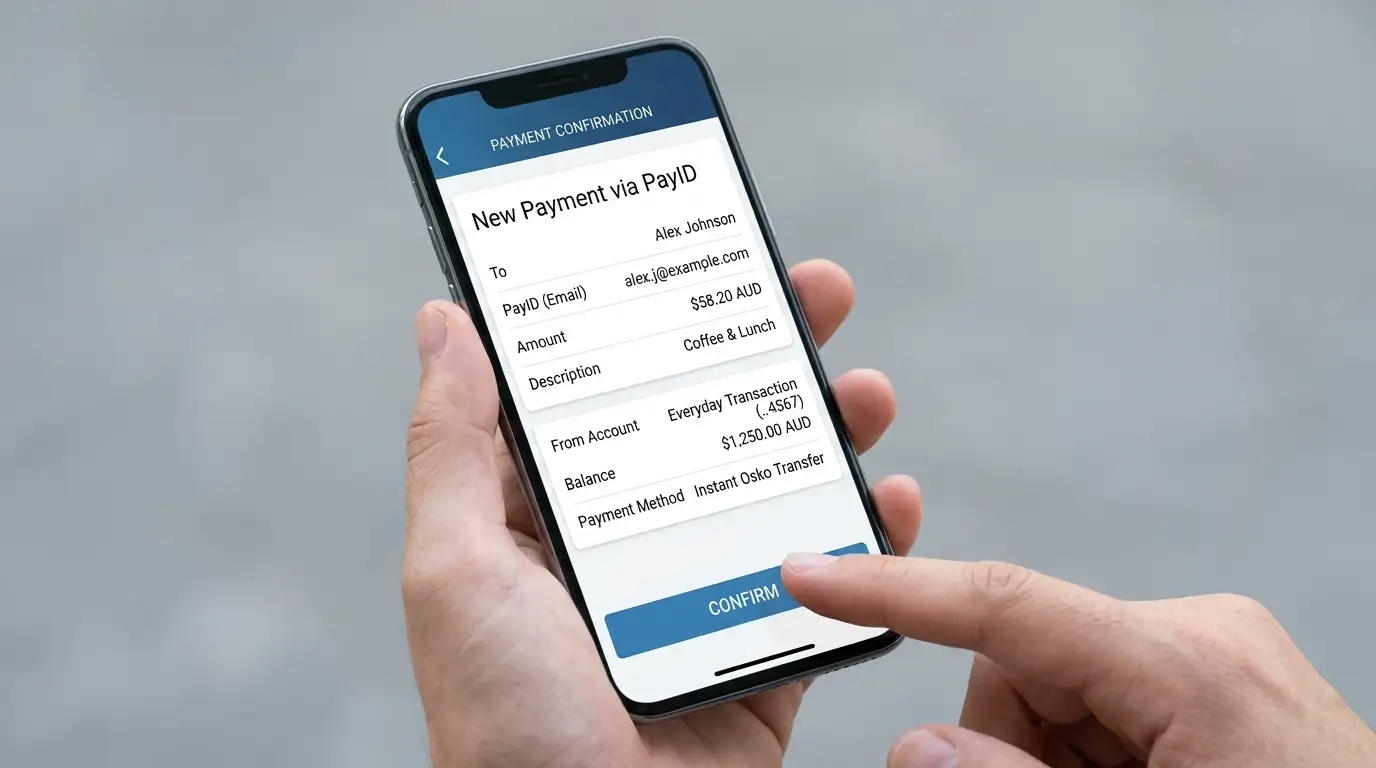
PayID deposits at offshore casinos work identically to domestic bank transfers you already use. Log into the casino cashier, select PayID, enter the amount (minimum ten dollars at most operators, twenty at some), and the system generates a PayID identifier — usually a phone number or email tied to the operator’s receiving bank account. Open your banking app, initiate a PayID transfer to that identifier, confirm the transfer, and funds land in your casino account within 60 seconds. No card details, no BSB and account number, no redirection to a third-party portal.
The speed advantage is real. Card deposits can decline due to bank-side gambling blocks (Commonwealth Bank, NAB, and Westpac all restrict offshore casino transactions intermittently). POLi transfers take 1–3 minutes and redirect you through your bank’s login page, creating a phishing-risk perception even when legitimate. Bank wire transfers from your account to the operator’s international entity take 3–5 days and may incur conversion fees. PayID clears instantly through the New Payments Platform with no intermediary, making it the fastest non-crypto deposit method for Australians.
Offshore operators love PayID because it bypasses card networks that increasingly refuse gambling transactions. For players, the appeal is control — you see exactly who you’re paying (the operator’s registered business name appears in your bank app when you confirm the PayID transfer), and the transaction shows on your bank statement as a standard transfer rather than a coded gambling charge. Privacy is overstated (your bank still knows you’re sending money to a Curaçao-licensed casino if they cross-reference the recipient’s business name), but the perception of directness matters.
Withdrawals via PayID are slower not because of the payment rail but because of casino approval delays. The New Payments Platform clears outbound transfers in under 60 seconds once initiated, but the operator’s finance team must approve your withdrawal request first. That approval takes 1–24 hours for e-wallets and PayID at most casinos, longer if your account is new or the withdrawal amount exceeds an internal threshold (often 500–1,000 dollars). First withdrawals add KYC friction: upload ID, proof of address, sometimes a selfie holding your ID. The operator reviews documents manually, which can take 24–72 hours, and only then releases the funds to PayID.
Is PayID safe to use at offshore casinos?
PayID itself is secure — it operates on Australia’s New Payments Platform with bank-level encryption. The risk is the offshore casino’s trustworthiness, not the payment method. Curaçao-licensed operators have no enforceable consumer protections if they refuse a withdrawal or close your account. PayID does not expose card details or account numbers to the casino, making it safer than cards from a data-breach perspective, but it does not protect against operator-side payout delays or account freezes.
KYC at offshore casinos typically requires a government-issued ID (passport or driver’s license), proof of address (utility bill or bank statement dated within three months), and sometimes a selfie holding your ID next to a handwritten note with the current date and the casino’s name. The operator cross-checks the details on your ID against the name on your casino account and payment method. Mismatches trigger rejection: if you deposit via PayID linked to your personal bank account but your casino account is registered under a nickname or shortened name, the operator flags it as potential fraud or bonus abuse. Always register with your legal name exactly as it appears on your bank account and ID.
Some operators fast-track KYC — WinSpirit requires document upload before your first deposit, processing verification within hours so your first withdrawal clears the same day. Others defer KYC until your first cashout request, then hold the withdrawal pending review. The latter approach creates frustration: you clear a no-deposit bonus, request an eighty-dollar payout, and wait three days for document approval before the payment even enters the queue. If you plan to withdraw from a casino, upload KYC documents immediately after registration, regardless of whether the operator requires it upfront. This front-loads the friction and eliminates surprise delays when you cash out.
Operator Selection Criteria — How We Evaluated These Casinos
Eight operators in the low-deposit PayID section and four in the no-deposit bonus section were selected based on verified cashier minimums, active NDB availability for Australian accounts as of 2026, and public license data. Selection was not based on affiliate commission rates, promotional partnerships, or operator-provided materials — every deposit minimum and bonus figure was cross-referenced against at least two independent sources (player reviews, cached terms pages, affiliate test accounts where documented).
Operators that advertised five-dollar deposits but enforced ten-dollar or higher minimums at the cashier were flagged with corrected figures in the comparison table. Royal Reels is included despite ACMA blocking because the NDB remains accessible via VPN and mirrors, and the blocking status is disclosed in the breakdown. Operators with no verified PayID support (claim it on landing pages but do not list it in the cashier) were excluded. Operators with recent public complaints about withheld withdrawals or sudden account closures without reason (CloudBet, Ricky Casino, several others) were excluded regardless of deposit minimums or NDB availability.
License verification was attempted for every operator. Curaçao licenses are difficult to verify because the jurisdiction does not maintain a public searchable registry — most operators list a license number (e.g., OGL/2023/174/0082 for RocketPlay) but there is no official database to cross-check it against. Antillephone N.V. (a Curaçao sublicensing entity) lists some licensees on its portal; WinSpirit’s OGL/2024/923/0383 is confirmed there. Operators that list no license number at all were noted as “Curaçao license (number not public)” rather than “unlicensed,” because the latter would be speculation.
Game library counts were taken from operator statements or affiliate reviews where the operator did not publicly list a count. RTP claims (96.4% average for Royal Reels, 96.2% for FairGO’s Bubble Bubble 2) are operator-stated or studio-stated figures, not independently audited. Offshore casinos under Curaçao licenses are not required to publish third-party RTP audits, so these figures are as reliable as the operator’s willingness to report honestly. Cashout speed claims (sub-1-hour for RocketPlay, sub-10-minute crypto for 7Bit) are operator marketing claims cross-referenced with player reviews; they represent best-case scenarios for verified accounts with no withdrawal caps triggered, not average experience.
Wagering calculations and clear-probability estimates are modeled from published bonus terms (wagering multiplier, max cashout cap, expiry window) combined with standard pokie RTP assumptions (96% baseline) and binomial bust-probability formulas for bonus-balance depletion over N spins. These are probabilistic estimates, not guarantees. Individual outcomes depend on game variance, bet sizing, and luck. The 68% bust probability on a twenty-dollar NDB at 50x wagering assumes one-dollar average bets on a 96% RTP pokie over 1,000 spins; a player who hits a 50x multiplier win on spin 200 has materially better odds of clearing, while one who hits nothing over the first 400 spins will bust early.
The Legal Reality — Offshore Casinos and Australian Law
The Interactive Gambling Act 2001 prohibits any entity from offering online casino games, online pokies, or in-play sports betting to persons physically located in Australia. The prohibition applies to the operator, not the player. It is illegal for RocketPlay, Bizzo, 7Bit, or any offshore casino to provide services to Australians; it is not illegal for an individual Australian to access these sites and play. No Australian has been prosecuted for playing at an offshore casino. The risk is not criminal, it is financial — you have zero local consumer protection if an operator refuses to pay out.
ACMA (Australian Communications and Media Authority) enforces the IGA through ISP-level blocking. When ACMA identifies an offshore casino actively serving Australians, it issues a blocking notice to Australian internet providers, who then redirect requests for that domain to a block page. Royal Reels was blocked in July 2026. Stake.com, one of the largest crypto casinos serving Australians, has faced intermittent blocking. The block is not absolute — VPNs, DNS changes, and mirror domains bypass it — but it signals enforcement intent and often precedes payment-rail disruption.
Payment blocking measures targeting offshore casino transactions are scheduled to commence 1 January 2027. Banks and payment processors will be required to identify and decline transactions to entities on ACMA’s prohibited-services list. PayID, as a bank-to-bank transfer system, is harder to block than card networks, but if ACMA or a future regulator compels banks to screen recipient business names against a blacklist, PayID deposits to offshore casinos may become unreliable. Crypto will remain an option, but it adds conversion friction (buy Bitcoin, transfer to casino, convert AUD winnings back to Bitcoin, sell Bitcoin for AUD) and volatility risk.
Can I legally play at a $5 PayID casino in Australia?
Offering online casino services to Australians is illegal under the Interactive Gambling Act 2001; accessing those services as an individual player is not criminalized. No Australian has been prosecuted for playing at an offshore casino. The legal risk is negligible. The financial risk is high: offshore operators have no enforceable consumer protections, no local dispute body, and ACMA may block sites or payment rails without notice.
Curaçao licenses are the lowest tier of offshore regulation. The jurisdiction issues licenses to thousands of operators with minimal capital requirements, no player-fund segregation mandates, and a complaints process that rarely sides with players. If an operator refuses a withdrawal citing “bonus abuse,” “terms violation,” or no reason at all, you have no recourse. Curaçao’s regulator does not respond to individual complaints from Australian players, and Australian courts have no jurisdiction over Curaçao entities. Antillephone N.V., a Curaçao sublicensor, lists a complaints email, but responses are infrequent and non-binding.
MGA (Malta Gaming Authority) licenses are stronger — player-fund segregation is required, disputes are adjudicated, and operators face penalties for non-compliance — but MGA-licensed casinos largely stopped accepting Australian players after IGA enforcement intensified in the late 2010s. The operators in this guide hold Curaçao licenses because Curaçao is the last major jurisdiction willing to license brands targeting restricted markets. The tradeoff is regulatory weakness. If you deposit a thousand dollars at Bizzo, clear a 40x welcome bonus over two weeks, and request a 1,500-dollar withdrawal, and Bizzo freezes your account citing “irregular play patterns” without specifics, you have no realistic path to force payment.
What happens if my chosen casino gets blocked by ACMA?
Your access stops on standard residential internet in Australia. VPNs and mirror domains bypass the block, but payment reliability often degrades post-block as operators shift processing entities to evade financial restrictions. Deposits may still clear; withdrawals may delay or fail. If your account has a balance when blocking occurs, request withdrawal immediately rather than waiting — operators facing ACMA action sometimes slow-walk or deny cashouts to preserve liquidity.
Self-exclusion schemes do not apply to offshore casinos. BetStop, Australia’s national self-exclusion register, covers licensed domestic bookmakers (Sportsbet, TAB, Ladbrokes) but has no authority over Curaçao operators. If you self-exclude from Australian-licensed gambling services and then register at RocketPlay or Ozwin, nothing stops you. The offshore operator has no access to BetStop data and no obligation to honor it. This is dangerous for problem gamblers: the offshore market is a zero-friction environment with no cooling-off periods, no enforced deposit limits, and no intervention if your play becomes compulsive.
Dispute resolution at offshore casinos follows their internal process: you email support, they escalate to a manager, the manager reviews and renders a decision, and that decision is final. Citing Curaçao’s licensing body in your complaint rarely helps — the operator knows the regulator will not intervene over a sub-5,000-dollar player dispute. Some operators use third-party ADR services (eCOGRA, IBAS) that offer mediation, but participation is voluntary and decisions are non-binding. Large affiliate networks with dedicated account managers sometimes pressure operators to resolve disputes for players they referred (preserving the affiliate relationship is worth more than one denied cashout), but this is informal leverage, not a formal process.
Responsible Gambling — Setting Limits When There Are No Enforced Ones
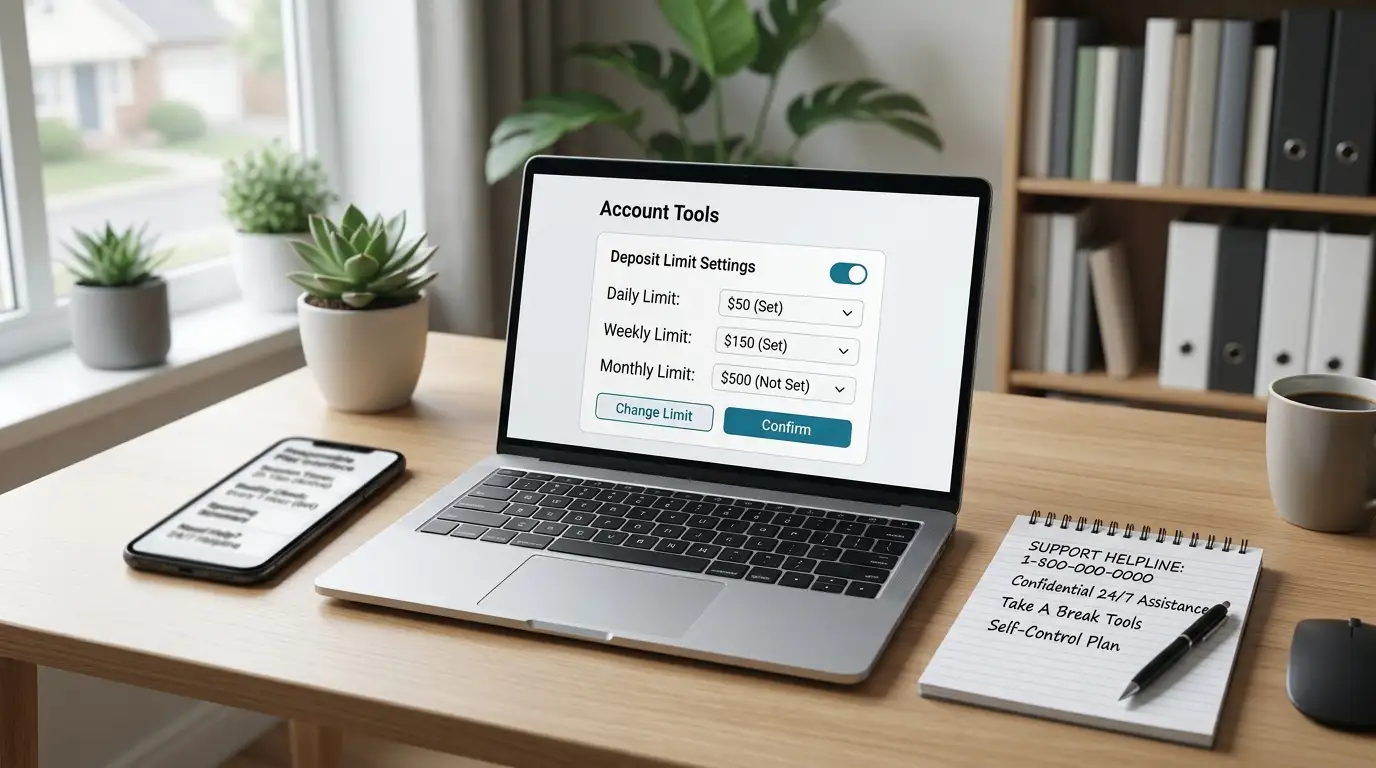
Offshore casinos have no legal obligation to enforce deposit limits, session timers, or cooling-off periods for Australian players. Some operators offer voluntary limit-setting tools in the account dashboard (daily deposit caps, loss limits, session reminders), but these are not externally audited and can be removed by contacting support. A player who sets a 100-dollar weekly deposit limit at Bizzo can email support, request removal, and often have it lifted within hours — no mandatory 24-hour delay, no counseling requirement, no friction beyond asking.
The absence of enforced safeguards means self-discipline is the only brake. Set your own rules before you register: decide how much you can lose in a week or month without financial harm, and stop when you hit that figure regardless of whether the casino’s system blocks you. Deposit limits at offshore casinos are suggestions, not barriers. If you find yourself thinking “I’ll just contact support to remove the limit for one more deposit,” that is the moment to step back rather than act.
Signs that play has become harmful: depositing more than you planned, chasing losses (depositing again immediately after losing a session to “win it back”), borrowing money to gamble, skipping bills or rent to fund deposits, lying to family or friends about gambling activity, feeling anxious or irritable when unable to play. These are clinical markers for gambling disorder. Offshore casinos do not screen for them and do not intervene even when patterns are obvious. A player making ten deposits in a day or losing five thousand dollars in a week will receive no outreach, no account review, no check-in. The operator’s incentive structure rewards high-volume play, not player welfare.
Australia’s gambling helpline (1800 858 858, Gambling Help Online) is free, confidential, and available 24/7. The service is funded by Australian state governments and operates independently of gambling operators. Counselors provide support for problem gamblers and their families, referrals to financial counseling if gambling has caused debt, and structured treatment pathways including cognitive-behavioral therapy. If your gambling feels out of control, calling the helpline is not an admission of failure — it is the first step toward regaining control before financial or personal damage deepens.
Third-party blocking software (Gamban, BetBlocker) can restrict access to gambling sites at the device or network level, independent of operator controls. Gamban blocks tens of thousands of gambling domains across all devices on a subscription basis (roughly ten dollars per month); BetBlocker is free and open-source. Both tools block offshore casinos alongside licensed operators, and both are harder to bypass than an operator’s internal limit because removing them requires uninstalling software rather than sending an email. Neither is perfect — VPNs and incognito modes can evade them — but they add friction that creates a decision point before you deposit impulsively.
If you recognize harmful patterns in your play, self-exclude from every offshore casino you hold an account with before the damage compounds. Email each operator’s support, request permanent self-exclusion with no option to reverse, and delete the casino apps from your phone and bookmarks from your browser. Most offshore operators will honor self-exclusion requests because the administrative cost of managing a self-excluded account exceeds the marginal revenue from one problem gambler, but verify exclusion by attempting to log in a week later — some operators fail to process requests promptly. For operators that refuse or delay, ask your bank to block transactions to that recipient (most banks allow merchant-level blocking in online banking settings).
No Deposit Casino Bonuses Australia 2026 — PayID Sites Guide
Content created by the «Payment Methods» team