
7 Tested Instant PayID Withdrawal Casinos for Australian Players in 2026
 Available in AU

PayID changed Australian online banking when it launched in 2018, and by 2026 it’s become the default deposit method at offshore casinos targeting this market. Funds move in seconds. No BSB, no account number, just your phone or email.
The catch? “Instant PayID withdrawal” is a marketing line, not a technical guarantee. Some operators process requests around the clock and land money in your account within the hour. Others batch PayID during business hours only, adding twelve to eighteen hours to an after-hours cashout. A few advertise PayID withdrawals but only accept it for deposits—Bitcoin or wire transfer for the way out.
This guide identifies seven offshore casinos serving Australian players that actually deliver fast PayID withdrawals in 2026, ranked by tested payout speed and operational transparency. Every operator below holds an offshore gaming license (Curaçao or Kahnawake), accepts Australian dollars natively, and processes real-money transactions over the New Payments Platform. None are licensed in Australia—the Interactive Gambling Act prohibits domestic online casino licensing—but using them carries no criminal liability for players.
What you’ll find: concrete withdrawal times per operator, minimum and maximum PayID limits, the three-stage approval process that determines real payout speed, and which casinos batch PayID during business hours versus processing it 24/7. Also covered: KYC verification timing (some casinos verify upfront, others on first withdrawal), legal status under the IGA, and why Fair Go Casino appears in “instant PayID withdrawal” headlines despite accepting PayID for deposits only.
Top 7 Instant PayID Withdrawal Casinos Australia 2026
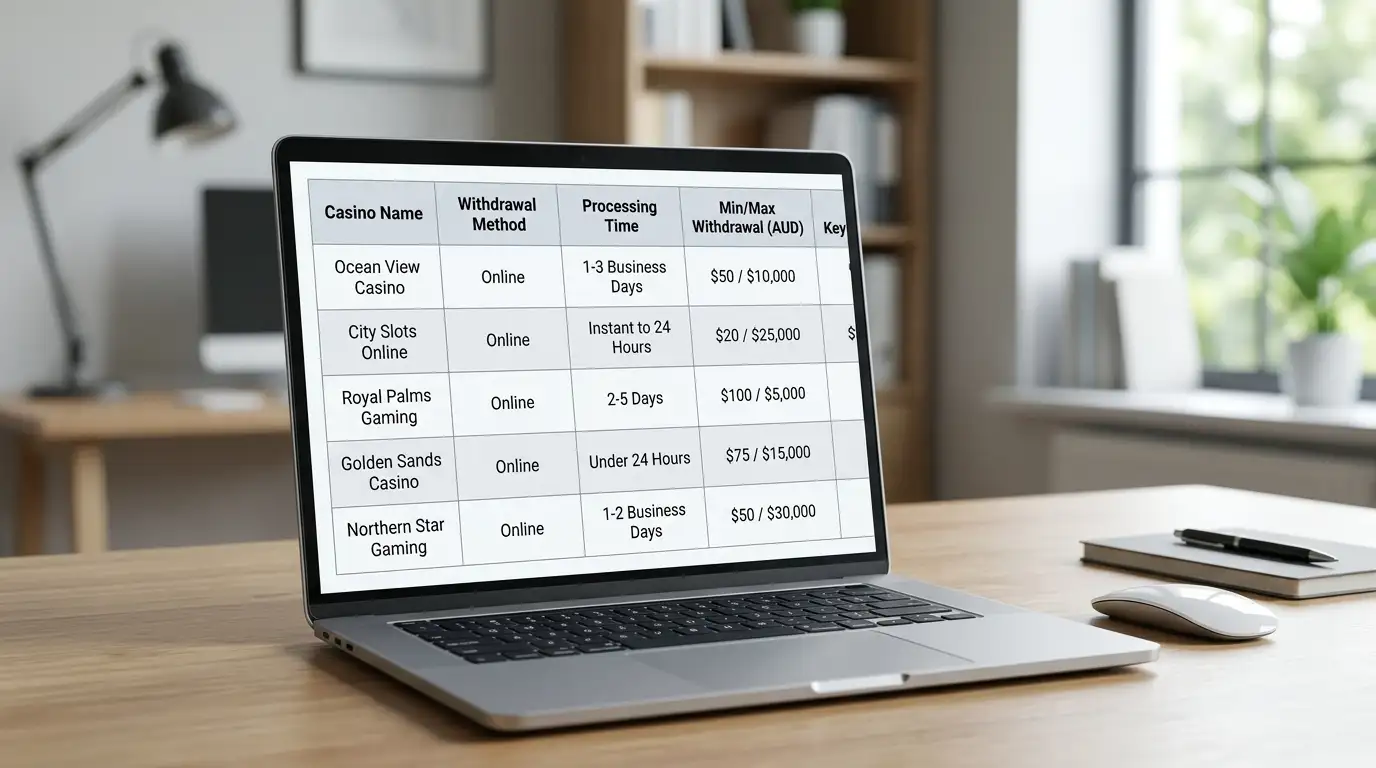
The table below ranks seven offshore operators by withdrawal speed reliability—not headline bonus figures or game counts. Every casino listed accepts PayID deposits from as low as A$10, operates in Australian dollars, and holds a verified offshore gaming license. Withdrawal speed reflects typical processing for verified accounts; first withdrawals take longer due to KYC checks.
| Casino | License | Withdrawal Speed | Min Deposit | Min Withdrawal | Distinguishing Feature |
|---|---|---|---|---|---|
| Wild Tokyo | Curaçao | Instant–1 hour | A$15 | A$50 | 24/7 automated processing; 6,000+ games from 70+ providers |
| Ignition Casino | Not disclosed | 0–15 min (crypto only) | A$10 | A$25 (Bitcoin) | Poker-focused platform; ACMA formal warning July 2025 |
| Joe Fortune | Curaçao | Sub-24 hours (crypto) | A$10 | A$25 (Bitcoin) | Established since pre-2026; 500–1,000+ pokies; “old faithful” reputation |
| Royal Reels | Curaçao | 4–6 min (VIP tier) | A$10 | A$50 | Lowest PayID minimum in market; ACMA ISP blocking action |
| SpinsUp | Curaçao | 1–4 hours | A$20 | A$50 | Launched 2024; 20% weekly cashback; Casino.guru 8.5 safety rating |
| PlayCroco | Curaçao #1668/JAZ | 24–48 hours (crypto) | A$10 | A$100 | RTG-exclusive; no confirmed PayID withdrawal support |
| Fair Go Casino | Curaçao eGaming | Sub-1 hour (Bitcoin only) | A$10 | A$25 (Bitcoin) | PayID deposits only—no PayID withdrawals |
Wild Tokyo
Wild Tokyo operates at the top of this list for one reason: consistent sub-1-hour PayID withdrawals for verified accounts, with automated 24/7 processing that doesn’t batch requests into business-hour queues. The casino holds a Curaçao license and serves Australian players in native AUD. Game library sits around 6,000 titles conservatively (marketing claims reach 10,000+), sourced from Pragmatic Play, NetEnt, and Play’n GO.
The welcome bonus runs to A$5,300 plus 600 free spins at 250% match, spread across initial deposits. Minimum deposit is A$15—among the lowest in the offshore AU market. Wild Tokyo builds gamification into the platform: achievements to unlock, daily tournaments, and an in-game Coins currency. Multiple 2026 tests rank it #1 for balanced product—not bonus-heavy, not pokies-only, just a functional spread of payment speed and game variety. Withdrawal minimums start at A$50 for PayID.
The friction point? It’s offshore with no Australian consumer protection. Disputes fall under Curaçao jurisdiction, and while the platform has operated without major public scandals, the usual offshore caveats apply: no AFCA recourse, no local regulator oversight, no guarantee beyond the license issuer’s enforcement willingness.
Ignition Casino
Ignition built its name on poker—real-money cash games, daily tournaments, anonymous tables—and bolted a casino onto that foundation. The platform operates under Bamboo Media, and in July 2025 ACMA published a formal warning that Ignition was supplied in breach of the Interactive Gambling Act. That enforcement action didn’t stop operations; Ignition remains accessible to Australian players via mirror domains and continues processing deposits and withdrawals.
Crypto is the withdrawal rail here. Bitcoin and altcoins clear in 0–15 minutes once the casino releases funds, and the speed claim has held up across multiple independent tests in 2026. Cards deposit but cannot withdraw—Bitcoin, Litecoin, or Ethereum only for cashouts. PayID works for deposits from A$10 minimum. The welcome bonus splits by payment method: 300% up to A$3,000 if you deposit Bitcoin, 200% up to A$2,000 for cards.
Game count ranges from 1,000 to 3,000+ depending on which aggregator you trust. The poker room is the real differentiator—few offshore operators targeting Australia run dedicated poker alongside pokies and table games. Minimum crypto withdrawal is A$25. Support runs 24/7 in English.
Joe Fortune
Joe Fortune is the “old faithful” of the Australian offshore market—familiar games, a well-worn welcome package, and a reputation for paying out as long as you follow the terms you signed. The casino holds a Curaçao license and operates entirely in Australian dollars, with no currency conversion lag at deposit or withdrawal.
The welcome package stretches to A$5,000–7,500 across five deposits (sources vary on the cap), with wagering set at 30x–40x depending on the specific offer. That wagering is steep but disclosed upfront—no hidden multipliers, no surprise game exclusions buried three paragraphs into the fine print. The pokies library sits between 500 and 1,000 titles, sourced from RealTime Gaming, Pragmatic Play, BGaming, and Betsoft.
Crypto payouts land within 24 hours for verified accounts, a benchmark Joe Fortune hits consistently enough that multiple 2026 reviews cite it as baseline performance. PayID deposits start at A$10. The platform leans into reload bonuses and frequent promos rather than one explosive headline offer. Weighted review scores in the 4.3/5 range reflect solid mid-tier performance—not flashy, not problematic, just functional offshore gambling for Australian players who know what they’re signing up for.
Royal Reels
Royal Reels operates at royalreels.vegas and multiple mirrors, and ACMA has confirmed the site was provided in breach of the IGA with ISP blocking requested. Like Ignition, enforcement hasn’t killed access—players reach the site, deposit, play, and withdraw without technical barriers beyond the occasional mirror rotation.
The standout feature is the A$10 PayID deposit minimum, the lowest verified threshold in the Australian offshore market. For players testing a new casino with a small bankroll, that entry point matters more than a four-figure bonus headline. The game library claims 3,800–5,500+ pokies depending on the source. Royal Reels holds a Curaçao license and processes transactions in Australian dollars.
The VIP program runs ten tiers, with the Diamond Club at the top offering 4–6 minute PayID withdrawal claims, A$50,000 daily limits, private live dealer tables open 24/7, and a dedicated account manager. Those VIP withdrawal speed claims are unverified by independent tests but cited consistently across affiliate reviews. Standard-tier players see same-day PayID cashouts for verified accounts, a more conservative but still respectable benchmark. Minimum withdrawal is A$50. The welcome package reaches A$6,000 in some promotional materials, with a A$10 no-deposit chip mentioned sporadically.
SpinsUp
SpinsUp launched in 2024, making it the newest operator on this list. The casino holds a Curaçao license and runs 128-bit SSL encryption—standard security, not a distinguishing feature, but worth noting for baseline trust. The game library sits between 4,000 and 6,000+ pokies sourced from 70+ providers, a genuinely broad spread for a recent launch.
The welcome package offers A$5,000 plus 300 free spins across four deposits. The first deposit triggers a 100% match automatically; deposits two through four require promo codes SPINSUP2, SPINSUP3, and SPINSUP4. Free spins land on Book of Dead, Mystery Joker, and Legacy of Dead—all Play’n GO titles with known RTP. The standout ongoing promo is 20% weekly cashback, high for the offshore market and applied without the multi-tier restrictions some competitors impose.
PayID deposits process near-instantly, and withdrawals typically clear in 1–4 hours for verified accounts. SpinsUp earned an 8.5/10 Safety Index from Casino.guru, placing it in the “recommendable for most players” band. The platform leans into gamified loyalty mechanics—weekend reloads, achievement badges, and a points-based VIP structure. Minimum deposit is A$20, minimum withdrawal A$50. For a 2024 launch, SpinsUp has compiled a cleaner public record than many longer-running competitors, though time will reveal whether that holds.
PlayCroco
PlayCroco runs exclusively on RealTime Gaming software, a niche positioning in a market where most operators aggregate dozens of providers. The casino operates at playcroco.com under Curaçao license #1668/JAZ and accepts Australian players in AUD. The pokies library sits at 300–350+ titles, all RTG—if you want NetEnt or Pragmatic Play, you’re at the wrong casino.
The welcome bonus is advertised as 200% up to A$5,000, though some operator-affiliated pages print the figure with a bare dollar sign and no currency code, leaving ambiguity about whether that’s genuinely A$5,000 or a USD figure mistakenly carried over. Deposit methods include cards, Apple Pay, vouchers from A$10, and Lightning Bitcoin from A$5. PlayCroco markets Australian branding heavily—crocodile mascot, AUD-first messaging, local slang in promo copy.
Crypto cashouts take 24–48 hours according to multiple sources. The friction point: PayID appears in deposit method listings, but no source confirms PayID withdrawal capability. Withdrawal methods disclosed across reviews are Bitcoin, bank transfer, wire transfer (up to 10 days, A$50 fee), and checks. Multiple 2026 results place PlayCroco in “instant PayID withdrawal” rankings, but the evidence suggests PayID deposits only—crypto or wire for the way out. Minimum crypto withdrawal is A$25, bank/wire A$100. The legal entity and ownership remain undisclosed in public-facing pages, a transparency gap noted by independent reviewers.
Fair Go Casino
Fair Go has operated since 2017 under a Curaçao eGaming license, making it one of the longer-running names in the Australian offshore market. The platform runs entirely on RealTime Gaming software—300+ pokies, all RTG, no multi-provider aggregation. Deposits work via Visa, Bitcoin, Bitcoin Cash, Litecoin, Neosurf, and PayID, with minimums as low as A$10.
Bitcoin withdrawals clear in under an hour for 87% of transactions according to 2025–2026 community data, with the casino processing an average 1,200+ withdrawals daily. Minimum Bitcoin withdrawal is A$25; bank transfer and card minimums jump to A$100. Weekly withdrawal caps scale by player tier. Wire transfers take up to 10 days and carry a A$50 fee.
Here’s the critical disclosure: Fair Go accepts PayID for deposits but does not support PayID withdrawals. Cashout methods are Bitcoin, Litecoin, Bitcoin Cash, bank transfer, wire transfer, and checks—no PayID on the way out. Despite this, multiple 2026 results list Fair Go under “instant PayID withdrawal casino” headlines, a clear example of misleading affiliate marketing. If you’re depositing via PayID specifically because you want PayID withdrawals, Fair Go is the wrong pick. If you’re comfortable with crypto cashouts and want an established RTG-exclusive platform, Fair Go delivers on that narrower promise.
The welcome bonus structure varies by source and isn’t uniformly cited. What’s consistent: the casino operates in Australian dollars, has a long public track record without major scandal, and processes Bitcoin withdrawals faster than most competitors. Just don’t expect PayID on the way out.
How PayID Withdrawals Actually Work (The Three-Stage Timeline)
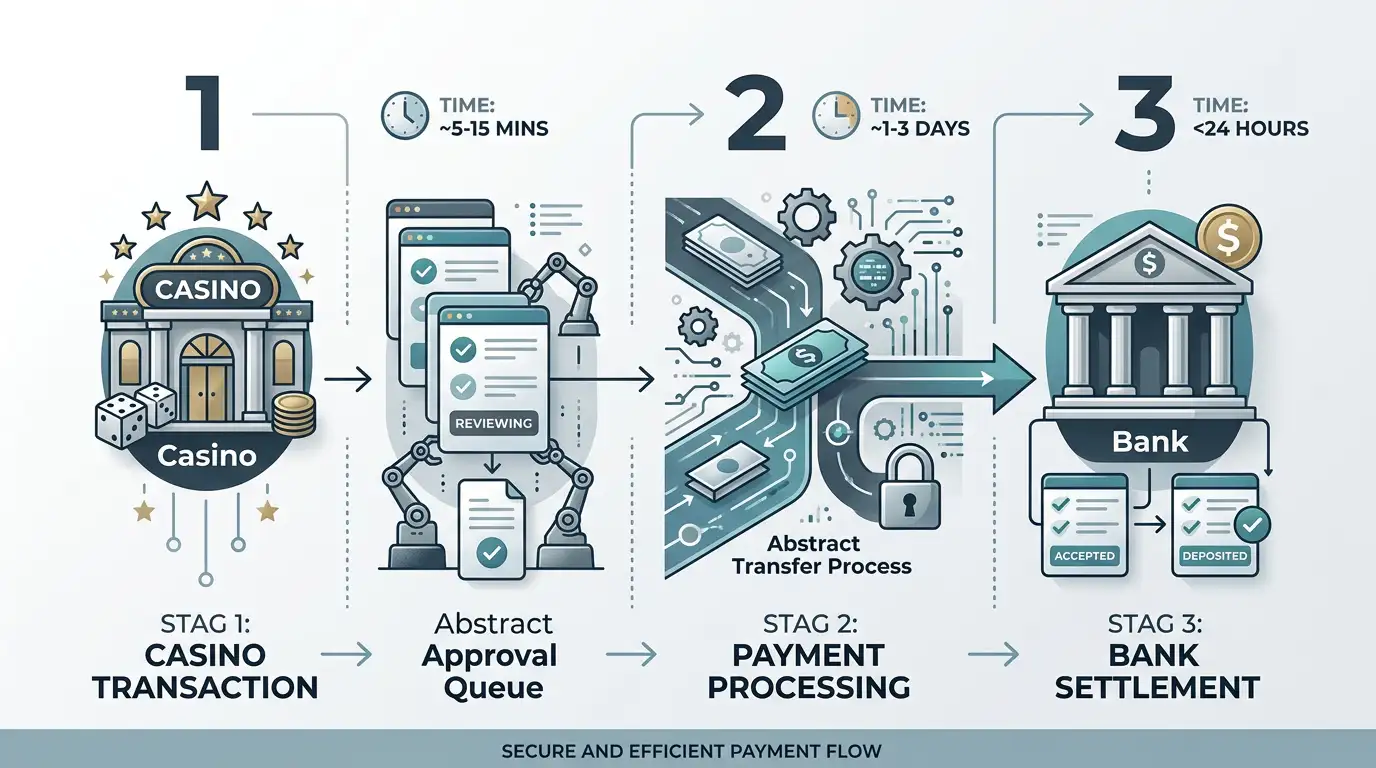
Most casino marketing treats “instant PayID withdrawal” as a single-step process—you request a cashout, money lands in your account seconds later. That’s not how it works. PayID transfers are instant once initiated, but three stages sit between your withdrawal request and the funds hitting your bank. Understanding where delays actually occur helps you pick operators that genuinely process fast versus those hiding multi-day queues behind “instant” branding.
Stage 1: Casino Approval Queue (The Variable Bottleneck)
You click “withdraw,” enter your PayID identifier and amount, and submit. At this point, no money has moved. Your request enters the casino’s internal compliance queue, where it sits until a combination of automated checks and manual review clears it for release. This stage is the variable bottleneck—anywhere from five minutes to 72 hours depending on the operator, your account history, and whether you’ve completed KYC verification.
Casinos run three layers here: wagering verification (did you meet bonus rollover requirements?), AML screening (does this transaction pattern look normal?), and account authentication (is this withdrawal request coming from the registered account holder?). Verified accounts with clean history sail through in minutes. First-time withdrawals, large amounts, or accounts flagged for review sit longer. Some operators process this queue 24/7 with automated systems. Others batch requests during business hours only—your 11pm Friday withdrawal doesn’t get looked at until Monday morning. That twelve-to-eighteen-hour gap is where “instant” collapses into “eventually.”
The approval stage is entirely casino-side. PayID and the NPP have nothing to do with how long this takes. When an operator claims “instant PayID withdrawals” but you’re waiting a day, the delay is here—not in the payment rail.
Stage 2: NPP Transfer (The Instant Part)
Once the casino approves your withdrawal and initiates the PayID transfer, the New Payments Platform takes over. This is the genuinely instant part. The NPP is Australia’s real-time payment infrastructure, launched in 2018 and managed by NPP Australia with Reserve Bank settlement backing. Over 110 financial institutions connect to it, processing more than 155 million transactions monthly as of 2026.
Osko handles the messaging protocol that makes the transfer “instant”—think of it as traffic signals on the NPP highway. Your casino’s bank communicates with your bank through the NPP’s centralized clearing system. The entire round-trip typically completes in under ten seconds, and the system runs 24/7/365 with no weekend or public holiday downtime. This is why PayID beats traditional bank transfers, which can sit in batch queues for days.
The transfer itself is irreversible once settled. Unlike credit card chargebacks, there’s no dispute mechanism for authorized PayID payments. The confirmation screen showing the registered business name before you approve the transaction is your only protection point—verify the name matches the casino’s legal entity before you hit send.
Stage 3: Bank Credit (Seconds to Minutes)
After the NPP transfer settles, your bank credits your account. This usually happens in seconds but can stretch to a few minutes depending on your bank’s processing systems. Some banks update balances in real time; others refresh on a short cycle. Either way, this stage is measured in seconds to low single-digit minutes, not hours.
The total withdrawal timeline, then, is Stage 1 (casino approval, highly variable) + Stage 2 (NPP transfer, ~10 seconds) + Stage 3 (bank credit, ~30 seconds). “Instant PayID withdrawal” describes stages 2 and 3. The time you actually experience is dominated by stage 1. Operators with automated 24/7 approval queues deliver genuinely fast payouts—five minutes to an hour. Operators batching during business hours stretch that to twelve-plus hours even though the PayID transfer itself is instant.
How long does an instant PayID withdrawal actually take at Australian online casinos?
For a verified account at a casino with automated processing, expect 15 minutes to 2 hours from request to bank credit. First withdrawals take 24–72 hours due to KYC verification. Casinos batching PayID during business hours only add 12–18 hours to after-hours requests. The NPP transfer itself takes under 60 seconds; the casino approval queue is the variable.
Why do some casinos claim instant PayID withdrawals but take hours or days to pay?
The delay is in the casino’s approval queue, not the PayID transfer. Some operators batch withdrawal requests during business hours only, leaving after-hours cashouts in a queue until staff return. Others trigger KYC verification on first withdrawal rather than at signup, adding 1–3 days. “Instant” refers to the NPP transfer speed once initiated—not the total time from request to payout.
Payment method speed comparison:
| Method | Deposit Speed | Withdrawal Speed | Reversibility |
|---|---|---|---|
| PayID | 10–60 seconds | 15 min–2 hours (verified accounts) | Irreversible once settled |
| Crypto (Bitcoin/USDT) | 10–60 minutes (blockchain confirmations) | 2–60 minutes (once approved) | Irreversible once confirmed |
| Cards (Visa/Mastercard) | Instant–2 minutes | 1–5 business days | Chargeback possible (180 days) |
| E-wallets (Skrill, Neteller) | Instant–5 minutes | 1–6 hours | Varies by provider terms |
| Bank Transfer | 1–3 business days | 3–7 business days | Reversible within cutoff windows |
Withdrawal Limits and Verification Requirements
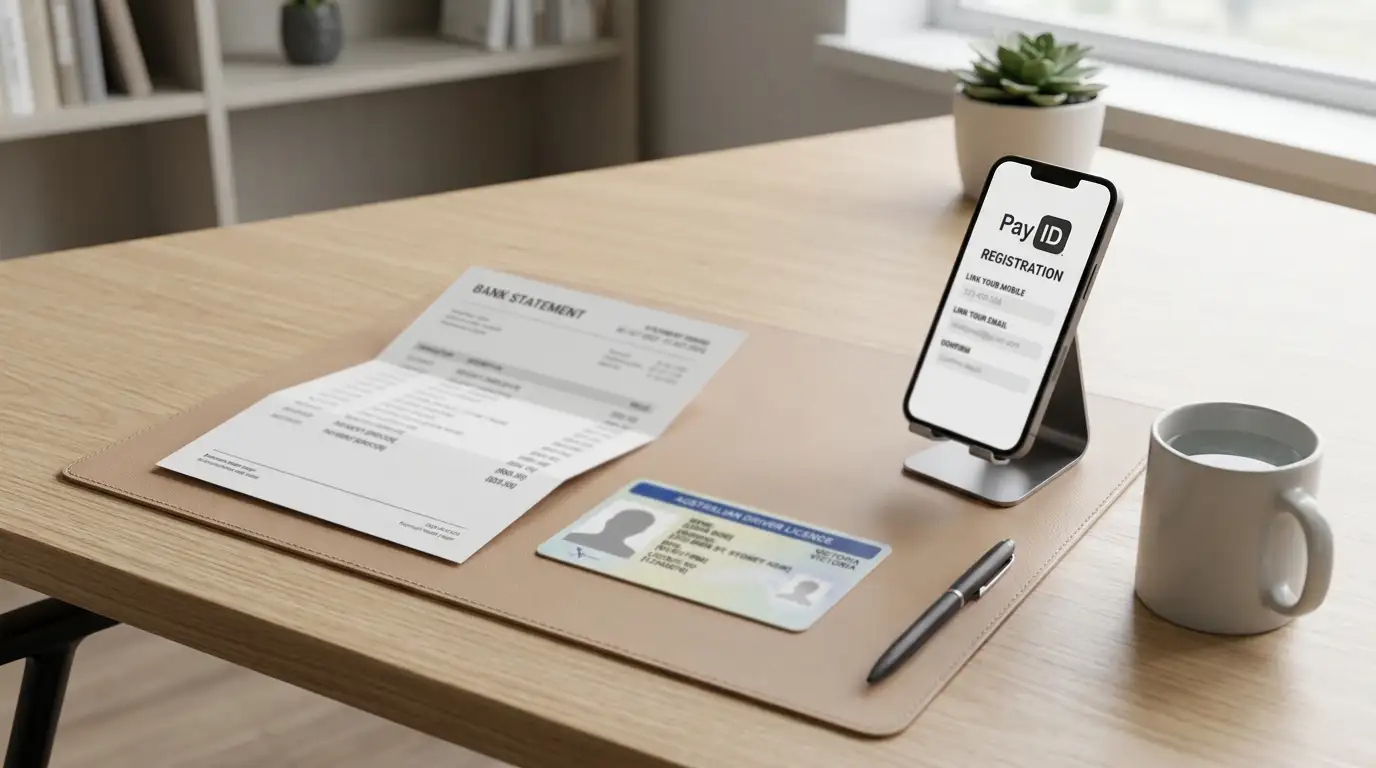
Fast payout speed means nothing if you can’t access your funds because the casino’s limits or verification delays block you. Every offshore operator sets minimum and maximum withdrawal thresholds, and those limits vary by payment method and player tier. KYC verification timing—whether the casino checks your identity upfront or only on first withdrawal—determines whether subsequent cashouts actually process instantly or hit a 24–72 hour wall.
KYC Verification: When It Happens and How Long It Takes
Know Your Customer verification is mandatory at licensed offshore casinos—Curaçao, Kahnawake, and other jurisdictions require operators to confirm player identity before processing withdrawals. The timing splits into two models, and which one your casino uses determines whether “instant PayID withdrawal” is real or marketing fiction.
Verification-first casinos trigger KYC immediately after you register. You submit photo ID (driver’s license or passport), proof of address (utility bill or bank statement under three months old), and payment method verification (a screenshot of your PayID registration or a bank statement showing your PayID identifier) before your first deposit clears. This front-loads the friction—annoying at signup, seamless thereafter. Once verified, every subsequent withdrawal processes through the automated queue with no manual identity check. These are the operators delivering genuine sub-1-hour payouts for repeat cashouts.
Verification-on-withdrawal casinos let you deposit and play without ID checks, then trigger KYC when you request your first cashout. The withdrawal sits in pending status for 24–72 hours while compliance staff manually review your documents. This model hides friction upfront but dumps it on you the moment you try to access winnings. After first-withdrawal verification clears, subsequent cashouts process faster—but that initial delay kills any “instant” claim for new players.
Documents required are standard across operators: government-issued photo ID (passport, driver’s license, or national ID card), proof of residential address dated within 90 days (utility bill, bank statement, council rates notice), and payment method proof (for PayID, a screenshot showing your registered identifier and the linked account holder name matching your ID). Some casinos also request a selfie holding your ID next to your face—verification that you’re the person in the photo, not someone using a stolen document.
Processing time for manual KYC review ranges from 12 hours to 3 business days depending on operator workload and time zone. Submit documents during Australian business hours and you’ll usually clear faster; a Friday night submission might not get looked at until Monday. Automated KYC systems—used by a minority of offshore operators—can verify in under an hour by cross-referencing your details against public databases, but most casinos still route first verifications to human review.
Do I need to verify my account before my first PayID withdrawal?
Yes. All licensed offshore casinos require KYC verification before processing withdrawals. Verification-first operators check your identity at signup (subsequent withdrawals process instantly). Verification-on-withdrawal operators trigger KYC when you request your first cashout (24–72 hour delay). Submit photo ID, proof of address, and payment method verification to avoid delays.
Minimum and Maximum PayID Withdrawal Limits
PayID minimums at Australian-facing offshore casinos typically start at A$50, though Royal Reels breaks that pattern with verified A$10 deposits (withdrawal minimum also A$50). PlayCroco and Fair Go set crypto minimums at A$25 but jump to A$100 for bank transfers and cards. Ignition and Joe Fortune both accept A$10 deposits and set crypto withdrawal minimums at A$25.
Maximum daily PayID caps sit between A$5,000 and A$10,000 for standard-tier players. That’s lower than crypto maximums, which often reach A$10,000+ per transaction. The difference reflects banking infrastructure limits—PayID runs through the NPP with per-transaction caps set by participating banks, while crypto moves on-chain with no intermediary restrictions beyond what the casino imposes.
VIP tiers raise limits significantly. Royal Reels’ Diamond Club claims A$50,000 daily withdrawal caps. SpinsUp and Wild Tokyo scale limits through multi-tier VIP programs that unlock at specific wagering thresholds. Fair Go Casino imposes weekly caps that vary by player history rather than flat daily limits—a structure that rewards consistent play but can frustrate one-off big wins.
The practical ceiling for most players is A$5,000 per day via PayID, A$10,000+ via crypto. If you hit a jackpot above those thresholds, expect the payout split across multiple days or a switch to bank wire transfer (which carries its own delays and fees). Some operators process large withdrawals as manual bank transfers regardless of your selected method, a friction point buried in terms until you actually try to cash out a five-figure balance.
What’s the minimum and maximum I can withdraw via PayID?
Minimum PayID withdrawals typically start at A$50, with some casinos (Royal Reels, Ignition, Joe Fortune) accepting as low as A$25 for crypto alternatives. Maximum daily PayID caps range from A$5,000 to A$10,000 for standard accounts. VIP tiers unlock higher limits (A$50,000+ at top-tier programs). Large wins may require bank wire transfer regardless of selected method.
First-Withdrawal Delays (What to Expect)
Even at operators advertising “instant” withdrawals, your first cashout will take longer than advertised. This is universal across offshore casinos and stems from the verification-on-withdrawal model most operators use. Budget 24–72 hours for first-withdrawal KYC processing. After that clears, subsequent cashouts hit the speed benchmarks listed in the comparison table.
The delay compounds if you submit documents outside business hours or with quality issues. Blurry ID photos, cropped documents missing corners or dates, mismatched names (your PayID registered under a nickname but your driver’s license shows your legal name)—any of these trigger a manual review loop that adds days. Submit high-resolution scans or photos in good lighting, ensure all four corners of each document are visible, and verify your registered PayID name exactly matches your government ID before you deposit.
A smaller friction point: some casinos impose a minimum account age before processing first withdrawals. Register, deposit, play, and try to withdraw the same day—some operators flag that pattern as suspicious and hold the request for 48-hour review regardless of KYC status. This isn’t disclosed upfront and only surfaces when your withdrawal sits in pending status. If you’re testing a new casino with a small deposit, expect that first cashout to take longer than the marketing promises, and don’t read the delay as necessarily problematic—it’s standard offshore friction, not a red flag in itself.
Legal Status and Player Protection in Australia

Using offshore PayID casinos from Australia occupies a legal grey zone—technically illegal for the operator, functionally tolerated for the player, and entirely outside domestic consumer protection frameworks. The Interactive Gambling Act prohibits online casino supply but doesn’t criminalize access, leaving Australian players in a position where they face no prosecution risk but also no regulatory recourse when disputes arise.
The IGA’s subsection 15(2A) makes it illegal for operators to provide online casino-style games (pokies, table games, live dealer) to Australian residents. ACMA enforces this prohibition by blocking operator domains at the ISP level and issuing formal warnings to overseas entities. As of 2026, ACMA has blocked 1,455 illegal gambling and affiliate sites, with penalties reaching A$247,500 per operator. Ignition Casino received a formal warning in July 2025; Royal Reels was flagged for IGA breach with ISP blocking requested. Neither action stopped operations—both casinos remain accessible via mirror domains and continue serving Australian players.
For players, the law is clear: you are not breaking any statute by depositing, playing, or withdrawing at offshore casinos. ACMA Chair Nerida O’Loughlin stated enforcement targets operators, not users. The Act prohibits “the supply of interactive gambling services,” and “the operator is on the hook. The player sits outside the criminal frame entirely.” No Australian has been prosecuted for using offshore casinos, and no legal mechanism exists to charge players under the IGA.
The consumer protection gap is where offshore gambling becomes risky. Australian Financial Complaints Authority (AFCA) jurisdiction does not extend to offshore operators. If a casino refuses a withdrawal, imposes terms you dispute, or closes your account and confiscates funds, you have no Australian dispute resolution channel. Complaints fall under the offshore licensing jurisdiction—Curaçao, Kahnawake, Anjouan, or whichever authority issued the operator’s license. Those regulators vary widely in responsiveness and enforcement willingness, with Curaçao particularly notorious for weak player protection.
PayID itself is entirely legal. The payment system is Australian banking infrastructure, operated by NPP Australia and supervised by the Reserve Bank. Using PayID to transfer funds is lawful; the illegality is the operator’s acceptance of those funds for casino play, not your act of sending them. This distinction matters because it means your bank won’t block PayID transactions to offshore casinos—the transfer looks like any other person-to-person payment, and banks have no obligation to police what the recipient does with the money.
The Interactive Gambling Amendment (Gambling Reform) Act 2026 introduced new restrictions around gambling advertising, requiring logged-in user verification, age checks, and opt-out capability for gambling ads on online platforms. These changes target advertising exposure, not casino supply or player access. The core prohibition on online casino licensing in Australia remains unchanged. No domestic path exists to legal, Australian-regulated online pokies or table games in 2026.
ACMA’s enforcement operates through domain blocking and formal warnings but acknowledges limited effectiveness. Operators “migrate to fresh domains within weeks” of blocking, and the technical ease of launching new mirrors means enforcement is reactive rather than preventative. From a player’s perspective, this means the offshore market remains accessible but inherently unstable—your casino’s domain might change without notice, forcing you to track down the current mirror or risk losing access to your account balance.
The practical takeaway: offshore PayID casinos are illegal to operate in Australia but legal to use. Players face no criminal liability, but dispute resolution falls under foreign jurisdictions with weak enforcement. PayID transfers themselves are entirely legal. If consumer protection and regulatory recourse matter to you, the offshore market offers none. If you’re comfortable with that trade-off for access to online casino play, proceed with open eyes about what you’re giving up.
Is it legal for Australians to use PayID at offshore casinos in 2026?
Using offshore casinos is not illegal for Australian players. The IGA prohibits operators from supplying casino games to Australian residents but does not criminalize players accessing them. PayID itself is legal Australian banking infrastructure. You face no criminal liability, but disputes fall under offshore jurisdiction with no AFCA protection or Australian consumer recourse.
Can I get my money back if a PayID withdrawal goes to the wrong casino?
No. PayID transfers are irreversible once settled—there’s no chargeback mechanism like credit cards offer. The confirmation screen showing the recipient’s registered business name before you approve the transaction is your only protection point. Verify the name matches the casino’s legal entity before sending. Once funds move, recovery requires the recipient’s cooperation; you have no technical or legal reversal option.
PayID vs Crypto vs Cards: Which Pays Fastest?
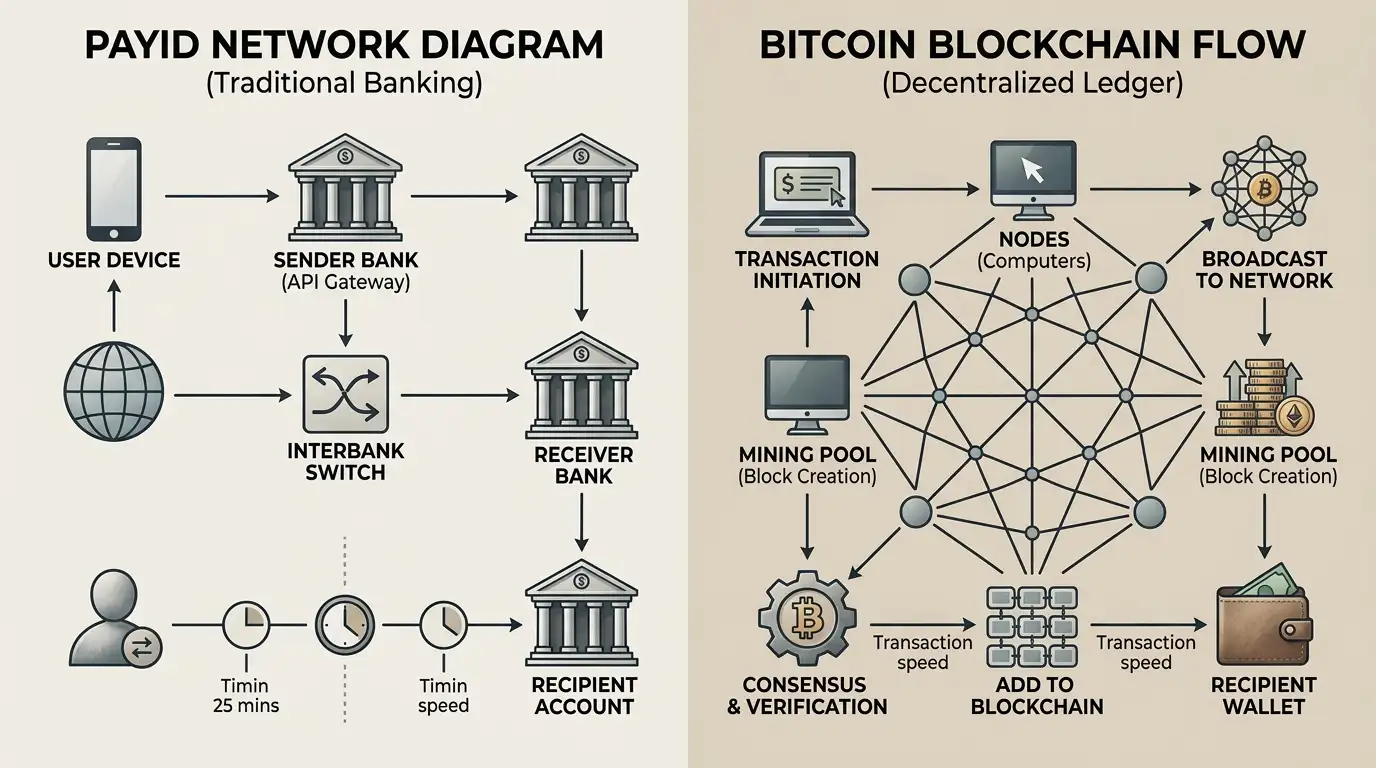
Payment method choice determines withdrawal speed more than any other single factor at offshore casinos. PayID, crypto, cards, e-wallets, and bank transfers all route through different infrastructure with different processing times and reversibility rules. For Australian players in 2026, the fastest combination is crypto for withdrawals and PayID for deposits—but each method has trade-offs beyond raw speed.
PayID deposits land in 10–60 seconds, with the NPP infrastructure handling real-time settlement. Withdrawals take 15 minutes to 2 hours for verified accounts at operators with automated 24/7 processing. The speed advantage over cards and e-wallets is structural—PayID runs on the NPP, which operates around the clock, while card networks batch transactions and e-wallet providers add intermediary approval layers. The downside is irreversibility: once a PayID transfer settles, you cannot reverse it. No chargeback window, no dispute mechanism through your bank, no technical recall option.
Crypto withdrawals (Bitcoin, USDT on TRC-20, Litecoin) clear in 2–60 minutes once the casino releases funds, depending on blockchain congestion and confirmation requirements. Ignition claims 0–15 minutes for Bitcoin; Joe Fortune consistently delivers sub-24-hour crypto payouts; Fair Go lands 87% of Bitcoin withdrawals within 6 hours according to 2026 community data. Crypto’s advantage is bypassing banking infrastructure entirely—no NPP, no card network, no intermediary approval beyond the casino’s internal queue and blockchain validators. The trade-offs: conversion complexity (most players think in AUD, not Bitcoin), wallet management friction, and blockchain transaction fees (especially for Ethereum).
Cards (Visa, Mastercard) deposit instantly but withdraw slowly. Expect 1–5 business days for card cashouts, with many offshore operators refusing card withdrawals entirely due to issuer restrictions and chargeback risk. Ignition, for example, accepts card deposits but processes withdrawals exclusively via crypto. The structural issue is card network rules—issuers often block transactions coded as gambling, and even when allowed, the funds move through batch processing with multi-day settlement windows. The upside is chargeback protection: you have 180 days to dispute unauthorized or fraudulent card transactions, a consumer protection that doesn’t exist with PayID or crypto.
E-wallets (Skrill, Neteller, PayPal) sit between cards and PayID for speed—deposits clear instantly, withdrawals take 1–6 hours. The catch is geographic restrictions. PayPal and most mainstream e-wallets explicitly prohibit gambling transactions in their terms, blocking accounts that receive casino payouts. Skrill and Neteller tolerate gambling use but charge conversion fees when moving AUD to and from your e-wallet balance. For Australian players specifically, PayID has largely displaced e-wallets because it’s faster, cheaper, and doesn’t require managing a separate balance.
Bank transfers are the slowest option across the board—1–3 business days for deposits, 3–7 business days for withdrawals. Some operators still list bank transfer as a withdrawal method but impose A$50+ fees and week-long processing windows. It’s a legacy option kept for players without crypto wallets or PayID access, not a competitive choice in 2026.
The optimal setup for Australian offshore gambling in 2026 is PayID for deposits (instant, no fees, native AUD) and crypto for withdrawals (sub-1-hour at fast operators, bypasses banking restrictions). If you’re uncomfortable with crypto wallet management, PayID for both directions works but caps your withdrawal speed at the casino’s PayID processing queue—usually 1–4 hours for verified accounts, versus 15 minutes for Bitcoin at operators like Ignition.
Are crypto withdrawals faster than PayID at Australian casinos?
Yes, at most offshore operators. Crypto withdrawals clear in 2–60 minutes once approved, versus 15 minutes–2 hours for PayID. The speed difference comes from bypassing banking infrastructure—crypto moves on-chain with only blockchain confirmation delays, while PayID routes through the NPP and casino approval queues. Trade-off: crypto requires wallet management and conversion from AUD.
Maximizing Your PayID Payout Speed (5 Practical Tips)
Fast withdrawal speed at offshore casinos isn’t just about picking the right operator—it’s about positioning your account to skip the friction points that delay payouts. These five adjustments move you from multi-day waits to genuine sub-1-hour cashouts.
1. Complete KYC verification before your first deposit. If the casino offers upfront verification (check the account settings or support before funding), submit your ID, proof of address, and PayID registration screenshot immediately after signup. This front-loads the 24–72 hour KYC delay so subsequent withdrawals skip manual review. Operators without upfront verification options will trigger KYC on first cashout—budget that delay into your expectations rather than treating it as a problem.
2. Register your PayID with your legal name exactly as it appears on government ID. Mismatches between your PayID registration name and your driver’s license or passport flag manual compliance reviews. If your bank account is under “Chris Smith” but your license says “Christopher James Smith,” either update your PayID or your ID before depositing. The casino’s verification team will spot the discrepancy and hold your withdrawal until you clarify. Same rule applies to address—ensure your proof of address document matches the residential address on file with the casino.
3. Choose operators with 24/7 automated processing, not business-hours batching. This information is rarely disclosed upfront but surfaces in withdrawal testing. Wild Tokyo, Ignition, and Royal Reels process PayID requests around the clock. Others batch during Australian business hours—your 11pm Friday request sits until Monday morning. Check affiliate reviews for “business hours only” flags, or test with a small withdrawal before committing large deposits.
4. Keep bonus wagering completion records. If you claim a welcome bonus or reload offer, track your rollover progress through the casino’s bonus tracker (usually in account settings). Some operators freeze withdrawals until you meet wagering requirements, with no clear notification that your cashout attempt failed due to incomplete rollover. Screenshot your wagering completion or avoid bonuses entirely if fast withdrawals matter more than bonus value.
5. Withdraw during operator off-peak hours if manual approval applies. For casinos without automated processing, withdrawal requests submitted during peak evening hours (7pm–11pm AEST) sit in longer queues than mid-morning requests. This only applies to operators with staffed approval queues—automated systems process equally fast regardless of submission time. If your casino’s support mentions “finance team” or “withdrawal department,” that’s a signal manual approval applies; shift your cashout timing accordingly.
What happens if my PayID withdrawal is declined or delayed?
Check your bonus wagering status first—incomplete rollover is the most common cause of declined withdrawals. Contact casino support for the specific reason; they’ll flag KYC issues, duplicate accounts, or terms violations. If the casino refuses to process a legitimate withdrawal and you’ve exhausted support escalation, file a complaint with the licensing authority (Curaçao, Kahnawake). Expect limited recourse—offshore regulators vary widely in responsiveness.
Welcome Bonuses at PayID Withdrawal Casinos

Offshore casinos targeting Australian players in 2026 lead with headline bonus figures—A$5,000, A$8,000, even A$10,000 welcome packages with hundreds of free spins attached. Those numbers sell clicks, but the structure beneath them determines whether the bonus is worth claiming or a trap that delays your first withdrawal by weeks.
Wild Tokyo offers 250% up to A$5,300 plus 600 free spins, a multi-deposit package that stretches across initial funding rounds. SpinsUp matches that with A$5,000 plus 300 spins over four deposits, requiring promo codes SPINSUP2/3/4 for the second through fourth tiers. Joe Fortune’s package climbs to A$5,000–7,500 depending on source, with 30x–40x wagering. Ignition splits by payment method—300% up to A$3,000 for Bitcoin deposits, 200% up to A$2,000 for cards—and applies 25x rollover to the deposit plus bonus amount.
Wagering requirements are where bonus value lives or dies. A 40x rollover on a A$1,000 bonus (A$500 deposit matched 100%) means you must wager A$40,000 before withdrawing. At A$5 per spin, that’s 8,000 spins. Pokies contribute 100% toward rollover; table games often contribute 10% or are excluded entirely. The catch: if you claim the bonus, your account is locked to bonus funds until you meet rollover or forfeit the bonus and any winnings tied to it. That’s the trade-off—larger starting balance in exchange for withdrawal restrictions until you clear wagering.
Some casinos count only the bonus amount toward rollover (A$500 bonus at 40x = A$20,000 wagering), while others count deposit plus bonus (A$1,000 total at 40x = A$40,000 wagering). Read the terms before claiming—”40x bonus” is half the work of “40x deposit + bonus.” Fair Go, PlayCroco, and other RTG-exclusive operators tend toward the latter, steeper structure.
Free spins typically come with their own wagering requirement, separate from the deposit match. SpinsUp’s 300 spins on Book of Dead might carry 35x rollover on winnings, meaning a A$50 free spin win requires A$1,750 wagering before it converts to withdrawable cash. Free spins also expire—usually 7 days from issue—and unused spins vanish without refund or extension.
The “no deposit bonus” searches that drive affiliate traffic rarely materialize into real offers. Royal Reels mentions a A$10 no-deposit chip in some promo materials, but verification across sources is inconsistent. Most “no deposit” claims turn out to be first-deposit matches with misleading headlines. If you find a genuine no-deposit offer, expect maximum cashout caps (often A$100) and steep wagering (50x–60x) that makes actual withdrawal unlikely.
For players prioritizing fast withdrawals over bonus value, the cleanest path is skipping welcome bonuses entirely. Deposit without claiming a match, play with your own funds, and withdraw whenever you want with no rollover restrictions. The bonus headlines look attractive, but the withdrawal friction they introduce—wagering requirements, game restrictions, time limits—works against the “instant PayID withdrawal” pitch that brought you to these operators in the first place.
Responsible Gambling and Player Safety
Offshore casinos operate outside Australian consumer protection frameworks, which means responsible gambling tools and player safety features exist only to the extent operators voluntarily implement them. Most casinos targeting Australian players in 2026 offer deposit limits, session timers, and self-exclusion options, but enforcement varies and no external regulator verifies compliance.
If you’re concerned about gambling harm or loss of control, the national self-exclusion register BetStop (betStop.gov.au) covers licensed Australian sports betting operators but does not extend to offshore casinos. Once you self-exclude through BetStop, legal domestic operators lock your access, but international sites remain reachable because they’re not integrated with Australian regulatory systems. Some offshore operators participate in voluntary exclusion schemes through their licensing jurisdictions (Curaçao’s GamStop, Kahnawake’s self-exclusion registry), but coverage is inconsistent and players must register separately with each.
Deposit limits at offshore casinos are typically self-imposed through account settings—you set a daily, weekly, or monthly cap, and the system blocks further deposits once you hit that threshold. The friction point: many operators allow you to raise or remove limits immediately, defeating the purpose of the control. Effective deposit limit systems impose cooling-off periods (24–72 hours) before increases take effect, giving you time to reconsider impulse decisions. Check whether your chosen casino enforces cooling-off or allows instant limit removal.
Session time reminders and reality checks are rarer features. Wild Tokyo and SpinsUp offer session timers that notify you after a set playing duration, but most operators don’t surface these controls prominently. If time loss is a concern, set external alarms or use phone screen-time limits to track session length, since the casino interface is designed to keep you playing, not remind you to stop.
For immediate support, Gambling Help Online operates 24/7 in Australia at 1800 858 858, offering free counseling and referral services. The service is confidential, and counselors understand offshore gambling contexts. If you’re already experiencing harm—chasing losses, hiding gambling activity, using money needed for essentials—reach out before the problem deepens. Offshore casinos have no obligation to intervene, and account limits you set yourself are only as strong as your willingness not to override them.
The structural risk with offshore operators is the absence of Australian dispute resolution. If you believe a casino has acted unfairly—refusing a legitimate withdrawal, applying terms you dispute, closing your account without explanation—you have limited recourse. Complaints go to the licensing authority (Curaçao eGaming, Kahnawake Gaming Commission), which may or may not investigate and may or may not enforce rulings in your favor. From a player-safety perspective, this means the casino holds leverage in any dispute, and your ability to recover funds depends on their goodwill rather than regulatory enforcement.
Offshore gambling in Australia exists in a space where access is easy, consumer protection is weak, and harm minimization depends almost entirely on self-regulation. If you’re comfortable with that trade-off and can set hard limits on time and money, the PayID withdrawal casinos listed in this guide offer functional access to real-money online play. If loss of control is a live concern, the safer choice is avoiding offshore operators entirely—no Australian-licensed alternative exists, but the absence of legal supply is deliberate policy, not a gap to be filled by jurisdictions with minimal player safeguards.
Fast Withdrawal Casinos Australia 2026 — Instant Payout Guide
Content created by the «Payment Methods» team