
Best Online Casino Payment Methods for Aussies — The Honest Banking Guide 2026
 Available in AU

Drop A$50 into a casino cashier via PayID and it lands in six seconds. Request the same A$50 back three hours later and you’re staring at a “pending” status that might clear by Thursday. That asymmetry — instant in, glacial out — is not a bug in the Australian online casino banking system. It’s the system.
Every casino accepting Australian players in 2026 operates offshore. No Australian license exists. The Interactive Gambling Act 2001 prohibits anyone from providing online casino games to a person in Australia, which means the operators ranked on affiliate sites, the apps promoted on Reddit, the brands advertised during sports coverage — all of them run under Curaçao, Malta, or Anjouan licenses and sit beyond the reach of Australian consumer protection.
Payment methods bridge that gap. PayID moves your AUD into an offshore cashier in real time. Cryptocurrency moves it back out in under an hour when traditional rails would take three business days. Debit cards remain legal after the June 2024 credit card ban. E-wallets bypass bank blocks. Prepaid vouchers leave no statement trail.
But not all methods work both ways, not all operators accept the same rails, and the regulatory ground is shifting. New bank blocking powers commence 1 January 2027 under the Interactive Gambling Amendment Act 2026, giving Australian financial institutions the authority to stop payments to illegal gambling services at the transaction level. What works today may not work the same way six months from now.
This breakdown walks through every payment method Australian players actually use in 2026: how each one works, what it costs, how fast deposits and withdrawals move, and which structural limitations determine what you can do with your money once it crosses into offshore territory.
The Australian Casino Banking Reality in 2026
Australia does not issue licenses for online casino operators. Not under any state regime, not under any federal framework. The Interactive Gambling Act 2001 makes it illegal to provide online casino games — pokies, table games, live dealer — to a person physically in Australia, regardless of where the operator is based. That prohibition targets the supply side. You, as the player, are not breaking any law by logging in, depositing, or cashing out.
What that means in practice: every site accepting Australian players holds an offshore license. Curaçao Gaming Control Board issues the bulk of them. Malta Gaming Authority and Anjouan licenses cover the rest. Those regulators enforce their own rules — fair-play audits, dispute resolution processes, financial solvency checks — but none of those protections carry the weight of Australian consumer law. When a withdrawal stalls or a bonus term reads like a trick question, you are dealing with a business operating beyond ACMA’s enforcement reach.
The payment methods you use to fund that account become the practical expression of that offshore reality. You cannot use a locally issued credit card anymore — that ban took effect 11 June 2024 under the Interactive Gambling Amendment Act. You can still use a debit card, but some Australian banks block gambling transactions at their own discretion. Commonwealth, NAB, and Westpac lead the blocking rates, which is why players route through e-wallets or PayID to sidestep the merchant code filters.
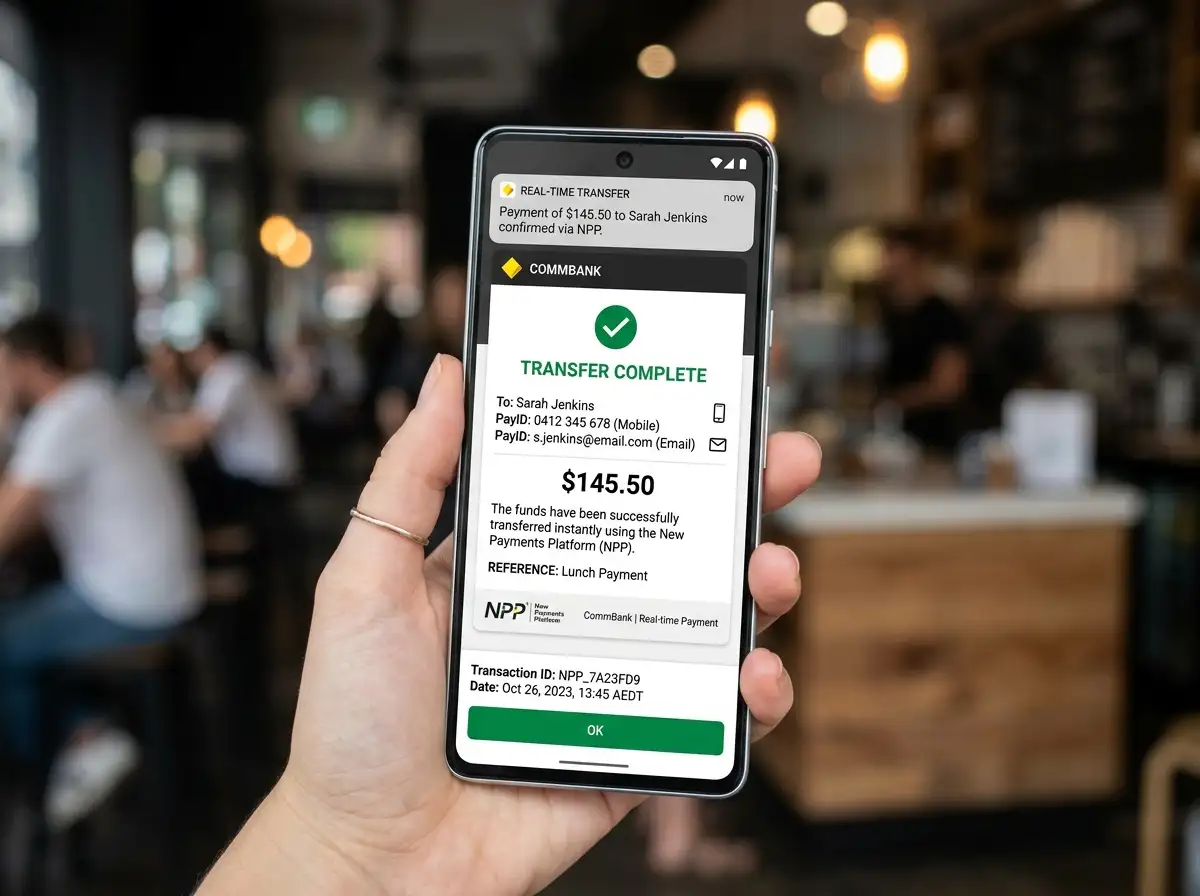
PayID dominates the deposit side. Over 42% of Australian casino players use it, and the number keeps climbing. It is not a separate app or a new bank — PayID is an addressing layer on the New Payments Platform, Australia’s real-time payment infrastructure. You link a mobile number or email to your bank account, punch it into a casino cashier, and the transfer settles in under 60 seconds via the NPP backbone. No card number to type, no third-party account to register, no separate login. The money moves bank-to-bank in AUD, around the clock, including weekends and public holidays.
Crypto runs the other direction. Bitcoin, Ethereum, and stablecoins like USDT clear withdrawals in 2 to 60 minutes once the operator approves the payout, compared to 3 to 7 business days for a traditional bank transfer. That speed gap — instant deposits via PayID, sub-hour cashouts via crypto — defines the Australian offshore casino banking experience in 2026. The methods that work fastest in one direction often do not work at all in the other.
Regulatory pressure is increasing. The Interactive Gambling Amendment Act 2026 passed in August, and Schedule 2 gives Australian banks the power to block financial transactions to illegal gambling services. Enforcement starts 1 January 2027. The mechanism shifts from blocking domain names (which players bypass with a VPN) to blocking payment flows (which is harder to work around unless you are using cryptocurrency or an international e-wallet with no Australian intermediary). What survives that enforcement wave depends on how aggressively banks apply the new powers and whether offshore operators adapt their payment routing.
Is it legal for Australians to use cryptocurrency at offshore casinos?
Australian law does not explicitly prohibit players from using cryptocurrency at online casinos. The Interactive Gambling Act 2001 targets operators who provide casino games to Australian residents, not individuals who play. Crypto exchanges operating in Australia require AML and KYC compliance, but holding Bitcoin or transferring it to a casino wallet is not illegal. The catch: the casino itself is offering a prohibited service, so you are funding an activity that sits in a legal grey area. Crypto use is not criminalized, but the offshore operator accepting it is still breaking Australian law by targeting you.
Fast Deposits vs Slow Withdrawals — Why the Gap Exists
You tap PayID at the cashier, the deposit lands in six seconds, and the balance updates before you finish reading the bonus terms. Three spins later you hit a decent line, request a cashout, and the pending timer starts. One hour. Four hours. Next business day. Three business days if the method is a card or bank transfer.
The timing asymmetry is not random. Deposits are low-risk from the operator’s perspective. You are sending money in, the transaction is irreversible once it clears the payment network, and identity verification can wait. Operators want that friction as low as possible because every extra step in the deposit flow is a point where you might close the browser and walk away.
Withdrawals flip the equation. Now the operator is sending money out, and that creates exposure. Regulatory licenses — even offshore ones — require anti-money-laundering checks and player verification before releasing funds. The first withdrawal from a new account triggers KYC: proof of identity, proof of address, sometimes proof of payment method. That review is manual. A compliance clerk in Curaçao or Malta looks at your documents during business hours in their timezone, which is not your timezone. If a document is unclear or expired, the request bounces back and the timer resets.
Beyond verification, there is the operator’s internal risk window. Most offshore casinos hold withdrawal requests in a pending state for 24 to 72 hours, even after KYC is cleared. That window exists to catch fraud, bonus abuse, duplicate accounts, and chargebacks. It also exists because some players reverse their withdrawal decision and gamble the balance back, which is free money for the house. Instant payouts are a feature at a handful of operators — the ones confident enough in their fraud detection that they skip the pending window — but the bulk of the market still holds requests for a day or two as standard practice.
Then there is the payment rail itself. PayID is fast inbound because the New Payments Platform settles in real time and the operator’s banking partner in Australia or Malta clears the funds immediately. PayID is rare outbound because very few offshore operators have set up the compliance infrastructure to push money back through NPP to an Australian bank account. The ones that do support PayID withdrawals — and the number is growing — still process them in 1 to 4 hours, not 60 seconds, because of the internal approval queue.
Cards present a similar limitation. A deposit is a standard purchase transaction. A withdrawal is a refund, and card networks treat refunds with more scrutiny than purchases. The refund goes back to the original card, the issuing bank holds it for verification, and the whole loop takes 3 to 7 business days. Some cards reject gambling refunds entirely, forcing the player into a bank transfer or e-wallet withdrawal.
Cryptocurrency bypasses all of that. A Bitcoin or USDT withdrawal is a blockchain transaction. Once the operator broadcasts it to the network, confirmation takes 10 to 60 minutes depending on network congestion and the fee paid. No bank intermediary, no card network, no refund approval process. The operator still holds the request in pending during their internal review, but after approval the payout moves at blockchain speed. That is why crypto dominates the fast-withdrawal segment in Australia: the rail itself is faster than anything touching the traditional financial system, and offshore operators cannot delay it beyond their own compliance window.
E-wallets sit in the middle. Skrill and Neteller withdrawals clear in 24 to 48 hours from the casino to your e-wallet account, then another 1 to 3 business days from the e-wallet to your Australian bank account. Faster than cards, slower than crypto. The two-step process adds time but also adds flexibility — you can leave the balance in the e-wallet and use it at a different casino, or you can cash out to your bank when you decide you are done.
Bank transfers are the slowest because they involve the most intermediaries. The offshore operator initiates a SWIFT transfer or local bank wire, an intermediary bank processes it, your Australian bank receives and verifies it, and the funds land in your account. Three to seven business days is standard, and some operators charge a flat fee of A$20 to A$35 for international bank wire withdrawals. But bank transfers handle the largest cashouts — when you are moving A$10,000 or more, a three-day wait is tolerable if the alternative method caps out at A$5,000 per transaction.
Why can’t I withdraw using PayID if I deposited with it?
PayID withdrawals are rare at offshore casinos because of operator-side limitations, not because the New Payments Platform cannot handle outbound payments. The NPP infrastructure supports real-time payments in both directions, but most offshore operators have not integrated the compliance and banking partnerships required to push funds back through the Australian banking system. The operators that do offer PayID withdrawals process them in 1 to 4 hours, which is faster than cards or bank transfers but slower than crypto. If your casino does not list PayID as a withdrawal option, you will need to use an alternative method like cryptocurrency, e-wallet, or bank transfer to cash out.
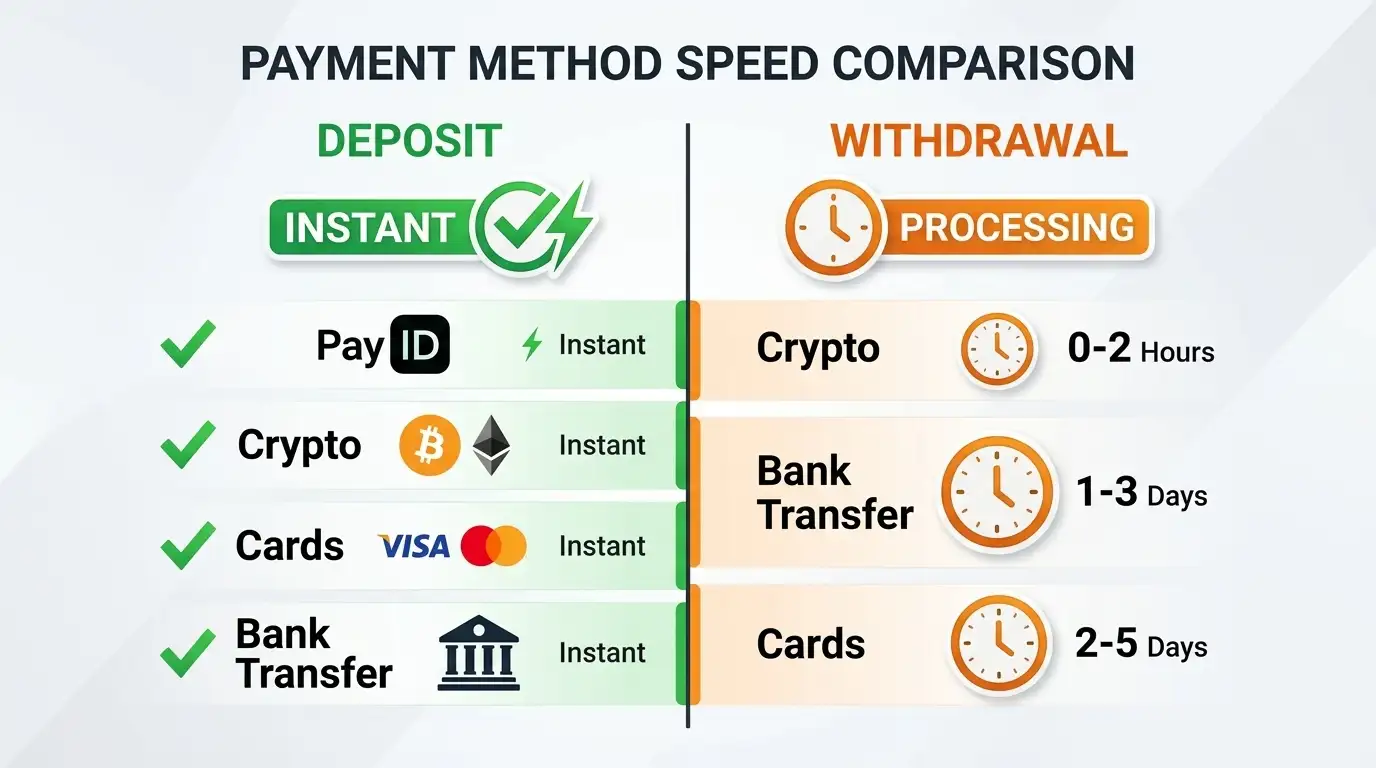
| Method | Deposit Speed | Withdrawal Speed | Why the Difference |
|---|---|---|---|
| PayID | Under 60 seconds | 1-4 hours (rare) | NPP real-time inbound; operator compliance constraints outbound |
| Visa/Mastercard Debit | Instant | 3-7 business days | Purchase instant; refund requires bank verification |
| Apple Pay / Google Pay | Instant | Not supported | Wraps card for deposit; no outbound rail |
| Bitcoin | 10-60 min (blockchain) | 2-60 min | Blockchain speed both ways; operator pending delay only |
| USDT (TRC-20) | 1-3 min (blockchain) | Sub-5 hours | Fastest blockchain; operator approval main delay |
| Ethereum | 2-8 min (blockchain) | 10-30 min | Faster than Bitcoin; operator approval delay |
| Skrill / Neteller | Instant | 24-48 hrs to e-wallet, 1-3 days to bank | E-wallet instant; bank transfer adds time |
| Neosurf / Paysafecard | Instant | Not supported | Prepaid voucher deposit-only by design |
| Bank Transfer | 1-3 business days | 3-7 business days | SWIFT intermediaries both ways |
PayID — Australia’s Dominant Deposit Method
PayID is not a payment company. There is no PayID app to download, no separate account to register, no new login to remember. PayID is an addressing service built on top of the New Payments Platform, Australia’s real-time payment infrastructure. You link a mobile number, email address, or ABN to your existing bank account through your bank’s app, and that identifier becomes a shortcut for your BSB and account number. When someone sends money to your PayID, it routes through the NPP backbone and lands in your account in real time.
Australian Payments Plus operates the infrastructure. The NPP launched in February 2018, and adoption was slow at first. Banks were cautious, merchants were skeptical, and most Australians had never heard of it. Eight years later the platform processes roughly 2 billion real-time transactions per year, and PayID has become the default deposit method for Australian online casino players. Over 42% use it, and that share keeps growing.
The casino experience is simple. You open the cashier page, select PayID as your deposit method, enter your mobile number or email, and authorize the payment through your bank’s app or internet banking portal. The funds move from your Australian bank account to the operator’s receiving account — usually held with a payment processor in Malta, Cyprus, or the UK — and the casino balance updates in under 60 seconds. The transfer is in AUD, there is no currency conversion, and there is no intermediary skimming a percentage off the top. PayID itself is free to use; your bank does not charge for sending money, and most casinos do not charge for receiving it.
POLi used to own this space. POLi Payments was a direct bank transfer gateway that let you log into your online banking through POLi’s interface and authorize an instant payment to a merchant. It was faster than a manual bank transfer and more private than a card transaction. Australian online casinos accepted it widely from the early 2010s through 2023, and it became the go-to deposit method for players who did not want to hand over a card number.
Australia Post, which owned POLi via its SecurePay subsidiary, shut the service down on 30 September 2023. The reasons were structural: the New Payments Platform had made POLi’s technology redundant, major Australian banks stopped accepting POLi transactions due to security and liability concerns, and the business case no longer held. The shutdown left a gap in the Australian casino deposit market, and PayID filled it within months. The 42% market share PayID holds now is largely the same player base that used to rely on POLi.
Withdrawals are a different story. The NPP can handle outbound payments just as fast as inbound ones — the technical infrastructure supports real-time transfers in both directions. But most offshore casino operators have not built the compliance and banking partnerships needed to push funds back through the Australian banking system via PayID. A PayID withdrawal requires the operator to hold an Australian bank account or work with a payment processor that does, and that processor needs to be willing to facilitate gambling payouts under an offshore license, which is a regulatory and reputational risk most Australian banks will not touch.
A handful of operators introduced PayID withdrawals in 2026, and the processing time is 1 to 4 hours once the operator approves the request. That is faster than a card refund or bank transfer but slower than cryptocurrency. The limitation is not the payment rail — it is the operator’s willingness and ability to route funds back through Australian banking infrastructure while operating under a Curaçao or Malta license. For most players, PayID remains a deposit-only method, and cashouts go through crypto, e-wallets, or traditional bank transfers.
Minimum deposits via PayID start at A$10 to A$50 depending on the operator. There is no practical maximum — the NPP can handle large transfers — but individual casinos set their own caps, typically A$5,000 to A$10,000 per transaction. If your bank has set a daily transfer limit on your account, that limit applies to PayID transactions the same way it applies to any other payment.
Bank blocking is the main friction point. Some Australian banks flag gambling transactions and block them at the merchant code level or by scanning the recipient’s business name. Commonwealth Bank, NAB, and Westpac have higher reported blocking rates than regional banks and credit unions. If your PayID deposit is declined, the casino cashier usually returns an error like “transaction rejected by issuing bank” or “payment failed.” The money does not leave your account, but you cannot retry the same method. The workaround is to use a different bank account, switch to an e-wallet or crypto, or call your bank and ask them to whitelist gambling payments — though that last option rarely works if the block is a blanket policy.
What happened to POLi and can I still use it?
POLi Payments shut down on 30 September 2023. Australia Post, which owned the service through its SecurePay subsidiary, terminated operations due to competition from the New Payments Platform, major Australian banks ceasing support for POLi transactions, and data privacy concerns. PayID via the NPP replaced POLi as the dominant Australian instant bank transfer method for online casino deposits. If a casino website still lists POLi as an available payment option in 2026, that information is outdated — the service has been offline for over three years and is not coming back.
Cryptocurrency — The Fastest Withdrawal Rail
Cryptocurrency is the only payment method at offshore casinos that consistently delivers sub-hour withdrawals to Australian players. Bitcoin, Ethereum, and stablecoins like Tether move money from a casino balance to your personal wallet in 2 to 60 minutes once the operator approves the payout, and that timing includes blockchain confirmation. No bank intermediary, no card network refund process, no SWIFT transfer lag. The blockchain settles the transaction, and the funds arrive.
The speed advantage exists because crypto bypasses the traditional financial system entirely. A withdrawal request goes into the operator’s internal approval queue — typically 30 minutes to 4 hours depending on the casino’s compliance workflow and whether you have already cleared KYC. Once approved, the operator broadcasts the transaction to the relevant blockchain network. Bitcoin confirmations take 10 to 60 minutes depending on network congestion and the transaction fee the operator includes. USDT on the Tron network (TRC-20) confirms in 1 to 3 minutes. Ethereum sits in between at 2 to 8 minutes. After confirmation, the crypto lands in your wallet and you can hold it, transfer it, or convert it to AUD through a local exchange.
Deposits follow the same path in reverse. You send crypto from your wallet to the casino’s deposit address, the blockchain confirms the transaction, and the casino credits your balance. Operators usually require 1 to 3 blockchain confirmations before releasing the funds for play, which means Bitcoin deposits take 10 to 60 minutes, USDT TRC-20 deposits take 1 to 3 minutes, and Ethereum deposits take 2 to 8 minutes. Faster than a bank transfer, comparable to PayID, and completely anonymous at the deposit stage — the blockchain does not record your name or location, only your wallet address.
That anonymity is partial. Offshore casinos still require identity verification before processing your first withdrawal, regardless of payment method. KYC applies to crypto the same way it applies to cards or bank transfers. You will need to upload a government-issued ID, proof of address, and sometimes a selfie or proof of payment method before the operator releases any payout. After the first withdrawal clears, subsequent payouts move faster because your account is already verified.
The tradeoff is complexity. Cryptocurrency requires you to hold a personal wallet — either a software wallet on your phone or computer, a hardware wallet for higher security, or an account at a cryptocurrency exchange like Binance, Coinbase, or Swyftx. You need to understand wallet addresses, transaction fees, and the difference between blockchain networks. Sending USDT to the wrong network (ERC-20 instead of TRC-20, for example) can result in lost funds that neither the casino nor the exchange can recover. Price volatility adds another layer of risk: if you deposit A$1,000 worth of Bitcoin and the BTC price drops 5% before you cash out, your withdrawal is worth A$950 in AUD terms. Stablecoins like USDT solve that problem by pegging 1 USDT to 1 USD, but you still bear currency risk if the AUD/USD exchange rate moves between deposit and withdrawal.
Blockchain fees vary by network. Bitcoin transaction fees range from A$1 to A$5 depending on network congestion. Ethereum gas fees run A$2 to A$20. USDT on the Tron network (TRC-20) is the cheapest at A$1 to A$2 per transaction, which is why it has become the preferred stablecoin rail for Australian players who want crypto speed without Bitcoin’s price swings or Ethereum’s high fees.
Bitcoin (BTC)
Bitcoin is the oldest, most widely accepted cryptocurrency at offshore casinos. Launched in 2009, it remains the default crypto option for players who want fast withdrawals and full anonymity at the deposit stage. Withdrawals clear in 2 to 60 minutes after operator approval, depending on how much transaction fee the operator includes and how congested the Bitcoin network is at the time. During high-traffic periods, low-fee transactions can sit unconfirmed for hours, but most casinos pay enough to ensure confirmation within 30 minutes.
The Bitcoin blockchain is decentralized and permissionless. No central authority controls it, no government can shut it down, and no bank can block your transaction. That makes Bitcoin a natural fit for offshore gambling, where traditional payment rails face increasing regulatory pressure. The upcoming bank blocking powers under the Interactive Gambling Amendment Act 2026, which take effect 1 January 2027, will not affect Bitcoin transactions because they do not touch the Australian banking system at any point.
Price volatility is the main drawback. Bitcoin’s value in AUD terms swings daily, sometimes by 5% or more in a single session. If you deposit A$1,000 in Bitcoin when the price is A$100,000 per BTC, you are sending 0.01 BTC. If the price drops to A$95,000 by the time you withdraw, that same 0.01 BTC is worth A$950. If the price rises to A$105,000, it is worth A$1,050. Players who care about preserving exact AUD value avoid Bitcoin and use stablecoins instead.
Minimum deposits are typically 0.0001 to 0.001 BTC, which translates to roughly A$10 to A$100 depending on current Bitcoin prices. Withdrawal minimums are similar. Blockchain fees of A$1 to A$5 per transaction make small withdrawals inefficient — cashing out A$20 in Bitcoin means losing 5% to 25% of the balance in fees — so most players wait until they have at least A$200 to A$500 before triggering a crypto withdrawal.
You need a Bitcoin wallet to use this method. Software wallets like Exodus, Electrum, or Trust Wallet work on desktop and mobile. Hardware wallets like Ledger or Trezor offer higher security for players holding larger balances. Exchange wallets at platforms like Binance, Coinbase, or Swyftx are convenient for players who plan to convert their winnings to AUD immediately, but keeping funds on an exchange means you do not control the private keys, which introduces counterparty risk if the exchange is hacked or goes bankrupt.
USDT (Tether) — TRC-20 vs ERC-20
Tether (USDT) is a stablecoin pegged 1:1 to the US dollar, issued by Tether Limited and backed by reserves held in cash, government bonds, and other liquid assets. The peg has held since USDT launched in 2014, despite periodic controversies about reserve transparency. For Australian casino players, the main appeal is simple: USDT withdrawals move at crypto speed without Bitcoin’s price volatility. One USDT is always worth roughly one USD, which is roughly A$1.50 to A$1.60 depending on the AUD/USD exchange rate. You bear currency risk on that exchange rate, but you do not bear Bitcoin’s daily 5% swings.
USDT operates on multiple blockchain networks. The two most common at Australian online casinos are TRC-20 (Tron network) and ERC-20 (Ethereum network). TRC-20 is faster and cheaper: transactions confirm in 1 to 3 minutes and cost A$1 to A$2 in blockchain fees. ERC-20 is slower and more expensive: transactions confirm in 2 to 8 minutes and cost A$2 to A$20 in Ethereum gas fees depending on network congestion. For withdrawal speed and cost, TRC-20 is the clear winner, which is why it has become the dominant stablecoin rail in the Australian offshore casino market.
Sub-5-hour cashouts are standard with USDT TRC-20. The operator holds the withdrawal in pending for their internal compliance review — typically 30 minutes to 4 hours — then broadcasts the transaction to the Tron blockchain. Confirmation takes 1 to 3 minutes. Total elapsed time from clicking “withdraw” to seeing the USDT in your wallet is usually under 5 hours, and often under 2 hours at casinos with fast approval workflows. That is faster than Bitcoin (which takes 10 to 60 minutes for blockchain confirmation alone), faster than any e-wallet (which takes 24 to 48 hours), and incomparably faster than a bank transfer (3 to 7 business days).
Deposits are near-instant. You send USDT from your wallet to the casino’s TRC-20 deposit address, the Tron blockchain confirms the transaction in 1 to 3 minutes, and the casino credits your balance. Most operators require 1 confirmation before releasing the funds for play, so the whole deposit process takes under 5 minutes from start to finish.
The stablecoin peg means you avoid Bitcoin’s volatility, but you do not avoid all currency risk. USDT is pegged to USD, not AUD. If you deposit A$1,000 when the AUD/USD rate is 0.65, you are buying roughly 650 USDT. If the AUD strengthens to 0.70 by the time you withdraw, those 650 USDT convert back to roughly A$930 in AUD terms. If the AUD weakens to 0.60, they convert to A$1,080. For most players, AUD/USD moves are less extreme than Bitcoin price swings, which makes USDT the safer crypto option even with exchange rate exposure.
ERC-20 USDT uses the Ethereum network and offers the same stablecoin peg but with higher fees and slightly faster confirmation times than Bitcoin. Most Australian players avoid it because TRC-20 is cheaper and just as fast. The main reason to use ERC-20 is if your casino does not support TRC-20 or if you already hold USDT on the Ethereum network and do not want to bridge it to Tron.
Minimum deposits are typically 10 to 20 USDT (roughly A$15 to A$30). Withdrawal minimums are similar. TRC-20 blockchain fees of A$1 to A$2 make even small withdrawals viable, unlike Bitcoin where the A$3 to A$5 fee eats into balances under A$100.
Ethereum (ETH)
Ethereum is the second-largest cryptocurrency by market cap and a common alternative to Bitcoin at offshore casinos. Withdrawals clear in 10 to 30 minutes after operator approval, which is faster than Bitcoin (10 to 60 minutes) but slower than USDT TRC-20 (1 to 3 minutes). Ethereum’s blockchain confirms transactions in 12 to 15 seconds per block, and most casinos require 12 to 30 confirmations before considering a transaction final, which works out to 2 to 8 minutes of blockchain time. Add the operator’s internal approval delay (30 minutes to 4 hours) and total withdrawal time falls in the 10 to 30 minute range once pending clears.
Deposits follow the same timing: you send ETH from your wallet to the casino’s Ethereum deposit address, the blockchain confirms in 2 to 8 minutes, and the casino credits your balance after 12 to 30 confirmations. Faster than Bitcoin, comparable to USDT ERC-20, slower than USDT TRC-20.
The cost is higher than Bitcoin or Tether. Ethereum gas fees range from A$2 to A$20 per transaction depending on network congestion. During peak usage periods, fees can spike above A$30, though those spikes are less common in 2026 than they were in 2021-2022 when DeFi and NFT activity pushed Ethereum usage to all-time highs. For small withdrawals under A$200, the gas fee eats a meaningful percentage of the balance, which makes Ethereum less practical than Bitcoin or USDT for casual players.
Price volatility matches Bitcoin. Ethereum’s value in AUD terms swings daily, and players depositing or withdrawing in ETH bear the same currency risk as Bitcoin users. If preserving exact AUD value matters, USDT is the better choice.
Acceptance is lower than Bitcoin or USDT at Australian-facing offshore casinos. Most operators support Bitcoin and at least one stablecoin (usually USDT), but Ethereum support is spottier. The casinos that do accept it treat it as a secondary crypto option, and some cap Ethereum deposits or withdrawals at lower limits than Bitcoin.
Which payment method offers the fastest withdrawals at Australian online casinos?
Cryptocurrency offers the fastest withdrawals, with USDT on the Tron network (TRC-20) delivering the quickest overall time: sub-5 hours including operator approval and blockchain confirmation, often under 2 hours at casinos with fast compliance workflows. Bitcoin withdrawals clear in 2 to 60 minutes after approval, and Ethereum in 10 to 30 minutes. All three are faster than e-wallets (24 to 48 hours), debit cards (3 to 7 business days), or bank transfers (3 to 7 business days). Among non-crypto options, PayID withdrawals at the few operators that support them process in 1 to 4 hours, making PayID the fastest traditional banking method when available.

| Cryptocurrency | Withdrawal Speed (Post-Approval) | Blockchain Fees | Volatility | Best Use Case |
|---|---|---|---|---|
| Bitcoin (BTC) | 10-60 minutes | A$1-A$5 | High (daily swings 3-10%) | Players comfortable with price risk, want maximum acceptance |
| USDT (TRC-20) | 1-3 minutes | A$1-A$2 | None (pegged to USD) | Players want crypto speed without volatility, smallest fees |
| USDT (ERC-20) | 2-8 minutes | A$2-A$20 | None (pegged to USD) | Players stuck with Ethereum network, higher fees than TRC-20 |
| Ethereum (ETH) | 2-8 minutes | A$2-A$20 | High (similar to Bitcoin) | Players already holding ETH, fewer operators accept it |
Debit Cards — What’s Left After the Credit Card Ban
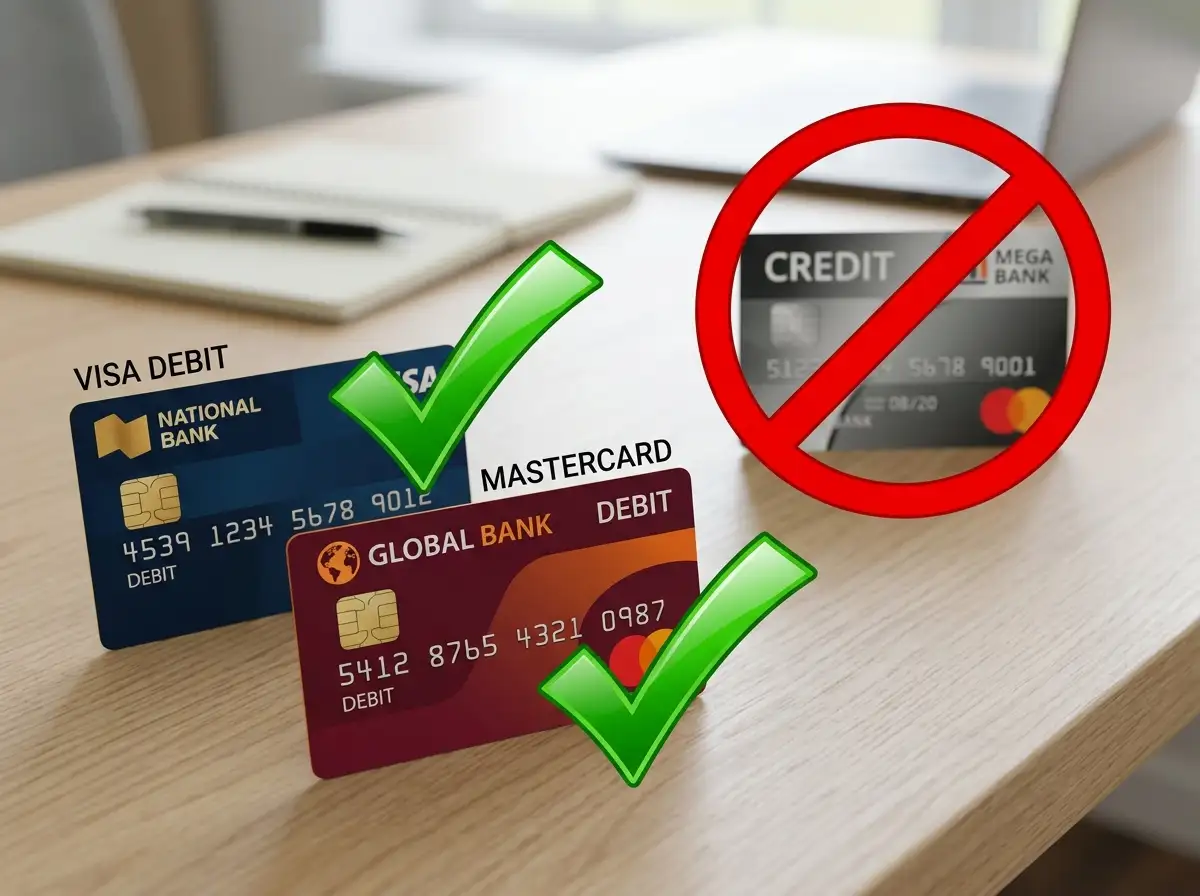
Credit cards are banned for online gambling in Australia. The Interactive Gambling Amendment Act took effect on 11 June 2024, making it illegal for licensed Australian wagering operators to accept credit card payments, credit-linked digital wallets, or any credit-related product. The ban extended to offshore operators too, though enforcement at offshore sites is less consistent. The intent was harm minimization — stopping players from gambling with borrowed money — and the result was a sharp drop in credit card deposits across the Australian market.
Debit cards remain completely legal. Visa debit and Mastercard debit are treated as direct bank account payments, not credit instruments, and the June 2024 legislation did not touch them. That makes debit cards the primary card payment method at offshore casinos in 2026, and acceptance is near-universal. Almost every operator taking Australian players lists Visa and Mastercard debit in their cashier alongside PayID, crypto, and e-wallets.
The practical difference between credit and debit is straightforward. A credit card transaction borrows from a credit line issued by the card provider. A debit card transaction pulls directly from your bank account balance. The gambling transaction itself looks identical on the merchant side, but the funding source is different, and under Australian law that difference determines legality. If you try to deposit with a credit card at an offshore casino in 2026, the transaction will either be declined by your card issuer or flagged and reversed if it somehow goes through.
Bank blocking complicates debit card use. Even though debit cards are legal, some Australian banks block gambling transactions at their own discretion. Commonwealth Bank, NAB, and Westpac have higher reported blocking rates than regional banks or credit unions. The block happens at the merchant category code level — gambling transactions are assigned specific MCC codes by Visa and Mastercard, and banks can filter those codes automatically. When a transaction is blocked, the deposit fails and the casino cashier returns an error like payment declined by issuing bank or transaction rejected. The money stays in your account, but you cannot retry the same card.
The workaround is to use a different bank account with a debit card from a bank that does not block gambling, or switch to PayID, crypto, or an e-wallet. Calling your bank to request that they whitelist gambling payments rarely works if the block is a blanket policy set at the institutional level. Some players report success with smaller regional banks and credit unions, which tend to have less aggressive transaction filtering than the major four.
Visa Debit
Visa debit cards are issued by every major Australian bank and most credit unions. The card carries the Visa logo, connects to the global Visa payment network, and functions as a direct link to your transaction or savings account. Deposits at offshore casinos are instant — the payment processes as a standard card purchase, and the casino balance updates within seconds. The transaction appears on your bank statement as a merchant purchase, often with a descriptor that does not obviously say “casino” depending on how the operator routes payments.
Withdrawals are slower. A debit card withdrawal functions as a refund to the original payment method. The casino initiates the refund through the Visa network, your bank receives it and holds it for verification, and the funds land back in your account in 3 to 7 business days. Some banks process refunds faster — 24 to 48 hours — but 3 to 5 days is more common. The refund only works if you deposited with that specific card in the first place; you cannot withdraw to a Visa debit card if you deposited via PayID or crypto.
Minimum deposits are typically A$10 to A$30. Maximum deposits vary by operator but are usually capped at A$5,000 to A$10,000 per transaction to manage fraud risk. Withdrawal minimums are similar, A$20 to A$50, and withdrawal maximums depend on how much you deposited with the card — most casinos limit card withdrawals to the total amount deposited via that card, forcing you to use an alternative method like bank transfer or crypto for winnings beyond the deposit amount.
Fees are rare. Most offshore operators do not charge for debit card deposits, and Visa itself does not charge consumers for card transactions. Your bank might charge a foreign transaction fee if the casino processes payments through an overseas merchant, but that fee is typically 1% to 3% and appears on your bank statement, not deducted at the casino level.
Mastercard Debit
Mastercard debit is functionally identical to Visa debit from a player’s perspective. The card is issued by your Australian bank, connects to the Mastercard payment network instead of the Visa network, and pulls funds directly from your bank account. Deposits are instant, withdrawals take 3 to 7 business days as refunds, and acceptance at offshore casinos is just as widespread as Visa.
The choice between Visa and Mastercard usually comes down to which network your bank issued your card on. Most Australian banks issue Visa debit as the default, but some offer Mastercard debit, and a few let you choose. From a casino banking perspective, there is no meaningful difference — both networks process deposits instantly, both handle withdrawals as refunds with the same 3-to-7-day timing, and both are subject to the same bank blocking risks if your financial institution flags gambling transactions.
Foreign transaction fees apply the same way as Visa. If the casino processes your payment through an international merchant, your bank may charge 1% to 3% on the transaction. Some banks waive foreign transaction fees on their debit cards, so checking your card’s fee schedule before depositing can save a small percentage on every transaction.
Are credit cards still banned for online gambling in Australia in 2026?
Yes. Credit cards remain banned for online gambling under the Interactive Gambling Amendment Act, which took effect on 11 June 2024. The ban applies to credit cards, credit-linked digital wallets like Apple Pay or Google Pay when backed by a credit card, and any other credit-related payment product. Debit cards are not affected by the ban and remain fully legal for online casino deposits and withdrawals. If you try to use a credit card at an offshore casino in 2026, the transaction will be declined by your card issuer or flagged as prohibited. Players have shifted to debit cards, PayID, e-wallets, or cryptocurrency as alternatives.
Mobile Wallets — Apple Pay and Google Pay
Apple Pay and Google Pay are not payment methods in the traditional sense. They are digital wallets that wrap an existing Visa or Mastercard stored in your device, tokenize the card data for security, and authorize the payment with biometric authentication or a device passcode. When you deposit at a casino using Apple Pay, the transaction is actually processed as a Visa or Mastercard payment from the underlying card linked to your Apple Wallet. The wallet itself is just the interface.
That distinction matters for legality. If the card you have stored in Apple Pay or Google Pay is a debit card, the transaction is legal under Australian law. If the card is a credit card, the transaction violates the June 2024 credit card ban and will be declined. The mobile wallet does not change the funding source — it only changes how you authorize the payment. Apple Pay with a debit card is legal; Apple Pay with a credit card is not.
Apple Pay
Apple Pay integrates into iPhone, iPad, Apple Watch, and Mac devices through the Wallet app. You add a Visa or Mastercard to the Wallet, and Apple issues a device-specific token that replaces your actual card number when you make a payment. The casino never sees your raw card number — Apple sends the token, the token is verified through the Visa or Mastercard network, and the payment clears from your linked card.
Deposits are one-touch. You select Apple Pay at the casino cashier, authenticate with Face ID, Touch ID, or your device passcode, and the payment processes instantly. The transaction appears on your bank statement as a card purchase from the underlying Visa or Mastercard, not as “Apple Pay.” That means if your bank blocks gambling transactions, the block applies to Apple Pay deposits the same way it applies to direct card deposits.
Withdrawals are not supported. Apple Pay is a deposit authorization method, not a bidirectional payment rail. Casinos cannot push money back to your Apple Wallet. If you deposit via Apple Pay, your withdrawal will go through an alternative method like bank transfer, crypto, or an e-wallet. The underlying card you used for the Apple Pay deposit might be eligible for a refund withdrawal, but that refund processes as a standard card withdrawal (3 to 7 business days) and is not routed through Apple Pay itself.
Apple Pay adoption among Australian casino players increased after the June 2024 credit card ban, as players with debit-card-backed Apple Pay wallets found the method faster and more convenient than typing card numbers manually. The biometric authentication adds a layer of security — your card details never leave the Secure Element chip in your device — and the one-touch experience reduces friction at the deposit stage.
Google Pay
Google Pay is the Android equivalent of Apple Pay. You add a Visa or Mastercard to Google Wallet on your Android phone or tablet, and Google tokenizes the card data so merchants never receive your actual card number. Deposits work the same way as Apple Pay: you select Google Pay at the casino cashier, authenticate with your fingerprint, PIN, or device unlock method, and the payment processes as a card transaction from the underlying Visa or Mastercard.
Legal status depends on the underlying card. Google Pay backed by a debit card is legal for gambling; Google Pay backed by a credit card violates the June 2024 ban and will be declined. The wallet is neutral — it is the card behind the wallet that determines legality.
Withdrawals are not supported. Google Pay is deposit-only, just like Apple Pay. Cashouts must go through bank transfer, crypto, e-wallet, or a refund to the original card if the casino supports card withdrawals.
Transaction blocking is identical to direct card use. If your bank blocks gambling transactions, the block applies to Google Pay deposits because the transaction still carries a gambling merchant category code and is processed through the Visa or Mastercard network. The tokenization changes the card number sent to the merchant, but it does not hide the transaction type from your bank.
E-Wallets — PayPal, Skrill, Neteller and Alternatives
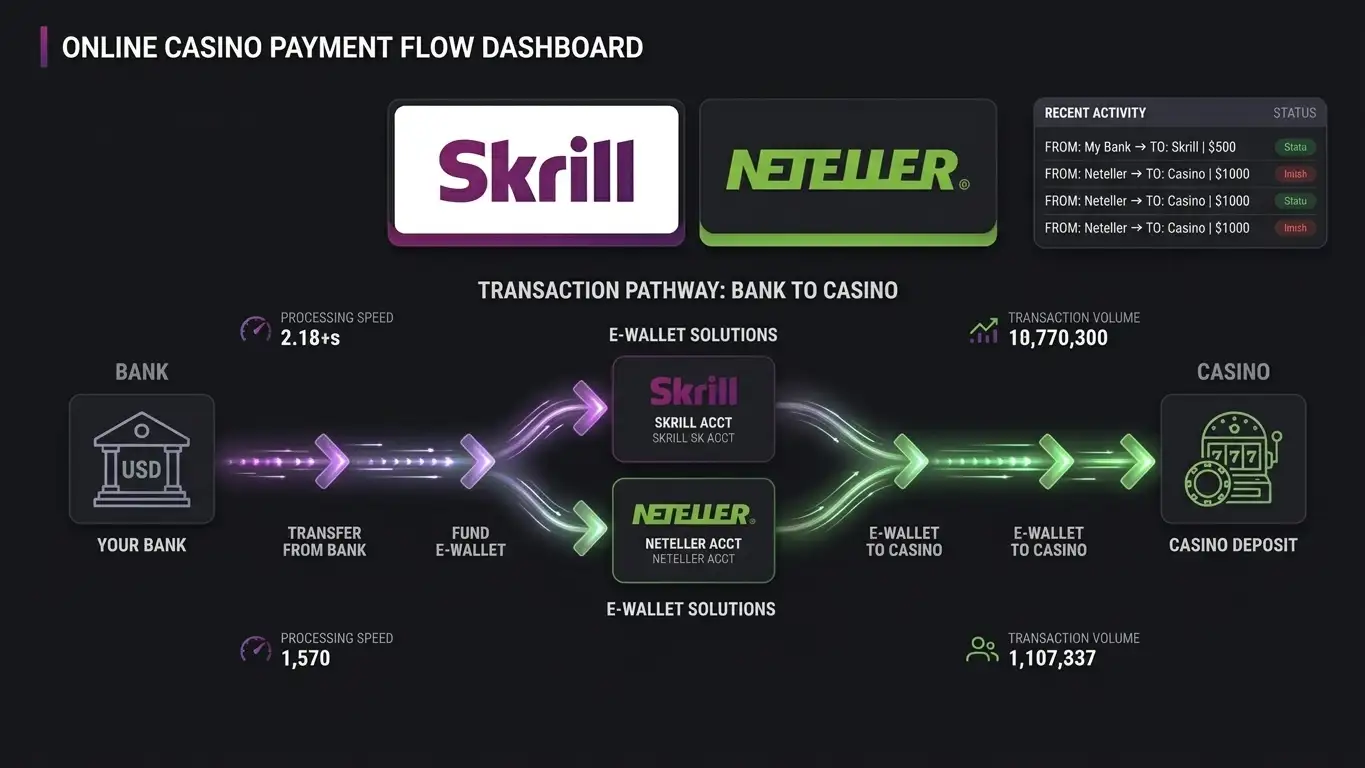
E-wallets sit between your bank account and the casino. You fund the e-wallet from your Australian bank, the e-wallet holds the balance in its own account structure, and you use that balance to deposit at casinos. Withdrawals reverse the flow: the casino sends money to your e-wallet, and you transfer from the e-wallet back to your Australian bank account when you are ready to cash out. The two-step process adds time compared to direct bank transfers or crypto, but it also adds flexibility — you can leave balances in the e-wallet and move them between casinos without touching your bank account every time.
E-wallets also bypass bank blocking. If your Australian bank flags gambling transactions and declines direct deposits, routing through Skrill or Neteller solves the problem because the transaction your bank sees is a transfer to an e-wallet company, not a gambling merchant. The gambling transaction happens between the e-wallet and the casino, and your bank never sees that leg of the payment.
PayPal (why it’s rarely available at offshore casinos)
PayPal is the most recognized e-wallet brand globally, with over 400 million active accounts and deep integration into online retail, freelance platforms, and peer-to-peer payments. Australian consumers trust it, Australian banks rarely block it, and the buyer protection policy gives users recourse if a merchant does not deliver. That makes PayPal an ideal fit for online casino deposits in theory.
In practice, PayPal is almost never available at offshore casinos accepting Australian players. The issue is not Australian law — PayPal itself restricts gambling transactions under its Acceptable Use Policy. The policy prohibits merchants from using PayPal to accept payments for gambling services unless the merchant holds a valid license in the jurisdiction where the transaction occurs and PayPal has approved that merchant category. Offshore casinos operating under Curaçao or Malta licenses do not meet that standard, so PayPal does not process their transactions.
Licensed Australian wagering operators — the ones offering sports betting and racing under state and territory licenses — can and do accept PayPal, because those operators are legal under Australian law and PayPal has whitelisted them. But online casino games are prohibited under the Interactive Gambling Act 2001, which means no Australian-licensed operator offers them, and offshore operators cannot access PayPal as a payment rail.
If a casino website lists PayPal as a deposit option, check carefully. Some sites show PayPal in the cashier menu as a placeholder but return an error when you try to use it, because PayPal rejected the merchant application. Others use PayPal through a third-party payment processor with misleading merchant descriptors, and those transactions often get flagged and reversed after the fact. The safest assumption for Australian players in 2026 is that PayPal does not work at offshore casinos, and Skrill or Neteller are the gambling-specialist e-wallet alternatives.
Skrill
Skrill was built for gambling. The company, formerly known as Moneybookers, rebranded as Skrill in 2011 and positioned itself as the e-wallet for online betting, forex trading, and other high-transaction-volume industries that PayPal avoids. Paysafe Group acquired Skrill in 2015 and now operates it alongside Neteller and Paysafecard as part of its global payments portfolio.
Offshore casino acceptance is near-universal. Most operators serving Australian players list Skrill in the cashier, and deposits are instant. You log into your Skrill account, authorize the payment, and the casino balance updates within seconds. Withdrawals take 24 to 48 hours to reach your Skrill account after the casino approves them, then another 1 to 3 business days to transfer from Skrill to your Australian bank account. Total time is 2 to 5 days from requesting the withdrawal to seeing AUD in your bank, which is faster than a card refund but slower than crypto.
The fee structure changed in 2026. Effective 17 August 2026, Skrill introduced a 2.99% international transaction fee for cross-currency or international merchant transactions. That fee applies to most offshore casino deposits and withdrawals because the casinos are registered as international merchants outside Australia. If you deposit A$100, Skrill deducts A$2.99 and sends A$97.01 to the casino. If you withdraw A$100 from the casino to Skrill, Skrill may deduct another 2.99% when you transfer to your Australian bank, depending on how the transaction is categorized. The fee makes Skrill less cost-effective than it was before August 2026, but it remains faster and more widely accepted than direct bank transfers.
Minimum deposits at casinos are typically A$10 to A$20. Skrill itself does not impose minimums, but casinos set their own thresholds. Withdrawal minimums are similar. Skrill supports AUD accounts, so you can hold your balance in Australian dollars and avoid currency conversion when depositing at casinos that accept AUD.
Bonus exclusions are common. Many offshore casinos exclude Skrill and Neteller deposits from welcome bonus eligibility because those e-wallets make it easy for bonus abusers to move money between casinos and exploit multiple promotions. If a casino offers a 100% deposit match bonus, read the terms carefully — the fine print often says “deposits via Skrill and Neteller do not qualify.” You can still use Skrill, but you forfeit the bonus.
Neteller
Neteller is Skrill’s sibling, operated by the same Paysafe Group parent company and targeting the same gambling-focused market. The two e-wallets are functionally similar: instant casino deposits, 24-to-48-hour withdrawals to your Neteller account, 1-to-3-day transfers from Neteller to your Australian bank, and near-universal acceptance at offshore operators. The fee structure mirrors Skrill, including the 2.99% international transaction fee introduced in 2026.
The main difference is reputation. Neteller has a longer track record in the gambling space — it launched in 1999, predating Skrill by several years — and some players report slightly faster withdrawal processing from casinos to Neteller compared to Skrill. That edge is marginal and varies by operator. In practice, if a casino accepts one, it usually accepts both, and the choice comes down to which e-wallet you already have an account with.
KYC verification is required at account opening. Neteller asks for proof of identity and proof of address before you can deposit or withdraw. That verification is a one-time process, and after it clears, you can move money in and out without repeating it. Casinos still require their own KYC at first withdrawal, so expect to verify your identity twice — once for Neteller, once for the casino.
Minimum deposits and withdrawal thresholds are set by individual casinos, typically A$10 to A$20 for deposits and A$20 to A$50 for withdrawals. Neteller supports AUD accounts, so you can hold balances in Australian dollars and avoid currency conversion when transacting with AUD-friendly casinos.
Why do some payment methods not qualify for casino bonuses?
E-wallets like Skrill and Neteller are often excluded from welcome bonus eligibility because they make it easy for players to exploit multiple promotions across different casinos. Bonus abusers deposit via e-wallet, claim the bonus, meet the wagering requirement, withdraw, then move the same funds to another casino and repeat. E-wallets facilitate that cycle faster than bank transfers or cards, so casinos protect their bonus budgets by excluding those methods from promotional offers. Prepaid vouchers like Neosurf are also frequently excluded for the same reason. If you want to qualify for a welcome bonus, use a debit card, PayID, or cryptocurrency instead of an e-wallet, and check the bonus terms before depositing.
| E-Wallet | Availability in AU Market | Typical Fees | Withdrawal Speed | Notes |
|---|---|---|---|---|
| Revolut | Low (few offshore casinos accept it) | 0-1% currency conversion | 24-48 hrs to e-wallet, 1-3 days to bank | Multi-currency account, not gambling-specialist |
| MuchBetter | Moderate (growing acceptance) | 0% deposit, variable withdrawal fees | 24-48 hrs to e-wallet, 1-3 days to bank | Mobile-first e-wallet, QR code deposits |
| EcoPayz (Payz) | Moderate | 1.5-3% fees typical | 24-48 hrs to e-wallet, 1-3 days to bank | Rebranded as Payz in 2022, gambling-focused |
| MiFinity | Moderate | 0-2% fees depending on tier | 24-48 hrs to e-wallet, instant to bank (rare) | Multi-currency, some operators support instant cashouts |
| STICPAY | Low (limited AU operator support) | 1-3% fees | 24-48 hrs to e-wallet, 1-3 days to bank | Asia-Pacific focus, lower acceptance in AU market |
Prepaid Vouchers — Anonymous Deposits with Neosurf and Paysafecard
Prepaid vouchers offer the highest level of anonymity among non-crypto payment methods. You buy a voucher at a retail location with cash or EFTPOS, receive a code, and enter that code at the casino cashier to fund your account. No bank account linkage, no card number exposure, no transaction appearing on a bank statement with a gambling merchant name. The voucher is a bearer instrument — whoever holds the code can use it — and the casino has no way to connect it back to your identity until you trigger KYC at withdrawal.
The limitation is structural: vouchers are deposit-only by design. They cannot receive funds back. When you cash out, you must use an alternative method like bank transfer, crypto, or an e-wallet. That makes vouchers a one-way rail, useful for funding an account but not for closing the loop on withdrawals.
Neosurf
Neosurf is a French prepaid voucher system operated by Neosurf SAS, a subsidiary of Viva Payments Group. Vouchers are sold at approximately 4,000 retail locations across Australia, including newsagents, service stations, Coles, Woolworths, and independent convenience stores. You walk in, ask for a Neosurf voucher, pay cash or tap your debit card, and receive a receipt with a 10-digit PIN code. Denominations are A$10, A$20, A$50, A$100, and A$250.
Deposits are instant. You select Neosurf at the casino cashier, enter the 10-digit code, and the voucher amount credits to your casino balance within seconds. The casino deducts the deposit from the voucher balance, and if the voucher had A$100 on it and you deposited A$50, the remaining A$50 stays on the voucher for future use. Vouchers do not expire for 12 months from purchase, so you can hold a partially used voucher and redeem the rest later.
Daily deposit limits are A$1,000 across all Neosurf transactions. That cap is set by Neosurf itself, not by individual casinos. If you need to deposit more than A$1,000 in a single day, you will need to use a different payment method or split the deposits across multiple days. Minimum casino deposits are typically A$10 to A$20, matching the smallest voucher denomination.
Neosurf does not require account registration. The voucher is anonymous at purchase and redemption. The casino logs the voucher code when you deposit, but Neosurf does not track who bought the voucher or where it was redeemed unless law enforcement requests that information under an anti-money-laundering investigation. For practical purposes, a cash-purchased Neosurf voucher leaves no financial trail connecting you to the casino deposit.
Retail availability is broader than Paysafecard in Australia. Most large newsagents, major service station chains like 7-Eleven and BP, and many Coles and Woolworths locations stock Neosurf vouchers. The Neosurf website has a location finder that shows nearby retailers, though availability is not guaranteed and smaller stores sometimes run out of stock.
The use case is clear. Players with gambling blocks on their bank accounts use Neosurf to bypass the block without opening a new bank account. Players who want to avoid a gambling transaction appearing on their bank statement use Neosurf for privacy. Players who do not have a bank account or cryptocurrency wallet use Neosurf because it is the only method that works with just cash. And players managing responsible gambling limits use Neosurf as a budgeting tool — once the voucher balance is spent, there is no way to deposit more without physically returning to the store and buying another voucher, which creates natural friction.
Paysafecard
Paysafecard is another prepaid voucher system, operated by Paysafe Group (the same parent company as Skrill and Neteller). Vouchers carry a 16-digit PIN code and are sold at retail locations across Australia, though availability is lower than Neosurf. Denominations are A$30, A$50, and A$100. You buy the voucher at a retailer, receive the PIN, and enter it at the casino cashier to fund your account.
Deposits are instant, and the mechanics are identical to Neosurf: you enter the 16-digit code, the casino validates it with Paysafecard, and your balance updates within seconds. Vouchers do not expire for 12 months, and partially used vouchers retain their remaining balance for future deposits.
Daily deposit limits are A$1,000, matching Neosurf. Minimum casino deposits are A$20 to A$30, aligned with the smallest Paysafecard denomination. Like Neosurf, Paysafecard does not require account registration for basic use, though the company offers an optional my paysafecard account that lets you combine multiple voucher balances into one online wallet.
Acceptance at offshore casinos is lower than Neosurf in the Australian market. Most major operators list Neosurf in the cashier, but Paysafecard appears less frequently. That difference is regional — Paysafecard has stronger penetration in Europe, while Neosurf has carved out the Australian prepaid voucher market more successfully. If a casino accepts both, the functional difference is minimal. If a casino only accepts one, it is more likely to be Neosurf.
Retail availability is spottier. Paysafecard is sold at some newsagents, service stations, and convenience stores, but the retail network is smaller than Neosurf’s. The Paysafecard website has a location finder, and in metropolitan areas you can usually find a retailer within a few kilometers, but rural players may have trouble locating a stockist.
The withdrawal limitation applies equally to both vouchers. Neither Neosurf nor Paysafecard can receive funds back from a casino. Your first withdrawal from a prepaid-voucher-funded account will require setting up an alternative method — typically a bank transfer, which means providing your bank account details and clearing KYC. That defeats some of the anonymity benefit, because the casino now has your verified identity and bank account on file. The voucher kept the deposit anonymous, but the regulatory requirement for withdrawal verification means your identity is eventually disclosed.
Bank Transfers — Slow but Reliable for Large Cashouts
Bank transfers are the slowest common method, and also the default for large withdrawals. When you request a payout above A$5,000 or A$10,000 — the typical upper limit for card refunds, e-wallet transfers, and sometimes even crypto at conservative operators — the casino pushes you toward a bank wire or local transfer. The method handles high amounts without the transaction limits that constrain other rails, and despite the 3-to-7-day wait, it remains the most reliable way to move four- or five-figure sums out of an offshore casino and into your Australian bank account.
Deposits via bank transfer take 1 to 3 business days. You initiate a transfer from your Australian bank account to the casino’s receiving account, usually held with a bank in Malta, Cyprus, the UK, or another offshore jurisdiction. The casino provides the account details — account holder name, IBAN or SWIFT code, and a reference number you must include so they can match the payment to your player account. The transfer routes through the SWIFT network or a local clearing house depending on the destination, and once it lands the casino credits your balance.
That 1-to-3-day lag makes bank transfer deposits impractical for most players. PayID lands in 60 seconds, cards and e-wallets are instant, and even crypto confirms in minutes. Waiting three days to fund your account only makes sense if you are depositing a large amount — say A$10,000 or more — and other methods have lower transaction caps. For everyday play, bank transfers are too slow to compete.
Withdrawals are where bank transfers dominate. The casino initiates a SWIFT wire or local bank transfer to your Australian bank account. Processing takes 3 to 7 business days from the moment the casino approves the payout. That includes the operator’s internal compliance review (which can add 24 to 72 hours if your account is not yet verified), the transfer routing through intermediary banks, and your Australian bank receiving and clearing the funds. Some casinos process bank transfers faster — 24 to 48 hours — but 5 days is more common, and 7 days is not unusual during peak periods or if the payment crosses a weekend or public holiday.
Fees vary by operator. Some casinos cover the cost of bank transfer withdrawals and do not charge the player. Others charge a flat fee of A$20 to A$35 per withdrawal to offset the SWIFT wire fees they pay on their end. The fee structure is usually disclosed in the cashier or the casino’s banking policy, and it does not change based on the withdrawal amount — a A$500 cashout and a A$5,000 cashout both incur the same flat fee if one is charged.
Minimum withdrawals are typically A$50 to A$100. Maximum withdrawals depend on the casino’s limits, but bank transfers generally have the highest caps of any method. Where e-wallets might cap out at A$5,000 per transaction and crypto at A$10,000, bank transfers often allow A$20,000 to A$50,000 or more per withdrawal. That makes bank transfer the only practical option for cashing out a very large win unless you are willing to split it across multiple crypto or e-wallet transactions over several days.
Currency conversion happens at the bank level if the casino sends the payout in a currency other than AUD. If the casino holds its funds in EUR or USD and wires that currency to your Australian bank, your bank converts it to AUD at their exchange rate and deposits the converted amount. The rate is usually less favorable than the mid-market rate, with a margin of 1% to 3% built in, and your bank may charge an additional foreign currency receiving fee of A$10 to A$20. Casinos that support native AUD payouts avoid that conversion entirely — they hold AUD in their banking infrastructure and send AUD directly to your Australian account — which is worth checking before choosing bank transfer as your withdrawal method.
How long does a bank transfer withdrawal actually take?
Bank transfer withdrawals from offshore casinos take 3 to 7 business days from the time the casino approves your request. That includes the operator’s internal compliance review, the SWIFT or local wire transfer routing through intermediary banks, and your Australian bank clearing the incoming funds. Some casinos process faster — 24 to 48 hours at the quickest operators — but 5 business days is the typical turnaround. If your account is not yet verified with KYC documents, add another 1 to 3 days for the compliance review. Weekends and public holidays extend the timeline because banks do not process international wires outside business hours.
What Doesn’t Work — POLi, Credit Cards, and Unavailable Methods
Not every payment method listed on generic casino banking guides works in Australia. Some were shut down, some were banned, and others were never available in the Australian market to begin with. Knowing what does not work saves time and eliminates confusion when a cashier menu shows an option that fails when you try to use it.
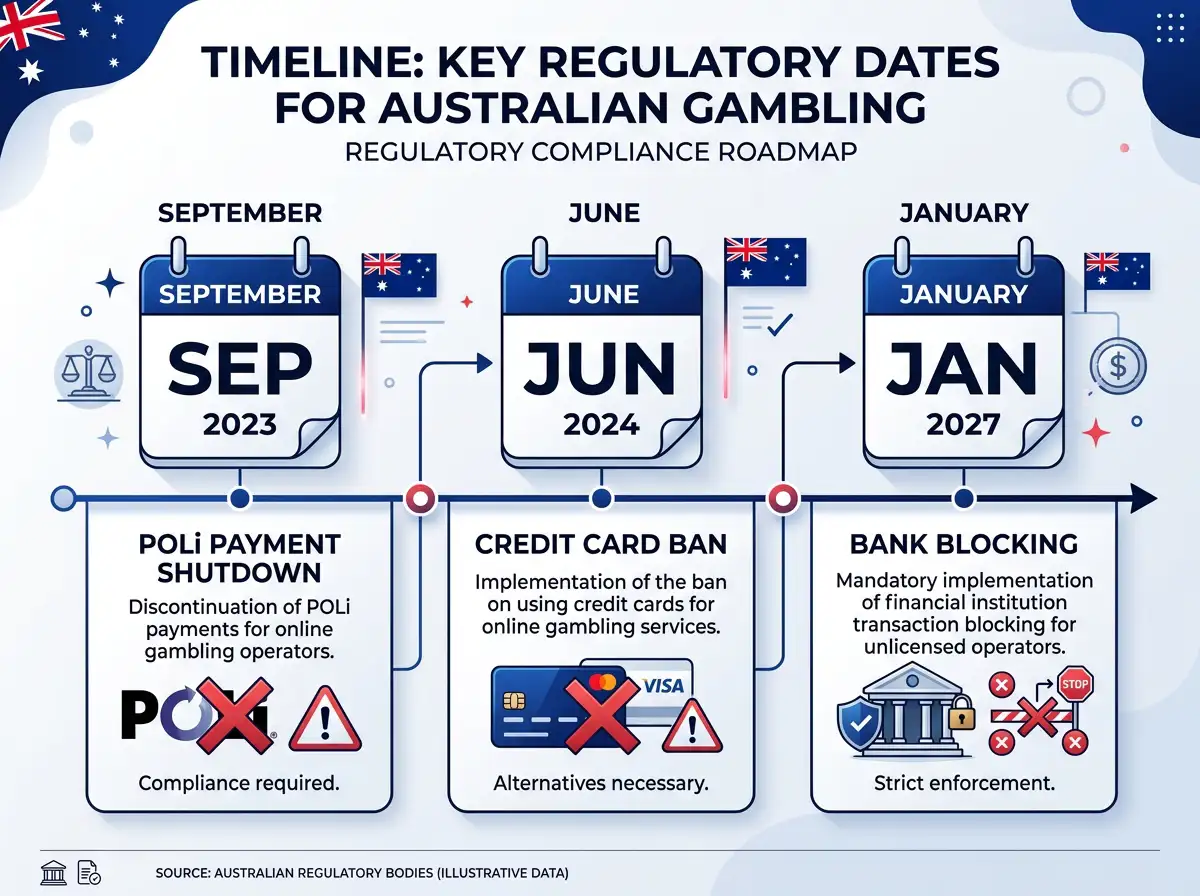
| Method | Status | Date / Reason | Replacement |
|---|---|---|---|
| POLi | Shut down | 30 September 2023 — NPP/PayID competition, bank policy changes, data privacy concerns | PayID via NPP |
| Credit cards (all) | Banned | 11 June 2024 — IGA Amendment (Credit and Other Measures) Act | Debit cards, e-wallets, crypto |
| Credit-linked Apple Pay / Google Pay | Banned | 11 June 2024 — same legislation, applies to credit-backed mobile wallets | Debit-backed Apple Pay / Google Pay |
| Trustly | Not available | Europe-focused, no Australian banking integration | PayID, bank transfer |
| Interac | Not available | Canada-only payment rail | PayID, bank transfer |
| iDEAL | Not available | Netherlands-only | PayID, bank transfer |
| Boku | Low acceptance | Mobile carrier billing, few AU operators support it | PayID, mobile wallets, crypto |
| Klarna | Low acceptance | Buy-now-pay-later not suited for gambling | Debit cards, e-wallets |
| Volt | Low acceptance | Open banking platform, limited AU casino integration | PayID, bank transfer |
| AstroPay | Low acceptance | Latin America focus, rare in AU market | E-wallets, prepaid vouchers |
POLi’s shutdown is the most significant change for Australian players in the past three years. POLi Payments was the dominant instant bank transfer method from roughly 2010 to 2023, accepted at nearly every offshore casino targeting Australian players. Australia Post, which owned the service through SecurePay, shut it down on 30 September 2023 after major Australian banks stopped supporting POLi transactions due to security concerns — the service required users to enter their online banking username and password into POLi’s interface, which banks viewed as a liability. The New Payments Platform and PayID made POLi’s technology redundant, and the business case collapsed.
Players who used POLi migrated to PayID within months. PayID offered the same real-time bank transfer experience without requiring you to hand over your banking credentials to a third party. The 42% market share PayID holds in 2026 is largely the same user base that relied on POLi before the shutdown. Casinos that still list POLi in their cashier menus have not updated their payment options in over three years, and any attempt to use POLi will fail with an error message.
Credit cards were banned by federal legislation on 11 June 2024. The Interactive Gambling Amendment Act prohibits the use of credit cards, credit-linked digital wallets, and any credit-related product for online wagering. The ban applies to licensed Australian operators and offshore operators alike, though enforcement against offshore sites is less consistent. If you attempt to deposit with a credit card at an offshore casino in 2026, your card issuer will decline the transaction, or the casino will reject it at their end to avoid regulatory exposure. Debit cards remain fully legal and are the primary card-based alternative.
The credit card ban also affects Apple Pay and Google Pay when those wallets are backed by a credit card. If your Apple Wallet holds a credit card and you try to deposit via Apple Pay, the transaction is banned under the same legislation. If your Apple Wallet holds a debit card, Apple Pay is legal. The wallet is neutral — legality depends on the underlying card.
Trustly, Interac, and iDEAL are region-locked payment methods that do not operate in Australia. Trustly is a European instant bank transfer service similar to POLi, Interac is Canada’s domestic payment network, and iDEAL is the Netherlands’ online banking payment standard. Casinos with international cashier systems sometimes display these methods to Australian players by mistake, but selecting them will fail because the payment rails do not connect to Australian banks. PayID and standard bank transfers are the Australian equivalents.
Boku, Klarna, Volt, and AstroPay are active payment services but have low acceptance at offshore casinos serving Australian players. Boku handles mobile carrier billing, which is a poor fit for gambling due to high fees and carrier restrictions. Klarna is a buy-now-pay-later service designed for retail purchases, not gambling transactions, and very few casinos integrate it. Volt is an open banking platform that never gained traction in the Australian casino market. AstroPay is a prepaid card service popular in Latin America but rare among AU-facing operators. If a casino lists any of these methods, check whether they actually work before assuming availability — many operators display them in the cashier but have not completed the integration.
Fees, Limits, and Verification — What to Expect
Payment method fees at offshore casinos are usually low or nonexistent on the deposit side, but withdrawal fees vary by method and operator. Understanding the fee structure before choosing a payment method prevents surprises when you request a cashout and discover a A$25 bank wire fee or a 2.99% e-wallet fee eating into your balance.
KYC verification is mandatory at first withdrawal regardless of which payment method you use. The operator will ask for proof of identity (government-issued ID like a driver’s license or passport), proof of address (utility bill, bank statement, or government correspondence dated within the past three months), and sometimes proof of payment method (a screenshot of your e-wallet account, a photo of your debit card with the middle digits obscured, or a bank statement showing the deposit transaction). That verification is a one-time process. After your first withdrawal clears, subsequent cashouts move faster because your account is already verified.
The timing of KYC matters. Most offshore casinos do not require verification at deposit — you can fund your account and play immediately. Verification is triggered when you request your first withdrawal. The compliance review can take 24 to 72 hours depending on how quickly you submit documents, whether the documents are clear and legible, and whether the casino’s compliance team works weekends or only during weekdays in their timezone. Submitting your documents proactively, before requesting a withdrawal, can shave a day or two off the total cashout time.
| Method | Deposit Min | Withdrawal Min | Fees | Deposit Speed | Withdrawal Speed |
|---|---|---|---|---|---|
| PayID | A$10-A$50 | Rare (A$20-A$50 where supported) | None | Under 60 seconds | 1-4 hours (rare) |
| Visa/Mastercard Debit | A$10-A$30 | A$20-A$50 | None typically | Instant | 3-7 business days |
| Apple Pay / Google Pay | A$10-A$30 | Not supported | None | Instant | N/A |
| Bitcoin | ~A$10-A$100 | ~A$20-A$100 | A$1-A$5 blockchain fee | 10-60 min | 2-60 min (post-approval) |
| USDT (TRC-20) | ~A$15-A$30 | ~A$15-A$30 | A$1-A$2 blockchain fee | 1-3 min | Sub-5 hours (post-approval) |
| Ethereum | ~A$15-A$50 | ~A$15-A$50 | A$2-A$20 blockchain fee | 2-8 min | 10-30 min (post-approval) |
| Skrill | A$10-A$20 | A$20-A$50 | 2.99% international fee (Aug 2026) | Instant | 24-48 hrs to e-wallet, 1-3 days to bank |
| Neteller | A$10-A$20 | A$20-A$50 | 2.99% international fee | Instant | 24-48 hrs to e-wallet, 1-3 days to bank |
| Neosurf | A$10-A$20 | Not supported | None | Instant | N/A |
| Paysafecard | A$20-A$30 | Not supported | None | Instant | N/A |
| Bank Transfer | A$20-A$50 | A$50-A$100 | A$0-A$35 (operator-dependent) | 1-3 business days | 3-7 business days |
What are the typical fees for casino deposits and withdrawals in Australia?
Most deposit methods are fee-free at the casino level: PayID, debit cards, mobile wallets, prepaid vouchers, and most e-wallets do not charge players for deposits. Cryptocurrency deposits incur blockchain fees of A$1 to A$5 for Bitcoin and Ethereum, or A$1 to A$2 for USDT on the Tron network. Withdrawal fees vary: e-wallets like Skrill and Neteller charge 2.99% for international transactions as of August 2026, bank transfers cost A$0 to A$35 depending on the operator, and crypto withdrawals incur blockchain fees (A$1 to A$20 depending on the network). Cards, PayID, and prepaid vouchers typically have no withdrawal fees, though card and PayID withdrawals are slow or unavailable at most operators.
Do I need to verify my identity before withdrawing?
Yes. Offshore casinos require KYC verification before processing your first withdrawal, regardless of payment method. You will need to upload proof of identity (driver’s license, passport), proof of address (utility bill, bank statement dated within 3 months), and sometimes proof of payment method (screenshot of e-wallet, photo of debit card, or bank statement showing deposit). Verification takes 24 to 72 hours. Deposits do not require verification — you can fund your account and play immediately — but withdrawals are blocked until KYC is complete. After your first cashout, subsequent withdrawals process without re-verification unless the operator flags unusual activity.
The 2027 Regulatory Shift — Bank Blocking Powers and What They Mean
The Interactive Gambling Amendment Act 2026 passed on 19 August and received royal assent on 26 August. Schedule 2 of the Act gives Australian financial institutions the legal authority to block payments to illegal gambling services, and that authority takes effect on 1 January 2027. The enforcement model shifts from blocking domain names — which players bypass with a VPN or by accessing mirror sites — to blocking financial transactions at the payment level.
The mechanics are straightforward. ACMA identifies an offshore gambling service operating illegally under the Interactive Gambling Act 2001. ACMA issues a notice to Australian banks, payment processors, and card networks directing them to block transactions to that service. The financial institutions implement the block by filtering payments to the operator’s merchant account, payment processor, or known receiving accounts. Players attempting to deposit see their transaction declined with an error like payment blocked by issuing institution or transaction rejected for regulatory compliance.
This is not hypothetical. The legislation is on the books, the commencement date is set, and banks will have both the legal authority and the regulatory expectation to enforce blocks once the provisions go live. What remains uncertain is how aggressively banks will apply the blocking powers and which payment methods will be most affected.
Debit cards and PayID are the most exposed. Both methods route through Australian banks and payment networks that are subject to ACMA’s blocking directions. If ACMA issues a notice targeting a specific offshore casino or its payment processor, Commonwealth Bank, NAB, Westpac, ANZ, and other Australian institutions will be expected to block those transactions. Players using Visa or Mastercard debit will see their deposits declined. Players using PayID will encounter transfer failures. The block is instantaneous once implemented, and there is no appeal process for players — if ACMA says the service is illegal, the block stands.
E-wallets like Skrill and Neteller sit in a grey zone. Transactions from your Australian bank account to Skrill are not gambling transactions — they are transfers to an e-wallet company registered in the UK. The gambling transaction happens between Skrill and the casino, outside Australian jurisdiction. ACMA could theoretically direct Australian banks to block transfers to Skrill and Neteller if those companies are deemed to be facilitating illegal gambling, but that is a heavier enforcement step and would affect non-gambling users of those e-wallets. The more likely scenario is that e-wallets remain a viable workaround because the financial flow between your bank and the e-wallet is not directly connected to the casino.
Cryptocurrency is the least affected. Bitcoin, USDT, and Ethereum transactions do not touch the Australian banking system until you convert crypto to AUD on a local exchange. Sending Bitcoin from your wallet to a casino deposit address is a blockchain transaction that no Australian bank sees or can block. The only enforcement point is when you cash out: if you sell your crypto winnings on an Australian exchange like Swyftx, CoinSpot, or Binance Australia, and those exchanges are directed to block accounts associated with gambling activity, you could face friction moving your funds. But that enforcement would require ACMA to coordinate with crypto exchanges, which are regulated as digital currency exchanges under AUSTRAC, not as traditional financial institutions under APRA.
The broader implication is that payment method choice becomes a regulatory risk management decision in 2026 and beyond. Debit cards and PayID offer the best user experience — instant deposits, AUD support, no blockchain complexity — but they are also the most vulnerable to enforcement under the new blocking powers. Crypto offers the strongest protection against payment blocking but requires technical literacy and exposes you to price volatility. E-wallets split the difference: easier than crypto, more resistant to blocking than direct bank payments.
Offshore operators will adapt. Some will route payments through additional intermediaries to obscure the connection between player deposits and the gambling service. Others will drop Australian-facing payment methods entirely and push players toward crypto-only cashiers. A few may exit the Australian market rather than navigate the compliance burden. The equilibrium is not yet clear, and the first six months of 2027 will reveal which methods survive enforcement and which collapse under regulatory pressure.
Will the 2027 bank blocking laws affect my ability to deposit at casinos?
Yes, the bank blocking powers under the Interactive Gambling Amendment Act 2026 will likely affect deposits via debit cards and PayID starting 1 January 2027. ACMA gains the authority to direct Australian banks to block payments to offshore gambling services, and those blocks will apply at the transaction level. If ACMA targets a specific casino or its payment processor, your debit card or PayID deposit will be declined. E-wallets like Skrill and Neteller are less exposed because the transaction between your bank and the e-wallet is not classified as gambling. Cryptocurrency is the least affected because blockchain transactions bypass Australian banks entirely. How aggressively ACMA enforces the blocking powers in practice remains to be seen, but payment method choice becomes a regulatory risk factor for Australian players from January 2027 onward.
Deposit Methods at Australian Online Casinos 2026 — Compared
Content created by the «Payment Methods» team