
Bitcoin Casinos Australia 2026: Tested Withdrawals, Real KYC Rules, Honest Legal Picture
 Available in AU

Every offshore crypto casino an Australian can reach sits outside the law — not in a grey area, in a black-and-white prohibition written into the Interactive Gambling Act 2001. Before the rankings, the withdrawal tests, the bonus math: that reality goes first.
Bitcoin Casinos in Australia — The Regulatory Reality First
No Australian state or territory issues licenses for online casino operation. The Interactive Gambling Act 2001 — Section 15, still in force — prohibits providing interactive gambling services, including online casino games and pokies, to persons physically present in Australia. Section 16 criminalizes advertising such services to Australians. The statute is absolute. There is no licensing pathway, no white-list, no “compliant offshore operator” loophole. Every Bitcoin casino in this article operates under a Curaçao or Anjouan offshore license, or a Costa Rican corporate registration that is not a gaming license at all, and offers a product Australian law prohibits.
The Australian Communications and Media Authority enforces the prohibition by blocking non-compliant sites at the ISP level. By 2026, ACMA had restricted access to over 1,700 offshore gambling platforms. BitStarz alone saw 12 domains blocked by July 2026. Operators face financial penalties. Players do not. Enforcement targets the supply side — no Australian has been prosecuted for using an offshore casino. The risk is commercial, not criminal, and it sits with the operator.
From June 11, 2024, licensed Australian sports betting operators were prohibited from accepting credit card or cryptocurrency deposits. That regulatory tightening, intended to reduce harm, shut the last domestic path to crypto-denominated gambling. Offshore Bitcoin casinos became the only option for Australians seeking BTC casino play — not because of a legal workaround, but because they operate beyond Australian jurisdiction and Australian players are not the enforcement target.
Are Bitcoin casinos legal in Australia in 2026?
No. The Interactive Gambling Act prohibits offering online casino games to persons in Australia, and no state or territory licenses such operations. Every Bitcoin casino serving Australians is offshore — Curaçao-licensed, Anjouan-licensed, or unlicensed entirely — and the product is illegal to provide under Australian law. Players are not prosecuted, but the service itself is prohibited.
What “no Australian license” means in concrete terms: you lose ACMA complaints mechanisms, Australian Consumer Law protections, and BetStop coverage. If an offshore operator locks your account, refuses a withdrawal, or confiscates a balance, you have no domestic legal recourse. The Curaçao or Anjouan license the operator holds is a commercial certificate issued by an offshore jurisdiction; it does not grant Australian legal standing and rarely binds the operator to player-favorable dispute resolution. Cloudbet is the one exception in this article — its terms name an independent adjudicator whose decisions bind the casino. Every other operator’s dispute process is internal, discretionary, and unenforceable in Australian courts.
AUSTRAC regulates cryptocurrency exchanges for anti-money-laundering compliance, but does not license or regulate crypto casinos. That distinction matters: the exchange you use to buy Bitcoin may be AUSTRAC-registered; the casino you send it to is not, and AUSTRAC oversight stops at the exchange’s exit.
New ACMA enforcement measures commence January 1, 2027. Specifics were not disclosed in public documents as of mid-2026, but the trajectory is tightening, not loosening. The offshore market persists because enforcement targets operators, not players, and site blocks are circumvented with VPNs or mirror domains. The legal reality has not changed in two decades. Neither has the market reality: Australians wanting Bitcoin casino play have one option, and it is offshore.

What is the Interactive Gambling Act and how does it affect Bitcoin casinos?
The Interactive Gambling Act 2001 is Commonwealth legislation. Section 15 prohibits anyone from providing an interactive gambling service — defined to include online casino games, online pokies, and in-play sports betting — to a person physically in Australia. Section 16 criminalizes advertising such services to Australians. The Act does not distinguish between fiat and cryptocurrency; Bitcoin deposits are still gambling services, and the prohibition applies regardless of payment method.
ACMA enforces the Act via ISP-level site blocking and financial penalties on operators. As of 2026, 1,700+ offshore gambling sites have been blocked. Operators continuing to serve Australians face fines. Players face no penalty — the Act targets supply, not demand. That asymmetry is why the market persists: offshore operators accept the enforcement risk for access to the Australian player base, and Australian players accept the consumer-protection gap for access to a prohibited product.
Crypto adds no legal twist. The Act predates Bitcoin, but cryptocurrency gambling falls under the same prohibition. No carve-out exists for blockchain transactions, and no regulator has issued guidance suggesting otherwise. Licensed Australian sports betting operators were banned from accepting crypto deposits in June 2024, narrowing the domestic regulated offering and driving players further toward offshore options that were already the only path for casino play.
TOP-10 Bitcoin Casinos for Australian Players (2026 Tested Rankings)
Ten offshore operators dominate the Australian Bitcoin casino market by tested withdrawal speed, bonus structure, game library, and brand recognition. Each holds a Curaçao license, an Anjouan license, or no gaming license at all. None has Australian legal standing. The rankings below are ordered by topical relevance to the question “which offshore Bitcoin casino works best for Australians” — fastest withdrawals and widest coin support top the list, bonus traps and lowest safety scores close it.
| Operator | License | Withdrawal Speed | KYC Threshold | Coin Support | Game Library | Distinguishing Feature |
|---|---|---|---|---|---|---|
| BC.Game | Anjouan | ~4 min (tested) | No mandatory KYC, but reserves right | 150+ cryptos | 8,000+ | Fastest tested withdrawals, widest coin support, BCD token economy |
| Stake | Curaçao (Medium Rare N.V.) | Routine, ACMA geo-blocked | Standard KYC for verification | 20+ cryptos | 6,000+ | Highest brand recognition (UFC/Drake), geo-blocked requires VPN |
| BitStarz | Curaçao OGL/2024/165/0185 | ~10 min, 0% fees | KYC for fiat, crypto lighter | Hybrid fiat+crypto | 6,500+ | 10-year track record (2014), Trustpilot 4.3/5, ACMA blocked 12+ domains |
| Cloudbet | Curaçao | 3–4 min (tested) | KYC-light crypto-only | 40+ cryptos | Casino+sportsbook | Oldest (2013), independent ADR clause binding on casino, no-wagering bonus |
| mBit Casino | Curaçao | ~10 min, throttled >3 BTC | Mandatory at 1 BTC cumulative, confiscation clause | BTC/ETH/LTC/USDT/BCH/DOGE | 2,600+ slots | RTP shown on every slot (sortable, unique), KYC trap at 1 BTC, confiscation risk |
| Lucky Block | Curaçao | Instant (marketed) | Standard, but KYC walls reported | 20+ cryptos | 4,000+ | 200% to €25k largest headline, 40× wagering = bonus trap, Casino.Guru 2.1 Safety Index |
| Metawin | License unclear | Instant to 30 ETH | Wallet-connect, minimal | Multi-chain (ETH/SOL/Polygon/BSC) | 4,000+ | Web3 wallet-connect, smart-contract prize competitions on-chain, “Crypto Casino of Year” |
| Betpanda | None (Costa Rican registration) | Fast (marketed) | No license = no mandate, but risk-based retroactive | Crypto-only | 6,000+ | True no-KYC (no license), VPN-friendly, live cashback, zero regulatory oversight |
| Wild.io | Anjouan (migrated from Curaçao 2026) | ~10 min | Minimal routine, large cashout verification | 15+ cryptos | 9,000+ | Largest game library, 400% to $10k welcome, Curaçao→Anjouan migration 2026 |
| Katsubet | Curaçao (Scores55 Tech B.V.) | Fast, weekend lag noted | Standard | Crypto-friendly | 7,000+ | Anime theme, 5 BTC + 200 FS welcome, provably-fair section, middle-tier trust |
The table aggregates key comparison points. Each operator receives a full breakdown below — two substantive paragraphs minimum, surfacing what the tested data and operator terms actually say, not what the landing page promises.
Do I need to verify my identity (KYC) at Bitcoin casinos?
It varies. mBit Casino triggers mandatory KYC at 1 BTC cumulative withdrawal and, per its terms, can confiscate your entire balance if you do not complete verification. BC.Game markets “no mandatory KYC” but reserves the right to request verification in its terms. Betpanda has no gaming license, which removes the regulatory KYC mandate, but the operator can impose risk-based verification retroactively despite the “no KYC” marketing. Cloudbet runs KYC-light for crypto-only accounts but requires verification for large cashouts or suspicious activity. BitStarz requires KYC for fiat methods; crypto withdrawals face lighter checks. The comparison table in the KYC section below maps threshold triggers and confiscation clauses across all ten operators.
“No KYC” at an offshore casino means no upfront identity mandate, not no verification ever. Operators reserve the right to request documents at withdrawal, and refusal voids your balance under most terms. The privacy trade-off: anonymity during deposit and play, but zero identity-verification-based dispute resolution if the operator locks your account. If something goes wrong and you cannot or will not verify, you have no recourse.
BC.Game — Fastest Withdrawals, 150+ Coins, Anjouan License
BC.Game is a crypto-native casino and sportsbook launched around 2017. It operates under an Anjouan gaming license as of 2026, having migrated from Curaçao after legal issues in Curaçao courts. The Anjouan jurisdiction — Comoros, an offshore locale — is a step down in oversight from Curaçao, which itself sits at the low end of regulatory rigor. The license migration followed litigation, suggesting compliance pressure or a Curaçao exit under duress. Legal entity ownership is not disclosed in public filings. Payment processing and wallet custody are handled in-house, with no third-party processor named.
The offering is massive: 8,000+ games spanning slots, table games, live dealer, and a full sportsbook, all on a single wallet. BC.Game accepts 150+ cryptocurrencies — the widest support in the market, including Bitcoin, Ethereum, Litecoin, USDT, and altcoins like Solana, Avalanche, Cardano, Tron, and Binance Coin that most competitors do not touch. No other operator in this list handles that coin breadth. Withdrawals tested at approximately 4 minutes by independent testers, with real deposit-and-cashout runs clocking 15 to 35 minutes for BTC and LTC. That makes BC.Game the fastest tested option for Australian players. The platform runs a native BCD token economy: players earn BC Dollars through rakeback and staking, then redeploy BCD for loyalty rewards, daily spins, and a yield vault. The welcome bonus reaches 300% up to AU$20,000 across multiple deposits. KYC is marketed as “no mandatory,” but the terms reserve the operator’s right to request verification. Trust signals from independent review aggregators run weaker than the marketing volume implies — the Anjouan migration and lack of disclosed ownership sit as yellow flags. Withdrawal speed and coin support remain the standout draws. If you hold SOL or AVAX and want it out in minutes, BC.Game is the only operator here that handles both natively.
Stake — Highest Brand Recognition, UFC/Drake Partnerships, Geo-Blocked
Stake.com is a crypto-native casino and sportsbook launched around 2017, owned and operated by Medium Rare N.V., a Curaçao-registered entity. The brand carries the highest recognition in crypto gambling, driven by celebrity partnerships with UFC, Everton F.C., and rapper Drake, plus massive marketing spend across social media and streaming platforms. That visibility comes at a cost in Australia: ACMA actively geo-blocks Stake domains, and Australian players need a VPN or mirror site to access the platform. The operator’s prominence makes it a primary enforcement target, and the block list grows as new domains appear.
The casino offers 6,000+ games, 20+ cryptocurrencies, and integrated sports betting with a strong esports vertical. Stake Originals — Plinko, Crash, Mines, Dice — are market-leading provably-fair games widely copied by competitors. The minimum deposit sits at A$10, and the welcome bonus structure runs 200% up to A$4,000 plus 400 free spins. VIP and rakeback models dominate the promotions engine. Mobile access is via progressive web app; no native App Store or Play Store listing exists due to gambling policy restrictions. The geo-block is the defining friction point for Australian players. Stake’s brand strength and Originals library make it a top-tier product, but the ACMA blocks mean setup friction every session — VPN required, mirror domains rotating, occasional access failures when enforcement catches a new address. If you are comfortable running a VPN and the Originals appeal, Stake is the best provably-fair platform in this list. If you want frictionless one-click access, it is the wrong choice.
BitStarz — 10 Years Established, Trustpilot 4.3/5, Hybrid Fiat+Crypto
BitStarz launched in 2014, making it the longest-established operator in this list with a continuous 10-year track record. It is operated by Gareton B.V. under Curaçao Gaming Authority license OGL/2024/165/0185 — a named legal entity, a current license reference, and a decade of operating history, which is more transparency than most offshore casinos publish. ACMA has blocked 12+ BitStarz domains by July 2026, so Australian access requires mirror domains or VPN, same friction as Stake but with slightly less aggressive block rotation.
The casino runs 6,500+ games from established providers including Pragmatic Play, NetEnt, and Evolution. It operates a hybrid model: fiat methods (credit/debit cards, e-wallets) and crypto (BTC, ETH, LTC, USDT, BCH, DOGE). Fiat deposits trigger full KYC; crypto withdrawals face lighter identity checks, though verification can be requested at any time. Crypto payouts process in approximately 10 minutes with 0% fees and no withdrawal limits once verification is cleared. The welcome bonus spans four deposits to a total of AU$10,000, opening with 100% up to AU$400 or 1 BTC plus 500 free spins. Wagering sits at 40× on spins. Trustpilot shows 4.3 out of 5 across 5,371 reviews — the highest rating in this list — and the operator answers 96% of negative reviews, signaling active reputation management. Table games depth is strong (blackjack, roulette, baccarat, poker variants), and Evolution plus Pragmatic Live handle the live dealer lobby. The hybrid model and fiat support make BitStarz more flexible than crypto-only competitors, but that flexibility comes with mandatory KYC for fiat methods. If you want the option to deposit via card and do not mind identity verification, BitStarz is the safest long-term bet by track record and public review score. If you want crypto-only anonymity, the fiat KYC crossover makes it a poor fit.
Cloudbet — Oldest Crypto Casino (2013), Only Operator with Independent ADR Clause
Cloudbet launched in 2013, the oldest continuously operating crypto casino in this list. Legal entity ownership is not disclosed, but the platform has survived 11+ years, three market cycles, and a full regulatory pivot: Cloudbet discontinued all fiat deposits and withdrawals on August 31, 2026, and now operates exclusively crypto. That strategic focus — shedding fiat infrastructure to concentrate on crypto product — positions Cloudbet as the purest crypto-first offering among the ten operators here. The move also eliminates fiat KYC friction; crypto-only accounts face lighter verification unless flagged for large cashouts or suspicious activity.
Cloudbet accepts 40+ cryptocurrencies, second only to BC.Game in breadth, and handles Bitcoin, Ethereum, Litecoin, and major altcoins natively. Tested withdrawals clock 3 to 4 minutes, matching BC.Game for fastest real-world payout. The casino runs a combined offering: casino games, live dealer, sportsbook, esports, Bet Builder, and Pulse features on a single wallet. Cloudbet Originals (provably-fair games) round out the library. The welcome bonus reaches up to $2,500 in real cash rewards with no wagering requirements — a rare no-wagering model that lets players keep all winnings instead of grinding through 40× playthrough. VIP tiered cashback runs automatically. Published fee schedules for crypto transactions appear at cloudbet.com/en/crypto-transaction-fees, another transparency outlier. The standout legal feature: Cloudbet’s terms name an independent adjudicator with binding authority on the casino for dispute resolution. No other operator in this article includes such a clause. If a dispute escalates, Cloudbet is contractually bound to accept a third-party ruling. That does not make it Australian-law-compliant, and the adjudicator is offshore, but it is the strongest player-protection mechanism on this list. Cloudbet is the operator to pick if you want crypto-only speed, no-wagering bonuses, and the best dispute-resolution clause an offshore casino offers. The age, the ADR clause, and the no-wagering model outweigh the lack of disclosed ownership. If the operator were going to exit-scam, 11 years was plenty of runway; the crypto-only pivot in 2026 signals long-term commitment, not a wind-down.
mBit Casino — RTP Transparency Leader, But KYC Trap at 1 BTC
mBit Casino launched in 2014, a Curaçao-licensed operator with a 10-year track record. The legal entity is likely Direx N.V. or a similar Curaçao holdco, though exact ownership is not confirmed in public filings. The casino runs 2,600+ slots and a standard live dealer lobby. Routine crypto withdrawals process in approximately 10 minutes, and 24/7 support is available. The welcome bonus reaches 375% up to 4 BTC plus 325 free spins, one of the largest headline packages in this list, with wagering at 35× to 45× on deposit plus bonus.
The defining feature is RTP transparency: mBit is the only operator in this list that shows return-to-player percentages on every slot thumbnail and allows players to sort the entire library by RTP. No other casino does this. Standard RTP for video slots ranges 94% to 97%; a handful of high-RTP games (Blood Suckers 98%, Mega Joker 99%) sit at the top of the sort. Informed players can maximize expected return by filtering to the highest-RTP titles. That transparency is worth real money over thousands of spins. The KYC trap negates much of that value: mBit triggers mandatory identity verification at 1 BTC cumulative withdrawal. The threshold is not per-transaction but lifetime aggregate — if you withdraw 0.3 BTC three times, you hit the trigger on the fourth. If you do not complete verification, mBit’s terms permit confiscation of your entire balance. That clause is enforced. Withdrawals above 3 BTC are throttled into instalments, and processing times stretch. The combination — unique RTP sorting, strong game library, but a 1 BTC KYC trap with confiscation risk and throttling above 3 BTC — makes mBit a high-value choice for small-stakes players who will never approach 1 BTC cumulative withdrawal, and a terrible choice for anyone moving serious money. If you are playing $50 to $200 sessions and want the RTP edge, mBit is unmatched. If you are a high roller or privacy purist, the 1 BTC confiscation clause disqualifies it entirely.
Lucky Block — Largest Bonus Headline (200% to €25k), Lowest Safety Score (2.1)
Lucky Block launched around 2021–2022, owned by Entretenimiento Rojo B.V. with payment processing via Igloo Ventures SRL, and operates under a Curaçao license. The platform was “born on the blockchain” per its marketing, built around the LBLOCK token for staking and rewards. The casino offers 4,000+ games, a sportsbook, and supports 20+ cryptocurrencies. Instant crypto withdrawals are marketed, and no maximum withdrawal limits are advertised.
The welcome bonus is the largest headline in this article: 200% up to €25,000 plus 50 free spins. That figure dominates competitor comparisons and tops every listicle. The effective value is a trap. Wagering sits at 40× on deposit plus bonus. At a €1,000 deposit, you receive a €2,000 bonus, creating a €3,000 total to wager. 40× on €3,000 equals €120,000 in required bets. Standard video slot RTP is 96%, meaning 4% house edge. Expected loss over €120,000 wagered at 96% RTP is €120,000 multiplied by 4%, which equals €4,800. To clear the bonus on a €1,000 deposit, the expected cost is €4,800 — nearly five times the deposit. That is not a bonus; it is a fee disguised as generosity. Cloudbet’s no-wagering $2,500 real-cash welcome is smaller in headline but infinitely better in effective value, because you keep every dollar you win with zero playthrough. Casino.Guru assigned Lucky Block a Safety Index of 2.1, rated “Very low,” due to “substantial shortfall in fairness and safety.” That is the lowest score in this list and a major red flag. Multiple independent reviews flag bonus traps and KYC walls. Some users praise game variety and payout speed; others report account locks and verification delays at withdrawal. The LBLOCK token ecosystem adds complexity with unclear utility for most players. Lucky Block is the operator to avoid unless you understand bonus math, read every term, and accept that the 200% to €25k headline is marketing, not value. The 2.1 Safety Index alone should stop most players here. For those still tempted: Metawin’s 100% to $1k or Cloudbet’s no-wagering $2,500 deliver more real value than Lucky Block’s €25k headline trap.
Metawin — Web3 Wallet-Connect, Smart-Contract Transparency, “Crypto Casino of the Year”
Metawin launched in 2022 as a Web3 crypto casino. Legal entity ownership is not disclosed. The platform operates on a wallet-connect model: players connect MetaMask, WalletConnect, or Coinbase Wallet instead of creating a traditional account. Ethereum is the primary chain, with direct multi-chain support for Solana, Polygon, and Binance Smart Chain. That architecture makes Metawin non-custodial for certain features — your wallet holds the keys, not the casino — though the casino side of the platform still operates custodial balances for gameplay. License status is unclear; no Curaçao or Anjouan license is explicitly mentioned in public filings or the operator’s own disclosures. That transparency gap sits as a yellow flag, though the Web3 model may position Metawin as infrastructure rather than a traditional casino under some regulatory interpretations. Australian law does not distinguish — the Interactive Gambling Act prohibition applies regardless of wallet custody model.
Metawin offers 4,000+ games spanning slots, table games, and live dealer. The welcome bonus is 100% up to $1,000 — a lower headline than Lucky Block or Wild.io, but cleaner terms with lower implied wagering burden. Instant crypto withdrawals up to 30 ETH are marketed, with no wagering traps blocking cashout. A maximum-RTP guarantee is advertised. The standout feature is smart-contract-based prize competitions: entries and winner selection are hosted on-chain in Ethereum smart contracts, with results publicly verifiable via Etherscan. No other operator in this list offers that transparency layer. Blockchain explorers let any player independently verify that a draw was fair, the winner was selected correctly, and no operator manipulation occurred. That cryptographic proof is the strongest fairness assurance available in online gambling — stronger than a regulator’s audit, because the code and the outcome are both public. Casinos.org named Metawin “Crypto Casino of the Year” in 2026. The Web3 wallet model, smart-contract transparency, and multi-chain support make Metawin the most technically advanced platform here. The license opacity and lack of disclosed ownership are the trade-offs. If you value cryptographic fairness proof and Web3 architecture over regulatory oversight, Metawin is the pick. If you need a clear Curaçao license and named legal entity, the transparency gaps disqualify it.
Betpanda — True No-KYC, But No Gaming License (Costa Rican Registration Only)
Betpanda launched in 2023, operated by Star Bright Media S.R.L., a Costa Rican corporate registration. Costa Rica allows offshore gambling companies to incorporate but does not regulate gaming operators. There is no gaming license, no licensing authority, no player protection framework. Betpanda operates under a commercial business registration, not a gaming license from any recognized jurisdiction. That places it in the lowest oversight tier in this list — below Curaçao, below Anjouan, in a category with zero regulatory accountability.
The platform offers 6,000+ games, a sportsbook, and a weekly $30,000 tournament. “No KYC” is the primary marketing message: deposit, play, and withdraw without identity documents. The lack of a gaming license removes the regulatory KYC mandate that Curaçao and Anjouan operators face. That is true no-KYC in the sense that no regulator compels verification. It is also zero recourse if something goes wrong. Betpanda is VPN-friendly. Live casino cashback is offered, a rare feature among crypto casinos. The welcome bonus structure varies by affiliate source, with a 100% to 1 BTC figure cited in some reviews. Risk-based KYC can be imposed retroactively despite the no-KYC marketing — the operator reserves the right to request verification for large withdrawals, suspicious activity, or compliance checks, and refusal voids the balance. Trustpilot feedback is mixed. Some players report fast payouts and smooth play; others flag account locks and slow support responses. The thin license trail and Costa Rican registration offer no dispute-resolution pathway. If Betpanda locks your account or confiscates a balance, you have no gaming regulator to escalate to, no ADR mechanism, no license-based recourse. Public pressure via complaint forums is your only lever, and it carries no enforcement weight. Betpanda is the operator for privacy purists who accept zero regulatory oversight in exchange for no upfront KYC. If anonymity is the priority and you trust the operator’s goodwill over a license framework, Betpanda delivers. If you want any form of player protection or dispute escalation, the Costa Rican registration disqualifies it. The 2023 launch date is another caution — less than two years of operating history, no track record through a market downturn or liquidity crunch.
Wild.io — 9,000+ Games, Anjouan License After 2026 Curaçao Migration
Wild.io runs the largest game library in this list at 9,000+ titles, spanning slots, live tables, provably-fair Originals, and a sportsbook. The platform launched under a Curaçao license and migrated to Anjouan in 2026. That license migration is unusual and typically signals compliance issues, cost-cutting, or regulatory pressure at the original jurisdiction. Anjouan oversight is lighter than Curaçao, and Curaçao itself is low-rigor. The migration direction — from higher oversight to lower — sits as a transparency concern. Legal entity ownership is not disclosed.
Wild.io accepts 15+ cryptocurrencies and processes crypto withdrawals in approximately 10 minutes. Instant deposits are standard. The welcome bonus reaches 400% up to $10,000, the second-largest headline after Lucky Block. Wagering terms are not specified in the research data, but 35× to 40× is the market norm for offshore casinos, which would place effective cost well above deposit value for most players. VIP rewards run automatically, with no manual claims required. Mobile access is via HTML5 browser, no native app. The 9,000+ game library is the standout draw — if variety matters and you want access to every major provider (Pragmatic Play, Evolution, Hacksaw, Nolimit City, NetEnt, Play’n GO, Yggdrasil, Relax Gaming, Push Gaming), Wild.io covers the broadest catalog. The Anjouan migration and lack of disclosed ownership are the friction points. If you prioritize game selection and the 400% bonus headline appeals, Wild.io delivers depth. If license stability and transparency matter, the 2026 migration to lower oversight is a yellow flag that suggests underlying issues the operator has not disclosed publicly.
Katsubet — Anime-Themed, 7,000+ Games, 5 BTC Welcome Package
Katsubet launched in 2020, operated by Scores55 Tech B.V. under a Curaçao license. The casino runs an anime aesthetic, a niche branding choice that appeals to a specific demographic and differentiates Katsubet visually from competitors. The platform offers 7,000+ games covering slots, live dealer, blackjack, roulette, baccarat, poker, video poker, jackpot titles, and a provably-fair section. Crypto payouts are described as fast, though one review notes they “can lag on weekends,” suggesting manual approval queues or reduced staffing outside business hours.
The welcome bonus spans up to 5 BTC plus 200 free spins across the first four deposits. A 100-free-spins no-deposit offer is advertised as an entry promotion. The provably-fair section is present but not prominent — Katsubet positions as a standard game-variety casino with a crypto payment layer, not a crypto-native platform built around blockchain Originals. VIP and loyalty programs are standard. Four years of operating history (2020–2026) places Katsubet in the mid-tier for track record — newer than BitStarz and mBit (both 2014), older than Lucky Block (2021) and Betpanda (2023). Reviews describe Katsubet as having “a fairly strong reputation within the crypto-friendly online casino sector” but note it is “not some fly-by-night operation” — language that suggests middle-tier trust, established enough to avoid immediate red flags but lacking the standout differentiators of BC.Game’s speed, Cloudbet’s ADR clause, or mBit’s RTP transparency. Katsubet is the operator to choose if anime theming appeals, the 7,000+ game library covers your preferences, and the 5 BTC welcome package fits your deposit range. No standout feature justifies picking Katsubet over the top four (BC.Game, Stake, BitStarz, Cloudbet) unless aesthetic or the specific game mix matters. For players who do not care about anime branding, faster operators with stronger trust signals sit higher in the rankings.
Bitcoin Casino Bonuses — The Math Behind the Headlines
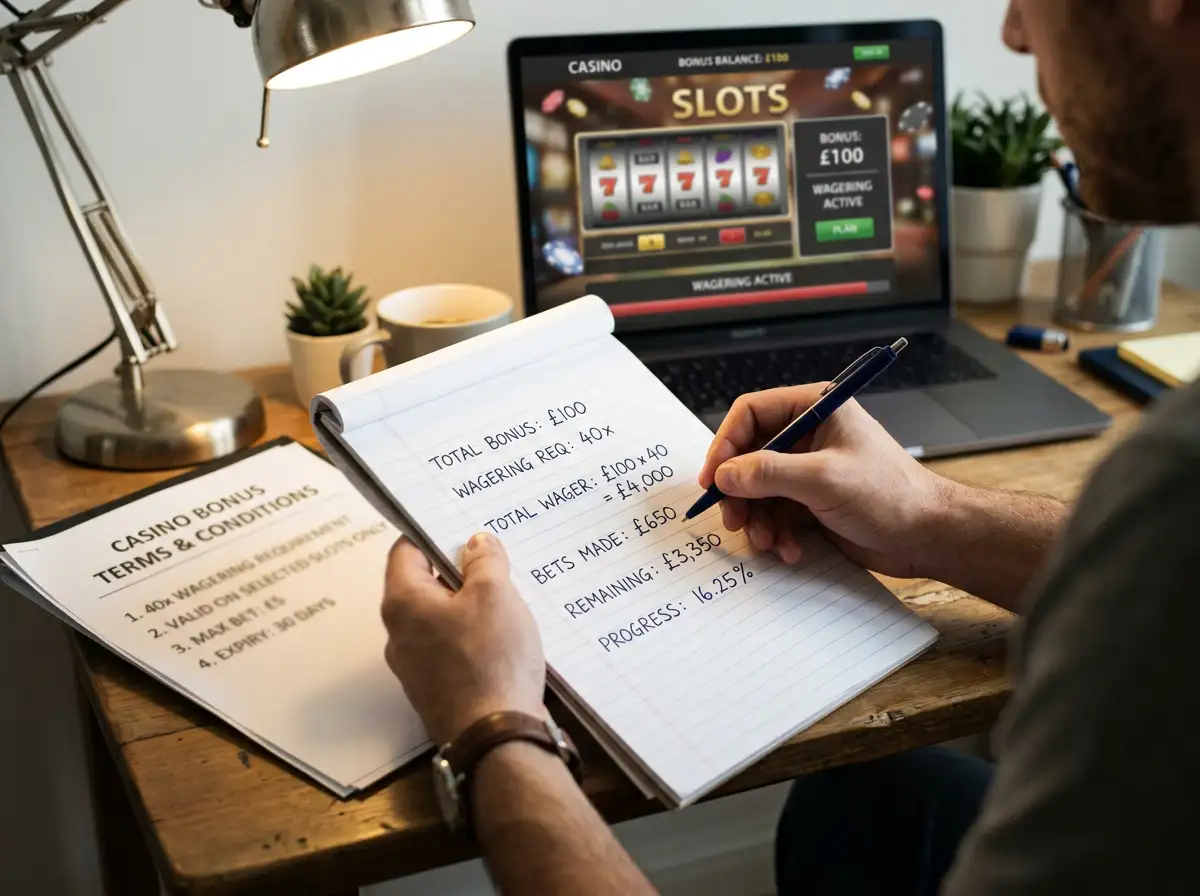
Offshore Bitcoin casinos lead with bonus headlines that sound enormous: 200% to €25,000, 375% to 4 BTC, 400% to $10,000. Those figures dominate listicles, affiliate comparisons, and operator landing pages. The effective value sits far below the headline once wagering requirements translate into expected cost. The math is simple, rarely shown, and worth more than any marketing promise.
Wagering requirements for offshore casino bonuses typically sit at 35× to 40× on deposit plus bonus. That multiplier determines how much you must bet before withdrawing bonus-derived winnings. The house edge on standard video slots runs around 4%, or 96% RTP. Expected loss is total wagered multiplied by house edge. Take Lucky Block’s 200% to €25,000 bonus as the worked example. At a €1,000 deposit, you receive €2,000 bonus, creating €3,000 total to wager. The 40× requirement means €3,000 multiplied by 40, which equals €120,000 in required bets. At 96% RTP, the house edge is 4%. Expected loss is €120,000 multiplied by 4%, which equals €4,800. To clear the bonus, the average player loses €4,800 on a €1,000 deposit — 4.8 times the deposit amount. That is not value. That is a trap.
Compare Cloudbet’s no-wagering $2,500 welcome. The headline is smaller, but the structure is real cash with no playthrough requirement. Every dollar you win, you keep. No 40× grind. No €120,000 bet requirement. No expected €4,800 loss to unlock your own winnings. Cloudbet’s $2,500 real-cash bonus delivers more effective value than Lucky Block’s €25,000 headline because zero wagering means zero forced loss. Metawin’s 100% to $1,000 is another cleaner structure — lower headline, but lower implied wagering burden, and a player clearing it at standard 35× to 40× faces proportionally less expected cost than the megabonus traps.
Bonus terms carry additional traps beyond raw wagering math. Game restrictions exclude high-RTP slots — Blood Suckers at 98% RTP, 1429 Uncharted Seas at 98.6% RTP, and similar titles either do not count toward wagering or contribute at 50%. The casino forces you onto lower-RTP games where the house edge is higher. Time limits run 7 to 30 days to clear wagering, or the bonus and associated winnings forfeit. Max bet rules cap each spin at $5 to $10 AUD-equivalent while the bonus is active; a single breach voids the bonus and all winnings. Max cashout clauses cap bonus-derived winnings at 10× or 20× the bonus amount even after wagering is cleared — so a €2,000 bonus with a 10× cap means you can withdraw at most €20,000 in winnings, regardless of how much you actually win. Withdrawal before clearing wagering triggers automatic forfeiture of unclaimed bonus and associated winnings at most operators. Read the terms before clicking claim. The 200% to €25k headline is bait. The 40× wagering at 4% house edge is the hook. Expected cost to clear exceeds deposit value in every megabonus case.
Are Bitcoin casino bonuses worth it in Australia?
Depends on the wagering math. Lucky Block’s 200% to €25,000 sounds massive but costs €4,800 expected loss on a €1,000 deposit to clear 40× wagering at 96% RTP — nearly five times your deposit. That is a fee, not a bonus. Cloudbet’s no-wagering $2,500 real-cash welcome is smaller in headline but infinitely better in effective value because you keep every dollar you win with zero playthrough. Metawin’s 100% to $1,000 sits in between — modest headline, cleaner terms. Calculate expected loss (total wagered × house edge) before claiming any bonus. Most offshore casino bonuses cost more to clear than they deliver in value. The rare no-wagering offers (Cloudbet) or low-multiplier structures are the only ones worth taking. High-roller bonuses with 40× requirements on deposit plus bonus are traps designed to look like gifts.
Withdrawal Speeds and What “Instant” Actually Means
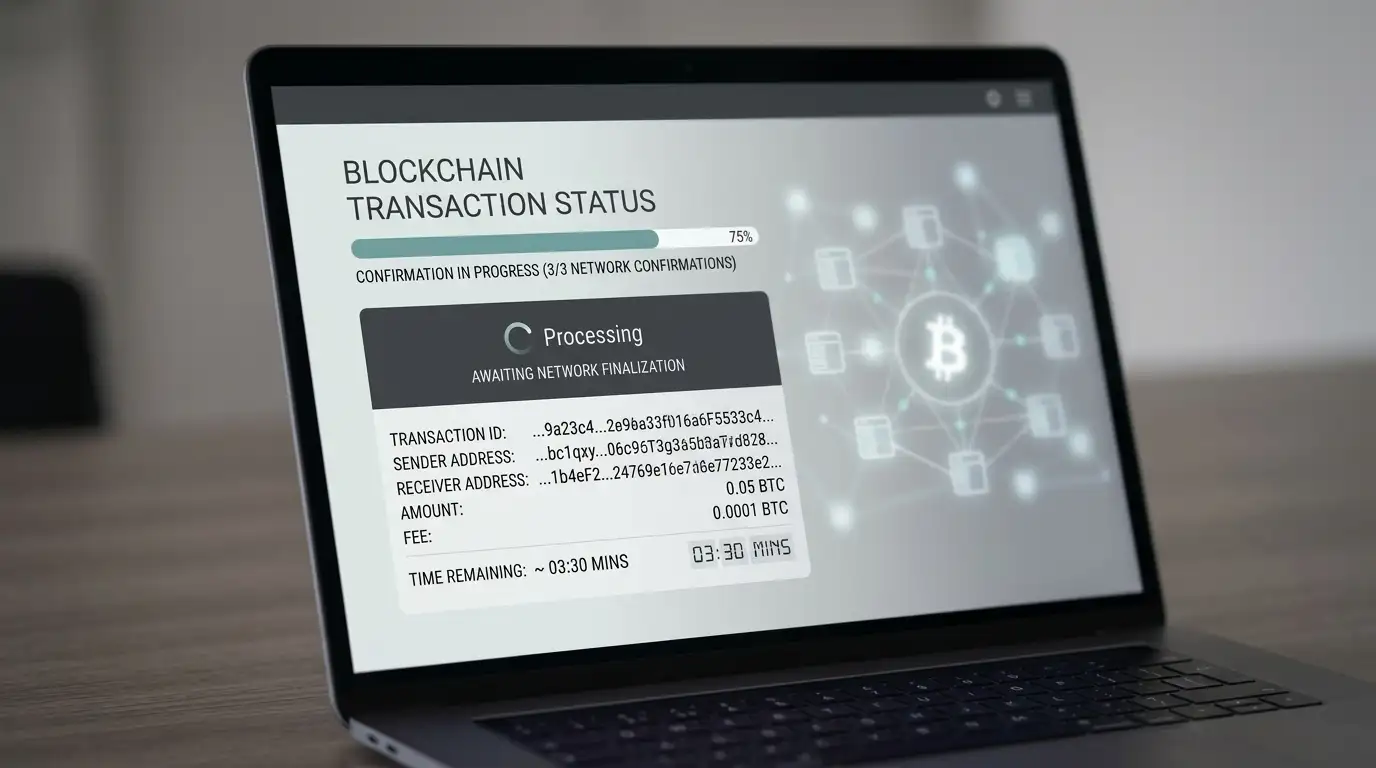
Every offshore Bitcoin casino markets “instant” or “fast” crypto withdrawals. The term conflates two separate timelines: operator approval (the queue) and blockchain settlement (the network). Both matter. Only their sum is the real withdrawal window an Australian player experiences.
Operator queue is the variable. BC.Game and Cloudbet automate approval for routine withdrawals, clearing them in 3 to 4 minutes from request to blockchain broadcast. BitStarz, Wild.io, and mBit process in approximately 10 minutes for standard amounts. That is operator processing time — the internal compliance check, the manual review for flagged accounts, the KYC trigger if thresholds are crossed. Fast operators (BC.Game, Cloudbet) run automated systems that approve and broadcast within minutes. Slower operators still queue everything for human eyes, stretching the window to 30 minutes or more, particularly outside business hours or on weekends when staffing is reduced.
Blockchain settlement is the fixed component, determined by network congestion and the transaction fee you (or the operator) attach. Bitcoin on-chain confirmation takes 10 to 60 minutes depending on fee tier. A high-fee transaction (paying $5 to $10+ in network fees) lands in the next block, roughly 10 minutes. A low-fee transaction sits in the mempool longer, waiting for miners to pick it up, and can take an hour or more. Ethereum Layer 1 settles in 1 to 5 minutes but carries gas fees ranging $2 to $50+ depending on network activity. Polygon and Binance Smart Chain finalize in under 2 minutes with fees of $0.10 to $2. The operator’s choice of network and fee policy determines blockchain speed. Most casinos absorb fees up to a threshold; large withdrawals may charge the user. Cloudbet publishes a fee schedule showing exactly what you pay per coin and per withdrawal size. No other operator in this list offers that transparency.
Throttling policies sit as the hidden friction. mBit Casino processes routine withdrawals in approximately 10 minutes, but throttles amounts above 3 BTC into instalments, stretching total payout time to days or weeks for large wins. The 1 BTC KYC trigger adds a separate delay if you have not verified in advance — verification requests at withdrawal time can take 24 to 72 hours to process, during which your funds are frozen. Lucky Block and other operators reserve the right to impose “risk-based” KYC at withdrawal, turning an “instant” payout into a multi-day document submission and review cycle. Tested data beats marketing every time. BC.Game clocked 4 minutes in independent tests, with real deposit-and-cashout runs confirming 15 to 35 minutes for BTC and LTC. Cloudbet’s 3 to 4 minutes is verified across multiple testers. BitStarz’s 10-minute window holds across reviews spanning years. Those are real-world times, not landing-page promises.
AUD-balance versus BTC-denomination matters for exchange-rate risk. Check your deposit confirmation screen. If your casino balance shows an Australian dollar figure (e.g., A$1,247.83), the operator converted your Bitcoin on deposit arrival and now holds fiat or stablecoins. The operator carries the FX risk, but may refuse to honor a Bitcoin price spike between deposit and withdrawal — you get the AUD amount you see, converted back to BTC at the operator’s rate when you withdraw, and you lose if BTC rallied while you played. If your balance shows an 8-decimal Bitcoin quantity (e.g., 0.03847291 BTC), you still hold the coin. You carry the FX risk — if Bitcoin crashes while you play, you withdraw fewer AUD-equivalent dollars — but you also capture any rally, and the operator cannot refuse to pay the BTC amount shown. That distinction determines who wins and who loses when the market moves. Most offshore casinos convert on arrival. A few (BC.Game, Cloudbet, Stake) let you hold Bitcoin natively. Know which model you are using before depositing large amounts during volatile markets.
How fast are Bitcoin casino withdrawals in Australia?
Operator queue plus blockchain settlement. BC.Game and Cloudbet are the fastest at 3 to 4 minutes tested for routine amounts, clearing approval and broadcasting almost immediately. BitStarz, Wild.io, and mBit run approximately 10 minutes for standard withdrawals. Bitcoin on-chain confirmation adds 10 to 60 minutes depending on transaction fee. Ethereum settles in 1 to 5 minutes. Polygon and BSC finalize under 2 minutes. Total time from request to funds in your wallet: 15 to 35 minutes for BC.Game BTC/LTC per real testing, 13 to 14 minutes for Cloudbet BTC, 10 to 70 minutes for BitStarz depending on blockchain congestion. mBit throttles withdrawals above 3 BTC into instalments, stretching large payouts over days. KYC triggers (mBit at 1 BTC, Betpanda risk-based, any operator flagging suspicious activity) can freeze withdrawals for 24 to 72 hours while documents are reviewed. “Instant” in marketing means operator approval, not funds in your wallet. Check tested data and know the throttling thresholds before depositing.
| Operator | Tested Withdrawal Time | Operator Queue Policy | Blockchain Network | Throttling / Limits | Fees |
|---|---|---|---|---|---|
| BC.Game | ~4 min (tested), 15–35 min BTC/LTC real runs | Automated approval, fast queue | BTC/ETH/LTC/150+ coins, multi-chain | No noted throttling, standard limits | Most absorbed, published schedule unavailable |
| Cloudbet | 3–4 min (tested) | Automated, official “within 24hr” | BTC/ETH/40+ coins | No ceiling post-verification | Published at cloudbet.com/en/crypto-transaction-fees |
| BitStarz | ~10 min, 0% fees | Standard queue, 10-year track record | BTC/ETH/LTC/USDT/BCH/DOGE | No limits post-verification | 0% operator fees |
| mBit | ~10 min routine, throttled >3 BTC | Queue, manual for large | BTC/ETH/LTC/USDT/BCH/DOGE | Throttled above 3 BTC into instalments, KYC at 1 BTC freezes withdrawal | Standard blockchain fees |
| Wild.io | ~10 min | Routine automated | BTC/ETH/15+ coins | Standard daily/weekly caps typical | Absorbed to threshold |
| Metawin | Instant to 30 ETH (marketed) | Wallet-connect model, fast | Multi-chain ETH/SOL/Polygon/BSC | 30 ETH instant cap mentioned | Low on Polygon/BSC |
| Stake | Routine, variable | Standard queue | BTC/ETH/20+ coins | Standard limits | Absorbed to threshold |
| Lucky Block | Instant (marketed), mixed user reports | Risk-based delays noted | BTC/ETH/20+ coins | No max advertised, but KYC walls reported | Not disclosed |
| Betpanda | Fast (marketed) | Risk-based KYC can freeze | Crypto-only | No disclosed caps | Not disclosed |
| Katsubet | Fast, weekend lag noted | Manual queue, reduced weekend staff | BTC/ETH/crypto-friendly | Standard limits | Standard fees |
The table surfaces tested times where available, operator queue behavior, and throttling policies that marketing omits. BC.Game and Cloudbet dominate on speed. mBit’s 1 BTC KYC trigger and >3 BTC throttling make it unsuitable for large cashouts despite decent routine speed. Metawin’s 30 ETH instant claim is unverified in independent tests but aligns with Web3 wallet-connect architecture. Lucky Block and Betpanda lack tested data; user reports are mixed, and the risk-based KYC at both can turn “instant” into multi-day delays.
Bitcoin Pokies and Game Libraries — What You’ll Actually Play
Game library size matters less than game mix, provider quality, and RTP transparency. BC.Game runs 8,000+ titles, Wild.io claims 9,000+, Betpanda lists 6,000+. Those numbers include every variant, every minor reskin, every white-label clone across dozens of providers. The substantive question is not count but coverage: which major providers are present, which game types dominate, and whether you can verify RTP before spinning.
Pragmatic Play, NetEnt, Microgaming, Evolution, Hacksaw Gaming, Nolimit City, Play’n GO, Yggdrasil, Push Gaming, and Relax Gaming are the standard provider mix across all ten operators. BitStarz, Stake, and BC.Game carry the deepest provider relationships, with established studios and multi-year content deals. Newer operators (Lucky Block, Betpanda, Metawin) rely more heavily on aggregator feeds, which deliver volume but less curatorial depth. Crypto-native casinos feature provably-fair Originals alongside traditional slots: BC.Game offers Crash, Dice, Plinko, and Limbo; Stake’s Originals (Plinko, Crash, Mines) are market-leading and widely copied; Cloudbet runs its own provably-fair games. Those Originals carry 98% to 99% RTP (1% to 2% house edge), higher than most video slots.
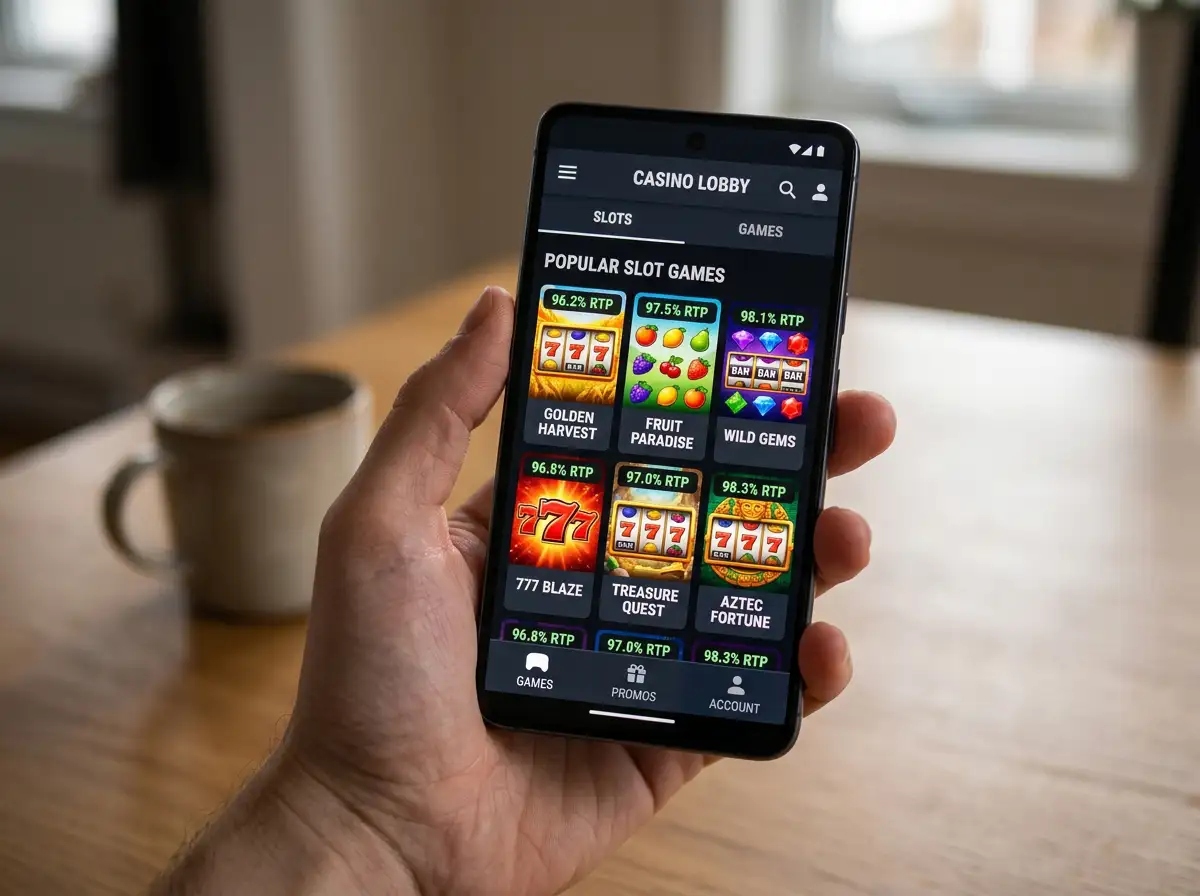
RTP transparency is the value gap. mBit Casino is the only operator in this list that shows return-to-player percentages on every slot thumbnail and allows sorting the entire library by RTP. Standard video slot RTP ranges 94% to 97%. High-RTP outliers like Blood Suckers (98%), Mega Joker (99%), and 1429 Uncharted Seas (98.6%) sit at the top of mBit’s sort. Informed players can filter to the best-return games and avoid the 94% floor where the house edge is 6%. Every other operator buries RTP in game info screens or does not display it at all, forcing players to spin blind or research each title externally. That opacity costs real money over thousands of spins. A 94% RTP slot at $1 per spin over 10,000 spins returns $9,400 on average; a 99% RTP slot returns $9,900. The $500 difference is the value of transparency.
Table games (blackjack, roulette, baccarat, poker variants) run 97% to 99% RTP across all operators. Evolution dominates live dealer with 80%+ market share, providing Lightning Roulette, Crazy Time, Monopoly Live, and standard table games streamed from studios in Latvia, Georgia, Romania, and Canada. Pragmatic Play Live and Ezugi cover the second tier. BitStarz and BC.Game offer the deepest live dealer lobbies; mBit’s live offering is smaller, proportionally weighted toward slots. Stake runs Evolution-exclusive branded tables. Some live games are geo-restricted — BitStarz notes certain Evolution titles are unavailable to specific regions, likely due to licensing splits or studio-level restrictions. The geo-blocks apply at the game-feed level, not the casino level, and vary by title.
Pokies is the Australian term for slots. Usage is interchangeable with “slots” in this market, and offshore casinos serving Australians use both terms in their marketing. The local preference for “pokies” does not change the product — video slots from Pragmatic Play, NetEnt, and Hacksaw Gaming play identically whether labeled “pokies” or “slots.” Bitcoin pokies refers to the same games with Bitcoin as the deposit and play currency. Provably-fair crypto games (Crash, Plinko, Dice, Limbo, Mines) are distinct — blockchain-based, with each round cryptographically verifiable by the player via seed and hash. Stake and BC.Game lead that category.
Mobile play is universal. All ten operators run HTML5-responsive sites that work in mobile browsers without downloads. Native apps are rare — Apple’s App Store and Google’s Play Store ban real-money gambling apps in most jurisdictions, including Australia, so offshore casinos skip the store-listing friction and build progressive web apps instead. Stake offers direct APK downloads for Android (install outside Play Store), but most players access via mobile browser. Desktop and mobile libraries are identical; no content is desktop-exclusive. Performance on mobile is solid across the board for slots and table games. Live dealer streams work but burn data — a 90-minute baccarat session over 4G can consume 500MB to 1GB depending on video quality settings.
Can I play Bitcoin casino games on my phone in Australia?
Yes. All ten operators in this article run HTML5-responsive sites that work in mobile browsers (Safari, Chrome, Firefox) with no download required. Native apps are rare because App Store and Play Store policies ban real-money gambling apps in Australia. Stake offers a direct APK download for Android (installed outside Play Store), but browser-based play is standard across the market. Desktop and mobile game libraries are identical. Live dealer streams work on mobile but consume 500MB to 1GB per 90-minute session over 4G. Progressive web apps let you add a shortcut to your home screen for one-tap access while staying browser-based.
What is provably fair gaming at Bitcoin casinos?
Provably fair is cryptographic verification of game fairness, used in crypto-native games like Crash, Dice, Plinko, and Mines. Before each round, the casino generates a server seed (hashed and shown to you), you provide a client seed, and the combination determines the outcome. After the round, the casino reveals the unhashed server seed. You verify via third-party tools or the casino’s built-in checker that the revealed seed matches the hash shown before the bet and that the outcome derived from the combined seeds is correct. That proof is mathematically binding — the casino cannot manipulate results after you have seen the hashed seed, because changing the seed would break the hash. Blockchain explorers and open-source verifiers let you independently confirm fairness without trusting the operator. Standard slots (Pragmatic Play, NetEnt) are not provably fair; they use RNG tested by third-party labs (eCOGRA, iTech Labs), which is trust-based, not cryptographically verifiable. BC.Game, Stake, and Cloudbet feature the best provably-fair Originals libraries. House edge on provably-fair games typically runs 1% to 2%, or 98% to 99% RTP.
KYC, Privacy, and the “Anonymous Casino” Reality Check
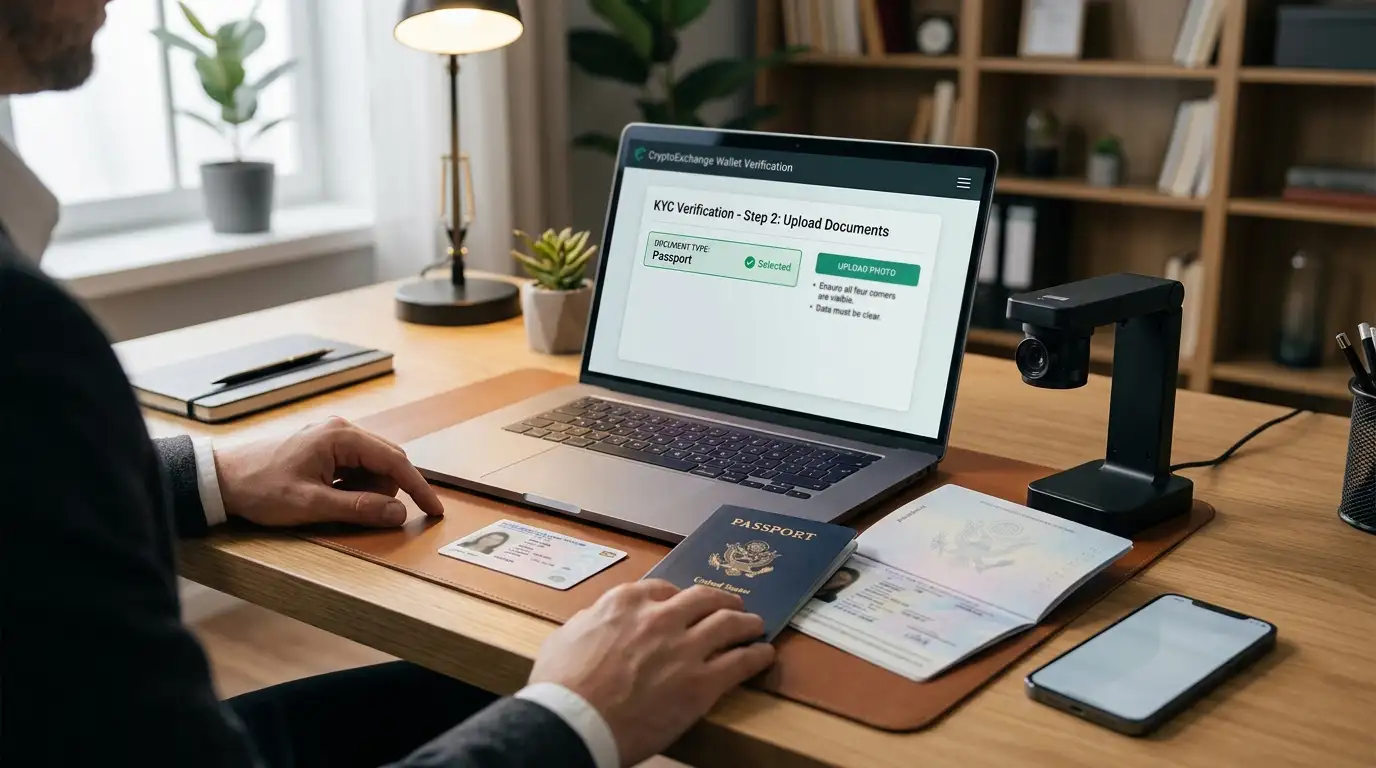
“No KYC” at offshore Bitcoin casinos means no upfront identity mandate, not no verification ever. The distinction determines whether you get paid or lose your balance when the operator flags your account.
True no-KYC operators in this list: Betpanda. The Costa Rican registration removes the regulatory KYC mandate Curaçao and Anjouan operators face. Betpanda does not require documents at sign-up or routine withdrawal. Risk-based KYC can be imposed retroactively — the operator reserves the right to request verification for large withdrawals, suspicious activity, or compliance checks, and refusal forfeits the balance — but there is no automatic threshold trigger. That is as close to true no-KYC as this market offers. The trade-off is zero regulatory oversight, zero player protection, and zero recourse if something goes wrong.
Threshold-triggered KYC: mBit Casino. Mandatory identity verification at 1 BTC cumulative withdrawal. Not per-transaction, but lifetime aggregate across all withdrawals. If you withdraw 0.2 BTC five times, you hit the trigger on the fifth. The terms permit confiscation of your entire balance if you do not complete verification. That clause is enforced. Players who refuse KYC or cannot pass it (no government-issued ID, privacy concerns, restricted jurisdiction) lose everything. The 1 BTC threshold is low enough to catch recreational players, not just high rollers. At $60,000 per BTC (mid-2026 range), 1 BTC cumulative withdrawal means $60,000 total cashouts trigger the trap. A player depositing $500 per month and withdrawing winnings hits 1 BTC cumulative in under a year of regular play.
“No mandatory KYC, but we reserve the right”: BC.Game, Cloudbet, Wild.io, BitStarz. Terms state KYC is not required upfront, but the operator reserves the right to request verification at any time for any reason. Large withdrawals, multiple accounts, bonus abuse, or algorithm-flagged patterns can trigger a manual review and document request. Refusal forfeits the balance. These operators run KYC-light for routine small withdrawals and ramp up verification for amounts crossing internal thresholds (typically $5,000 to $10,000 equivalent, though exact thresholds are not disclosed). The risk is retroactive enforcement — you deposit without KYC, play for months, build a balance, request withdrawal, and suddenly face a 72-hour document review before payout.
VPN tolerance varies. Betpanda and BC.Game are explicitly VPN-friendly. BitStarz and Stake are geo-blocked by ACMA, so Australian access requires VPN or mirror domains — the operators tolerate VPN use because blocking would eliminate the entire Australian user base. Cloudbet accepts VPN for access from restricted regions. mBit and others do not explicitly address VPN in public terms but do not block VPN traffic in practice. The friction is ACMA’s ISP-level blocks, not operator policy. Operators serving Australians cannot afford to ban VPNs, because the market would vanish overnight.
Privacy trade-offs are stark. No-KYC casinos offer deposit and play anonymity but eliminate identity-verification-based dispute resolution. If the operator locks your account, confiscates a balance, or refuses a withdrawal, and you cannot or will not verify your identity, you have no recourse. Curaçao and Anjouan licenses do not compel operators to honor anonymous player complaints. Trustpilot and Casino.Guru public complaints are pressure tools, not enforcement mechanisms. Cloudbet’s independent adjudicator clause is the one exception — binding third-party dispute resolution — but even that requires engaging with the process, which may include identity disclosure. True anonymity means accepting that your recourse if something goes wrong is zero. KYC-compliant casinos (BitStarz with fiat, mBit post-1-BTC) trade privacy for a paper trail that can support a dispute claim. That trail is still offshore, still Curaçao-jurisdiction, still rarely enforced in the player’s favor, but it exists. Anonymous play is maximum privacy, zero recourse.
Crypto transactions are pseudonymous, not anonymous. Your Bitcoin wallet address is visible on the blockchain. Anyone can see every deposit you sent to a casino address, every withdrawal you received, and the amounts and timing of each. Blockchain explorers (blockchain.com, blockchair.com) make this data public and permanent. The casino knows your wallet address links to your account. If law enforcement or tax authorities request that data, offshore casinos may comply — Curaçao licenses require basic AML cooperation, and a legal request backed by treaty or bilateral agreement can compel disclosure. Monero offers stronger privacy (shielded transactions, hidden amounts), but only Betpanda and a handful of niche operators accept it. Bitcoin privacy is better than a bank account (no name attached to the address by default) but far from untraceable. If privacy from government or tax authorities is the goal, Bitcoin casinos are insufficient. Monero or peer-to-peer cash gambling would be required, and neither is widely available in this market.
What happens if a Bitcoin casino refuses to pay out in Australia?
You have no domestic recourse. ACMA complaints mechanisms, Australian Consumer Law protections, and BetStop do not cover offshore casinos. The Curaçao or Anjouan license the operator holds is a commercial certificate from an offshore jurisdiction; it does not grant Australian legal standing and rarely enforces player-favorable outcomes. Offshore ADR (alternative dispute resolution) exists at some Curaçao licensors but is non-binding on the casino except at Cloudbet, which is the only operator in this article whose terms name an independent adjudicator with binding authority. Crypto transactions are irreversible — chargebacks do not exist on blockchain rails, so your deposit is gone the moment it confirms.
Your options if an operator locks your account or refuses a withdrawal: (1) Engage the operator’s internal complaints process, escalate through support tiers, request a supervisor review. Most disputes resolve here if the operator values reputation. (2) Post public complaints on Trustpilot, AskGamblers, Casino.Guru, Reddit, and Bitcoin-focused forums. Public pressure can push operators to pay out when the reputational cost exceeds the disputed amount, but it carries no legal weight. (3) Contact the licensing authority (Curaçao Gaming Control Board, Anjouan Gaming Authority) and file a formal complaint. Response rates are low, enforcement is rare, and outcomes favor the operator in most cases unless egregious fraud is proven. (4) For Cloudbet only: invoke the independent adjudicator clause in its terms and pursue binding third-party dispute resolution. (5) Accept the loss. Offshore gambling is unregulated gambling. The risk of non-payment or confiscation is baked into the model. Australian players choosing offshore casinos trade ACMA oversight and ACL protection for access to a prohibited product. That trade is explicit, documented in every “no Australian license” disclaimer, and irreversible once the deposit confirms.
| Operator | KYC Stance | Trigger Threshold | Confiscation Clause | VPN Policy | License Oversight |
|---|---|---|---|---|---|
| BC.Game | “No mandatory KYC” but reserves right | Reserves right, no disclosed threshold | Terms permit forfeiture on refusal | VPN-friendly | Anjouan (low) |
| Stake | Reserves right | Standard for verification | Terms permit forfeiture on refusal | VPN tolerated (geo-blocked by ACMA) | Curaçao (low) |
| BitStarz | KYC for fiat, lighter for crypto | Reserves right, large amounts flagged | Terms permit forfeiture on refusal | VPN tolerated (geo-blocked by ACMA) | Curaçao (low) |
| Cloudbet | KYC-light crypto-only, required for large cashouts | No disclosed threshold, large withdrawals flagged | No ceiling post-verification, ADR clause binding | VPN accepted | Curaçao (low), ADR clause unique |
| mBit | Mandatory at 1 BTC cumulative withdrawal | 1 BTC cumulative (lifetime aggregate) | Explicit confiscation clause if verification not completed | Standard | Curaçao (low) |
| Lucky Block | Standard, but KYC walls reported | Not disclosed, risk-based | Terms likely permit forfeiture (standard clause) | Standard | Curaçao (low), 2.1 Safety Index red flag |
| Metawin | Wallet-connect, minimal upfront | Not disclosed, large cashouts likely flagged | Not disclosed, license unclear | Standard | License unclear (transparency gap) |
| Betpanda | No license = no mandate, but risk-based retroactive | Risk-based, no automatic threshold | Terms reserve right to impose and forfeit on refusal | VPN-friendly | None (Costa Rican registration, zero oversight) |
| Wild.io | Minimal routine, large cashout verification | Not disclosed | Terms likely permit forfeiture (standard clause) | Standard | Anjouan (low, migrated from Curaçao 2026) |
| Katsubet | Standard | Not disclosed | Terms likely permit forfeiture (standard clause) | Standard | Curaçao (low) |
The table maps KYC stances, threshold triggers, and confiscation risks. mBit’s 1 BTC cumulative trigger with explicit confiscation clause is the clearest trap. Betpanda’s no-license model removes the regulatory mandate but also removes all oversight. BC.Game and Cloudbet run the lightest routine KYC among licensed operators, with Cloudbet’s ADR clause offering the strongest player protection if disputes arise. Lucky Block’s 2.1 Safety Index amplifies KYC-wall risk — multiple reviews flag account locks and verification delays at withdrawal, turning “instant” into multi-week document battles.
Cryptocurrency Support Beyond Bitcoin — Altcoins, Stablecoins, Multi-Chain
BC.Game accepts 150+ cryptocurrencies, the widest support in the market and an order of magnitude beyond any competitor. Bitcoin, Ethereum, Litecoin, USDT, and the core eight coins are standard across all ten operators. BC.Game extends to Solana, Avalanche, Cardano, Tron, Binance Coin, Polkadot, Cosmos, Algorand, and 140+ additional altcoins. No other operator in this list handles SOL, AVAX, ADA, TRX, or BNB natively. If you hold altcoins and want to gamble without converting to BTC or ETH first, BC.Game is the only option.
Cloudbet accepts 40+ cryptocurrencies, second-widest support. Bitcoin, Ethereum, Litecoin, Bitcoin Cash, Dogecoin, USDT, USDC, DAI, and major DeFi tokens are covered. Cloudbet discontinued fiat entirely in August 2026, pivoting to crypto-only operations. That strategic focus makes Cloudbet the purest crypto-first platform among licensed operators, ahead even of Stake and BC.Game, which still support fiat on-ramps in some jurisdictions. Most other operators cap at 4 to 8 core coins: BTC, ETH, LTC, USDT, BCH, DOGE, and maybe USDC and XRP. Stake lists 20+ cryptocurrencies, but the practical offerings cluster around the same core group with a few additions. Metawin runs multi-chain architecture (Ethereum, Solana, Polygon, Binance Smart Chain) rather than multi-coin within one chain, which suits Web3 wallet users holding native tokens on multiple networks.
AUD-balance versus BTC-denomination determines who carries exchange-rate risk. Check your deposit confirmation screen. If your casino balance displays an Australian dollar figure (A$1,247.83), the operator converted your Bitcoin on deposit arrival and now holds fiat or stablecoins. You carry no FX risk during play — your balance stays A$1,247.83 regardless of Bitcoin price movements — but the operator controls the conversion rate at withdrawal, and you get the AUD amount you see converted back to BTC at whatever rate the operator sets. If Bitcoin rallied 10% while you played, you do not capture that gain; you withdraw the same AUD amount at the operator’s conversion rate, which may include a spread.
If your balance shows an 8-decimal Bitcoin quantity (0.03847291 BTC), you still hold the coin. The operator did not convert on arrival. You carry the FX risk — if Bitcoin crashes 15% while you play, you withdraw 0.03847291 BTC worth 15% fewer AUD-equivalent dollars — but you also capture any rally, and the operator cannot refuse to pay the BTC amount shown on your screen. That model is pure crypto: your deposit stays in Bitcoin, your bets are denominated in Bitcoin (or converted on-the-fly for display only), and your withdrawal is the same BTC amount regardless of AUD exchange rate. Most offshore casinos convert on arrival (AUD balance model). A few — BC.Game, Cloudbet, Stake — let you hold Bitcoin natively and avoid the operator’s conversion spread.
Network choice matters for fees and speed. Bitcoin on-chain transactions take 10 to 60 minutes for confirmation, depending on the fee you (or the operator) attach. A high-priority transaction paying $5 to $10+ in network fees lands in the next block, roughly 10 minutes. A low-priority transaction paying $1 to $2 sits in the mempool longer, waiting for miners to pick it up, and can take 30 to 60 minutes or more during congestion. Ethereum Layer 1 settles in 1 to 5 minutes but carries gas fees ranging $2 to $50+ depending on network activity — a simple send during peak hours can cost $20, eating into your withdrawal. Polygon (Ethereum Layer 2) finalizes in under 2 minutes with fees of $0.10 to $0.50. Binance Smart Chain runs similar speed and cost to Polygon. Litecoin settles in 2 to 5 minutes with fees under $0.10. Operators choosing low-fee networks save you money; operators stuck on Ethereum Layer 1 cost you $10 to $50 per withdrawal during busy periods. Cloudbet publishes its fee schedule showing exactly what you pay per coin and per withdrawal size. No other operator offers that transparency. Most absorb fees up to a threshold (e.g., first withdrawal free, subsequent withdrawals charge network fee) and pass large-withdrawal costs to the user.
Stablecoins (USDT, USDC, DAI) eliminate FX risk during play. If you deposit 1,000 USDT, your balance stays 1,000 USDT regardless of Bitcoin or Ethereum price swings. Tether (USDT) is the most widely accepted stablecoin, available at all ten operators in this list. USDC and DAI are less common but covered at BC.Game, Cloudbet, and Metawin. Stablecoins settle on various blockchains — USDT runs on Ethereum, Tron, Binance Smart Chain, Polygon, and others. Tron-based USDT (TRC-20) is the fastest and cheapest, settling in under 2 minutes with fees under $1. Ethereum-based USDT (ERC-20) carries the same $2 to $50+ gas-fee variability as ETH. Choose the network at deposit and withdrawal; the operator’s cashier will list supported chains. Stablecoins suit players who want to avoid Bitcoin volatility but still benefit from crypto’s speed and pseudonymity. The trade-off is reliance on the stablecoin issuer (Tether Ltd. for USDT, Circle for USDC) — if the issuer collapses or freezes your address, your casino balance becomes worthless or inaccessible.
Which Bitcoin casinos accept altcoins besides BTC in Australia?
BC.Game accepts 150+ cryptocurrencies including Bitcoin, Ethereum, Litecoin, USDT, plus Solana, Avalanche, Cardano, Tron, Binance Coin, and 140+ additional altcoins — the widest support in the market. Cloudbet accepts 40+ cryptocurrencies, second-widest. Most other operators (BitStarz, mBit, Wild.io, Katsubet, Lucky Block) cap at 4 to 8 core coins: BTC, ETH, LTC, USDT, BCH, DOGE, sometimes USDC and XRP. Stake lists 20+ coins but clusters around the same core group. Metawin runs multi-chain architecture (Ethereum, Solana, Polygon, Binance Smart Chain) rather than multi-coin on one chain. If you hold Solana, Avalanche, Cardano, Tron, or Binance Coin and want to deposit natively without converting to BTC or ETH first, BC.Game is the only option in this list.
Do Bitcoin casinos convert my BTC to AUD or keep it in Bitcoin?
Check your deposit confirmation screen. If your casino balance shows an Australian dollar figure (A$1,247.83), the operator converted your Bitcoin on deposit arrival and now holds fiat or stablecoins. You carry no FX risk during play, but the operator controls the conversion rate at withdrawal, and you lose if BTC rallied while you played. If your balance shows an 8-decimal Bitcoin quantity (0.03847291 BTC), you still hold the coin. You carry the FX risk (if BTC crashes, you withdraw fewer AUD-equivalent dollars), but you also capture rallies, and the operator cannot refuse to pay the BTC amount shown. Most offshore casinos convert on arrival (AUD-balance model). BC.Game, Cloudbet, and Stake let you hold Bitcoin natively and avoid the operator’s conversion spread.
What Happens When Things Go Wrong — Disputes, Recourse, and the Protection Gap
Every offshore Bitcoin casino serving Australians operates beyond Australian law and Australian consumer protection. That exclusion is the product’s defining feature, not a side effect. The Interactive Gambling Act 2001 prohibits offering online casino services to Australians, ACMA blocks non-compliant sites, and no state or territory licenses such operations. The operators in this article hold Curaçao licenses, Anjouan licenses, or no gaming license at all. None has Australian legal standing. If a dispute arises — account locked, withdrawal refused, balance confiscated — you have no domestic recourse.
ACMA complaints mechanisms do not cover offshore casinos. ACMA enforces the Interactive Gambling Act by blocking sites and penalizing operators, but it does not adjudicate player complaints against unlicensed offshore platforms. An Australian player cannot file an ACMA complaint against BC.Game, Stake, or any operator in this list, because ACMA’s mandate is prohibition, not regulation. The distinction is absolute. ACMA blocks the casino; it does not compel the casino to honor a withdrawal.
Australian Consumer Law protections do not apply. The ACL covers goods and services provided within Australia by Australian businesses or foreign businesses operating in Australia under Australian law. Offshore casinos are explicitly outside that framework — they are foreign entities operating under foreign law, serving a prohibited product, with no Australian business registration, no Australian bank accounts, and no Australian legal presence. ACL guarantees (refunds, chargebacks, consumer dispute resolution) are unavailable. If an offshore operator breaches its own terms or refuses to pay out, ACL provides no remedy.
BetStop does not cover offshore casinos. BetStop is Australia’s national self-exclusion register for licensed gambling operators. It works by integrating with ACMA-licensed sports betting and racing operators, state-licensed pubs and clubs, and land-based casinos like Crown and The Star. Offshore crypto casinos are unlicensed in Australia, operate outside ACMA jurisdiction, and are not connected to BetStop infrastructure. A player who self-excludes via BetStop remains able to register and play at BC.Game, Cloudbet, mBit, and every other offshore operator. BetStop coverage stops at the Australian regulatory perimeter. Offshore is beyond that perimeter by definition.
Curaçao and Anjouan licenses are commercial certificates, not consumer protection frameworks. A Curaçao eGaming license means the operator paid the licensing fee, submitted basic incorporation documents, and passed minimal AML checks. Ongoing oversight is light. Player dispute resolution is non-binding on the casino in most cases. The Curaçao Gaming Control Board accepts complaints via its website, but response rates are low, enforcement is rare, and outcomes favor the operator unless egregious fraud is documented. Anjouan (Comoros) is a step down from Curaçao — a flag-of-convenience jurisdiction with even less regulatory infrastructure. BC.Game and Wild.io migrated to Anjouan from Curaçao in 2026, suggesting compliance pressure or cost-cutting at the original licensor. An Anjouan license provides no meaningful player protection. Betpanda holds no gaming license at all, only a Costa Rican corporate registration. Costa Rica does not regulate online gambling. If Betpanda locks your account or confiscates a balance, there is no licensing authority to escalate to, no ADR mechanism, and no regulatory consequence for the operator.
Cloudbet is the one exception. Its terms name an independent adjudicator with binding authority on the casino for dispute resolution. That clause is unique in this market. If a dispute escalates and the adjudicator rules in the player’s favor, Cloudbet is contractually bound to comply. The adjudicator is offshore, the clause is governed by Curaçao law, and enforcement would still require litigation if Cloudbet refuses, but the clause exists and is stronger than anything competitors offer. Every other operator’s dispute process is internal, discretionary, and non-binding. The operator is judge, jury, and executioner.
Crypto transactions are irreversible. Chargebacks do not exist on blockchain rails. When you send Bitcoin to a casino, the transaction is final the moment it confirms. Credit card payments can be disputed; bank transfers can be recalled within certain windows; PayPal transactions can be reversed if fraud is proven. Cryptocurrency transactions cannot. If you deposit 0.5 BTC to mBit and mBit later locks your account and refuses to return the balance, your 0.5 BTC is gone unless mBit voluntarily reverses the decision. No bank will help you. No payment processor will intervene. The blockchain does not care about fairness. The transaction executed correctly, settled on-chain, and is now irreversible. That immutability is Bitcoin’s defining feature and your biggest risk.
What remains when official recourse is gone: public pressure. Trustpilot, AskGamblers, Casino.Guru, Reddit (r/cryptocurrency, r/gambling), BitcoinTalk forums, and Telegram crypto-gambling communities are where disputes play out publicly. Operators value reputation because it drives customer acquisition. A flood of negative reviews, a detailed complaint with screenshots showing operator wrongdoing, and community amplification can pressure an operator to pay out when the reputational cost exceeds the disputed amount. That pressure works best for mid-size disputes ($500 to $5,000 AUD-equivalent) where the operator’s cost-benefit calculation tilts toward resolution. It works poorly for small disputes (under $200, not worth the operator’s time) and large disputes (above $10,000, where the operator can absorb reputational damage more easily than paying). Public complaints are a lever, not a remedy. They carry no legal weight, compel no action, and depend entirely on the operator’s willingness to engage.
Offshore gambling is unregulated gambling. The choice to use an offshore Bitcoin casino is a choice to trade ACMA oversight, ACL protection, and BetStop coverage for access to a product Australian law prohibits. That trade is explicit, documented in every “no Australian license” disclaimer, and irreversible once the first deposit confirms. Players making that trade do so with eyes open or they do so as fools. The regulatory gap is not a bug in the system. It is the system.
Mobile Bitcoin Casino Play in Australia — Apps, PWAs, and Browser Access
All ten operators run HTML5-responsive sites that work in mobile browsers without downloads. Safari on iOS, Chrome on Android, Firefox on both — every major mobile browser handles the casino lobby, game library, live dealer streams, cashier, and account settings with no desktop-only restrictions. Native apps are rare in this market. Apple’s App Store bans real-money gambling apps in Australia under its developer guidelines. Google’s Play Store enforces similar restrictions. Offshore casinos cannot list on either store without violating platform policy and risking takedown. The workaround is progressive web apps: browser-based sites optimized for mobile, with an “Add to Home Screen” option that creates a shortcut icon bypassing the browser chrome. The experience mimics a native app — one-tap launch, fullscreen mode, no URL bar — while remaining browser-based under the hood.
Stake offers direct APK downloads for Android. The APK (Android Package) installs outside Play Store, sideloading the app onto your device. That method bypasses Play Store restrictions but requires enabling “Install from Unknown Sources” in Android settings, which carries security risk if you download from an untrusted mirror. Stake’s official site hosts the APK, reducing that risk, but updates must be manually checked and reinstalled rather than auto-updating via Play Store. Most Australian players skip the APK and use Stake’s mobile site in Chrome, which delivers identical functionality without the sideload friction.
Desktop and mobile game libraries are identical across all ten operators. No content is desktop-exclusive. Slots, live dealer, table games, and provably-fair Originals run in mobile browsers with the same RTP, the same rules, and the same cashier integration as desktop. The only performance difference is live dealer streaming: a 90-minute baccarat or roulette session over 4G mobile data can consume 500MB to 1GB depending on video quality settings. Most operators auto-adjust stream quality based on connection speed, dropping resolution on slower networks to prevent buffering. WiFi is preferable for extended live dealer play to avoid data-cap overages.
Touch controls work well for slots and table games. Swipe to spin, tap to bet, pinch to zoom on paytables. Live dealer chat (typing messages to the dealer or other players) is functional but clunky on small screens — the keyboard covers half the stream, and typos are common. Voice chat is not supported. Slots and instant games (Crash, Plinko, Dice) are the best mobile experiences. Poker and complex table games with multi-step betting (multi-hand blackjack, baccarat side bets) are playable but slower on mobile than desktop.
Battery drain is significant. A two-hour slot session on mobile can consume 30% to 50% of battery depending on screen brightness and processor load. Live dealer streams with video decoding push that higher. Casino sites are not optimized for battery efficiency the way native apps can be, because browser-based JavaScript and continuous server communication keep the CPU active. Bring a charger or power bank for extended sessions.
Security on mobile is the same as desktop: HTTPS encryption, two-factor authentication where offered, and the same login credentials. Mobile browsers do not add or remove security layers. The risk is device loss or theft — if your phone is unlocked and the casino tab is open, anyone with physical access can withdraw funds. Enable biometric login (Face ID, fingerprint) on your device, log out of the casino after each session, and use a strong unique password. Do not save casino passwords in browser auto-fill on a device you might lose.

Responsible Gambling and the Offshore Gap — No BetStop, No Limits, No Safety Net
Offshore Bitcoin casinos offer zero structural responsible-gambling protections. BetStop does not cover them. Deposit limits do not exist. Loss limits are not enforced. Cooling-off periods, reality checks, session timers, and mandatory breaks are absent. Self-exclusion is available only by emailing operator support and hoping they honor it, with no binding framework and no third-party verification. If you have a gambling problem, offshore crypto casinos are the worst possible environment — maximum friction-free access, zero intervention, and no safety net.
BetStop is Australia’s national self-exclusion register. It works by integrating with ACMA-licensed sports betting operators, state-licensed venues, and land-based casinos. A player who registers with BetStop is blocked from opening accounts or placing bets at any connected operator. The register launched to provide a single point of control for problem gamblers who previously had to self-exclude from dozens of operators individually. It works within the Australian regulated gambling ecosystem. Offshore casinos are outside that ecosystem by definition. BC.Game, Cloudbet, mBit, Stake, and every operator in this article are unlicensed in Australia, blocked by ACMA, and not connected to BetStop infrastructure. A player who self-excludes via BetStop remains able to register, deposit, and play at every offshore casino. BetStop coverage stops at the regulatory perimeter. Offshore is beyond.
Licensed Australian sports betting operators (Sportsbet, Bet365 AU, Ladbrokes, TAB) are required by law to offer deposit limits, loss limits, activity statements, self-exclusion, and links to Gambling Help Online. Those tools are mandatory under the Interactive Gambling Act and enforced by ACMA. Offshore casinos face no such mandate. Betpanda, with its Costa Rican registration and no gaming license, offers zero responsible-gambling tools. BC.Game and Cloudbet provide self-exclusion by email request but do not enforce deposit or loss limits. BitStarz allows self-exclusion via support but offers no deposit caps, no cooling-off period, and no reality checks. The lack of limits is marketed as “freedom” and “no nanny state,” appealing to players who resent regulatory restrictions. That freedom is also the absence of circuit-breakers that stop a problem gambler before financial ruin.
If you recognize you have a gambling problem while using an offshore casino, your options are limited. Email the operator’s support address and request permanent self-exclusion. Reputable operators (BitStarz, Cloudbet, mBit) will honor the request and close your account, though enforcement is discretionary and no third party verifies compliance. Less reputable operators may ignore the request, delay closure, or allow you to reopen the account with a simple email reversal. No binding framework exists. Block the casino domains in your device’s hosts file or router settings to create a technical barrier, though VPNs and mirror domains can bypass it. Delete saved passwords and payment methods. Contact Gambling Help Online (1800 858 858, gamblinghelponline.org.au) for free counseling and support. The service is confidential, available 24/7, and staffed by trained counselors who understand both gambling addiction and the specific risks of crypto casinos. Lifeline (13 11 14) and Beyond Blue (1300 22 4636) offer broader mental health support. Financial counseling services can help manage gambling-related debt.
Offshore casinos are structurally designed for maximum player retention and minimum friction. Instant crypto deposits mean no waiting period to fund your account. Fast withdrawals mean winnings can be recycled back into play within minutes. No deposit limits mean no external brake on binge sessions. The absence of responsible-gambling tools is not an oversight. It is the business model. Operators maximize lifetime value per player by removing every barrier between impulse and action. That model works for recreational players who can self-regulate. It is catastrophic for problem gamblers. If you need BetStop, mandatory limits, or intervention tools, offshore crypto casinos are the wrong choice. Licensed Australian sports betting platforms and state-based land venues offer those protections. Offshore does not.
Recognizing problem gambling: chasing losses, gambling with money you cannot afford to lose, lying to family about gambling activity, borrowing or stealing to fund gambling, feeling distressed or anxious when not gambling, gambling to escape problems, neglecting work or relationships due to gambling. If two or more apply, seek help. Gambling Help Online (1800 858 858) is the first call. The service is free, confidential, and available to any Australian. Offshore casinos will not stop you. Self-exclusion emails are easily ignored or reversed. The only structural intervention is external: BetStop (for licensed operators), financial controls (blocking casino deposits at your bank), and professional support. Offshore gambling removes every external control. You are alone with the product, the algorithm, and your own discipline. If discipline is failing, offshore crypto casinos will take everything you give them and ask for more.
Crypto Casino Australia 2026 — Bitcoin, Ethereum & Stablecoins Guide
Content created by the «Payment Methods» team