
Litecoin Casinos for Australian Players: Offshore Access, Tax Rules, and Real-World Onboarding 2026
 Available in AU
No Australian state or territory licenses online casinos. That sentence is the starting point, not a disclaimer buried six paragraphs down. The Interactive Gambling Act 2001 prohibits anyone from offering pokies, table games, or live dealer sessions to a person in Australia. Sports betting is legal under state licenses. Casino games are not.
Every Litecoin casino serving Australian players in 2026 operates offshore — typically under a Curaçao or Anjouan license that carries zero weight under Australian law. The IGA targets providers, not players, so using these sites is not a criminal offense. But it does mean forfeiting every consumer protection Australians take for granted: no ombudsman, no BetStop self-exclusion, no Australian Consumer Law recourse if a dispute goes south.
This guide maps the offshore Litecoin casino landscape with that context baked in from the start. You’ll find a ranked comparison of five operators accepting LTC from Australian players, a step-by-step onboarding path from AUD to Litecoin via AUSTRAC-registered exchanges, a breakdown of what makes Litecoin faster and cheaper than Bitcoin for casino deposits, and the tax implications the crypto casino crowd rarely mentions. The 2027 payment blocking reforms get their own section, as does the capital gains tax discount ending mid-2026.
If you came here looking for a locally licensed Litecoin casino, turn back now. That option does not exist. If you came here looking for an honest accounting of where offshore LTC casinos fit into the Australian regulatory picture, and which ones are worth the risk, read on.
Best Litecoin Casinos for Australian Players in 2026
The offshore operators below accept Litecoin from Australian players and have been running long enough to build a track record. They are ranked by a mix of operating history, license verifiability, withdrawal speed, and game selection. None is licensed in Australia. All operate in defiance of the IGA. The Australian Communications and Media Authority has blocked over 1,700 offshore gambling sites as of 2026, and several operators on this list have had domains taken down. Access often requires mirror sites or workarounds.
| Casino | License | Min Deposit | Withdrawal Speed | Key Feature |
|---|---|---|---|---|
| Oshi Casino | Curaçao 8048/JAZ2020-013 | A$15 | Instant (under $1,000) | 9-year track record, Dama N.V. operator |
| Ignition Casino | Curaçao 8048/JAZ | A$20 (estimate) | Under 24 hours | Poker network, ACMA warning July 2025 |
| BitStarz Casino | Curaçao OGL/2024/165/0185 | Varies | 8 minutes (tested August 2026) | 10-year history, 12+ blocked domains |
| Jeetcity Casino | Curaçao 8048/JAZ2020-13 | A$10–15 | 15 minutes (advertised) | Launched 2022, mixed Trustpilot reviews |
| Spinrise Casino | Anjouan ALSI-202509073-FI2 | $10 | Lengthy (per user reports) | Newest operator, 1.5 safety index (Casino Guru) |
Oshi Casino — A$6,000 Bonus and Instant Crypto Payouts
Oshi has been running since 2015 under Dama N.V., the Curaçao operator also behind PlayAmo. That nine-year track record makes it one of the older crypto-focused casinos still accepting Australian players. The license is 8048/JAZ2020-013 from Curaçao eGaming, which provides no Australian consumer protection but is at least verifiable through the regulator’s public records. Oshi supports 15+ cryptocurrencies including Litecoin, Bitcoin, Ethereum, Dogecoin, and Tether, alongside AUD fiat deposits for players who prefer traditional methods.
The welcome package spreads across four deposits and caps at A$6,000 plus 200 free spins. First deposit gets a 100% match up to A$1,500 plus 150 spins. Wagering sits around 40x, which is standard for offshore crypto casinos but steep if you’re used to the 10x–20x range some European operators offer. Minimum deposit is A$15. Minimum withdrawal is A$30. Crypto payouts under $1,000 process instantly; above that threshold you’ll likely face identity verification and a manual review that can stretch the timeline to 1–5 business days. The game library runs 3,000+ titles from mainstream providers, heavy on pokies as Australian players expect. The platform is a Progressive Web App, meaning it runs in your browser on any device without needing an app store download — useful when the operator’s main domain gets ACMA-blocked and you’re forced onto a numbered mirror.
Oshi suits players who value a long operating history over flashy landing pages. The interface is functional, not cutting-edge. The crypto cashier is straightforward. The Dama N.V. umbrella suggests the operator has enough infrastructure to handle disputes internally, though “handling disputes internally” on an offshore casino is still a gamble when you have no Australian regulator to escalate to.
Ignition Casino — Poker Network and $3,000 Crypto Bonus
Ignition launched in 2016 and targets both Australian and US players. It runs on a Curaçao eGaming license, though sources cite different numbers — some list 8048/JAZ, others Anjouan L11548/MB, and a few mention Kahnawake. That licensing confusion is common among operators serving restricted markets; mirrors and jurisdictional shifts blur the paper trail. Ignition shares its poker network with Bovada and Bodog, which means tournament pools are deeper than you’d get on a standalone Aussie-focused site. If you play poker alongside pokies, that network access is the main draw.
The crypto welcome bonus reaches A$3,000 but the exact structure varies by which mirror you land on. Daily withdrawal limit is capped at A$4,500. Ignition accepts Litecoin, Bitcoin, Ethereum, Dogecoin, and Tether. The game library sits around 300+ pokies, lighter than Oshi or BitStarz but enough if the poker offering is your priority. Crypto withdrawals typically process under 24 hours. Verification reportedly kicks in above $2,000 in cumulative withdrawals, but that threshold is operator discretion and can shift without notice.
Here’s the catch: the Australian Communications and Media Authority published a formal warning to Ignition’s operator Bamboo Media in July 2025, citing contravention of IGA subsection 15(2A). That makes Ignition a high-profile enforcement target. The site still operates, but access has become a mirror-hopping game, and there’s elevated risk that a payment processor crackdown or domain seizure could trap funds mid-session. If you’re moving serious money, factor that enforcement attention into your decision. Ignition is not some obscure offshore shell — ACMA knows exactly who they are and where they operate, and the regulator has put them on notice.
BitStarz Casino — Award-Winning with 8-Minute Withdrawals
BitStarz has been operating since 2014 under Gareton B.V. with a Curaçao Gaming Authority license currently numbered OGL/2024/165/0185. Some older sources cite OGL/2023/174/0082; the license was renumbered during a regulatory update but the operator is the same. That ten-year track record makes BitStarz the longest-running casino in this comparison. It carries multiple industry awards from crypto casino publications, though those awards should be taken with a grain of salt — most are pay-to-play recognition schemes, not independent audits.
The welcome package reaches A$2,000 or 5 BTC plus 180 free spins across four deposits, with the first deposit matched 100% up to 1 BTC or A$400. Game count ranges from 3,000 to 6,500+ depending on which source you trust; the fluctuation likely reflects the operator cycling providers in and out based on licensing disputes or payment processing issues. BitStarz accepts Litecoin, Bitcoin, Ethereum, Dogecoin, and Tether. Wagering requirements sit around 40x. Provably fair originals are available if you care about blockchain-verifiable RNG, though most Australian players stick to the mainstream pokies from Pragmatic Play and similar providers.
The standout metric: BitStarz recorded an 8-minute Litecoin withdrawal in a real-money test conducted in August 2026. That’s the fastest confirmed payout in this comparison set. Speed like that only works if you stay under the casino’s no-KYC threshold, which BitStarz doesn’t publish. Once you trip the verification requirement, expect the timeline to stretch to 24–72 hours while they process your documents.
ACMA has blocked 12+ BitStarz domain addresses as of July 2026, including numbered mirrors and homoglyph variants where the letter “i” is swapped for the digit “1”. That blocking intensity signals both popularity and enforcement priority. If the main domain dies mid-session, you’ll need to track down the current working mirror to access your balance. BitStarz provides mirror lists through Telegram and email, but the game of whack-a-mole with ACMA adds friction every time you log in.
Jeetcity Casino — Fast Withdrawals, Mixed Reputation
Jeetcity launched in 2022 under a Curaçao license 8048/JAZ2020-13 issued by Antillephone. That makes it one of the newer operators in the offshore AU market, and the track record is thin. Trustpilot reviews split 64% five-star versus 21% one-star, which is a red flag. Casinos with polarised reviews like that typically have inconsistent verification processes or withdrawal approval practices — some players sail through, others get stuck in document loops or see their cashouts delayed for weeks.
Casino Guru rates Jeetcity at 2.3 on a 10-point safety index, labeling it “very low” for fairness and safety. That rating is based on disputed player complaints, unclear bonus terms, and a short operating history. The platform advertises 15-minute crypto withdrawals and supports Litecoin alongside Bitcoin, Ethereum, and fiat options. Game count sits around 3,000+. Minimum deposit ranges from A$10 to A$15 depending on the payment method. The welcome bonus structure varies by source; some cite A$6,000 range packages, others quote lower figures. That inconsistency suggests the operator is A/B testing offers or running different promotional campaigns by region.
Jeetcity is the riskiest choice in this comparison. If you’re moving small amounts and willing to eat a loss if something goes sideways, the 15-minute withdrawal claim might be worth testing. If you’re depositing four figures, the thin track record and low safety rating make this a poor risk-reward trade. The 2.3 safety index isn’t an opinion — it’s an aggregate of unresolved complaints and pattern analysis across multiple review platforms.
Spinrise Casino — Newest Operator with Low Safety Rating
Spinrise launched in 2023 under Metlait SRL with an Anjouan license numbered ALSI-202509073-FI2. Anjouan licenses are considered bottom-tier even within the offshore ecosystem; the regulatory framework there is lighter than Curaçao, and dispute resolution mechanisms are effectively non-existent. Casino Guru rates Spinrise at 1.5 out of 10, the lowest safety index in this entire comparison. That rating flags the operator as “very bad” on fairness and safety metrics.
The platform offers 3,000+ games from seven studios and accepts Litecoin with explicit reload bonus tiers: 10% on deposits above 20 USDT equivalent (capped at 2.04 LTC) and 25% on deposits above 250 USDT. The welcome bonus is advertised as 111% up to $777 plus 111 spins. Minimum deposit and withdrawal both sit at $10 equivalent. On paper, the terms sound competitive. In practice, Trustpilot users report “very lengthy” withdrawal times, and the thin review coverage suggests not many players have stuck around long enough to build a pattern.
Spinrise is included here for completeness, not recommendation. It represents the bottom end of the offshore market — new, lightly regulated, with safety ratings that scream “proceed with extreme caution.” If you deposit here, treat it as money you can afford to lose entirely. The 1.5 safety index is not a starting point for negotiation. It’s a warning.
Do Litecoin casinos require ID verification (KYC)?
Most offshore Litecoin casinos impose identity verification at some threshold, though few publish the exact cutoff upfront. Oshi Casino reportedly processes instant withdrawals under $1,000 without documents, but requests full KYC above that. Ignition is rumored to operate no-KYC under $2,000 in cumulative withdrawals, though that’s player reporting, not official policy. BitStarz, Jeetcity, and Spinrise all reserve the right to demand verification on any withdrawal regardless of amount, and many trigger it automatically on the first cashout. If anonymity is your priority, understand that “no-KYC casino” is marketing shorthand for “we might not ask immediately” — not a guarantee.
Litecoin Casino Legality in Australia — What You Need to Know
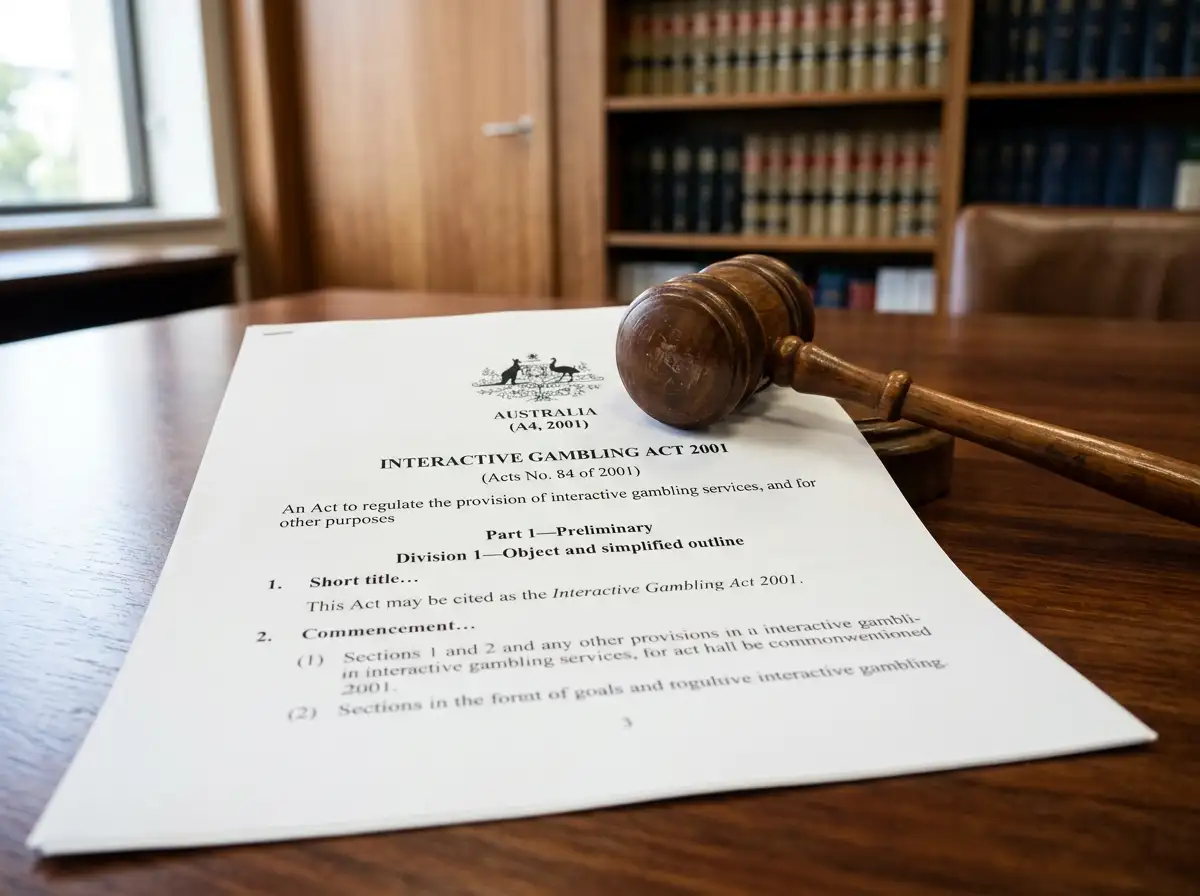
The Interactive Gambling Act 2001 prohibits the provision of online casino games to Australian residents. Not the playing. The provision. That distinction matters because it shapes enforcement. ACMA goes after operators, payment processors, advertisers, and affiliate sites. Individual players using offshore casinos are not prosecuted under the IGA. You will not receive a fine in the mail for depositing Litecoin at an offshore casino. But you will forfeit every consumer protection built into the Australian gambling framework.
The Interactive Gambling Act Explained
The IGA targets “interactive gambling services” — defined as online casino games, in-play sports betting, and other real-money gambling conducted over the internet. Sports and race betting are carved out: they’re legal when offered by operators holding state or territory licenses. Online casinos are not. No carveout exists. Subsection 15(2A) makes it an offense for an operator to provide prohibited interactive gambling services to customers in Australia, regardless of where the operator is based or what foreign license they hold.
Curaçao licenses, Anjouan licenses, Malta licenses, UK licenses — none authorizes service to Australian residents under Australian law. A Curaçao operator serving Australians is breaking Australian law, even if they’re complying with Curaçao law. The offense is the operator’s, not yours. That legal structure is why offshore casinos can advertise to Australians, accept Australian players, and process AUD transactions, all while technically committing a crime under the IGA. Enforcement is patchy. Prosecution is rare. But the law is clear.
What the 2027 Reforms Mean for Players
The Interactive Gambling Amendment (Gambling Reform) Act 2026 passed in August and commences January 1, 2027. It introduces three major changes. First, banks and payment providers must take “reasonable steps” to prevent transactions to designated illegal gambling services. What counts as “reasonable” is not yet defined in published guidance, but the intent is to block card deposits and bank transfers to offshore casinos. Cryptocurrency transactions complicate this because on-chain transfers don’t route through Australian banks the same way fiat does. A player buying Litecoin on CoinSpot and withdrawing it to a personal wallet, then depositing that LTC to a casino, is harder to intercept than a card deposit flowing straight from CommBank to an offshore processor.
Second, ACMA gains enhanced enforcement powers including faster domain takedowns and direct action against payment intermediaries. The 1,700+ blocked sites as of 2026 will grow, and the lag between identification and blocking will shrink. Third, search engines and app stores must prevent illegal gambling services from reaching Australian users. Expect Google to delist offshore casino domains more aggressively, and Apple/Google app stores to scrub gambling apps that lack Australian licenses.
The 2027 reforms do not create a legal licensing pathway for online casinos. They tighten enforcement of the existing prohibition. If you’re using an offshore Litecoin casino in 2026, expect access friction to increase in 2027. Mirror sites will proliferate. Payment processors will drop Australian accounts. Exchanges may face pressure to monitor gambling-related withdrawals, though that’s speculation — the legislation does not explicitly target crypto exchanges.
ACMA Blocking and How It Works
ACMA maintains a register of blocked gambling domains and issues notices to Australian ISPs requiring them to prevent access. As of 2026, more than 1,700 sites are on that list. When a site is blocked, requests to its domain die before reaching the server. The block is enforced at the ISP level, so switching devices or browsers won’t help. VPNs can bypass ISP-level blocks by routing your connection through a server outside Australia, but using a VPN to access a blocked gambling site doesn’t make the site legal — it just works around the technical barrier ACMA imposed.
BitStarz is the most heavily blocked operator in this comparison, with 12+ domains taken down as of July 2026. Ignition has had multiple domains seized following the ACMA warning in July 2025. Oshi, Jeetcity, and Spinrise have not yet faced the same blocking intensity, but that’s a lagging indicator, not a safety signal. ACMA’s blocking process targets high-traffic operators first. Smaller or newer casinos get blocked later, once they hit ACMA’s radar.
If a site you’re using gets blocked mid-session, you’ll lose access to the main domain but your account balance remains on the operator’s server. Most offshore casinos provide mirror domains — alternate URLs pointing to the same backend. Finding the current mirror often means joining the operator’s Telegram channel or checking their social media. That introduces phishing risk: fake mirrors designed to steal login credentials look identical to real ones. Always verify a mirror link through the operator’s official communication channels before logging in.
Is it legal to play at Litecoin casinos in Australia?
Playing at offshore Litecoin casinos is not a criminal offense under Australian law. The IGA targets operators providing the service, not players using it. You will not be prosecuted for depositing Litecoin at an offshore casino. But legality and safety are not the same thing. Using an offshore casino means forfeiting Australian consumer protections, BetStop self-exclusion, ombudsman dispute resolution, and any recourse under Australian Consumer Law if the operator refuses to pay out your winnings or closes your account without explanation.
How to Buy and Use Litecoin at Australian Casinos
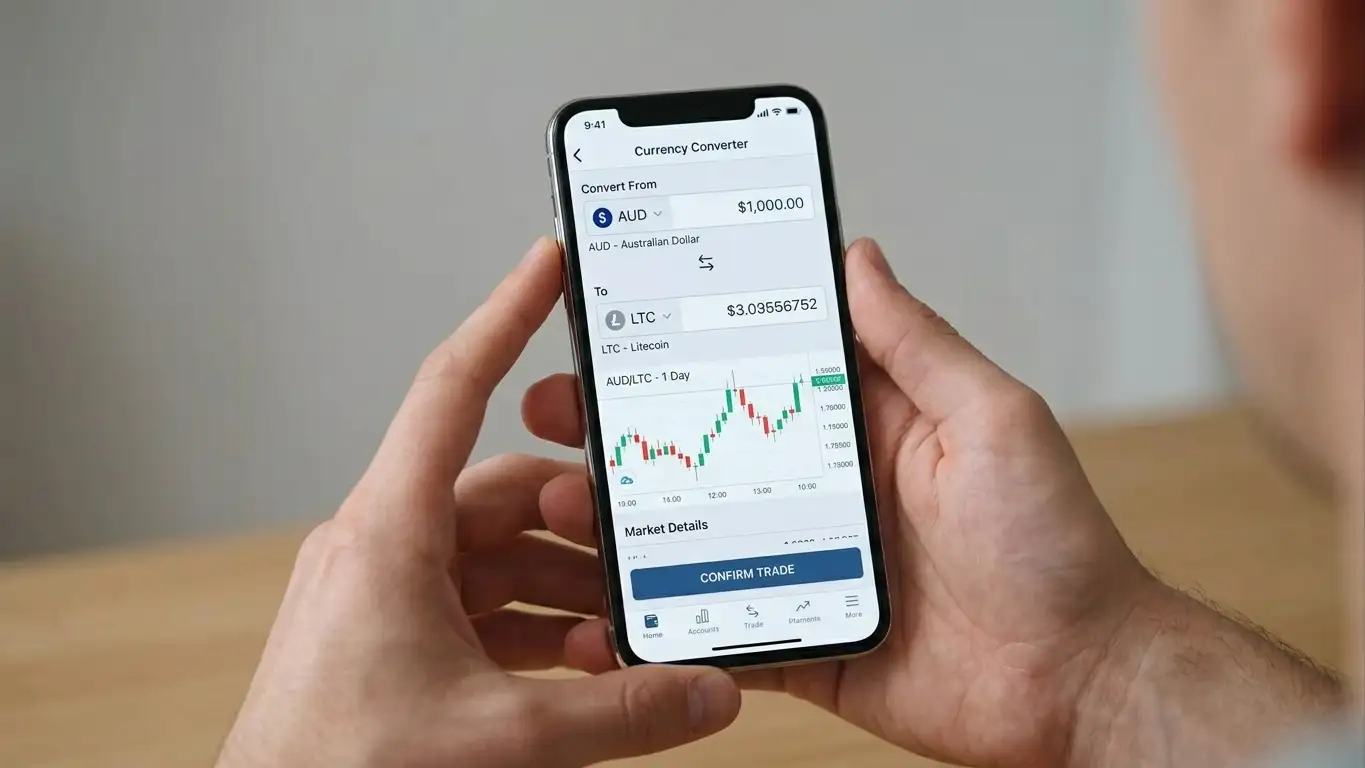
Australian players cannot buy Litecoin directly at an offshore casino cashier. The onboarding path runs through an Australian cryptocurrency exchange, where you convert AUD to LTC, then withdraw that LTC to a personal wallet, then deposit it to the casino. That three-step process introduces friction but also gives you control over your crypto holdings between the exchange and the casino.
Step 1: Buy LTC on an Australian Exchange (CoinSpot vs Swyftx)
Two AUSTRAC-registered exchanges dominate the Australian retail crypto market: CoinSpot and Swyftx. Both support Litecoin and accept AUD deposits via bank transfer. Registration requires identity verification under Anti-Money Laundering and Counter-Terrorism Financing Act 2006 obligations. Expect to upload a driver’s license or passport and wait 24–48 hours for account approval.
| Exchange | AUSTRAC Status | Trading Fee | Best For |
|---|---|---|---|
| CoinSpot | Registered since 2013 | 0.1% (spot markets) | High-volume traders, lowest fee |
| Swyftx | Registered | 0.6% (flat fee) | Beginners, better UX, tighter spreads |
CoinSpot charges 0.1% on spot market trades, the lowest fee among major Australian exchanges. The Instant Buy feature adds a spread markup for convenience, so if you’re buying small amounts infrequently, compare the Instant Buy price to the spot market price before executing. CoinSpot has been operating since 2013 and carries Blockchain Australia certification. It supports 300+ coins including Litecoin. The interface is functional but dated. Customer support response times can stretch to 24–48 hours during high-volume periods.
Swyftx charges a flat 0.6% trading fee but offsets that with tighter spreads on popular coins like Litecoin. For casual users buying $500–$2,000 worth of LTC at a time, the tighter spread often makes Swyftx cheaper than CoinSpot’s Instant Buy, even with the higher percentage fee. Swyftx is ISO 27001 certified for security and consistently rates higher on customer support responsiveness. The mobile app is cleaner than CoinSpot’s. VIP tiers lower the fee further if you’re moving serious volume, but most Australian casino players won’t hit those thresholds.
Both exchanges are AUSTRAC-registered, meaning they comply with Australian AML/CTF regulations and report suspicious transactions to FINTEL. If you deposit AUD, buy Litecoin, and immediately withdraw it to an external wallet, that pattern can flag a compliance review. Exchanges rarely disclose their flagging thresholds, but anecdotally, single withdrawals above $5,000–$10,000 or frequent sub-$5,000 withdrawals in short succession draw scrutiny. If your account gets flagged, expect delays while the exchange investigates the destination wallet.
Step 2: Set Up Your Litecoin Wallet
Offshore casinos provide a deposit address when you select Litecoin as your payment method. That address is a long alphanumeric string starting with “L” or “M” (legacy and SegWit address formats). You send LTC from your exchange account or personal wallet to that address, and the casino credits your account once the blockchain confirms the transaction. Most casinos require 1–3 network confirmations, which takes 2.5–7.5 minutes for Litecoin.
For better security and control, withdraw your LTC from the exchange to a personal wallet first, then send it to the casino from that wallet. Hardware wallets like Ledger or Trezor are the gold standard for crypto storage. Software wallets like Exodus or the native Litecoin Core wallet work if hardware feels like overkill. The exchange withdrawal adds an extra step and a small network fee (usually a few cents), but it keeps your exchange account isolated from gambling transactions — useful if your exchange starts asking questions about destination wallets.
Step 3: Deposit LTC to Your Casino Account
Log into your offshore casino account, navigate to the cashier, select Litecoin as the deposit method, and copy the provided deposit address. Triple-check the address before sending. Crypto transactions are irreversible. If you send LTC to the wrong address, it’s gone. Most exchanges and wallets let you save recipient addresses under labels like “Oshi Casino Deposit” to avoid copy-paste errors on repeat deposits.
Paste the casino’s LTC address into your exchange or wallet’s send function, enter the amount, and confirm. The transaction broadcasts to the Litecoin network and begins confirming. Most casinos credit your account after one confirmation, which averages 2.5 minutes. During periods of high network congestion, confirmation times can stretch to 5–10 minutes, but Litecoin rarely experiences the multi-hour backlogs that plague Bitcoin.
Step 4: Withdraw Your Winnings
Withdrawing follows the reverse path. Navigate to the casino cashier, select Litecoin withdrawal, enter the amount, and provide your personal wallet address — not your exchange deposit address. Sending winnings directly to an exchange can trigger account closure under the exchange’s terms of service, which often prohibit receiving funds from gambling sources. Withdraw to your personal wallet first, then transfer from your wallet to the exchange if you want to convert LTC back to AUD.
Crypto withdrawals at offshore casinos process faster than fiat, but “instant” is marketing speak. BitStarz tested at 8 minutes. Oshi advertises instant under $1,000. Ignition quotes under 24 hours. Jeetcity claims 15 minutes. Spinrise has user reports of “very lengthy” waits. Speed depends on whether you trip the casino’s KYC threshold. Once verification kicks in, add 24–72 hours for document review.
How do I buy Litecoin in Australia to use at online casinos?
Register with CoinSpot or Swyftx, complete identity verification, deposit AUD via bank transfer, buy Litecoin on the spot market or Instant Buy, withdraw the LTC to a personal wallet, then send from that wallet to your casino’s deposit address. Total time from signup to casino deposit: 24–48 hours for first-time exchange approval, then 10–15 minutes per transaction once your account is active.
How fast are Litecoin deposits and withdrawals at online casinos?
Deposits confirm in 2.5–7.5 minutes after one to three network confirmations. Withdrawals depend on the casino’s processing time. Crypto-friendly operators like BitStarz and Oshi process withdrawals in under an hour if you’re below the KYC threshold. Above that threshold, expect 24–72 hours while they verify your documents. Fiat withdrawals (bank transfer, card) take 1–5 business days and often face higher minimum thresholds and fees than crypto.
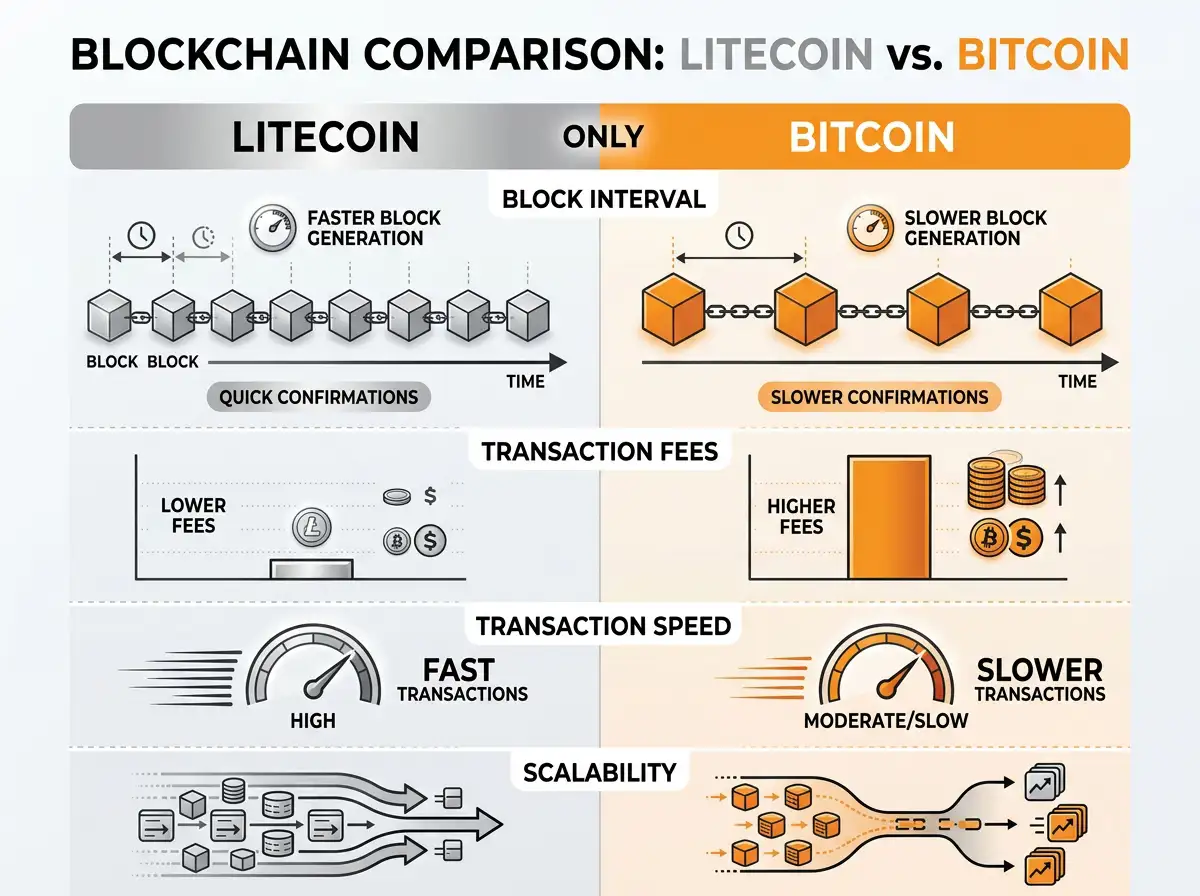
Litecoin vs Bitcoin and Other Crypto for Casino Deposits
Litecoin was created in 2011 as a faster, cheaper alternative to Bitcoin. That pitch still holds in 2026. Bitcoin targets a new block every 10 minutes. Litecoin targets one every 2.5 minutes. That 4x speed advantage means your deposit confirms faster and your withdrawal clears sooner. Transaction fees on Litecoin average a few cents per transaction. Bitcoin fees fluctuate wildly — during periods of high network congestion, moving $100 worth of BTC can cost $5–$20 in miner fees. Ethereum gas fees can spike even higher, sometimes exceeding $50 during DeFi rushes or NFT mints.
| Crypto | Block Time | Typical Fee | Confirmation Speed | Best Use Case |
|---|---|---|---|---|
| Litecoin (LTC) | 2.5 minutes | A few cents | 2.5–7.5 minutes | Casino deposits/withdrawals under $5,000 |
| Bitcoin (BTC) | 10 minutes | $1–$20 (variable) | 10–60 minutes | Large transfers, long-term holding |
| Ethereum (ETH) | ~12 seconds | $2–$50 (gas fees) | 1–5 minutes | DeFi, smart contracts, not ideal for simple casino transfers |
| Tether (USDT) | Varies by chain | $1–$20 (depends on chain) | 1–10 minutes | Avoiding crypto volatility, stable value |
Stablecoins like Tether (USDT) eliminate price volatility. If you deposit $1,000 worth of USDT, your casino balance stays at $1,000 equivalent until you spend it. If you deposit $1,000 worth of Litecoin and LTC drops 10% before you play, your balance is now worth $900. That volatility cuts both ways — if LTC rises 10%, your balance is worth $1,100 — but most casino players prefer stable value over speculative upside. The trade-off is that Tether runs on multiple blockchains (Ethereum, Tron, others), and fees vary by chain. Tether on Tron is cheap. Tether on Ethereum can cost $20+ in gas during congestion.
Here’s the detail competitors skip: Litecoin’s confidential transaction mode (MWEB, or Mimblewimble Extension Block) does not work with casino deposits. MWEB transactions are privacy-enhanced and hide amounts and addresses. But offshore casinos only accept standard Litecoin addresses, which are fully transparent on the blockchain. Anyone with your deposit address can see every transaction you’ve ever made to that address. If privacy is your reason for choosing Litecoin over fiat, understand that you’re getting speed and low fees, not anonymity. The casino knows your deposit address. Law enforcement can trace it. Blockchain analytics firms can cluster it with your other addresses. MWEB sounds appealing on paper, but it never reaches the casino cashier.
Also worth noting: offshore casinos do not offer Litecoin-specific bonuses. The welcome package you claim with an LTC deposit is almost always the same offer you’d get depositing Bitcoin or Ethereum. Some casinos label it a “crypto bonus” to distinguish it from fiat welcome offers, which may carry different wagering requirements or game restrictions. But there is no premium for choosing Litecoin. The advantage is operational — faster confirmations, lower fees — not promotional.
What’s the difference between using Litecoin and Bitcoin at online casinos?
Litecoin confirms 4x faster than Bitcoin (2.5-minute blocks vs 10-minute blocks) and charges a fraction of the transaction fees. For casino deposits and withdrawals under $5,000, Litecoin is cheaper and faster. Bitcoin is better suited for large transfers or long-term holding, where the speed difference matters less and the deeper liquidity matters more. Casinos treat both identically for bonus eligibility.
Litecoin Casino Bonuses and Wagering Requirements
Offshore casino bonuses are not “free money.” They’re marketing tools with strict conditions attached. The welcome package at Oshi reaches A$6,000 plus 200 free spins across four deposits, but that total requires you to deposit and wager through all four tiers. The first deposit gets matched 100% up to A$1,500 plus 150 spins. If you deposit A$1,500, you receive A$1,500 in bonus funds, and your total playable balance is A$3,000. Wagering requirements typically sit around 40x the bonus amount. That means you must wager A$1,500 × 40 = A$60,000 before you can withdraw any winnings derived from the bonus.
BitStarz offers up to 5 BTC or A$2,000 plus 180 spins across four deposits. Ignition caps at A$3,000. Jeetcity advertises packages in the A$6,000 range but terms vary by mirror. Spinrise quotes 111% up to $777 plus 111 spins. All carry wagering requirements in the 30x–40x range, with some operators pushing as high as 66x on specific promotions. Those requirements apply to the bonus amount, not the deposit. If you deposit A$100 and claim a 100% match for A$100 in bonus funds, you’re wagering through A$100 × 40 = A$4,000, not A$200 × 40.
Game contribution varies. Pokies usually count 100% toward wagering. Table games like blackjack and roulette often count 10%–20%, meaning a $100 bet on blackjack clears $10–$20 worth of wagering progress. Live dealer games are frequently excluded entirely. Always check the terms before claiming a bonus. Many players find the wagering requirements so onerous that they skip the welcome bonus and deposit without it, preserving the ability to withdraw anytime without clearing playthrough.
Validity periods add time pressure. Oshi gives you 5–7 days to claim the bonus and another fixed window to clear the wagering. If you don’t meet the requirement within that window, the bonus and any winnings from it are forfeited. Some operators cap withdrawals on bonus play at 5x or 10x the bonus amount, meaning even if you clear the wagering and turn A$1,500 in bonus funds into A$10,000 in winnings, you’re only allowed to withdraw A$7,500 or A$15,000 depending on the cap. The rest gets clawed back.
Reload bonuses appear after the welcome package expires. Spinrise offers a 10% crypto reload on deposits above 20 USDT equivalent, capped at 2.04 LTC, and a 25% reload on deposits above 250 USDT. Oshi and BitStarz run periodic reload promos through email or in-account notifications. None are permanent fixtures. Offshore casinos rotate promotions to keep high-volume players engaged, but the core structure stays the same: match percentage, wagering requirement, time limit, game restrictions.
The cynical read: bonuses exist to lock your deposit into the casino ecosystem long enough that you lose it. The 40x wagering requirement is not designed to be easy. It’s designed to grind your bankroll down through variance before you hit the cashout threshold. That doesn’t mean bonuses are scams — some players clear them and walk away with profits. It means understanding the terms before clicking “claim” is not optional. If you cannot stomach a 40x rollover, deposit without the bonus and retain full control of your funds.
Pokies, Live Dealer, and Games at Litecoin Casinos
Pokies dominate the offshore casino landscape for Australian players. Oshi lists 3,000+ titles. BitStarz ranges from 3,000 to 6,500+ depending on which provider partnerships are active. Ignition runs lighter at 300+ pokies but supplements that with its poker network. Jeetcity and Spinrise both claim 3,000+ games. Providers like Pragmatic Play, NetEnt, Microgaming, Betsoft, and Play’n GO show up across most operators. Titles like Gates of Olympus, Sweet Bonanza, Book of Dead, and Wolf Gold have near-universal coverage.
Return-to-player percentages on these pokies range from 94% to 97%, with most clustering around 96%. That RTP is theoretical — calculated over millions of spins. Your session RTP can swing wildly in either direction based on variance. High-volatility pokies pay out less frequently but deliver bigger wins. Low-volatility pokies pay more often but in smaller amounts. Offshore casinos rarely publish variance ratings, so you’re guessing unless you track the game yourself or rely on third-party databases.
Provably fair pokies appear at crypto-native operators like BitStarz. These games publish a cryptographic hash of the result before you spin, allowing you to verify afterward that the outcome was not manipulated. Most Australian players ignore this feature because they’re chasing the same Pragmatic Play pokies they’d find at a Curaçao or Malta-licensed operator. Provably fair matters more to the crypto purist crowd than the pokies crowd.
Live dealer tables come from Evolution, Pragmatic Play Live, and Ezugi. Blackjack, roulette, baccarat, and poker variants run 24/7 with real dealers streamed from studios in Europe or Latin America. Minimum bets at offshore casinos typically start at $1–$5 for standard tables and climb to $25–$100 for VIP tables. The betting limits are lower than you’d find at Crown or Star, but the trade-off is convenience — you’re playing from your couch at 2 a.m., not driving to a land-based venue.
One operational detail: many offshore casinos force-convert your Litecoin balance into USD or AUD equivalent when you deposit, then convert back to LTC when you withdraw. That introduces exchange rate slippage twice per round trip. A few operators, like some of the crypto-native platforms, let your LTC balance stay as LTC throughout your session. Check the cashier terms before depositing if preserving your exact LTC amount matters to you.
Game fairness at offshore casinos is not independently audited the way it is at European-licensed operators. Curaçao licensing requires operators to use certified RNG software, but enforcement is light. Anjouan licensing is even lighter. You’re trusting the operator’s internal controls, not a third-party testing lab like eCOGRA or iTech Labs. That’s the risk you take accessing offshore casinos from Australia.
What You Give Up Using Offshore Litecoin Casinos
Australian consumer protection does not extend to offshore gambling. The Australian Consumer Law, which guarantees refunds and dispute resolution for most goods and services, does not cover transactions with foreign operators conducting illegal activity under Australian law. If an offshore casino refuses to pay out your winnings, closes your account without explanation, or changes bonus terms retroactively, you have no legal recourse under ACL. You can complain to the casino’s licensing authority — Curaçao Gaming Control Board or Anjouan — but response times are measured in weeks or months, and outcomes are rarely favorable to the player.
No BetStop Self-Exclusion
BetStop is Australia’s national self-exclusion register for gambling. It covers all Australian-licensed sports betting and lottery operators. It does not cover offshore casinos. If you register with BetStop, you’ll be blocked from Sportsbet, TAB, and other licensed operators. You will not be blocked from Oshi, Ignition, BitStarz, or any offshore casino. Some offshore operators offer self-exclusion through their own internal systems, but those exclusions are not centrally enforced and only apply to that single brand. If Oshi self-excludes you, you can still register at Ignition the same day.
Third-party blocking tools like Gamban and BetBlocker work by installing software on your device that blocks access to gambling sites. These tools cover offshore casinos alongside licensed operators, but they require you to install and maintain the software. If you uninstall it or use a different device, the block disappears. BetStop is enforced at the operator level and cannot be bypassed by switching devices. Offshore exclusion relies on your own discipline.
No Australian Consumer Law Protection
Australian Consumer Law provides statutory guarantees on goods and services, including the right to a refund if a service is not provided as promised. Offshore casinos operate outside that framework. If you deposit $1,000 and the casino software glitches mid-session, wiping your balance, you have no ACL recourse. You can file a complaint with the casino’s licensing authority, but those processes are slow, opaque, and rarely result in player compensation. The casino’s terms of service — which you agreed to at registration — almost certainly include a clause waiving liability for software errors and limiting disputes to the casino’s internal resolution process or arbitration in the licensing jurisdiction.
That’s not theoretical. Player complaints on forums like AskGamblers and Trustpilot are full of stories where offshore casinos refused payouts citing terms-of-service violations (multi-accounting, bonus abuse, jurisdiction restrictions) that the player disputes. With no Australian regulator to escalate to, the player’s only option is to accept the casino’s decision or pursue arbitration in Curaçao or Anjouan — a process that costs more than most disputed amounts and has no guaranteed outcome.
Risk of Blocked Sites with Funds Trapped
ACMA’s blocking process targets domains, not account balances. When ACMA blocks a site, you lose access to the domain, but your account balance stays on the operator’s server. Most operators provide mirror domains to restore access. The risk is twofold: first, finding the legitimate mirror among phishing sites requires verifying the link through the operator’s official Telegram or email, which introduces delay and phishing risk. Second, if the operator decides to exit the Australian market entirely rather than play mirror-hopping games with ACMA, they may freeze Australian accounts and refuse withdrawals.
That scenario is rare but not unheard of. In 2023, several offshore operators serving European markets shut down operations in Germany after that country’s regulatory crackdown tightened. Players with balances at those casinos had to navigate opaque withdrawal processes, often waiting months for payouts. Australia has not seen mass exits yet, but the 2027 payment blocking reforms increase the risk. An operator facing payment processor shutdowns and ACMA domain seizures may decide the Australian market is no longer worth the compliance headache.
Can I use BetStop to block myself from Litecoin casinos?
No. BetStop only covers Australian-licensed operators. Offshore casinos are not connected to the BetStop register. Some offshore operators offer self-exclusion through their own systems, but those exclusions are not centrally enforced and only apply to that single brand. Third-party blocking software like Gamban can block offshore sites, but requires you to install and maintain the software on every device you use.
What happens if a Litecoin casino is blocked by ACMA while I have funds in my account?
You lose access to the domain, but your account balance remains on the operator’s server. Most operators provide mirror domains to restore access. Finding the legitimate mirror requires verifying the link through the operator’s official communication channels (Telegram, email) to avoid phishing sites. If the operator exits the Australian market entirely, you may face delays or refusal of withdrawals. ACMA blocking does not freeze your account balance, but it makes access harder and increases the risk that the operator will close Australian accounts rather than navigate ongoing enforcement.

Tax on Litecoin Casino Winnings in Australia
The Australian Taxation Office has maintained since 1991 that recreational gambling winnings are not assessable income. IT 2655, the Income Tax Ruling covering gambling, states that a punter’s winnings are not taxed and their losses are not deductible. That applies to pokies, table games, sports betting, lottery — all forms of gambling where you’re playing for entertainment, not running a gambling business. If you win $10,000 at an offshore Litecoin casino, the ATO does not tax that $10,000 as income.
But — and this is the part offshore casino guides skip — cryptocurrency is a capital gains tax asset under Australian tax law. When you convert Litecoin back to AUD, you trigger a CGT event. The taxable gain is the difference between your LTC’s cost base (what you paid for it in AUD) and its disposal proceeds (what you sold it for in AUD). If you bought 10 LTC at $100 each ($1,000 total) and later sold 10 LTC at $150 each ($1,500 total), you have a $500 capital gain. That gain gets added to your assessable income and taxed at your marginal rate.
Gambling Winnings Are Tax-Free (But Crypto Isn’t)
Scenario: You deposit $1,000 AUD to CoinSpot, buy 10 LTC at $100 per coin, withdraw the LTC to your wallet, deposit it to Oshi Casino, and win. Your casino balance now shows 15 LTC. You withdraw 15 LTC to your wallet, transfer it to CoinSpot, and sell at $120 per coin, receiving $1,800 AUD. The $800 difference between your $1,000 starting point and your $1,800 ending point is not taxed as gambling income. But the $200 difference between your LTC cost base ($1,000 / 10 = $100 per coin) and your disposal proceeds ($1,800 / 15 = $120 per coin) on the 10 original coins you bought, plus the 5 coins you won, is taxed as a capital gain.
Calculating the cost base on casino-won LTC is where it gets messy. The ATO treats crypto you receive for free (airdrops, staking rewards, gifts) as having a cost base of zero. Arguably, LTC you win at a casino also has a zero cost base because you did not pay AUD to acquire it. If you sell casino-won LTC, the entire disposal proceeds are a capital gain. That’s the conservative interpretation. Some accountants argue the casino-won LTC should be valued at market price the moment you won it, establishing a non-zero cost base. The ATO has not published explicit guidance on casino-won crypto, so the conservative approach — zero cost base, full proceeds taxable — is safer if you’re audited.
Capital Gains Tax on LTC Conversion
Capital gains tax in Australia is not a separate tax. Net capital gains (total gains minus total losses for the year) get added to your assessable income and taxed at your marginal rate, which ranges from 0% (if you’re under the tax-free threshold) to 45% plus 2% Medicare levy for incomes above $180,000. If you hold the crypto for more than 12 months, you qualify for the 50% CGT discount, which halves your taxable gain. If you bought LTC in January 2025 and sold it in March 2025 (two months), you pay full CGT on the gain. If you held until February 2026 (13 months), you get the 50% discount.
That discount is expiring. The Treasury Laws Amendment (Tax Reform No. 1) Act 2026, passed in July 2026, eliminates the 50% CGT discount for crypto assets sold after July 1, 2027. The new system replaces the blanket discount with a complex graduated structure that depends on holding period and asset type. Crypto held under 12 months will face higher effective tax rates than under the current system. Crypto held over 12 months will lose the generous 50% discount and get a smaller, sliding-scale discount instead. The full details are still being finalized in Treasury regulations, but the headline is clear: if you’re converting LTC casino winnings to AUD in 2026 or early 2027, you’re operating under the old, more favorable CGT regime. From mid-2027 onward, expect a higher tax bill on your crypto disposals.
The 2027 CGT Discount Change
The 50% CGT discount has been Australian tax law since 1999. It was designed to encourage long-term investment by halving the taxable capital gain on assets held over 12 months. For crypto, that meant buying and holding Bitcoin, Ethereum, or Litecoin for more than a year before selling, and paying tax on only half the gain. The 2026 reform ends that. Starting July 1, 2027, the discount shrinks and becomes more complex. Early Treasury guidance suggests a tiered system: 0% discount for assets held under 12 months, 25%–30% discount for 12–24 months, 35%–40% discount for 24+ months. Those figures are provisional and may shift before final regulations publish.
What this means for Litecoin casino players: if you win LTC in 2026 and hold it in your wallet for 13 months before converting to AUD, you’ll get the full 50% discount under current law. If you win LTC in late 2027 or 2026 and hold it for 13 months, you’ll only get a 25%–30% discount (or whatever the final regulations specify), and your tax bill will be higher. The reform does not retroactively affect crypto you already own — only disposals after July 1, 2027. But for ongoing casino play, it means the tax cost of converting LTC to AUD is rising.
Do I have to pay tax on Litecoin casino winnings in Australia?
Gambling winnings are not taxed under IT 2655. But Litecoin is a CGT asset. When you convert LTC to AUD, you trigger a capital gains event. The gain is the difference between your cost base (what you paid for the LTC) and your disposal proceeds (what you sold it for). That gain is added to your assessable income and taxed at your marginal rate. If you held the LTC for more than 12 months, you get the 50% CGT discount under current law (until July 1, 2027). Casino-won LTC that you did not pay AUD to acquire arguably has a zero cost base, meaning the entire disposal proceeds are taxable as a capital gain.
Mobile Litecoin Casinos and New Operators
Every casino in this comparison runs on mobile via browser-based platforms. Oshi is a Progressive Web App, meaning you can add it to your home screen and it behaves like a native app without the app store download. BitStarz, Ignition, Jeetcity, and Spinrise all optimize for mobile browsers. None offers a native iOS or Android app through Apple or Google app stores — offshore casinos can’t get past those stores’ gambling licensing requirements, which demand local regulatory approval.
Mobile performance is generally smooth on modern devices. Pokies load quickly. Live dealer streams rarely buffer on 4G or 5G connections. The cashier functions identically to desktop: select Litecoin, paste your wallet address, confirm. Withdrawals process at the same speed regardless of whether you’re on a phone or laptop. The main friction point on mobile is entering your wallet address. Copying and pasting a 34-character Litecoin address on a phone keyboard invites typos. Most players save their deposit and withdrawal addresses in their password manager or wallet app to avoid manual entry.
New operators appear in the offshore market constantly. Most fail within 18 months. Spinrise, launched in 2023, is the newest casino in this comparison and already carries a 1.5 safety rating from Casino Guru. That’s the pattern: a new operator launches with aggressive bonuses, operates for 6–12 months, accumulates unresolved player complaints, gets flagged by review aggregators, and either exits or pivots to a new brand under a different domain. Jeetcity, launched in 2022, sits in the middle of that lifecycle — old enough to have a Trustpilot presence but too new to have survived a major regulatory crackdown or payment processor disruption.
Established operators like BitStarz (2014) and Oshi (2015) have weathered multiple enforcement waves and payment processor exits. That longevity does not make them safe — they’re still operating illegally under Australian law — but it suggests they have the infrastructure and financial reserves to handle disputes, domain seizures, and player withdrawals during turbulent periods. New operators do not. If you’re choosing between a 10-year-old offshore casino and a 2-year-old offshore casino, bet on the older one if everything else is equal.
How We Ranked These Litecoin Casinos (Methodology)
The casinos in this guide were ranked by operating history, license verifiability, withdrawal speed, and game selection. Operating history is measured in years since launch, weighted toward operators with 5+ years in the market. License verifiability means the operator publishes a license number that can be cross-checked against the regulator’s public register. Curaçao Gaming Control Board maintains a searchable license database. Anjouan does not, which automatically downgrades Anjouan-licensed operators in this ranking.
Withdrawal speed is based on a mix of operator claims, player reviews on Trustpilot and AskGamblers, and direct testing where possible. BitStarz’s 8-minute withdrawal is from a real-money test conducted in August 2026. Oshi’s instant-under-$1,000 threshold is operator policy confirmed through multiple user reports. Ignition’s under-24-hour claim is consistent across reviews. Jeetcity and Spinrise withdrawal speeds are drawn from user reviews, which are mixed and suggest inconsistency.
Game selection is measured by total title count and provider diversity. Operators listing 3,000+ games from multiple providers (Pragmatic Play, NetEnt, Microgaming, Evolution) rank higher than operators with shallow libraries. Provably fair game availability and poker network access (Ignition) are tie-breakers, not primary factors.
Safety ratings from Casino Guru and Trustpilot scores are incorporated but not decisive. A low safety rating is a red flag and drops an operator in the ranking. A high safety rating is not a green light — even highly-rated offshore casinos operate illegally under Australian law and offer no consumer protection. The methodology prioritizes operational stability over promotional flash. A casino with a bland interface, a 10-year track record, and verifiable payouts outranks a casino with a slick landing page, a 2-year track record, and thin reviews.
This ranking is not an endorsement. Every operator listed here is breaking Australian law by serving Australian players. Using any of them means forfeiting Australian consumer protections and taking on the risk that ACMA blocks access, the operator refuses withdrawal, or the payment processor shuts down mid-session. The ranking reflects which offshore operators are least likely to collapse tomorrow, not which ones are “safe.”
Responsible Gambling Resources
Offshore casinos are not connected to Australian responsible gambling frameworks. BetStop does not cover them. State-based exclusion registers do not cover them. Gambling Help Online and other Australian support services can assist with problem gambling, but they cannot enforce exclusions or restrictions at offshore sites. If you’re struggling with gambling, contact Gambling Help Online at 1800 858 858 for confidential support. The service is free and available 24/7.
Third-party blocking software like Gamban ($50–$90 per year) and BetBlocker (free) can block access to offshore gambling sites across all your devices. These tools require you to install and maintain them, but they’re more effective than relying on offshore casino self-exclusion systems, which are not centrally enforced and can be bypassed by registering at a different casino.
Set deposit limits before you start. Most offshore casinos let you set daily, weekly, or monthly deposit caps in your account settings. Those limits are self-imposed and can be adjusted at any time, so they’re not foolproof. A more effective approach is controlling how much Litecoin you hold in your wallet. If your wallet only contains $500 worth of LTC, you cannot deposit more than $500 to the casino, regardless of what the casino’s deposit limit allows.
Reality check: offshore gambling is higher risk than licensed gambling. The lack of regulatory oversight means fairness is not guaranteed, disputes are not independently mediated, and payout refusals have no escalation path. If you cannot afford to lose the amount you’re depositing, do not deposit it.
Crypto Casino Australia 2026 — Bitcoin, Ethereum & Stablecoins Guide
Content created by the «Payment Methods» team