
Best Solana Casinos for Australians: Which Offshore Platforms Actually Work in 2026?
 Available in AU

Solana hit the gambling scene promising what Bitcoin couldn’t deliver: sub-second finality, fees under a cent, and none of the “wait three blocks” anxiety. Fast-forward to 2026, and SOL has carved out a niche among crypto gamblers who actually care whether a deposit clears before their lunch break ends.
For Australian players, the pitch gets more complicated. No locally licensed online casino exists under Australian law — the Interactive Gambling Act 2001 saw to that — so every viable Solana casino sits offshore under Curaçao, Anjouan, or Panama licensing. You’re not breaking the law by playing, but you’re also not under ACMA’s consumer protection umbrella.
This comparison ranks ten offshore platforms where Solana deposits work for Australian players in 2026. We focus on the distinction competitors mention but rarely verify: does the casino maintain native SOL balances, or does your deposit convert to house currency the instant it lands? Withdrawal speed, operator fee transparency, bonus wagering traps, and the regulatory context all factor into the hierarchy. What you won’t find here is hype about “revolutionary blockchain gaming” — just a pragmatic map of where SOL actually functions as intended, and where it’s little more than a deposit rail for the same old fiat-casino machinery in crypto drag.
Best Solana Casinos for Australian Players in 2026
The ten platforms below accept Solana from Australian players and have documented operating histories ranging from a few months to over two decades. They’re ranked by how well they execute the Solana proposition: native balance handling, withdrawal reliability, fee transparency, and terms that don’t bury the catches in paragraph fourteen of the bonus policy.
What’s the difference between a casino that accepts Solana vs one that maintains native SOL balances?
Accepting Solana means the cashier has a SOL deposit option. Maintaining native SOL balances means your deposited coins stay as SOL in the casino’s wallet system, and your gameplay balance reflects actual SOL rather than an instant-converted USD or stablecoin equivalent. The distinction matters because conversion adds slippage, removes your exposure to SOL price movement (which cuts both ways), and often buries an extra operator fee in the exchange rate. Native SOL casinos let you deposit, play, and withdraw in the same coin without touching a conversion step — the speed and fee advantages of the Solana blockchain actually reach your experience. Converted-balance casinos use SOL as a deposit rail but operate like fiat platforms once your money lands.
| Casino | License & Jurisdiction | Withdrawal Speed | Min Deposit | Distinguishing Feature |
|---|---|---|---|---|
| Cloudbet | Curaçao OGL/2024/328/0599 | Hours to 1 day | No stated minimum | Publishes fee schedule, no withdrawal ceiling |
| Stake | Curaçao OGL/2024/1451/0918 | Minutes | $10 equivalent | Massive scale, 73 game studios |
| BC.Game | Anjouan (post-2024 migration) | Instant to hours | 21 USDT equivalent | 165 cryptocurrencies, BCD token ecosystem |
| Wild.io | Anjouan (2026 migration) | Near-instant | No stated minimum | Crypto-only, no-KYC stance, 6,000+ games |
| BetOnline | Panama/Antigua framework | Hours | $20 | 20+ year track record, $500k max transaction |
| Thrill | Curaçao | Instant | None | 70% rakeback, no match bonuses |
| Jack.com | Curaçao | Instant to hours | Varies by coin | 30% rakeback, April 2026 rebrand from Jackbit |
| FortuneJack | Anjouan ALSI-202411021-FI1 | Hours to 1 day | Varies by coin | Live since 2014, ten-year operating history |
| Bets.io | Likely Curaçao | Hours | Varies | Crypto + fiat hybrid, live dealer depth |
| Super Slots | Panama/Antigua framework | Hours to 1 day | $20 | 400+ slot titles, RTG provider focus |
1. Cloudbet — Fee Transparency and No Withdrawal Ceiling
Cloudbet has operated since 2013 under Halcyon Super Holdings B.V., a Curaçao entity holding license OGL/2024/328/0599. That makes it one of the oldest names in this ranking — old enough to have survived multiple industry cycles, regulatory tightenings, and the 2022 crypto winter. The platform supports 40+ cryptocurrencies including SOL, runs a full sportsbook alongside the casino, and publishes its operator fee schedule on a dedicated page rather than burying costs in vague “processing charges.” For a space where transparency often means “we’ll tell you after you ask support three times,” that’s rare.
SOL deposits and withdrawals go through native Solana wallets. The fee you pay is the blockchain network fee plus whatever Cloudbet’s published schedule lists for SOL transactions — as of late 2026, that’s been a flat passthrough with no operator markup, though network congestion can shift the base cost. Withdrawals have no stated ceiling once you’ve cleared KYC, which puts Cloudbet ahead of the €10,000 monthly caps some competitors enforce. The catch: KYC is required for withdrawal, and the verification process can take a day or two if you’re flagged for manual review. The terms include an independent adjudicator clause — if a dispute escalates beyond Cloudbet’s internal process, the casino agrees to binding arbitration through a named third party. That clause is unique in this ranking and gives the platform an edge on trust infrastructure, even if invoking it is a last-resort scenario most players never reach.
2. Stake — Brand Recognition and Minutes-Fast Payouts
Stake operates under Medium Rare N.V. with Curaçao license OGL/2024/1451/0918. The platform launched into global view in the late 2010s and has since become one of the largest crypto casinos by volume, with 73 game studios, a comprehensive sportsbook, and high-profile sponsorship deals that include UFC partnerships and a Drake co-sign. Withdrawals typically process within minutes once approved, and the platform’s scale means liquidity is rarely an issue even for five-figure payouts.
SOL support sits among a broad cryptocurrency menu. Deposits are straightforward, but the 200% welcome bonus — which sounds generous — requires Level 2 KYC and carries a 40x wagering requirement on the combined deposit and bonus amount. For a $100 deposit triggering a $200 bonus, that’s $12,000 in turnover before you can withdraw a dollar of bonus-funded winnings. Not impossible, but not the “free money” the marketing implies. Stake’s trust profile took a hit in 2026 when the Curaçao licensing leak exposed ownership opacity across hundreds of offshore casinos, including questions about who ultimately controls Medium Rare N.V. beyond the declared Serbian national Mladen Vuckovic. The platform still pays out reliably, but the transparency gap is wider than the marketing suggests. For Australian players, Stake’s main appeal is speed and game selection — if you can live with the bonus wagering math and don’t need to know exactly who’s holding your bankroll behind the corporate veil.
3. BC.Game — Broadest Crypto Support, Complicated Trust Profile
BC.Game supports 165 cryptocurrencies across 30+ blockchain networks — the broadest crypto acceptance in this entire ranking. The platform launched in the early 2020s and built a reputation for product depth: 8,500+ games, 50+ provably fair originals (Crash, Plinko, Dice, Mines, Limbo, Keno), a full sportsbook, and a native BCD token ecosystem with VaultPro staking that pays 10% APR on held BCD. On feature density alone, BC.Game competes with anyone.
The complication is trust. In 2024, the platform’s parent entities — BlockDance B.V. and Small House B.V., both Curaçao-registered — filed for bankruptcy in Curaçao courts. BC.Game migrated to an Anjouan license and continued operating, but the bankruptcy reset whatever track record the old entities had built. Withdrawal caps are tighter than the marketing implies: €10,000 per month standard, dropping to €5,000 per month once your balance exceeds ten times your total deposits. That second threshold is a trap for winners — the moment you’re up significantly, your monthly withdrawal ceiling halves. Bonus wagering is 40x with a 5% contribution rate from BC Originals, which means your Plinko and Crash plays contribute almost nothing toward clearing the requirement. SOL deposits work and the multi-chain cashier is genuinely impressive, but Australian players chasing large payouts need to read the withdrawal policy twice and factor in the entity restructure when weighing long-term reliability.
4. Wild.io — Crypto-Native No-KYC Focus
Wild.io launched in 2022 under Nonce Gaming B.V. and positions itself as a crypto-only alternative to fiat-hybrid platforms. The casino migrated from Curaçao to an Anjouan license in 2026, giving it a longer corporate paper trail than most two-year-old operations. The platform markets a no-KYC stance — you can deposit, play, and withdraw without identity verification — though the terms reserve the right to require KYC “at any time,” which softens the absolutism of the claim.
The game library spans 6,000+ titles from 60+ providers, including top-tier studios like Pragmatic Play, Evolution, and NetEnt. SOL is among a dozen supported cryptocurrencies, deposits are near-instant, and Wild.io claims no withdrawal caps. The 30-level VIP ladder offers rakeback and cashback that scales with play volume, and the welcome bonus structure is a 350% match plus 200 free spins split across the first three deposits. Wagering requirements sit at the standard 40x. Wild.io’s Safety Index from third-party reviewers sits at 8.1 out of 10 — a “high” rating reflecting a clean payout record and no appearances on blacklists as of late 2026. For Australian players who prioritize speed and want to avoid uploading a passport unless absolutely forced, Wild.io delivers on the crypto-native promise more consistently than platforms that market anonymity but enforce KYC the moment you cross an internal threshold.
5. BetOnline — 20+ Year Track Record
BetOnline has operated since the late 1990s under a Panama/Antigua licensing framework that predates the modern Curaçao-crypto-casino era. The .ag domain (Antigua and Barbuda) is a legacy marker from the first wave of offshore sportsbooks targeting US and international players when domestic options didn’t exist. Two decades later, BetOnline is still processing payouts, which counts for something in a space where operations fold or rebrand every eighteen months.
The platform is sportsbook-first with a casino and poker room attached. SOL deposits live in the “Altcoins” section of the cashier alongside Ethereum, Litecoin, and Tether, with a $20 minimum and a $500,000 maximum per transaction — that ceiling is the highest in this ranking and reflects BetOnline’s high-roller accommodation. Crypto withdrawals settle within hours to a day depending on verification status and transaction size. The platform is a hybrid fiat/crypto operation, meaning you can deposit via card or bank wire if crypto isn’t your preference, but for Australian players that flexibility is less relevant given the offshore context. BetOnline’s appeal is straightforward reliability: the operation has paid out through multiple regulatory crackdowns, payment processor exits, and industry shake-ups. You won’t find cutting-edge provably fair games or a sleek Web3 interface, but you will find an operation that was processing Bitcoin payouts before most of the competition existed.
6. Thrill — 70% Rakeback Instead of Match Bonuses
Thrill launched in 2025 and immediately distinguished itself by ditching the traditional match-bonus model in favor of a rakeback-first rewards structure. The platform offers up to 70% rakeback that scales with VIP tier, plus 10% lossback on net losses — both wager-free, meaning the returned value is yours to withdraw or replay without turnover requirements. For players who understand expected value, 70% rakeback over time beats a 200% match bonus with 40x wagering in almost every scenario.
The casino supports 10+ cryptocurrencies including SOL, hosts 3,000+ games from studios like Pragmatic Play and Red Tiger, and markets no withdrawal limits. The “no limits” claim requires context: every casino has internal thresholds that trigger manual review or additional verification, but Thrill’s published terms don’t state a hard monthly cap the way BC.Game’s €10,000 ceiling does. Instant withdrawals are standard for crypto, and the platform has no minimum deposit requirement. The catch is newness — Thrill has operated for less than two years as of 2026, which means its long-term reliability is unproven. The 2026 Curaçao licensing leak and tightening enforcement have hit newer operators harder than established names, and Thrill’s entity details remain sparse in public filings. For Australian players who value rakeback math over bonus hype and are comfortable with a shorter track record, Thrill’s structure is the best in this ranking. For those who want a decade of payout history before trusting a platform with a four-figure bankroll, the calculus tilts elsewhere.
7. Jack.com (formerly Jackbit) — 30% Rakeback, Fresh Rebrand
Jackbit launched in 2022 and rebranded to Jack.com in April 2026 alongside a “Volume 2.0” platform upgrade that introduced Wallet 2.0, enhanced transaction tracking, a live bets feed, and a tipping function. The operator entity shifted from Ryker B.V. to Data Link Digital B.V., both Curaçao-registered, and the Curaçao license carried through the rebrand. Existing accounts and balances transferred automatically, but the rebrand reset the platform’s public-facing identity — the 2022–2026 “Jackbit” history now sits under a new name, which complicates trust assessment.
The casino offers 7,000+ games across slots, live dealer, and table games, supports 19+ cryptocurrencies including SOL, and runs a 30% wager-free rakeback program. The platform markets a “no-KYC” experience, but the terms explicitly reserve the right to require identity verification “at any time,” and third-party reviews note that large withdrawals consistently trigger KYC requests. The $50,000 monthly withdrawal cap sits below BetOnline’s quarter-million ceiling and well below Cloudbet’s no-cap policy, making Jack.com less suitable for high rollers. For mid-stakes Australian players who prioritize rakeback over match bonuses and can live with the rebrand uncertainty, the 30% return and broad game selection make Jack.com a functional option. The fresh branding and entity swap are red flags for players who want a stable corporate identity and transparent ownership.
8. FortuneJack — 10 Years Operating, Anjouan Migration
FortuneJack has operated since 2014, making it one of the original Bitcoin casinos still functioning under its original brand name. The platform spent its first decade under Curaçao licensing and migrated to a Costa Rican entity (PlayWave SRL) holding an Anjouan license (ALSI-202411021-FI1) in the mid-2020s. That license is verifiable on the Anjouan regulator’s public register, and third-party reviewers confirmed the registration against the fortunejack.com domain as recently as August 2026 with validity extending to November 2026.
SOL is among eleven cryptocurrencies listed in the site footer, though it’s not a prominently marketed payment option the way it is on crypto-native platforms like Wild.io. The casino offers slots, live dealer, table games, and a sportsbook, with a game library that skews toward established providers. Withdrawal speeds sit in the hours-to-one-day range depending on verification status and payout size. FortuneJack’s main selling point is longevity — a ten-year operating history means the platform has survived multiple regulatory tightenings, crypto market crashes, and industry consolidations that wiped out newer competitors. The license migration from Curaçao to Anjouan follows a broader 2024–2026 industry trend as Curaçao tightened enforcement post-leak, but Anjouan is a less established jurisdiction with lighter oversight than Malta or the UK Gambling Commission. For Australian players who value operating history over cutting-edge features, FortuneJack offers a stable middle option between the new-entrant risk of Thrill and the high-volume scale of Stake.
9. Bets.io — Crypto + Fiat Hybrid
Bets.io launched in 2021 and markets itself as an “award-winning” casino, though the specific awards aren’t detailed in public-facing pages. The platform operates as a crypto + fiat hybrid, accepting both cryptocurrency deposits (including SOL) and traditional payment methods like cards and bank transfers. That flexibility is rare in this ranking — most platforms are either crypto-only (Wild.io, Thrill) or crypto-first with minimal fiat support (Stake, BC.Game).
The game library is large, with particular depth in live dealer offerings, and the platform runs recurring promotions that refresh weekly. Withdrawal speeds sit in the hours range for crypto, longer for fiat methods. The license jurisdiction isn’t prominently disclosed on the main site, though the 2021 launch date and operational profile suggest Curaçao licensing, standard for that cohort. Bets.io’s hybrid model makes it the best option in this ranking for Australian players who want the flexibility to deposit crypto one session and use a card the next, though that flexibility comes with the same offshore-license limitations every platform here operates under. SOL support is confirmed and functional, but Bets.io doesn’t emphasize Solana-specific advantages the way bitcoin.com’s ranking (which scored it 8.5/5 for SOL handling) might imply — it’s a capable all-around platform that happens to accept SOL rather than a Solana-optimized operation.
10. Super Slots — 400+ Slot Titles, RTG Focus
Super Slots operates under the same Panama/Antigua framework as BetOnline and shares infrastructure with that platform — both are part of the legacy offshore sportsbook/casino network that has served international players since the late 1990s. The .ag domain and entity structure mirror BetOnline’s, giving Super Slots the same two-decade operational foundation.
The platform is slots-first, with 400+ titles headlining the marketing. RealTime Gaming (RTG) is the prominent provider partnership, which means the game library skews toward a specific aesthetic and mechanic set that RTG specializes in — classic five-reel video slots, progressive jackpots, and bonus-round structures that feel closer to early-2010s Vegas floor machines than the Megaways-and-cluster-pays innovation coming out of Pragmatic Play or Big Time Gaming. SOL is accepted among the crypto options, with the same $20 minimum as BetOnline. Withdrawal speeds sit in the hours-to-one-day range depending on verification and transaction size.
Super Slots is the right choice for Australian players who specifically want a deep slot catalog with RTG’s style and are comfortable with an older interface and game selection. It’s the wrong choice for players chasing live dealer depth, cutting-edge provably fair games, or the sleek Web3 experience that newer crypto-native platforms deliver. The shared infrastructure with BetOnline means Super Slots inherits the same reliability reputation — two decades of payouts processed through multiple industry disruptions — but also the same dated feel and lack of innovation that comes with legacy offshore operations.

Are Solana Casinos Legal for Australians in 2026?
Australian law doesn’t prohibit you from gambling. The Interactive Gambling Act 2001 prohibits someone else — specifically, an operator — from providing online casino games, online pokies, or in-play sports betting to a person physically located in Australia. The distinction is deliberate: enforcement targets providers, not players.
The Australian Communications and Media Authority (ACMA) enforces the IGA 2001 and has tools to block domains, pressure payment processors, and issue infringement notices to offshore operators. What ACMA doesn’t have is a licensing regime for online casinos. No Australian-licensed online casino exists as of 2026. Every platform in this ranking — Cloudbet, Stake, BC.Game, all ten — operates under an offshore license (Curaçao, Anjouan, Panama/Antigua, Costa Rica) that has no legal standing in Australian jurisdiction.
Is it legal for Australians to gamble at Solana casinos in 2026?
Yes, in the sense that no provision of the Interactive Gambling Act 2001 criminalizes an Australian resident for placing a bet at an offshore casino. The prohibition is one-directional: operators cannot legally offer the service to you, but you are not breaking Australian law by using it. The legal paradox creates a gray market where participation is not illegal but the platforms you participate on are prohibited from serving you, which means you operate without ACMA’s consumer protection framework. Offshore licenses under Curaçao or Anjouan do not give you recourse through Australian courts or regulatory bodies if a payout dispute escalates. Your leverage is limited to the operator’s own terms, third-party arbitration clauses (rare, Cloudbet is the exception in this ranking), and reputational pressure in online forums.
The Interactive Gambling Amendment (Gambling Reform) Act 2026 passed in August 2026 and introduces stricter enforcement measures commencing 1 January 2027. The amendment targets operators, not players, continuing the IGA’s enforcement philosophy. The nature of the new measures hasn’t been fully detailed in public sources, but the direction remains operator-focused: tighter domain blocking, enhanced payment processor restrictions, and potentially harsher penalties for offshore operators caught advertising to Australian audiences. Cryptocurrency complicates enforcement because there’s no Visa or Mastercard intermediary to pressure and no bank transfer to block — your Solana wallet pays out to another Solana wallet, and the transaction settles on-chain without touching a financial institution ACMA can lean on. That pseudonymity layer makes player-side enforcement impractical, but it doesn’t change the legal reality that the casinos you’re using are prohibited from serving you under Australian law.

Why Solana Works Better for Online Gambling
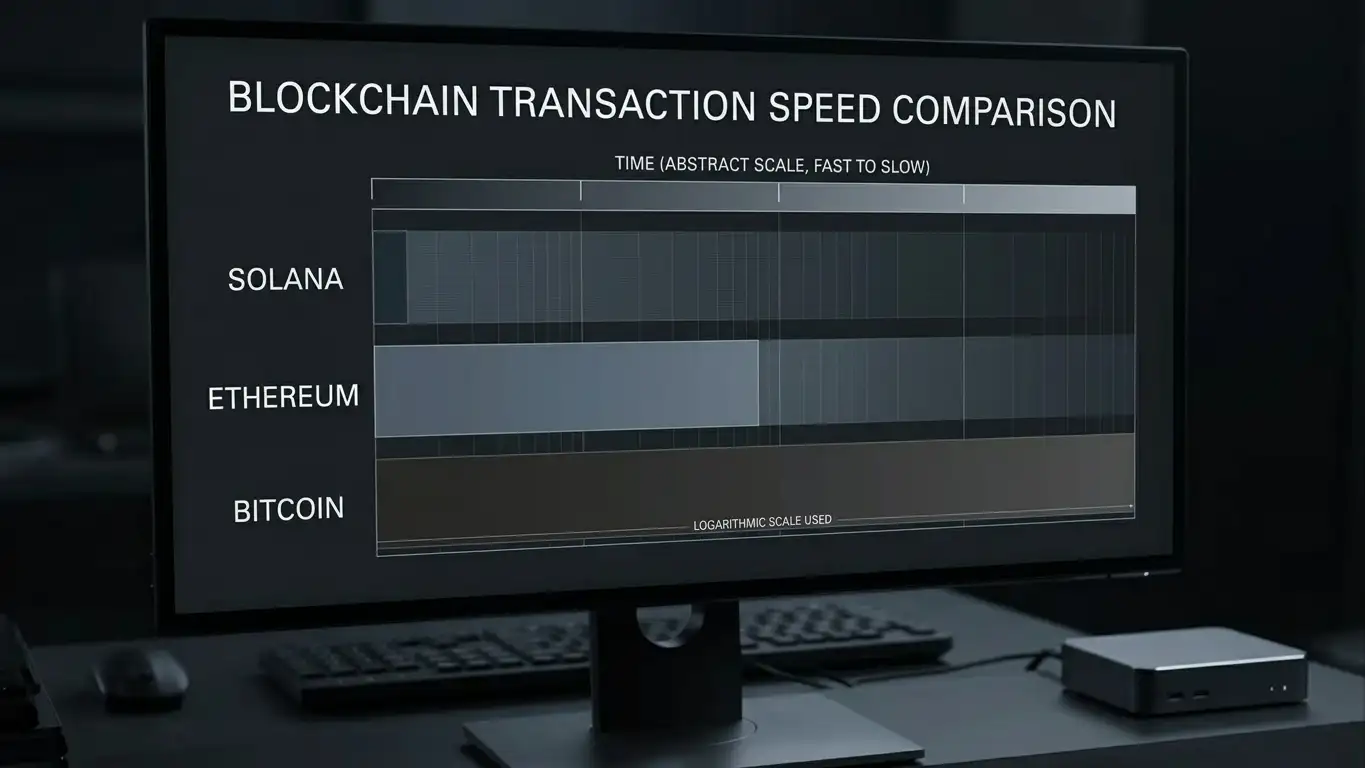
Solana transactions finalize in roughly 400 milliseconds and cost a fraction of a cent — often under $0.0025 even during periods of elevated network activity. That speed and cost structure is why SOL keeps climbing casino cashier menus. Bitcoin transactions can take ten minutes to an hour depending on mempool congestion and how much fee you’re willing to pay, with costs ranging from $1 to $5 or more during peak periods. Ethereum transactions settle faster than Bitcoin (12 to 15 seconds) but gas fees can spike to $5–$50 when the network is busy, making small deposits and frequent withdrawals economically irrational.
Solana’s technical architecture — a proof-of-history consensus mechanism combined with proof-of-stake validation — enables the network to process roughly 65,000 transactions per second at theoretical capacity. Real-world throughput sits lower, but the point is headroom: Solana doesn’t bottleneck under the transaction load that would choke Ethereum or Bitcoin. For a gambling session, that translates to deposits that confirm before you’ve finished setting up your first bet and withdrawals that land in your wallet while you’re still deciding whether to cash out or run another session.
How fast are Solana casino withdrawals compared to Bitcoin or Ethereum?
On the blockchain itself, Solana finalizes in under half a second, Bitcoin takes ten minutes to an hour, and Ethereum settles in 12 to 15 seconds. But casino withdrawal speed is a two-part equation: blockchain speed plus operator processing time. A casino that batches withdrawals once every six hours will take six hours whether you’re using Solana, Bitcoin, or Ethereum — the blockchain advantage evaporates if the operator sits on the transaction. The platforms in this ranking that actually leverage Solana’s speed (Stake, Wild.io, Thrill) process crypto payouts within minutes to an hour. The ones that treat SOL as just another deposit rail without optimizing internal processes (Super Slots, FortuneJack) take hours to a day regardless of what the Solana network itself can do. When comparing withdrawal times, check the operator’s processing window, not just the blockchain spec sheet.
The catch is reliability. Solana’s network suffered multiple outages between 2021 and 2023, including an 18-hour halt in September 2021 and several shorter downtime periods in 2022. Validator upgrades and protocol improvements in 2024–2026 have significantly increased network stability, and major outages have been absent from the 2026 operational record, but the history matters. A network outage during a live gambling session means deposits hang in limbo, withdrawals don’t process, and balances freeze until validators bring the chain back online. Bitcoin and Ethereum have longer finality windows but decades of uptime — their reliability floor is higher even if their performance ceiling is lower. Solana’s speed advantage is real, but it comes with a stability trade-off that seasoned crypto users factor into their platform choice.
Games, Bonuses and What to Watch For
Every casino in this ranking offers slots, live dealer tables, and table games in some combination, with game counts ranging from 3,000+ titles (Thrill) to 8,500+ (BC.Game). Provider lineups skew toward established studios — Pragmatic Play, Evolution, NetEnt, Red Tiger — with crypto-native platforms adding provably fair originals (Crash, Plinko, Dice) that traditional fiat casinos don’t carry. The provably fair mechanic lets you verify each game round’s randomness by checking the server seed, client seed, and nonce against a cryptographic hash. It’s transparency theatre for most players, but for the subset who actually run the verification, it’s a real differentiator.
Bonus structures fall into two camps. Traditional match bonuses (Stake’s 200%, Wild.io’s 350%) come with wagering requirements — typically 40x the combined deposit and bonus amount — and contribution rates that vary by game type. Slots usually contribute 100%, meaning every dollar wagered counts toward clearing the requirement. Live dealer games contribute 10% to 20%, table games often contribute 10% or less, and provably fair originals can contribute as little as 5% (BC.Game’s Crash and Plinko trap). That structure incentivizes slot play and punishes players who prefer live blackjack or Plinko by making the bonus nearly impossible to clear through those games.
Rakeback models (Thrill’s 70%, Jack.com’s 30%) return a percentage of the house edge on every wager, regardless of whether you win or lose, with no wagering requirement attached. The returned value is immediately withdrawable or replayable. For a player wagering $10,000 over a month, 70% rakeback returns $700 (assuming a 1% house edge as baseline) with no strings attached. A 200% match bonus on a $1,000 deposit creates a $3,000 balance but requires $120,000 in turnover (40x wagering on $3,000) to unlock withdrawals of bonus-funded winnings. Most players never clear that turnover threshold, which is the point — casinos offer large match bonuses because the math ensures most of that “free” money stays in-house.
Are Solana casino bonuses worth the wagering requirements?
Rarely, unless you were planning to wager the required turnover anyway and the bonus acts as a rebate on expected losses rather than a path to profit. A $1,000 deposit with a 200% match creates a $3,000 balance subject to 40x wagering ($120,000 turnover). Assuming a 2% house edge across your game selection, you’ll lose roughly $2,400 to variance and house edge over that turnover volume, leaving you with $600 from your original $1,000 deposit — a 40% loss. Without the bonus, that same $120,000 turnover on a $1,000 starting bankroll would have busted you long before you reached the requirement. The bonus extends your play time and gives you more shots at a lucky streak, but it’s not “free money” the way the marketing implies. Rakeback is the better deal for anyone disciplining their play around expected value rather than chasing bonus clears.
Do Solana casinos require KYC verification for Australian players?
It varies. Wild.io and Thrill market no-KYC experiences but reserve the right to require verification in their terms. Jack.com advertises “no-KYC” while enforcing it on large withdrawals. Cloudbet and Stake require KYC for withdrawals above internal thresholds, explicitly stated in their policies. BetOnline and Super Slots enforce verification on first payout or at random depending on transaction patterns. BC.Game’s KYC requirements shifted post-bankruptcy and license migration, with current enforcement sitting somewhere between “optional until it’s not” and “mandatory for anything above small recreational withdrawals.”
The pattern: crypto casinos rarely refuse to take your deposit without identity verification, but many will hold your withdrawal until you submit a passport scan, proof of address, and occasionally a selfie video. For Australian players, that creates a practical risk — the platform you deposited $5,000 into without a single verification question might demand a full document upload two days later when you try to cash out $12,000 in winnings, and refusing to comply means forfeiting the balance. If KYC is a dealbreaker, your options narrow to platforms with demonstrated histories of processing large no-KYC withdrawals (Wild.io has the strongest record in this ranking) or accepting that “no-KYC” is marketing, not policy, and preparing documents in advance.
Can I use a hardware wallet like Ledger for Solana casino deposits?
Technically yes, practically no. A hardware wallet (Ledger, Trezor) stores your private keys offline and requires physical confirmation for every transaction, which is ideal security for long-term holdings but impractical for active gambling. Depositing from a hardware wallet to a casino works fine — you approve the outbound transaction, the casino receives the SOL, your balance updates. Withdrawing from the casino back to a hardware wallet also works. The friction comes during gameplay: you can’t sign every bet from a hardware wallet, so the casino holds your bankroll in their custodial system while you play, which defeats the hardware wallet’s security advantage.
The safer workflow is a hot wallet for active play (Phantom, Solflare) funded from a hardware wallet with only the session bankroll you’re willing to risk. Deposit from the hot wallet to the casino, play, withdraw winnings back to the hot wallet, then sweep winnings from the hot wallet back to the hardware wallet for cold storage. That structure limits your exposure to two attack surfaces — the hot wallet’s software security and the casino’s custodial risk — while keeping the bulk of your holdings offline. Hardware wallets work for casino transactions but not for casino play, and confusing the two is how players lose funds to clipboard malware or phishing sites that mimic legitimate casino domains.

What If Something Goes Wrong
Offshore Curaçao and Anjouan licenses don’t give Australian players recourse through Australian courts or regulatory bodies. If Cloudbet, Stake, or any platform in this ranking refuses a payout, your options are limited: escalate through the operator’s internal dispute process, invoke any third-party arbitration clause in the terms (Cloudbet is the only one offering this), post the dispute in public forums to apply reputational pressure, and potentially pursue civil action in the casino’s home jurisdiction — which for a Curaçao entity means filing in Curaçao courts, an economically irrational choice for disputes under five figures.
What happens if a Solana casino refuses to pay out my winnings?
You argue your case through the operator’s support system, provide whatever documentation they request, and hope the internal escalation resolves it. If it doesn’t, you have no regulatory body to appeal to — ACMA doesn’t adjudicate disputes for offshore casinos it explicitly prohibits, and offshore regulators in Curaçao or Anjouan rarely respond to individual player complaints with enforceable rulings. Reputational pressure in forums like AskGamblers, Trustpilot, or Reddit’s gambling communities can sometimes move the needle if the dispute is documented and the platform cares about its public image, but that’s leverage, not recourse. The practical takeaway: choose platforms with long operating histories (BetOnline’s 20+ years, FortuneJack’s ten years, Cloudbet’s decade-plus since 2013) over new entrants with six-month track records, read the terms before depositing, and keep transaction records — blockchain confirmation hashes, deposit screenshots, email correspondence — in case you need to build a paper trail.
Withdrawal failures fall into categories. Technical failures (wrong wallet address, wrong network, blockchain congestion) usually resolve themselves once the error is identified — support refunds the balance or reprocesses the transaction. Policy failures (you triggered a KYC requirement mid-withdrawal, your jurisdiction was geo-blocked post-deposit, your gameplay triggered an anti-fraud flag) require negotiation with support and compliance with whatever verification they demand. The worst-case scenario is an outright refusal with a vague terms-of-service citation and no path to escalation, which is why operator reputation matters more in this space than in regulated markets where a licensing authority can force a payout.

How to Choose the Right Solana Casino
Start with native SOL vs converted balance. If the casino doesn’t maintain SOL wallets and instead converts your deposit to USD or USDT the moment it lands, you’re using Solana as a deposit rail but playing on a fiat-casino backend. That’s fine if your priority is game selection or a specific bonus structure, but it removes the coin-specific advantages you came for. Cloudbet, Stake, Wild.io, and Thrill handle native SOL. BC.Game’s multi-chain infrastructure supports native balances across its 165 coins. BetOnline and Super Slots treat SOL as a payment method, not a native balance currency.
Withdrawal speed depends on operator processing time more than blockchain speed. Stake, Wild.io, and Thrill process payouts in minutes to an hour. Cloudbet, BetOnline, FortuneJack, and Super Slots take hours to a day. BC.Game and Jack.com sit somewhere in between depending on account status and withdrawal size. If fast cashouts matter, test the platform with a small deposit and withdrawal before committing a larger bankroll.
License transparency varies. Cloudbet and Stake publish their Curaçao license numbers on dedicated pages. FortuneJack’s Anjouan license is verifiable on the regulator’s public register. BC.Game migrated licenses post-bankruptcy, which complicates verification. Wild.io migrated from Curaçao to Anjouan in 2026. BetOnline and Super Slots operate under a Panama/Antigua framework that predates modern licensing disclosure norms. The license itself doesn’t guarantee ethical operation — Curaçao’s “light touch” regulation is notorious for approving operators with opaque ownership structures — but the absence of a verifiable license or a recent entity restructure (Jack.com’s April 2026 rebrand, BC.Game’s 2024 bankruptcy and migration) adds uncertainty.
Operating history is the strongest proxy for reliability in an offshore market with minimal regulatory oversight. BetOnline and Super Slots have processed payouts for over 20 years. Cloudbet has operated since 2013. FortuneJack launched in 2014. Stake, BC.Game, Wild.io, and Bets.io have multi-year track records in the 2021–2022 cohort. Thrill (2025) and Jack.com (2022, rebranded 2026) are newer, which doesn’t make them scams but does mean you’re betting on a shorter operational history and less public feedback. For large bankrolls or sustained play, tilt toward platforms that have survived multiple industry cycles over new entrants with aggressive marketing and slim track records.
Bonus math separates the traps from the value. A 200% match with 40x wagering and 5% contribution from your preferred game type is a trap — you’ll never clear the requirement playing Crash or live blackjack at that rate. A 70% rakeback with no wagering requirements (Thrill) or a 30% wager-free rakeback (Jack.com) returns value on every session regardless of win/loss outcome. If you’re planning to claim a bonus, calculate the expected turnover, contribution rate, and house edge over that volume before you deposit. If the math doesn’t work in your favor, skip the bonus and play with your raw deposit — many platforms let you opt out at the cashier, and some (Cloudbet) don’t offer match bonuses at all, replacing them with rakeback or comp-point structures that deliver value without the wagering trap.
The Australian legal context doesn’t change between platforms — every casino in this ranking operates under the same offshore reality where you’re legally permitted to play but the operator is prohibited from serving you. The difference is consumer protection. Cloudbet’s third-party arbitration clause is the only contractual recourse mechanism in this ranking. The rest rely on reputational pressure and internal escalation. That makes operating history, third-party reviews, and community feedback your primary trust signals. A ten-year payout track record (FortuneJack, Cloudbet) carries more weight than a slick landing page and a Trustpilot score that launched six months ago.
Crypto Casino Australia 2026 — Bitcoin, Ethereum & Stablecoins Guide
Content created by the «Payment Methods» team