
Bitcoin Cash Casinos in Australia: the honest map of where BCH actually works in 2026
 Available in AU
Bitcoin Cash sits in an odd spot. It carries the Bitcoin name, moves money for a fraction of a cent, and settles fast enough that a casino cashier barely notices it arrived. Yet most “best crypto casino” lists shove it into a footnote — one coin among twenty, mentioned once, never explained. For an Australian player deciding how to fund an offshore account, that footnote hides the practical answer: nearly every crypto casino that takes Bitcoin also takes BCH, so the real question is not whether a site accepts it, but which site is worth your coins in the first place.
This guide fixes that. Below you’ll find the operators that genuinely accept BCH from Australia, ranked by what matters — how fast they pay, what their licence is actually worth, and where the fine print bites. You’ll also get the parts the listicles skip: how to move BCH without torching your coins on a wrong-network send, what the tax office thinks of your winnings, and why Bitcoin Cash beats its bigger cousin at the one job casinos need it to do.
Best Bitcoin Cash Casinos for Australian Players in 2026
Start with the shortlist. The table below ranks seven operators that accept BCH and take Australian sign-ups, ordered by how well they serve a BCH player specifically — payout speed, licence quality, and how much the platform trusts you with your own money before it starts asking questions. Full breakdowns follow underneath, because a table row tells you a withdrawal is “fast” but not what happens when you try to cash out a five-figure win.
| Operator | Licence | BCH Withdrawal Speed | Min Deposit | Game Library | Distinguishing Feature |
|---|---|---|---|---|---|
| BC.Game | Anjouan (ALSI-202410011-FI1) | ~4 min processing | No minimum | 10,000+ | Widest coin support; token rewards economy |
| mBit Casino | Curaçao (OGL/2024/1307/0748) | ~10 min routine | ~AU$30 (US$20) | 8,000+ | Operating since 2014; RTP shown per game |
| Wild.io | Curaçao + Anjouan (dual) | Minutes once approved | ~AU$30 (US$20) | 5,000+ | No-KYC stance; dual licensing |
| MyStake | Curaçao | Under 30 min | ~AU$15 (€10 via Binance Pay) | 7,000+ | Crypto and card options side by side |
| Lucky Block | Offshore (Curaçao/Anjouan) | 10–30 min | ~AU$20 | 4,000+ | AU$26,000 welcome package, AUD-denominated |
| Betpanda | None (Costa Rica registration) | Minutes to hours | Not published | 6,000+ | 10% weekly cashback, zero wagering |
| Cryptorino | None (Costa Rica registration) | ~5 min claimed | Not published | 6,300+ | Newest launch; meme-coin support |
A note before the reviews. Two of these — Betpanda and Cryptorino — run on a Costa Rican company registration, which is not a gambling licence at all. They’re on the list because they genuinely take BCH from Australians and some players rate them for speed, but that regulatory gap is a real difference, not a technicality. It sits in the “distinguishing feature” column for a reason.
BC.Game
Live since 2017, BC.Game is the closest thing crypto gambling has to a household name, and it runs today under an Anjouan licence (ALSI-202410011-FI1) after its earlier Curaçao permit lapsed amid a payment dispute that ended up in court. The catalogue runs past 10,000 titles — slots, live dealer tables, its own provably fair Originals — and coin support is the broadest anywhere, north of a hundred cryptocurrencies with Bitcoin Cash sitting comfortably among the headline options. BCH deposits clear after a single confirmation, roughly ten minutes, and standard withdrawals are quoted at about four minutes once they leave the operator’s queue.
So far, so glossy. The catch is trust. Independent reviewers have documented court-confirmed non-payment and more than US$2.1 million in unpaid player claims tied to the platform’s history — the kind of detail the 300% welcome bonus up to AU$20,000 is designed to keep you from googling. BC.Game suits a player who values selection and speed above all and keeps balances modest enough that a payout never gets “reviewed.” Treat it as the biggest venue in town with a bouncer who occasionally forgets who you are.
mBit Casino
The veteran. mBit opened in 2014, which in crypto-casino years is roughly geological, and it holds a Curaçao eGaming licence (OGL/2024/1307/0748). Its 8,000-plus games come from more than fifty studios, and it does one genuinely useful thing almost nobody else bothers with: it prints each game’s RTP right on the thumbnail, so you can sort the whole library by return-to-player instead of guessing. Bitcoin Cash is supported alongside the other majors, deposits and withdrawals carry no operator fee, and routine cashouts land in about ten minutes.
Read the bonus terms with your glasses on, though. The 325% welcome package spread across your first three deposits — up to four Bitcoin — is slots-only and comes with tight win caps, and mBit triggers enhanced identity checks once a withdrawal crosses one BTC. Big winners have reported being throttled into instalments. Its Trustpilot sits around 4.3 out of 5 across several hundred reviews, and the split is predictable: praise for payout speed, grumbling about verification and bonus rules. For a player who wants a long track record and transparent odds, it’s the sensible pick.
Wild.io
Wild.io launched in 2022 and carries an unusually thick paper trail — a Curaçao licence (OGL/2024/210/0198) through Nonce Gaming B.V. and an Anjouan licence (ALSI-202504044-FI2) through Stack Gaming Ltd. The dual arrangement points to some corporate reshuffling behind the brand, but the practical upshot is a platform that leans hard into a no-KYC stance: you can play and withdraw without handing over documents until a large cashout forces the issue. The library runs to around 5,000 games with the usual crypto spread, BCH included, and withdrawals are processed within minutes of approval.
The 350% welcome match plus 20 no-deposit free spins is aggressive even by the standards of a category that treats “generous” as a synonym for “come inside.” What Wild.io lacks is history — three-odd years of operation means a thinner reputation record than mBit, and the “no-KYC” freedom evaporates the moment you win big enough to matter. It’s a strong fit for privacy-minded players making mid-sized deposits who’d rather not photograph their driver’s licence to place a bet. Just don’t mistake a short complaint list for a spotless one.
MyStake
MyStake breaks the crypto-only mould. It’s a Curaçao-licensed casino and sportsbook that takes both cryptocurrency — Bitcoin Cash among BTC, ETH, LTC and XRP — and old-fashioned fiat through Visa, Skrill, Neteller and Paysafecard. That hybrid setup is the whole point for an Australian who wants the option of topping up with a card one week and a BCH transfer the next. The game count sits above 7,000, and the platform bolts on eSports, virtual sports and a full live casino.
Crypto withdrawals clear in under thirty minutes, the monthly ceiling runs past AU$100,000-equivalent, and the welcome offer is a 170% crypto bonus, with the standard three-deposit structure stacking to 300%. The trade-off with a jack-of-all-trades venue is that nothing about it is best-in-class — the BCH experience is competent rather than specialised, and the minimum deposit logic shifts depending on the rail you use (as low as around AU$15 via Binance Pay, higher otherwise). For players who value flexibility over a pure crypto purist’s setup, it earns its spot.
Lucky Block
Lucky Block, also a 2022 arrival, has spent real money courting the Australian market — its bonuses are quoted directly in Australian dollars, a small tell that the marketing team knows exactly who it’s chasing. The headline is a 200% matched deposit up to AU$26,000 plus 50 free spins on Hacksaw Gaming’s Wanted Dead or a Wild, unlocked from a first deposit as low as AU$20. The library covers 4,000-plus games including pokies, live dealer, and crash titles, with a sportsbook attached and better than twenty cryptocurrencies accepted, Bitcoin Cash included.
Licensing is the murky part — public sources point to an offshore permit (Curaçao or Anjouan, depending on who you read), which is worth confirming on the site before you deposit rather than taking on faith. Withdrawals are advertised as “instant,” which in practice means the ten-to-thirty-minute window every crypto casino calls instant. What Lucky Block has going for it is a clean complaint record and an interface that doesn’t assume you speak fluent blockchain. For a newcomer to BCH gambling who wants a big matched bonus and hand-holding, it’s an easy on-ramp.
Betpanda
Here’s where the licence column stops being decorative. Betpanda, launched in 2023, is run by Star Bright Media S.R.L. out of Costa Rica — and a Costa Rican business registration (company ID 3-102-880000) is exactly that: a company registration, not a gambling licence. The operator says as much itself. What you’re trusting when you deposit is the brand’s reputation and cashflow, not a regulator standing behind it. Worth knowing before, not after.
That caveat aside, the product is genuinely good. Around 6,000 games, a full sportsbook, in-house Originals like Betpanda Mines and Plinko, and the best loyalty mechanic in this group: a 10% weekly cashback with zero wagering attached, extending — unusually — to live casino losses. The welcome bonus is a straightforward 100% up to one Bitcoin, and payouts land in minutes to hours depending on the queue. Betpanda suits a player who reads the fine print, accepts the unlicensed risk with open eyes, and wants cashback that actually behaves like cashback rather than a “gift” with strings knotted around it.
Cryptorino
The new kid. Cryptorino opened in 2024, also on a Costa Rican registration rather than a gaming licence, and it competes on speed and anonymity. Some review sites call it “licensed in Costa Rica,” which is generous — Costa Rica doesn’t issue online gambling licences, only company registrations, so treat that claim with the scepticism it deserves. The platform lists 6,300-plus games, supports eleven to thirteen cryptocurrencies including BCH and a garnish of meme coins like Shiba Inu, and runs zero KYC by default.
Its calling card is withdrawal speed — Bitcoin cashouts quoted at up to five minutes, with BCH likely tracking similarly — paired with a 100% welcome bonus up to one Bitcoin plus 50 free spins and the same 10% zero-wagering weekly cashback Betpanda offers. Being this young cuts both ways: there’s little payout history to lean on, and at least one reviewer has flagged the bonus terms as sharper than they first appear. Cryptorino is for the speed-and-privacy crowd willing to bet on a fresh operator. Everyone else should let it build a track record first.
A word on Metawin, which turns up on plenty of Australian crypto lists. It’s a slick Web3 casino — connect a wallet instead of registering, smart-contract prize draws, instant withdrawals up to 30 ETH — but it lists Australia as a restricted territory in its own terms. Players reportedly reach it via VPN, and that’s their call to make, but a site that formally shuts the door on Australians doesn’t belong in a straight recommendation. Noted, and set aside.
Which casinos process Bitcoin Cash withdrawals fastest for Australian players?
On current data, BC.Game (around four minutes) and Cryptorino (about five minutes for Bitcoin, with BCH comparable) advertise the quickest processing, with Wild.io and mBit close behind at roughly ten minutes for routine cashouts. Remember these are operator queue times — the BCH blockchain then settles separately, usually within another ten minutes.
How to Deposit and Withdraw Bitcoin Cash at Online Casinos
Moving BCH into a casino is not a card payment with a crypto sticker on it. There’s no bank in the middle, no chargeback if you fumble, and no support line that can reverse a transfer once it’s confirmed on the chain. You send coins from a wallet you control to an address the casino generates, the network confirms it, and the balance appears. Get the mechanics right once and it becomes routine. Get the network wrong and the coins are gone — which is why the setup matters more than the deposit button.
Setting Up a BCH Wallet for Casino Use
You need somewhere to hold Bitcoin Cash before a casino will take it. Australians generally acquire BCH through a local exchange — the domestic platforms that now sit under the tightening crypto rules — then move it to a personal wallet. A non-custodial wallet (one where you hold the keys) gives you full control; a custodial exchange wallet is simpler but leaves your coins on the exchange’s books. For gambling, a lightweight dedicated wallet you top up as needed keeps your main holdings at arm’s length from the casino.
The acquisition step is where Australia’s regulatory shift actually touches you. The Corporations Amendment (Digital Assets Framework) Act 2026 — passed in April 2026, commencing April 2027 — pulls crypto exchanges and custody providers under the Australian Financial Services Licence regime. In plain terms, the exchange where you buy BCH is becoming a more heavily supervised business, with tighter identity checks and transaction monitoring. That doesn’t touch the casino, which sits offshore and outside all of it. But it does mean the on-ramp — turning Australian dollars into Bitcoin Cash — is getting more paperwork, not less.
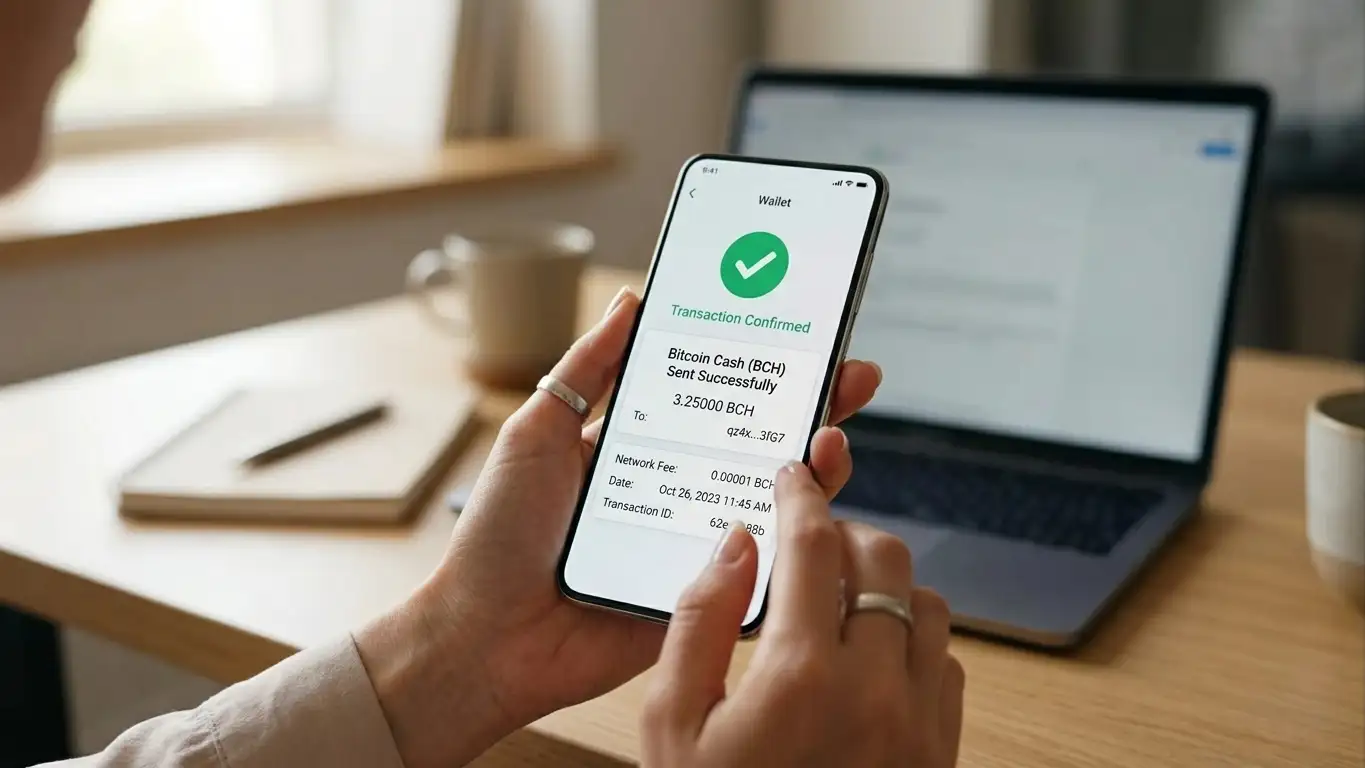
Once you hold BCH, funding a casino is a three-step affair: open the cashier, pick Bitcoin Cash, and the site shows you a deposit address plus, usually, a QR code. Copy that address exactly or scan the code, paste it into your wallet’s send field, enter the amount, and confirm. No account numbers, no BSB, no waiting for a bank’s business hours.
Making Your First BCH Deposit
The single rule that saves you from disaster: match the network. Bitcoin Cash uses its own address format — modern wallets show a CashAddr string that begins with “bitcoincash:”, though legacy addresses that look like Bitcoin’s are still floating around. If a casino gives you a BCH deposit address, only Bitcoin Cash goes to it. Send actual Bitcoin to a BCH address, or the reverse, and the coins vanish into a mismatch no one can undo. The support ticket you’ll want to file has no happy ending.
Minimums vary by operator. BC.Game asks for no minimum at all, mBit and Wild.io want roughly AU$30 worth, Lucky Block starts around AU$20, and MyStake can go as low as AU$15-equivalent through Binance Pay. Because BCH network fees are effectively pocket lint — fractions of a cent — the deposit cost is whatever the casino sets, not what the blockchain charges. That’s a genuine edge over funding methods where the transfer itself eats into your stake.
After you hit send, the casino waits for confirmations. Most credit a BCH deposit after one to three network confirmations, which lands your money in roughly ten to thirty minutes. Some show the balance as “pending” until the threshold is met. If it hasn’t appeared after an hour, the culprit is almost always the address or the network, not the casino — which is the whole reason the matching rule earns its capital letters.
Withdrawing BCH Winnings to Your Wallet
Cashing out reverses the flow, with one extra gatekeeper: the operator’s approval queue. You request a withdrawal, enter your own BCH wallet address, and the casino reviews it before releasing the coins. This review is the part every “instant withdrawal” banner quietly omits. The blockchain itself settles a BCH transfer in minutes; whether you wait four minutes or four hours depends on how long the operator sits on the request.
That queue is where the operators genuinely separate. BC.Game and Cryptorino advertise processing in under five minutes. Wild.io and mBit clear routine cashouts in about ten. The catch surfaces at scale — mBit throttles larger wins into instalments and triggers identity verification past one Bitcoin, while BC.Game’s history of disputed payouts is a reminder that “approved” is a decision, not a formality. For anything above a modest sum, the platform’s payout reputation matters more than the number on its withdrawal-speed graphic.
Limits deserve a glance too. BC.Game handles up to around 30 ETH-equivalent instantly for verified accounts, MyStake caps at roughly AU$100,000-equivalent monthly, and Lucky Block tops out near AU$26,000 per transaction. For the recreational player these ceilings are academic. For anyone planning to move serious money, they’re the first thing to check — and the first thing the marketing won’t mention.
Understanding BCH Confirmation Times
Bitcoin Cash was built for exactly this job. It forked from Bitcoin in 2017 with a much larger block size — 32 MB against Bitcoin’s 1 to 4 MB — so its transactions don’t pile up in a congested queue waiting for space. First confirmation arrives in about ten minutes, full six-confirmation finality in roughly an hour, and the speed stays consistent whether the network is quiet or busy. Bitcoin, by contrast, can leave a transaction stuck in the mempool for hours during a rush unless you pay a premium fee.
For a casino cashier moving money in and out, that consistency is the point. You’re not holding BCH as an investment; you’re using it as a rail. The coin’s larger blocks mean the rail rarely jams, and the near-zero fee means the toll barely registers. Keep Bitcoin for the vault if you like — for shuttling funds through a casino, the faster, cheaper fork does the work.
How long do Bitcoin Cash deposits take to credit at online casinos?
Most casinos credit a BCH deposit after one to three blockchain confirmations, which puts the money in your account within roughly ten to thirty minutes. The first confirmation typically arrives in about ten minutes. If a deposit hasn’t landed after an hour, the cause is almost always a wrong address or a network mismatch rather than a slow casino.
What’s the difference between a BCH address and a BTC address, and why does it matter?
Bitcoin Cash uses a CashAddr format starting with “bitcoincash:”, while Bitcoin uses its own address style. They belong to separate networks. Sending BCH to a Bitcoin address, or Bitcoin to a BCH address, results in permanent loss — no operator, exchange, or support team can reverse it. Always confirm you’re sending the right coin to the matching network.
Bitcoin Cash vs. Other Cryptocurrencies for Casino Play
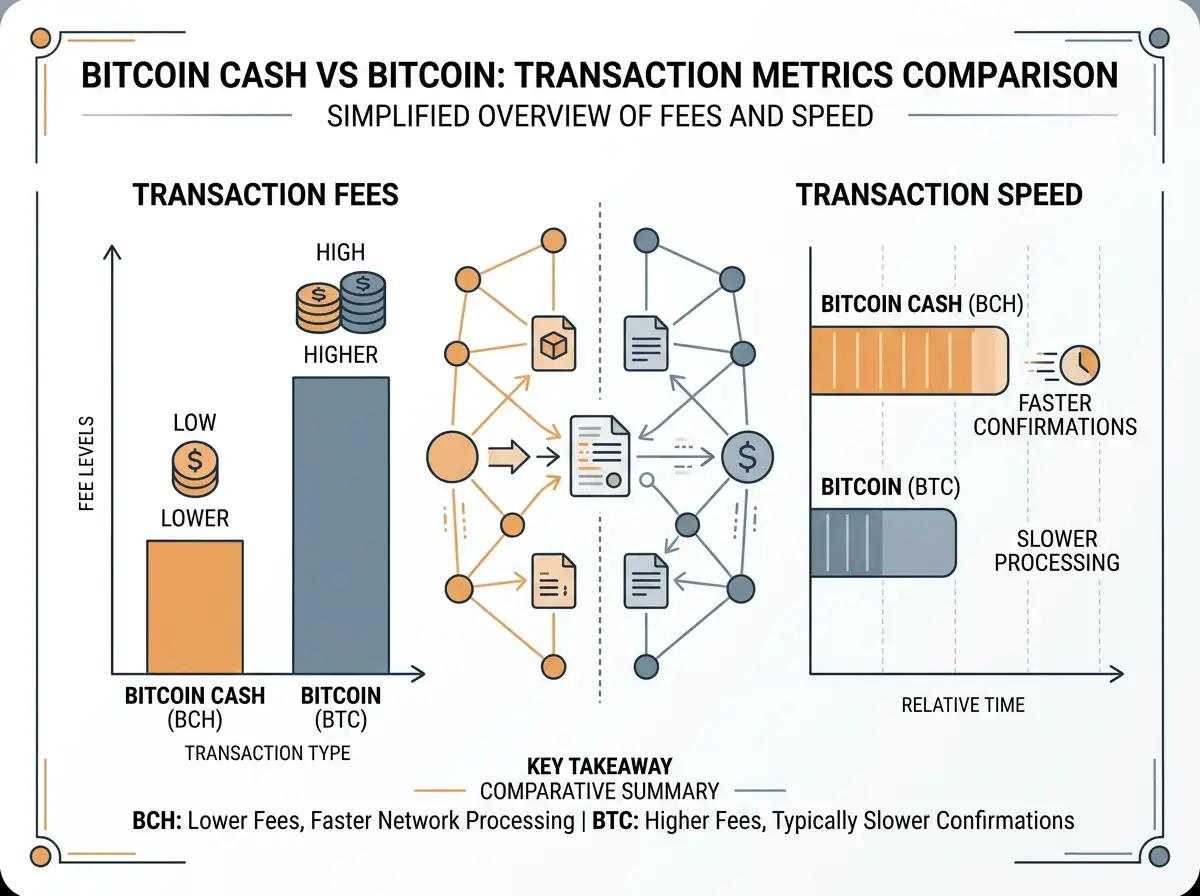
Every crypto casino offers a menu of coins, and the marketing pretends they’re interchangeable. They aren’t — not for the specific task of moving money into a casino and pulling winnings back out. The three numbers that decide it are the transaction fee, the confirmation time, and whether the network jams under load. On all three, Bitcoin Cash is built for exactly this, and Bitcoin is built for something else entirely.
| Cryptocurrency | Avg Fee (2026) | Confirmation Time | Block Size | Best Casino Use Case |
|---|---|---|---|---|
| Bitcoin Cash (BCH) | US$0.001–0.01 | ~10 min first confirmation | 32 MB | Frequent deposits and withdrawals; low-cost movement |
| Bitcoin (BTC) | ~US$0.30 | 10–60+ min under load | 1–4 MB | Large, infrequent transfers; store of value |
| Ethereum (ETH) | ~US$0.10–2 (gas-dependent) | ~12 sec block, minutes to settle | N/A (gas model) | Fast settlement; smart-contract casinos |
| USDT (Tether) | Network-dependent | Minutes (varies by chain) | N/A | Avoiding crypto price swings mid-play |
Transaction Fees: BCH vs. BTC vs. ETH
The fee gap is not subtle. In 2026 a Bitcoin Cash transaction costs somewhere between a tenth of a cent and a full cent — call it free for practical purposes. Bitcoin averages around thirty US cents per transaction, itself a historic low after a steep year-on-year drop, and Ethereum’s gas sits anywhere from ten cents to a couple of dollars depending on how busy the network is and what the transaction does. Move money in and out a dozen times a month and those fees compound into a difference you can actually feel.
For a single large transfer, the fee is noise — thirty cents on a AU$5,000 deposit rounds to nothing. Where BCH pulls ahead is frequency. A player who deposits, withdraws, and re-deposits regularly is running the toll booth over and over, and Bitcoin Cash charges pocket lint each time while Bitcoin charges a coffee’s worth. Over a year of active play, that’s the difference between the coin being a cost and the coin being invisible.
Confirmation Speed Comparison
Speed splits into two questions: how fast is the first confirmation, and does it stay fast when the network is under strain. Ethereum wins the raw race — blocks confirm in about twelve seconds — but settlement for a casino deposit still takes a few minutes and the gas fee is the price of that pace. Bitcoin Cash confirms in roughly ten minutes and holds that speed regardless of congestion, thanks to those oversized blocks. Bitcoin also targets ten minutes but degrades badly under load, leaving transactions stranded in the mempool for hours unless you outbid the queue.
For casino purposes, consistency beats peak speed. You don’t need twelve-second finality to fund a pokies session; you need to know the deposit will land in a predictable window every single time, busy network or not. That’s the case for Bitcoin Cash — not that it’s the fastest coin in existence, but that it’s reliably fast at a cost that rounds to zero.
Which Crypto Wins for Australian Casino Players?
The honest answer depends on what you’re optimising for, and it isn’t the same coin for everyone. If you move money often and want the lowest all-in cost, Bitcoin Cash is hard to beat — cheap, quick, and jam-resistant. If you’re parking a large balance and dislike watching its value swing between deposit and withdrawal, a stablecoin like USDT removes the price risk that BCH, BTC and ETH all carry. And if you specifically want a Web3 or smart-contract casino, Ethereum is the native fit.
Bitcoin’s role here is the narrowest, which surprises people who assume the biggest coin is the best for everything. It’s a superb store of value and a clumsy payment rail — high-ish fees, congestion risk, slower under load. The players who reach for BTC at a casino are usually the ones who already hold it and can’t be bothered converting. Nothing wrong with that. But if you’re choosing a coin for the job rather than spending what you happen to own, Bitcoin Cash answers the brief more directly than its famous cousin does.
How do Bitcoin Cash fees compare to Bitcoin and Ethereum at casinos?
Bitcoin Cash fees run between US$0.001 and US$0.01 per transaction in 2026 — effectively free. Bitcoin averages about US$0.30, and Ethereum’s gas fees range from roughly US$0.10 to US$2 depending on network load. For players who deposit and withdraw frequently, BCH’s near-zero cost is a clear, compounding advantage over both alternatives.
Bitcoin Cash Casino Bonuses for Aussie Players
Crypto bonuses look enormous next to fiat ones, and there’s a reason beyond generosity: a casino that pays in cryptocurrency dodges card fees and chargebacks, so it can afford to dangle a bigger number. Whether that number means anything depends entirely on the terms stapled to it — and this is where the word “bonus” earns its quotation marks. A casino is not a charity handing out free money. It’s a business pricing in exactly how much of that match it expects to claw back through wagering.
Welcome Bonus Structures at BCH Casinos
The offers across the shortlist span a wide range, and the structure matters more than the headline. Lucky Block leads on raw size with 200% up to AU$26,000 plus 50 free spins. mBit spreads 325% across your first three deposits, up to four Bitcoin. Wild.io throws 350% plus 20 no-deposit free spins. BC.Game runs 300% up to AU$20,000. Betpanda and Cryptorino both keep it simple with 100% up to one Bitcoin, Cryptorino adding 50 free spins. MyStake’s 170% crypto offer stacks toward 300% over three deposits.
Notice the shapes. A single large match on the first deposit rewards a big opening move; a three-deposit stagger rewards sticking around. Free spins sweeten the entry but usually lock you to a specific slot with its own win rules. None of these is better in the abstract — the right one depends on whether you’re depositing once and playing through, or settling in for a longer run.
Wagering Requirements Explained
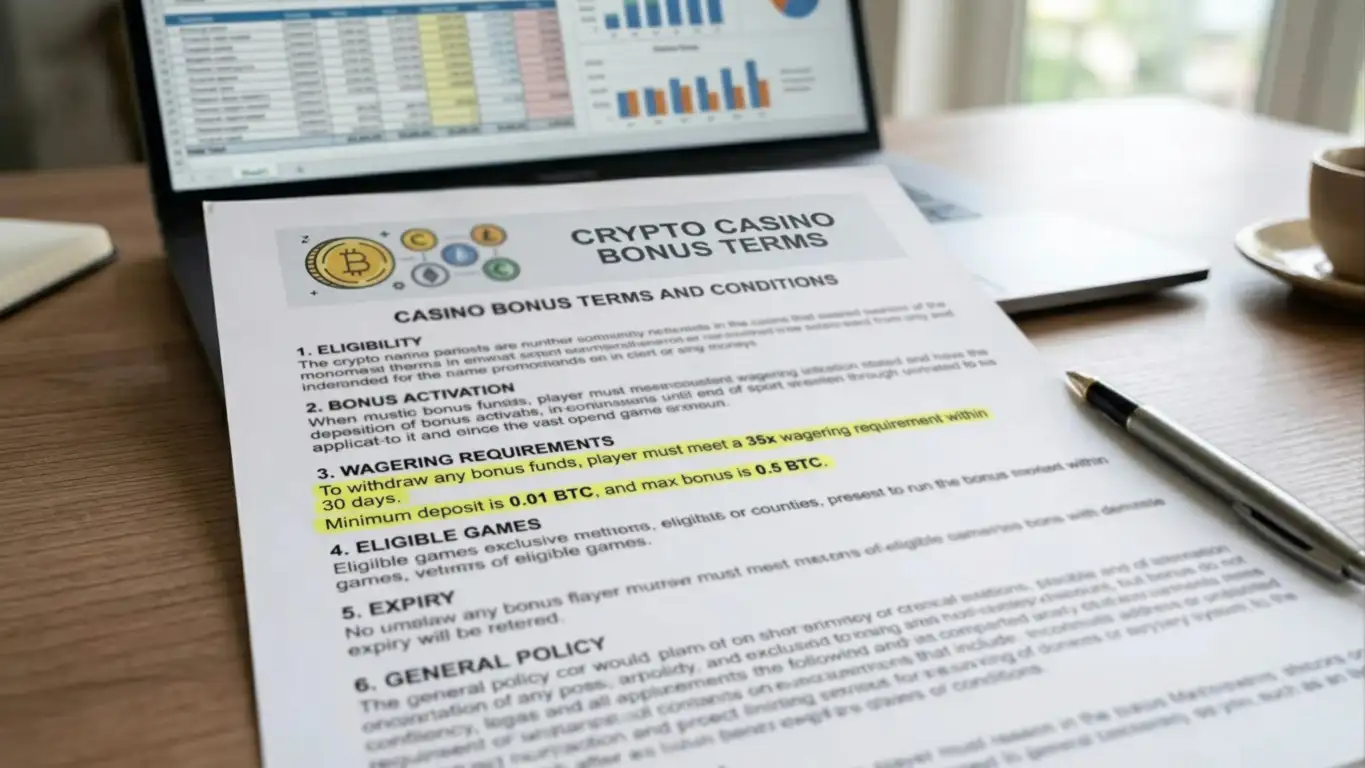
The wagering requirement is the number that turns a “gift” into a task. It tells you how many times you must bet the bonus (sometimes bonus plus deposit) before any winnings become withdrawable. A 40x requirement on a AU$100 bonus means AU$4,000 wagered before you see a cent of it as cash. Most of the shortlist sits in the 35x to 40x band, which is standard rather than kind.
The devil hides in what counts toward that total. Slots — pokies — usually contribute 100%, while blackjack, roulette and live dealer games contribute little or nothing, because the house edge on them is thinner and the casino would rather you didn’t clear the requirement playing them. mBit’s welcome bonus is slots-only with win caps, meaning even a lucky run tops out at a ceiling. Betpanda’s standout is the exception that proves the rule: its 10% weekly cashback carries zero wagering, so it behaves like actual returned money rather than a chore with a payout attached.
BCH-Specific Bonus Advantages
Funding a bonus with Bitcoin Cash carries a couple of quiet perks over fiat. Crypto deposits clear in minutes, so the bonus credits almost immediately instead of waiting on a three-to-five-day bank hold — you’re playing the matched balance the same session. Several operators also nudge crypto match rates a notch above their card equivalents, since the coin saves them processing costs they’re happy to share a sliver of.
There’s a subtler angle too. A bonus credited and held in BCH keeps its value in BCH — if the coin appreciates while you’re clearing the wagering, the cash value of your eventual withdrawal rises with it. That cuts both ways, of course; a falling market shrinks it just as neatly. It’s not a reason to chase a bonus, but for a player already holding Bitcoin Cash, denominating the whole exercise in the coin they own removes a conversion step and the spread that comes with it.
Do Bitcoin Cash casino bonuses have better terms than fiat bonuses?
Often the match percentage is higher, because crypto saves the casino on processing fees and chargebacks. Wagering requirements, though, are usually the same 35x–40x band as fiat bonuses, and slots-only restrictions still apply. The genuine BCH advantage is speed — the bonus credits in minutes rather than after a multi-day bank hold — plus occasional crypto-only boosts.
The Legal Reality: Playing at BCH Casinos from Australia
Every operator in this guide is offshore, and that is not an accident or an oversight. It’s the only way the market can exist. Australia does not licence online casinos — not federally, not at state level, not anywhere — so the choice isn’t between a legal local site and a dodgy foreign one. There are no local sites. Understanding why reframes the whole question of what “safe” even means here.
What the Interactive Gambling Act 2001 Actually Says
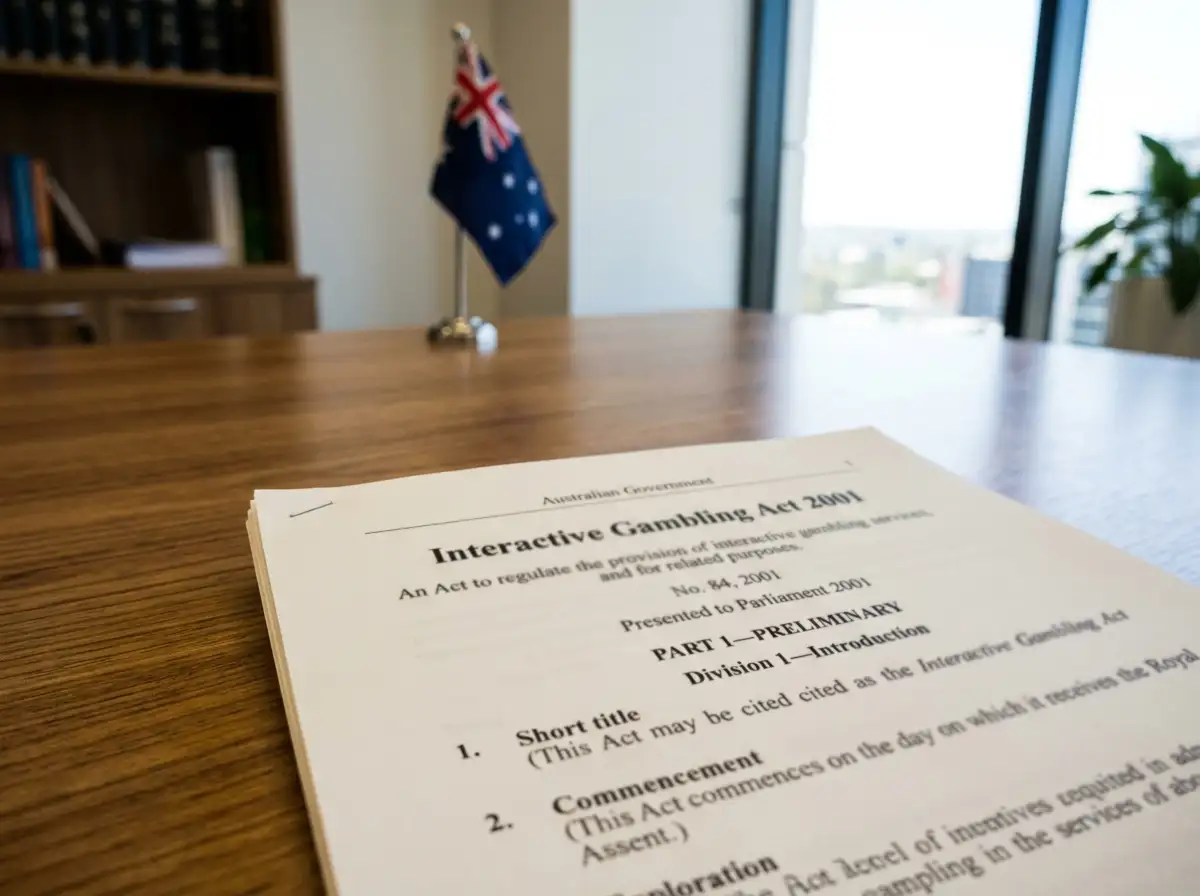
The governing law is the Interactive Gambling Act 2001 (Cth). It prohibits any operator, Australian or foreign, from providing an “interactive gambling service” — online casino games, pokies, in-play sports betting — to a person physically located in Australia. The prohibition targets the provider, not the punter. As one regulatory summary puts it plainly:
> The Interactive Gambling Act 2001 prohibits anyone from providing online casino games, online pokies, or in-play sports betting to a person in Australia. No state or territory issues a licence for it. — bitcoincasinos-australia.com
That’s the crux. The Act makes supplying the service illegal, while saying nothing that criminalises the individual who plays. The enforcement burden sits on operators and the infrastructure around them, which is why offshore casinos carefully avoid formally “targeting” Australia even as they happily accept Australian sign-ups.
Why No Australian Casino Licenses Exist
Because the service itself is prohibited, there is no licence to issue. The Australian Communications and Media Authority (ACMA) enforces the Act, but it doesn’t run a register of approved online casinos the way a gambling commission might in other markets — there’s nothing to approve. State and territory regimes licence some forms of wagering and bookmaking, but real-money online casino play, pokies and table games included, has no legal pathway at all.
This is the detail that trips up players expecting an “Australian-licensed” badge to mean something. It can’t exist. Any site claiming to be licensed for Australian online casino play is either confused or lying. What legitimate operators actually hold is a foreign licence — and those vary enormously in what they’re worth.
Offshore Licenses Explained: Curaçao, Anjouan, Costa Rica
Not all offshore paper is equal, and the differences are practical rather than cosmetic. Curaçao eGaming is the long-standing workhorse of crypto gambling — mBit (OGL/2024/1307/0748), MyStake and Wild.io (via Nonce Gaming, OGL/2024/210/0198) all hold one. It’s a real licensing regime with a complaints process, though a light-touch one by the standards of stricter jurisdictions. Anjouan, in the Union of Comoros, is the newer budget option — BC.Game (ALSI-202410011-FI1), Wild.io’s second licence (ALSI-202504044-FI2) and Metawin all operate under it. It’s cheaper for operators to obtain and correspondingly thinner on oversight.
Then there’s Costa Rica, which is not a gambling licence at all. Betpanda (Star Bright Media S.R.L., ID 3-102-880000) and Cryptorino run on Costa Rican company registrations — the country lets gambling businesses incorporate without regulating the gambling itself. A player at these sites has no licensing authority to appeal to, full stop. That doesn’t make them scams; both have working products and paying customers. It means the only thing standing between you and a frozen balance is the operator’s own goodwill and cashflow. Know which tier you’re dealing with before you deposit, not after.
Are You Breaking the Law? Player vs. Operator Risk
The short version: no, playing is not a criminal offence for you. There are no recorded prosecutions of Australian individuals for using offshore casinos, and the Act’s machinery points at operators, not players. ACMA’s tools are domain-blocking — it has blocked more than 800 offshore gambling sites across the 2025–2026 period — and financial pressure, with new enforcement measures scheduled to commence in January 2027 that lean harder on transaction monitoring.
What you don’t get, in exchange for that freedom, is recourse. Playing offshore means no Australian regulator will take your complaint if a site refuses to pay. The blocked-domain game continues its cat-and-mouse — operators spin up mirror sites, players reach them by VPN — but the underlying trade-off never changes: you’re operating in a grey zone where the upside is access and the downside is that you’re entirely on your own if it goes wrong. That’s the real meaning of “no Australian licence.” Not that the door is locked, but that there’s no one behind it if you knock.
Is Bitcoin Cash legal for online gambling in Australia?
Holding and using Bitcoin Cash is legal in Australia. Playing at an offshore casino with it isn’t a criminal offence for you as an individual — the Interactive Gambling Act 2001 targets operators, not players, and no Australians have been prosecuted for offshore play. The catch: these casinos aren’t Australian-licensed, so you have no local regulator to turn to in a dispute.
Are Bitcoin Cash casinos safe for Australian players with no local license?
Safety varies by operator, not by the coin. A Curaçao-licensed site like mBit offers a complaints process; a Costa Rica-registered site like Betpanda or Cryptorino offers none, since that’s a company registration, not a gambling licence. No offshore casino gives you Australian regulatory protection, so vet the licence, payout history and reputation before depositing.
Tax Treatment for BCH Casino Winnings in Australia
Tax is the part players wave away until it’s a problem. The good news is that recreational gambling winnings themselves are generally tax-free in Australia. The complication is that you didn’t gamble in Australian dollars — you gambled in Bitcoin Cash, and the Australian Taxation Office has firm views about crypto that don’t switch off just because a casino was involved. The winnings and the coin are two separate tax questions, and only one of them is simple.
Are Casino Winnings Tax-Free?
For a recreational gambler, yes. The ATO’s long-standing position treats gambling winnings as the product of luck rather than assessable income, so a hobby punter doesn’t declare a pokies win as earnings. The exception is the professional — someone whose gambling is systematic and business-like enough to constitute a genuine trade — who may have to treat winnings as income. For the overwhelming majority of players, that threshold is nowhere close, and the winnings side stays clean.
But “the winnings are tax-free” is only half the transaction, and it’s the half that lulls people into ignoring the other half. The money didn’t stay as winnings. It became Bitcoin Cash, sitting in your wallet as a capital asset — and that’s where the ATO’s crypto rules take over.
The CGT Trap: Crypto Conversions
Here’s the chain that actually happens: you convert Australian dollars to BCH to fund the casino, play, withdraw BCH, and eventually convert it back to dollars. Each time you dispose of cryptocurrency — including selling it back to fiat — you trigger a capital gains tax event on any change in the coin’s value between acquisition and disposal. The gambling is tax-free; the crypto movement around it may not be.
Say you buy BCH at one price, it rises while it sits in your wallet, and you cash out at a higher price. That gain is a CGT event regardless of whether the coins ever touched a casino. The ATO’s updated guidance treats crypto conversions as taxable disposals, and it doesn’t carve out an exception for funds that happened to pass through a gambling site. This is the trap: players hear “winnings are tax-free,” pocket a BCH withdrawal, sell it months later for more than they paid, and don’t realise the appreciation is reportable. The casino was never the taxable part. The coin was.
When the Personal Use Asset Exemption Applies
There’s a narrow relief worth knowing. Cryptocurrency acquired and used to buy items for personal consumption — rather than held as an investment — can qualify as a personal use asset, and capital gains on a personal use asset are disregarded where the asset cost AU$10,000 or less. If you genuinely buy BCH to gamble with more or less immediately and the amounts are modest, you may fall inside this exemption.
The line is fuzzy and the ATO reads it narrowly. The longer you hold the coin, the larger the sum, and the more it looks like you’re holding for gain rather than spending, the less likely the exemption applies. None of this is tax advice — thresholds and interpretations shift, and a registered tax agent is the right call for anything sizeable. The practical takeaway is simpler: keep records of what you bought BCH for and what you sold it for, because the tax-free winnings you were counting on don’t cover the coin’s price movement, and pretending otherwise is how a good night turns into a bad letter.
Do I need to pay tax on Bitcoin Cash casino winnings in Australia?
Recreational gambling winnings are generally tax-free in Australia. However, the Bitcoin Cash itself is a capital asset — converting it back to dollars can trigger capital gains tax on any price rise since you acquired it. A personal use asset exemption may apply for small amounts (under AU$10,000) used promptly for gambling. Keep records and consult a tax agent for larger sums.

How to Choose a Safe BCH Casino With No Australian Regulator to Help
When there’s no local authority to catch you, due diligence stops being optional and becomes the whole game. The good habits here aren’t complicated, but they’re the difference between a site that pays and a site that stalls. Treat the choice the way you’d treat handing cash to a stranger — because functionally, that’s what an offshore deposit is.
Checking License Legitimacy
Start with the licence, and don’t take the footer badge on faith. A real Curaçao or Anjouan licence carries a number — mBit’s OGL/2024/1307/0748, BC.Game’s ALSI-202410011-FI1, Wild.io’s pair — and those can often be checked against the issuing authority’s records. A site flashing a licence logo with no number, or a number that leads nowhere, is telling you something. And remember the tier distinction: a Costa Rican “licence” is a company registration, so a site leaning on that phrasing is quietly overstating what it holds.
The point isn’t that a licence guarantees safety — Curaçao’s oversight is light and even licensed operators have payout disputes. The point is that a verifiable licence gives you a complaints avenue, however modest, that an unlicensed site simply doesn’t. That’s a real difference in what you can do when things sour.
Red Flags to Avoid
Some warning signs are loud once you know to look. A payout history full of documented non-payment — BC.Game’s court-confirmed unpaid claims are the cautionary example — should weigh against a site no matter how big its game count. Bonus terms that read like a trap (win caps buried under a giant match percentage, wagering requirements well above the 40x norm) are a sign the “gift” was never meant to be collected. So is a support channel that goes quiet the moment money is involved.
Vague withdrawal policies are the sneakiest flag. “Withdrawals processed on request” or “subject to review” without stated timeframes gives the operator infinite room to sit on your money. The sites worth trusting state their limits and timings plainly, even when those limits are inconvenient. Opacity is a choice, and it’s rarely made in your favour.
Reading the Fine Print: Withdrawal Limits, KYC Triggers, Win Caps
The terms of service is where the real casino lives, and almost nobody reads it until they’re stuck. Three clauses matter most. Withdrawal limits cap how much you can pull per day, week or month — MyStake’s roughly AU$100,000 monthly ceiling, Lucky Block’s per-transaction cap near AU$26,000 — and they only bite when you’re winning enough to care, which is precisely the wrong time to discover them. KYC triggers define when a “no-KYC” site suddenly demands your documents; mBit’s kicks in at one Bitcoin, and Wild.io’s arrives with large withdrawals. Win caps limit how much a bonus can pay out no matter how well you run.
None of these clauses is inherently sinister — casinos need controls against fraud and money laundering, and identity checks are part of that. The problem is the surprise. A player who read the fine print and knows the KYC threshold plans around it; a player who didn’t runs headlong into a verification wall with winnings held hostage behind it. Ten minutes with the terms page is the cheapest insurance in gambling.
Community Reputation and Review Sites
With no regulator to consult, the crowd becomes your due diligence. Trustpilot scores, crypto-gambling forums, and independent review sites fill in the payout reality that marketing hides — mBit’s 4.3-ish rating across several hundred reviews, with its characteristic split of speed-praise and KYC-complaints, tells you more than any bonus banner. Look for patterns, not single reviews: one furious post might be a sore loser, but fifty reports of stalled withdrawals is a pattern.
Read review sites with a sceptical eye, too. Many carry affiliate links and rank sites by commission as much as merit, so a glowing write-up isn’t neutral. The useful signal is consistency across independent sources — when forum threads, review sites, and Trustpilot all describe the same behaviour, that’s your answer. Cross-checking is tedious. Losing a balance to a site you didn’t vet is worse.
Can I play at Bitcoin Cash casinos without KYC verification in Australia?
Yes — several BCH casinos like Wild.io, Betpanda and Cryptorino run a no-KYC or risk-based-KYC model, letting you deposit and play without documents. But verification usually triggers on large withdrawals or suspicious activity, even at “no-KYC” sites. mBit, for instance, requires KYC past one Bitcoin. Treat anonymous play as conditional, not guaranteed.
Game Selection at Bitcoin Cash Casinos
The games at a BCH casino are, for the most part, the same games at any online casino — the coin funds the account, it doesn’t change the library. What varies is depth and a few crypto-native extras. Across the shortlist, catalogues run from Lucky Block’s 4,000-odd to BC.Game’s 10,000-plus, sourced from the same established studios that supply the wider market.
Pokies dominate, as they do everywhere. Slots make up the bulk of every library here, they contribute fully to bonus wagering, and they carry the free spins that sweeten most welcome offers. Live dealer sits at the other end — real croupiers streamed in real time for blackjack, roulette and baccarat — and while every operator on the list offers it, live games usually contribute little or nothing toward wagering requirements, so read the terms before you count on clearing a bonus at the blackjack table. Table games in their standard digital form round out the core: blackjack, roulette, baccarat, and the video poker and dice variants that fill out a crypto casino’s shelves.
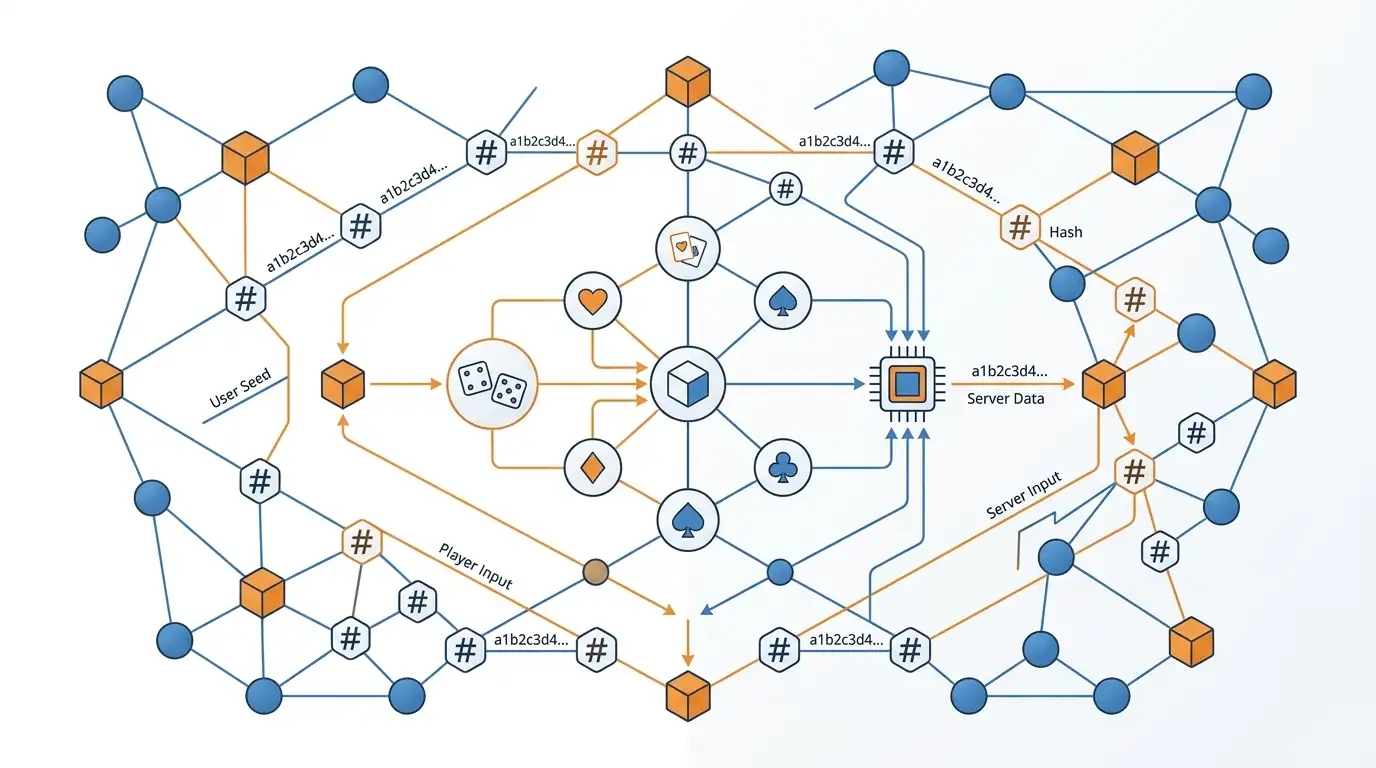
The genuinely crypto-specific category is provably fair gaming. These are titles — often a casino’s in-house Originals, like BC.Game’s or Betpanda’s Mines and Plinko — that let you cryptographically verify each result was fair, using the blockchain to prove the outcome wasn’t tampered with after your bet. It’s a real answer to the oldest question in online gambling, which is whether the house is quietly rigging the odds. For a player who trusts maths over a licensing badge, provably fair games are the most compelling thing crypto brought to the table. Just don’t confuse “provably fair” with “good odds” — the house edge is still there, plainly, and now you can verify it’s working exactly as designed.
Mobile BCH Casinos and Anonymous Play
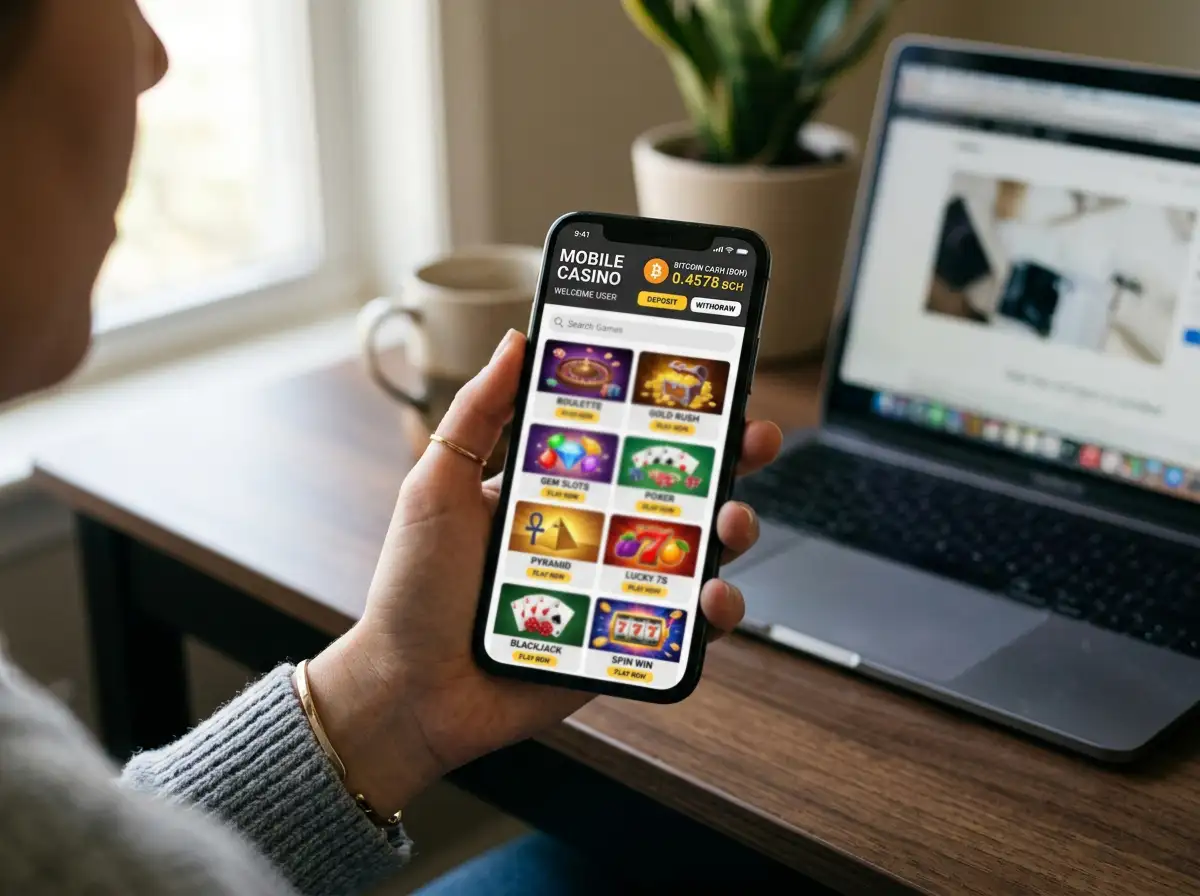
Nearly all of these casinos run in the phone browser rather than through a downloadable app, which for BCH play is a feature, not a compromise. A browser-based site sidesteps the app-store gambling restrictions that keep most real-money casinos out of official app catalogues anyway, and it means no install, no update cycle, and the same cashier on your phone as on your desktop. BC.Game, MyStake, Lucky Block and the rest render their full libraries on mobile, and moving BCH is arguably easier on a phone — most crypto wallets are mobile apps, so scanning a casino’s deposit QR code with the wallet already in your hand cuts out the copy-paste dance entirely.
Anonymity is the other draw, and it’s where expectations need calibrating. The no-KYC casinos — Wild.io, Betpanda, Cryptorino — genuinely let you play without submitting identity documents, and paired with Bitcoin Cash’s pseudonymous transfers, that’s about as private as gambling gets. The pro is obvious: no paperwork, no data sitting on an offshore server waiting to leak. The con is the flip side of the same coin. Anonymous play means an anonymous relationship, and when a dispute arises, a site that never verified you has less reason to prioritise you — and no regulator to make it. Privacy and recourse pull in opposite directions here. Pick the balance you can live with, and remember that “no KYC” almost always means “no KYC until you win enough to matter.”
Responsible Gambling and Player Protection
Crypto gambling removes friction, and friction was quietly protecting you. No bank hold, no card decline, no daylight between the urge and the deposit — a BCH transfer clears in minutes, at any hour, with no third party to slow it down. That’s the convenience the marketing sells. It’s also exactly what makes offshore crypto play easier to lose control of than a night at a licensed venue, and the honesty of this guide depends on saying so.
Setting your own limits matters more here precisely because the operator won’t set them for you well. Some offshore sites offer deposit caps, loss limits and cooling-off periods; use them, but don’t assume they carry the enforcement weight a domestic regulator would demand. The tools are only as good as the operator’s willingness to honour them, and an unlicensed site has no one compelling it to. Treat the balance you move to a casino as money you’ve already decided you can lose, because the platform is built to help you do exactly that.
Australia does maintain player-protection infrastructure worth knowing, even though it’s aimed at the domestic market. BetStop, the National Self-Exclusion Register, lets you block yourself from licensed Australian wagering services — it won’t reach offshore casinos, but if gambling has stopped being a pastime, it’s a concrete first step. For direct help, Gambling Help Online (1800 858 858) offers free, confidential support around the clock across the country. Reaching out isn’t an admission of anything except that the maths of a casino, provably fair or not, always favours the house. Play with money you can afford to lose, keep it recreational, and walk away while walking away is still your idea.
Crypto Casino Australia 2026 — Bitcoin, Ethereum & Stablecoins Guide
Content created by the «Payment Methods» team