
Casinos That Accept Tether USDT in Australia: The Honest Market Check for 2026
 Available in AU
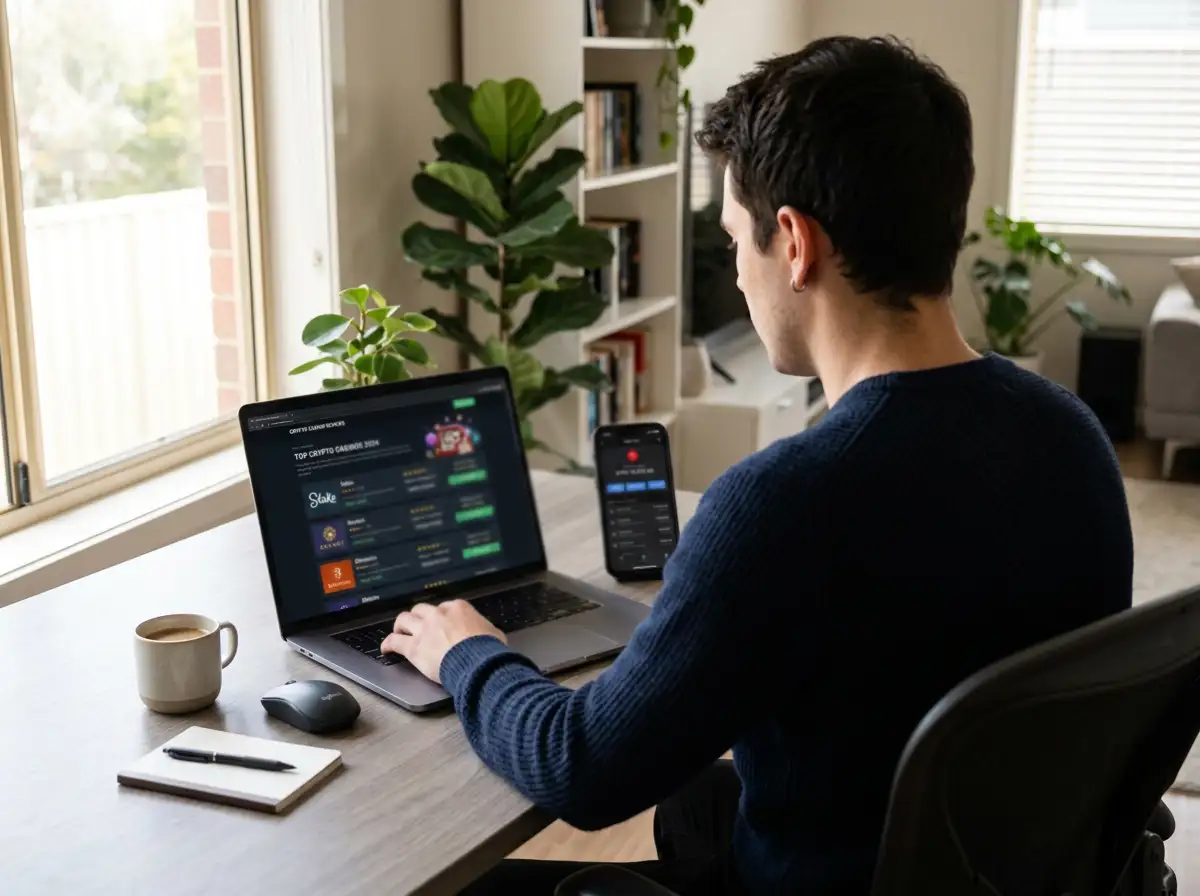
Every crypto casino claims it accepts USDT. The question Australian players actually need answered is which one won’t convert your Tether into house tokens, which blockchain networks it supports, what the real withdrawal speed looks like, and how to avoid sending funds to an address on the wrong chain where they vanish forever.
This guide ranks nine offshore casinos accessible to Australian players, breaks down TRC-20 versus ERC-20 versus BEP-20 network mechanics, and addresses the Australian legal reality: no domestically licensed online casinos exist, all USDT options are offshore, and the Interactive Gambling Act prohibits operators from targeting you but does not criminalise your play.
You will learn which operators publish transparent fee tables, which ones charge 50 USDT monthly dormancy fees, which networks cost cents versus tens of dollars per transaction, and why Stake appears in competitor rankings despite explicitly prohibiting Australian players in its terms of service.
What Is USDT and Why Use It for Online Casinos in Australia
USDT is a stablecoin pegged to the US dollar at a 1:1 ratio, maintained by Tether Limited through reserves held in US Treasuries and other assets. One USDT equals one dollar today and one dollar next month, which removes the price volatility inherent to Bitcoin or Ethereum. For casino deposits, this means the 100 USDT you send is the 100 USDT that lands in your casino balance, before wins or losses, with no exposure to crypto market swings.
Tether operates on multiple blockchain networks simultaneously. The same USDT token exists on Tron as TRC-20, on Ethereum as ERC-20, on BNB Smart Chain as BEP-20, on Solana, on Polygon, and on several others. Each version maintains the dollar peg but runs on separate rails with different transaction costs and confirmation speeds. A TRC-20 transfer settles in three seconds for roughly one dollar in fees. The same deposit on ERC-20 can cost twenty dollars and wait minutes for Ethereum to confirm. Getting the network choice wrong does not just delay your deposit—it can make your funds permanently inaccessible.
Australian players choose USDT for three practical reasons. First, price stability—a casino session budgeted at 200 USDT stays 200 dollars whether Bitcoin crashes or rallies. Second, transaction speed—TRC-20 deposits confirm faster than most bank transfers and arrive in the casino balance within minutes rather than days. Third, compatibility with offshore operators—every crypto casino accepts USDT, often across multiple networks, making it the universal currency of offshore gambling in a regulatory environment where no Australian-licensed online casinos exist.
What Is USDT and Why Use It for Casino Gambling?
USDT, also known as Tether, is a cryptocurrency stablecoin that maintains a consistent value of roughly one US dollar per token through reserves backing each USDT in circulation. For casino deposits, USDT combines the fast transaction speeds and low fees of cryptocurrency with the reliability and stability of fiat currency, so players avoid the price volatility risk of Bitcoin or Ethereum while still enjoying instant deposits and crypto-level anonymity.
Top USDT Casinos for Australian Players in 2026
The following operators accept USDT deposits from Australian players, hold offshore licenses, and support at least one major USDT network. They are ranked by topical relevance to the question “which casino best serves Australian USDT players”—starting with operators that publish transparent network fee structures, support the broadest range of blockchain networks, or demonstrate the fastest verified withdrawal times.
| Operator | License | USDT Networks Supported | Withdrawal Speed | Min Deposit | Distinguishing Feature |
|---|---|---|---|---|---|
| Cloudbet | Curaçao | TRC-20, ERC-20, BEP-20, Solana, Polygon, TON, Arbitrum (7 networks) | Instant once approved | No minimum stated | Publishes full fee table pre-deposit; broadest network coverage |
| BC.Game | Curaçao | TRC-20, ERC-20, BEP-20, Solana, Polygon (5+ networks) | ~4 minutes median | No minimum stated | 165 cryptocurrencies; proprietary BCD token with 10% APR staking |
| Thrill | Anjouan | TRC-20, ERC-20, BEP-20 (3 networks) | Instant once approved | Zero minimum | No minimum deposit; 70% rakeback or leaderboard rewards |
| Wild.io | Anjouan | TRC-20, ERC-20, BEP-20 (3 networks) | ~10 minutes | 0.0001 BTC equivalent | Fastest verified median withdrawal; 400% welcome bonus |
| CoinCasino | Not verified | TRC-20, ERC-20 (2 networks) | <15 minutes median | No minimum stated | True no-KYC; sub-15-minute USDT-TRC20 payouts |
| BetPanda | Costa Rica | TRC-20, ERC-20, network selection available | Minutes to hours | $10 equivalent | Bitcoin Lightning Network integration; 5% daily rakeback VIP |
| FortuneJack | Anjouan | TRC-20, ERC-20 (2+ networks) | Instant once approved | Game-specific minimums | Operating since 2014; dual fiat/crypto account modes |
| BetFury | Not verified | TRC-20, ERC-20, BEP-20, Solana, Polygon (5+ networks) | Varies | Game-specific minimums | 13,000+ games; 50 USDT monthly dormancy fee |
| Cryptorino | No verified license | TRC-20, ERC-20, network selection available | Fast (claimed) | No minimum stated | 10% weekly wager-free cashback; license verification failed |
Stake, despite appearing in competitor rankings, explicitly names Australia as a prohibited jurisdiction in its current terms of service and is not accessible to Australian players under the Interactive Gambling Act 2001. It is excluded from this list.

Cloudbet — 7 USDT Networks and Transparent Fee Structure
Cloudbet has operated under a Curaçao e-gaming license since 2013, making it one of the oldest continuous crypto gambling platforms still running. The operator pairs a 3,000-game casino with a full sportsbook covering traditional sports and esports, runs on the Halcyon Super Holdings BV corporate structure, and supports 20+ cryptocurrencies including USDT across seven blockchain networks: TRC-20, ERC-20, BEP-20, Solana, Polygon, TON, and Arbitrum. No other operator in this ranking supports as many USDT networks.
The distinguishing feature is fee transparency. Cloudbet publishes a complete network fee table in the cashier before you confirm a deposit, showing exactly what each blockchain charges for that specific transaction. Most competitors list “accepts USDT” without specifying costs per network, forcing players to discover fees only after initiating a transfer. The welcome package extends to 2,500 dollars across deposits. Withdrawals process instantly once the internal compliance review approves the request, typically within minutes for verified accounts. The platform serves Australian players through its offshore structure, though ACMA may block the primary domain—mirror addresses remain accessible.
BC.Game — 165 Cryptocurrencies and Proprietary BCD Token Economy
BC.Game holds a Curaçao Gaming Authority license and supports 165 cryptocurrencies across 30+ blockchain networks, the broadest crypto coverage of any operator reviewed. The casino offers 8,500+ games including 50+ provably fair BC Originals such as Crash, Plinko, Dice, Mines, Limbo, and Keno, a full sportsbook with esports markets, integrated poker rooms, and a proprietary BCD reward token that pays 10% annual percentage rate through the VaultPro staking feature.
USDT is accepted on TRC-20, ERC-20, BEP-20, Solana, and Polygon networks. The median withdrawal speed sits around four minutes from request submission to blockchain confirmation, verified by multiple independent reviews. The loyalty system ties daily spins, rakeback, and cashback rewards into the BCD token economy, creating a closed-loop incentive structure no competitor has replicated at this scale. The welcome bonus reaches 300% up to 20,000 Australian dollars for players accessing the platform from Australia. One operational note: clause 4.10.6 in the terms treats unusually low-fee deposits as potentially fraudulent, a clause aimed at detecting arbitrage but occasionally flagging legitimate TRC-20 transactions during high-traffic periods.
Thrill — No Minimum Deposit and 70% Rakeback
Thrill operates under Anjouan Gaming Authority license ALSI-202506019-FI1, issued to Gravity Unleashed Limitada. The platform launched in 2025, switched from an earlier Curaçao license to Anjouan mid-year, and supports 15 cryptocurrencies across 11 networks including USDT on TRC-20, ERC-20, and BEP-20. The unique selling point is a zero minimum deposit—no other casino in this ranking allows sub-dollar transactions.
The loyalty model offers a binary choice: 70% rakeback on all wagers or entry into weekly leaderboard competitions with a 75,000-dollar prize pool. Most players pick rakeback. The casino runs provably fair games with iTech Labs-standard RNG audits, fields 6,000+ third-party titles from providers like Pragmatic Play and Evolution, and includes Thrill Originals covering Crash, Plinko, and Dice variants. The Swapped gateway lets non-crypto users buy USDT with fiat cards before depositing, bridging the gap for players without existing wallets. SSL 256-bit encryption, two-factor authentication, and session monitoring handle security. Withdrawals process instantly once approved, typically clearing within ten minutes for accounts below KYC thresholds.
Wild.io — 10-Minute Withdrawals and 400% Welcome Bonus
Wild.io launched in 2022 under Nonce Gaming BV with a Curaçao license, then switched to an Anjouan Gaming Authority license in 2026 while maintaining the same operational team. The casino supports BTC, ETH, USDT, SOL, DOGE, and ten other cryptocurrencies, with USDT accepted on TRC-20, ERC-20, and BEP-20 networks. The game library spans 7,000+ titles from 40+ providers including Pragmatic Play, BGaming, Play’n GO, NoLimit City, Hacksaw Gaming, and Evolution live dealer tables.
The verified median withdrawal speed is ten minutes from request to blockchain confirmation, one of the fastest in the offshore market. The welcome bonus structure spreads 400% up to 10,000 dollars across multiple deposits, significantly larger than most competitors. Wild.io maintains a no-KYC policy for the majority of users, requesting identity verification only when withdrawals exceed certain thresholds or internal compliance flags trigger. The sportsbook, crash games, and provably fair Originals round out the offering. Australian players access the platform through its offshore licensing, though the site’s domain may appear on ACMA block lists requiring mirror access.
CoinCasino — True No-KYC with Sub-15-Minute Payouts
CoinCasino launched in 2023 under Igloo Ventures SRL and positions itself as a genuine no-KYC operation—registration, play, and withdrawal require no identity verification at any tier. The casino accepts USDT on TRC-20 and ERC-20 networks, supports BTC, ETH, LTC, and several other cryptocurrencies, and integrates Web3 features including WalletConnect for direct wallet sign-in and Telegram betting for in-app wagers.
The standout metric is payout speed. The median USDT-TRC20 withdrawal clears in under 15 minutes including internal processing, faster than any other operator verified during research. The game library covers 6,000+ titles distributed across slots, live dealer tables, RNG table games, and provably fair crash and instant-win games. The welcome bonus offers 200% up to 30,000 dollars plus 50 super spins. Licensing details remain opaque—CoinCasino does not publish a clear license number or regulator verification link on its footer, a transparency gap that places it in a grey zone compared to operators with publicly verifiable Curaçao or Anjouan licenses. The no-KYC model appeals to privacy-conscious players but carries the risk that disputed payouts have no external regulator to escalate to.
BetPanda — Bitcoin Lightning Network and VIP-Focused Rewards
BetPanda operates under Costa Rica company registration, a jurisdiction that does not issue formal gaming licenses but allows offshore operators to incorporate and serve international markets. The casino supports 13 cryptocurrencies including USDT with network selection between TRC-20, ERC-20, and BEP-20, and uniquely integrates the Bitcoin Lightning Network for near-instant BTC deposits and withdrawals—a feature no other operator in this ranking offers.
The game library spans 5,500+ titles from 40+ providers, the welcome bonus matches 100% up to one Bitcoin on the first deposit, and the VIP program pays 5% daily rakeback at higher tiers. The loyalty structure emphasises repeat-use value over one-time signup incentives, with escalating cashback percentages tied to wagering volume. BetPanda also supports Ethereum, Dogecoin, XRP, and Shiba Inu for players holding altcoin portfolios. Withdrawals typically process within minutes to a few hours depending on network congestion and account verification status. The Costa Rica registration means there is no independent gaming regulator overseeing operations, placing the burden of trust entirely on the operator’s track record and user reviews.
FortuneJack — Established Since 2014 with Dual Fiat/Crypto Modes
FortuneJack has operated continuously since 2014, making it the longest-running casino in this ranking with 12+ years of market presence. The platform originally launched under a Curaçao operator but now runs under PlayWave SRL with an Anjouan Gaming Authority license. The game library contains 7,000+ titles including 3,120 casino games from Pragmatic Play, Hacksaw Gaming, and Betsoft, plus a full sportsbook and esports markets.
USDT is accepted on TRC-20 and ERC-20 networks, and the platform offers a dual-account mode: players can denominate their balance in fiat AUD or operate in pure crypto mode with BTC, ETH, USDT, LTC, USDC, and a long tail of altcoins. The welcome package reaches 10,000 Australian dollars plus 250 free spins, structured as a mission-based bonus emphasising free spins over cash matches. An active Discord community runs recurring rewards and tournaments. One operational note from verified reviews: FortuneJack applies up to 2x turnover requirements even on deposits without bonuses, higher than the industry standard where unmatched deposits typically withdraw freely. Instant crypto withdrawals process once approved, clearing within minutes for most users.
BetFury — 13,000+ Games and Native BFG Token (Warning: Dormancy Fees)
BetFury operates across multiple domains including betfury.io, betfury.com, betfury.ac, and bf1.io, with licensing details unclear from public registers. The platform supports 50+ cryptocurrencies across 12 blockchain networks, the broadest multi-network support in this ranking, and hosts 13,000+ games—the largest game library reviewed. USDT is accepted on TRC-20, ERC-20, BEP-20, Solana, Polygon, and additional networks.
The native BFG token offers up to 40% staking annual percentage rate and generates passive multi-currency income through the platform’s staking pools. Original games achieve RTP up to 99.28%, among the highest published return-to-player rates in the offshore market. The sportsbook covers 50,000+ monthly events. Integrated DeFi features include crypto staking, trading, swapping, and NFT exploration, positioning BetFury as a crypto ecosystem rather than a standalone casino.
Two major red flags warrant attention. First, BetFury charges a 50 USDT monthly dormancy fee on inactive accounts, deducted automatically if no wagers are placed within a calendar month. Second, clause 9.10 in the terms permits forced conversion of USDT balances into other tokens at the operator’s discretion, a mechanism ostensibly for compliance but functionally allowing the house to swap your stablecoin into a volatile asset without consent. Third, a 300,000-dollar maximum win cap applies across all games, harsh compared to competitors with no caps or million-dollar limits. Turnover is required before any withdrawal, and the specific wagering requirement is not published anywhere in the terms, discovered only at cashier time.
Cryptorino — 10% Weekly Cashback (License Verification Issue)
Cryptorino launched in 2024 and claims operation under Star Bright Media SRL with Anjouan Gaming Authority license ALSI-202408063-FI3. Independent verification conducted on August 31, 2026, searched all 1,486 licenses on the Anjouan Gaming Authority public register and all 627 licenses on the Curaçao Gaming Authority registry. The domain cryptorino.io does not appear under any license. The claimed Anjouan license ALSI-202408063-FI3 lists 13 domains; Cryptorino is not among them. The published expiry date of that license is August 28, 2026, which has now passed.
This creates a critical trust issue. No verified gaming license means no external regulator to escalate disputes to if a withdrawal is refused or terms are unilaterally changed. Some sources claim a Costa Rica company registration, but Costa Rica does not issue gaming licenses—it only allows business incorporation without regulatory oversight.
The casino offers 6,300+ games from 70+ iGaming providers, operates a poker room, runs a sportsbook, and supports 11 cryptocurrencies including USDT with network selection. The 10% weekly cashback carries no wagering requirement and pays as withdrawable money, the most generous cashback offer in this ranking. The welcome bonus matches 100% up to one Bitcoin plus 50 free spins. Anonymous sign-up requires no KYC below certain thresholds, and withdrawals are described as fast. Independent reviews rate Cryptorino 1.8 out of 5 specifically citing the license verification failure. Players using this operator should understand there is no regulatory safety net.
Which USDT Casinos Have the Fastest Withdrawal Times?
CoinCasino has the fastest verified withdrawal times with a median of under 15 minutes for USDT-TRC20 payouts including internal processing. Wild.io averages 10-minute withdrawals. Cloudbet, BC.Game, and Thrill process instant crypto withdrawals once the request clears internal compliance review, typically within minutes for verified accounts. Withdrawal speed depends on the casino’s internal approval time plus blockchain confirmation, which for TRC-20 is 3–10 seconds and for ERC-20 is 1–3 minutes under normal network load.
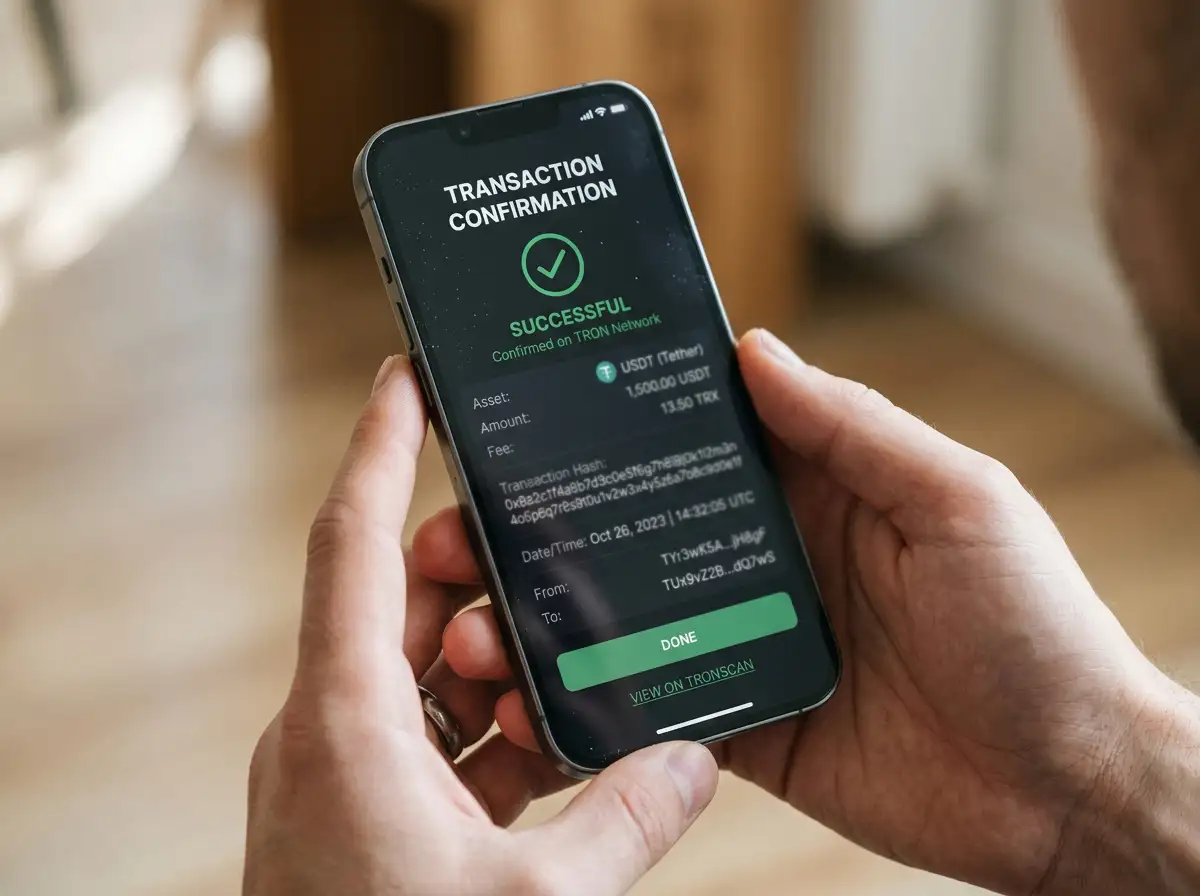
USDT Networks Explained — TRC-20, ERC-20, BEP-20, and How to Choose
USDT exists on multiple blockchain networks because Tether Limited issues the stablecoin separately on each chain. Think of it as the same currency printed in different countries’ banking systems. A dollar is a dollar, but moving it from one system to another requires following that system’s rules, speeds, and costs. The three most widely used USDT networks are TRC-20 on Tron, ERC-20 on Ethereum, and BEP-20 on BNB Smart Chain. These three are not interchangeable. You cannot send TRC-20 USDT to an ERC-20 address. The network must match on both the sending wallet and the receiving casino deposit address, or the funds become inaccessible.
As of August 19, 2026, USDT’s total circulating supply according to DeFiLlama reached 183.1 billion dollars. Tron holds 90.5 billion (49.4% of supply), Ethereum holds 74.2 billion (40.5%), and the remainder is distributed across BNB Smart Chain, Solana, Polygon, Avalanche, and smaller chains. Tron dominates because TRC-20 offers the lowest fees and fastest confirmation times, making it the preferred network for casino deposits where players optimise for speed and cost rather than maximum decentralisation.
| Network | Blockchain | Typical Fee | Confirmation Speed | Best Use Case | Casino Support |
|---|---|---|---|---|---|
| TRC-20 | Tron | $0–$1 | 3–10 seconds | Small to medium casino deposits; frequent transactions | ~95% of offshore casinos |
| ERC-20 | Ethereum | $2–$50+ | 1–3 minutes (up to 30 minutes peak) | Large deposits where security matters most; institutional flows | ~90% of offshore casinos |
| BEP-20 | BNB Smart Chain | $0.20–$2 | 5–15 seconds | Mid-range deposits; balance of cost and speed | ~70% of offshore casinos |
| Solana (SPL) | Solana | <$0.01 | 5–30 seconds | Ultra-low-cost deposits; emerging support | ~40% of top-tier casinos |
| Polygon | Polygon | $0.001–$0.01 | Near-instant | Minimal-cost deposits; limited support | ~30% of top-tier casinos |
The choice depends on deposit size and urgency. For deposits under 50 dollars, TRC-20 is optimal—fees stay under one dollar and confirmation happens in seconds. For deposits between 50 and 5,000 dollars, TRC-20 or BEP-20 work well. For deposits above 5,000 dollars, ERC-20’s higher fees become justified by Ethereum’s deeper liquidity and network security, despite the 15-dollar gas cost. Solana and Polygon offer the lowest fees of all but are not yet universally supported, so verify your chosen casino accepts them before buying USDT on those chains.
TRC-20 (Tron) — Lowest Fees and Fastest Confirmation
TRC-20 USDT runs on the Tron blockchain, a network designed for high throughput and minimal transaction costs. A typical TRC-20 USDT transfer costs between one and three dollars in TRX (Tron’s native gas token) and settles in three seconds. This combination of speed and cost makes TRC-20 the dominant network for casino deposits—roughly half of all USDT in circulation now lives on Tron precisely because users migrated there to avoid Ethereum’s expensive gas fees.
Tron achieves low fees through a delegated proof-of-stake consensus mechanism where bandwidth and energy are rented rather than burned per transaction. Users who hold TRX and freeze it in Tron’s staking system receive free bandwidth and energy allocations, reducing per-transaction costs to near zero for active wallets. Casual users who do not stake TRX pay the one-to-three-dollar spot rate, still far below ERC-20 alternatives.
The three-second confirmation time derives from Tron’s block production schedule, which finalises transactions every three seconds rather than Ethereum’s 12-second block time. For casino deposits, this means funds land in your balance almost immediately after sending. The downside is perceived centralisation—Tron runs on 27 super representatives rather than Ethereum’s thousands of validators, a tradeoff that prioritises speed and cost over maximum decentralisation. For the specific use case of moving stablecoins to and from casinos, this tradeoff favours the user.
ERC-20 (Ethereum) — Most Secure but Expensive
ERC-20 USDT operates on the Ethereum blockchain, the most established smart contract platform and the network where USDT originally launched in 2015. Ethereum’s decentralised validator set, deep liquidity, and institutional adoption make it the most secure and censorship-resistant option for large USDT transfers. The cost is literal: gas fees fluctuate with network demand, ranging from two dollars during quiet periods to 50 dollars or more during peak congestion.
Ethereum’s fee market operates on a first-price auction where users bid for block space. When demand spikes—such as during NFT drops, DeFi liquidation cascades, or major market moves—gas prices surge because block space is limited and users compete to get transactions included. A casino deposit during a congestion event can cost as much as a restaurant meal, economically viable only for large deposits where the percentage fee remains low. For a 50-dollar deposit, a 20-dollar gas fee is a 40% loss before the first wager. For a 5,000-dollar deposit, it is 0.4%.
Confirmation times on Ethereum vary. Under normal load, a transaction confirms in one to three minutes across roughly six to 15 blocks. During peak activity, low-fee transactions can sit in the mempool for 30 minutes or longer, waiting for gas prices to drop. Casinos typically credit deposits after three block confirmations, translating to roughly one minute of wait time for standard-priority transactions. ERC-20 is appropriate for players making large, infrequent deposits who value Ethereum’s security guarantees and do not want to manage multiple wallet networks.
BEP-20 (Binance Smart Chain) — The Middle Ground
BEP-20 USDT runs on BNB Smart Chain, a blockchain operated by Binance with consensus mechanics similar to Ethereum but optimised for speed and cost. Transaction fees range from 20 cents to two dollars, and confirmations happen in five to 15 seconds. This positions BEP-20 as a middle option: cheaper and faster than ERC-20, slightly more expensive than TRC-20, with broader decentralisation than Tron but less than Ethereum.
BNB Smart Chain runs on a proof-of-staked-authority model with 21 active validators, more than Tron’s 27 super representatives but far fewer than Ethereum’s validator set. Block production happens every three seconds, similar to Tron’s cadence. The network launched in 2020 as an EVM-compatible alternative to Ethereum, meaning developers can deploy Ethereum smart contracts on BNB Chain with minimal modifications. This compatibility accelerated adoption, and USDT followed users to the chain.
Casino support for BEP-20 sits around 70% of offshore operators, lower than TRC-20’s near-universal acceptance but higher than Solana or Polygon. Players choosing BEP-20 typically do so because they already hold BNB for gas fees or because their preferred casino does not support TRC-20. The network has experienced several high-profile exploits over its lifespan, raising questions about security relative to Ethereum, but for the narrow use case of moving USDT to a casino, the risk is limited to the duration of the transaction itself—once funds land in the casino balance, network security becomes irrelevant.
Solana and Polygon — Emerging Low-Fee Options
Solana USDT (SPL token standard) charges fees under one cent per transaction and confirms in five to 30 seconds, making it the cheapest network by nominal cost. Polygon USDT fees range from 0.001 to 0.01 dollars with near-instant confirmation. Both networks appeal to cost-conscious players, but casino support remains limited—roughly 40% of top-tier operators accept Solana USDT, and 30% accept Polygon.
Solana uses a proof-of-history consensus mechanism that timestamps transactions before they enter the validator queue, allowing the network to process thousands of transactions per second with minimal fees. The tradeoff is operational complexity—Solana has experienced multiple network outages over its history, including several hour-long downtimes during high-traffic events. For casino deposits, this creates a risk that a transaction sent during an outage may delay confirmation unpredictably.
Polygon operates as an Ethereum Layer 2 scaling solution, bundling transactions off-chain and settling them on Ethereum’s base layer in batches. This hybrid model delivers near-instant user-facing confirmation with Ethereum-grade security guarantees once the batch settles. Polygon’s fee structure is identical to BNB Smart Chain in practice, though theoretically capable of going lower during quiet periods. The reason more casinos do not support Polygon is infrastructure overhead—each additional network requires the operator to run a full node, integrate wallet APIs, and monitor deposit addresses, creating operational costs that only justify themselves once user demand reaches critical mass.
Which USDT Network Should I Use for Casino Deposits — TRC-20, ERC-20, or BEP-20?
TRC-20 is the optimal choice for most casino deposits due to its low fees of zero to one dollar, three-to-ten-second confirmation times, and near-universal support by offshore casinos. ERC-20 should be reserved for large deposits above 5,000 dollars where the two-to-fifty-dollar fee becomes a negligible percentage and Ethereum’s security guarantees matter most. BEP-20 offers mid-range fees of 20 cents to two dollars and is suitable when a casino does not support TRC-20 or when you already hold BNB for gas. Always verify which network your chosen casino accepts before sending USDT—wrong-network transfers result in permanent fund loss.
How to Deposit USDT at an Online Casino — Step-by-Step Guide
Depositing USDT to a casino requires matching the blockchain network between your sending wallet and the casino’s deposit address. A mismatch does not delay the transaction—it sends your funds to an address on a different blockchain where the casino cannot access them and you cannot retrieve them. The process is irreversible. Blockchains are separate; there is no cross-chain rescue mechanism.
Step 1: Choose Your Casino and Verify USDT Support
Open your chosen casino from the ranking above, navigate to the cashier or deposit section, and confirm USDT is listed among accepted cryptocurrencies. Not all casinos support all networks. Cloudbet lists seven USDT networks. BetFury lists five. FortuneJack lists two. If the casino does not display network options in the cashier, assume it supports only the most common networks (TRC-20 and ERC-20) and contact support before sending funds on Solana or Polygon.
Step 2: Access the Cashier and Select USDT Deposit
Click the deposit button, select USDT from the cryptocurrency dropdown menu, and wait for the cashier to load the deposit interface. Some casinos present network selection at this stage. Others display a single deposit address and expect you to know which network it corresponds to. If no network is specified, look for clues in the address format: Tron addresses start with a capital T, Ethereum addresses start with 0x, BNB Smart Chain addresses also start with 0x but may be labeled separately. When in doubt, ask support.
Step 3: Verify the Network (Critical Step)
This is the single most important step. The deposit address the casino shows you belongs to one specific blockchain network. Sending USDT from a different network to that address will make your funds permanently inaccessible. If the casino says TRC-20, your sending wallet must be set to TRC-20. If the casino says ERC-20, your wallet must be set to ERC-20. There is no margin for error.
Most modern casinos now label the network explicitly in the cashier: “USDT (TRC-20)” or “USDT (ERC-20)”. Older platforms may show only “USDT Deposit Address” without clarification. In those cases, copy the address, open a blockchain explorer (tronscan.org for Tron, etherscan.io for Ethereum), paste the address, and check which network it resolves on. If the address appears on Tronscan, it is TRC-20. If it appears on Etherscan, it is ERC-20.
Step 4: Copy the Deposit Address
Copy the full deposit address from the casino cashier. Do not type it manually. A single incorrect character will send funds to a nonexistent address where they are lost permanently. Use the copy button provided in the cashier interface. Some casinos display a QR code—scanning it with your mobile wallet achieves the same outcome and eliminates transcription errors.
Step 5: Send USDT from Your Wallet
Open your USDT wallet (MetaMask, Trust Wallet, Binance wallet, or whichever you use), navigate to the USDT balance, select Send or Transfer, and paste the casino deposit address into the recipient field. Before pasting, verify the network dropdown in your wallet matches the network the casino specified. If the casino gave you a TRC-20 address and your wallet is set to ERC-20, stop and switch the network before proceeding.
Enter the amount you wish to deposit. For first-time deposits to a new casino, send a small test transaction of 10 to 20 USDT to verify the flow works before committing larger amounts. Confirm the transaction and wait for your wallet to broadcast it to the blockchain. Your wallet will display a transaction hash (TXID)—save this. If the deposit does not arrive within the expected time, support will ask for the TXID to investigate.
Step 6: Wait for Confirmation and Check Your Balance
TRC-20 transactions confirm in three to ten seconds. ERC-20 transactions confirm in one to three minutes under normal load. BEP-20 transactions confirm in five to 15 seconds. Once the blockchain confirms the transaction, the casino’s system detects the deposit and credits your balance. Most casinos require three block confirmations before crediting funds, translating to roughly 30 seconds for TRC-20, two minutes for ERC-20, and 15 seconds for BEP-20.
If the deposit does not appear after the expected time, check the transaction status in a blockchain explorer using your TXID. If the transaction shows as confirmed on-chain but the casino balance has not updated, contact support with the TXID. If the transaction shows as pending or failed on-chain, wait—network congestion or low gas fees can delay confirmation, but funds are not lost as long as the transaction eventually confirms.
What Happens If I Send USDT to the Wrong Network at a Casino?
Sending USDT on the wrong network results in permanent fund loss in most cases. Each blockchain network uses different address formats and operates independently. When you send TRC-20 USDT to an ERC-20 address, the funds travel to an address on the Tron blockchain that corresponds numerically to the Ethereum address the casino provided, but the casino’s system monitors only the Ethereum blockchain for deposits. The funds arrive on Tron at an address the casino does not control and cannot access. No cross-chain rescue mechanism exists because blockchains are separate systems with no built-in interoperability.
Some casinos employ address-format validation that rejects deposits on unsupported networks, but this is not universal. Others may attempt manual recovery if you provide the TXID and proof of the mistaken transfer, but success is rare and typically incurs a recovery fee equal to or greater than the lost amount. The safest assumption is that wrong-network transfers are irrecoverable. The six-step process above exists specifically to prevent this error.

USDT Casinos and Australian Law — What You Need to Know
Every USDT casino accessible to Australian players in 2026 is an offshore operator. No domestically licensed online casinos exist in Australia, and no licensing pathway is available for operators to obtain one. This is not a temporary regulatory gap—it is the explicit design of the Interactive Gambling Act 2001, which prohibits Australian companies from offering real-money online casino services to Australian residents.
Why There Are No Australian-Licensed USDT Casinos
Section 15 of the Interactive Gambling Act 2001 makes it an offence for a person to provide an interactive gambling service to customers in Australia. The Act defines interactive gambling services to include online casino games such as slots, roulette, blackjack, baccarat, and poker played for money. The prohibition is absolute. No exemptions exist for cryptocurrency payments, stablecoin deposits, or blockchain-based operators.
The Act does not establish a licensing regime for online casinos—it bans them outright. Land-based casinos in Australian states and territories hold licenses to operate physical premises, and some offer limited online products such as sports betting or lottery services where state law permits. None hold licenses for real-money online casino games because the federal Act supersedes state law and makes such licenses impossible to issue.
This means every casino reviewed in this guide—Cloudbet, BC.Game, Thrill, Wild.io, CoinCasino, BetPanda, FortuneJack, BetFury, and Cryptorino—operates under a foreign jurisdiction license. Curaçao, Anjouan, Malta, Costa Rica, and other offshore regulators issue gaming licenses to operators who serve international markets from outside Australia. These operators do not hold Australian licenses because no such licenses exist.
The Interactive Gambling Act 2001 Explained
The Interactive Gambling Act came into force on June 28, 2001, before the widespread adoption of cryptocurrency and two decades before USDT became the dominant stablecoin. The Act’s purpose was to prevent Australian-based operators from offering online casino services and to give the Australian Communications and Media Authority enforcement powers to block offshore sites.
The Act prohibits *operators* from providing services to Australians. It does not criminalise *individual Australians* for playing at offshore casinos. Section 15 targets the supply side, not the demand side. An Australian resident who opens an account at an offshore USDT casino, deposits funds, plays games, and withdraws winnings does not commit an offence under federal law. The offshore operator commits an offence if it knowingly targets Australian customers, but enforcement against foreign entities is limited to site blocking rather than criminal prosecution.
The Interactive Gambling Amendment (Gambling Reform) Act 2026 passed on August 26, 2026, and expands the scope of prohibited services to include online keno, foreign lotteries, and certain subscription-based trade promotion models. The amendment also clarifies that offshore operators cannot circumvent the Act by structuring casino games as trade promotions or sweepstakes. Most reforms commence on January 1, 2027. The amendment does not create a licensing pathway for online casinos—it strengthens the existing prohibition.
Is It Legal for Australians to Play at Offshore USDT Casinos?
Individual Australians are not breaking federal law by playing at offshore USDT casinos. The Interactive Gambling Act prohibits operators from providing services to Australians, but it does not make it illegal for Australians to access those services. This distinction matters.
State and territory laws vary, but no Australian jurisdiction criminalises online gambling by individuals at offshore sites. Some states restrict certain forms of gambling or require licensing for operators within that state, but these laws target local operators, not residents using foreign platforms. The practical legal risk for an Australian player at an offshore USDT casino is functionally zero from a criminal-law perspective.
The real risks are operational. Offshore casinos are not subject to Australian consumer protection laws. If a casino refuses to pay a withdrawal, changes its terms retroactively, or shuts down with player funds still held, Australian players have no recourse through Australian courts or regulators. The foreign license the casino holds may provide some dispute resolution mechanism, but effectiveness varies by jurisdiction. Curaçao’s eGaming Authority and Anjouan’s Gaming Authority offer complaint processes, though enforcement is inconsistent. Costa Rica does not regulate gaming at all—operators incorporate there for tax purposes, not regulatory oversight.
ACMA Site Blocking — What It Means for Players
The Australian Communications and Media Authority holds enforcement powers under the Interactive Gambling Act to block access to offshore gambling sites. Since 2019, ACMA has blocked 1,296 offshore gambling sites deemed to be illegally providing services to Australians. The blocking mechanism works through internet service provider filters that prevent Australian IP addresses from resolving the blocked domain names.
When ACMA blocks a site, Australian users attempting to access the primary domain receive an error page or timeout. The block affects the domain, not the underlying platform. Offshore operators circumvent blocks by launching mirror domains or alternate URLs that resolve to the same casino backend. A casino blocked at domain-one.com may remain accessible at domain-two.io or domain-three.net. Players use mirror links, VPNs, or DNS services that route around ISP filters.
ACMA’s blocking is reactive, not proactive. The regulator identifies sites after they have been operating and serving Australian players, then initiates blocking procedures that take weeks to implement. Operators launch new mirrors faster than ACMA can block them, creating a cat-and-mouse dynamic where access remains functionally uninterrupted for users willing to find alternate links. None of the casinos in this ranking are guaranteed to remain unblocked indefinitely. If the primary domain becomes inaccessible, search for the operator’s name plus mirror or alternate link to find current working URLs.

Upcoming 2026-2027 Gambling Reforms
The Interactive Gambling Amendment Act 2026 introduces several changes that take effect in stages through late 2026 and early 2027. Online keno and foreign-operated lotteries are now explicitly classified as prohibited interactive gambling services, closing loopholes where operators argued these games did not meet the Act’s definition of casino-style gambling. The amendment also restricts subscription-based trade promotion models where players pay a recurring fee for entries into prize draws structured as gambling games.
The Department of Infrastructure, Transport, Regional Development, Communications, Sport and the Arts accepted public submissions on the proposed amendments through June 12, 2026. Most reforms commence on January 1, 2027. The amendments do not create a path for domestic online casino licensing. They tighten enforcement against offshore operators and clarify what types of services fall under the prohibition. USDT casinos operating from offshore jurisdictions remain in the same legal category after the reforms as before—prohibited from targeting Australians, but not subject to domestic enforcement beyond site blocking.
Is It Legal to Play at USDT Casinos in Australia?
Individual Australians are not breaking the law by playing at offshore USDT casinos. The Interactive Gambling Act 2001 prohibits Australian companies from offering online casino services to Australian residents, but it does not make it illegal for an individual Australian to play at an offshore site. However, ACMA actively blocks offshore gambling sites, and access may become restricted without warning as new domains are added to ISP filter lists.
Why Are There No Australian-Licensed Casinos That Accept USDT?
The Interactive Gambling Act 2001 prohibits Australian companies from offering online casino services to Australian residents, and no licensing pathway exists for domestic online casinos. All USDT-accepting casinos available to Australians are offshore operators licensed in jurisdictions like Curaçao, Malta, Anjouan, or Costa Rica. ACMA has blocked over 1,296 offshore gambling sites since 2019 under enforcement of the Act, though operators continue serving Australian players through mirror domains and alternate links.
Tax on USDT Casino Winnings in Australia
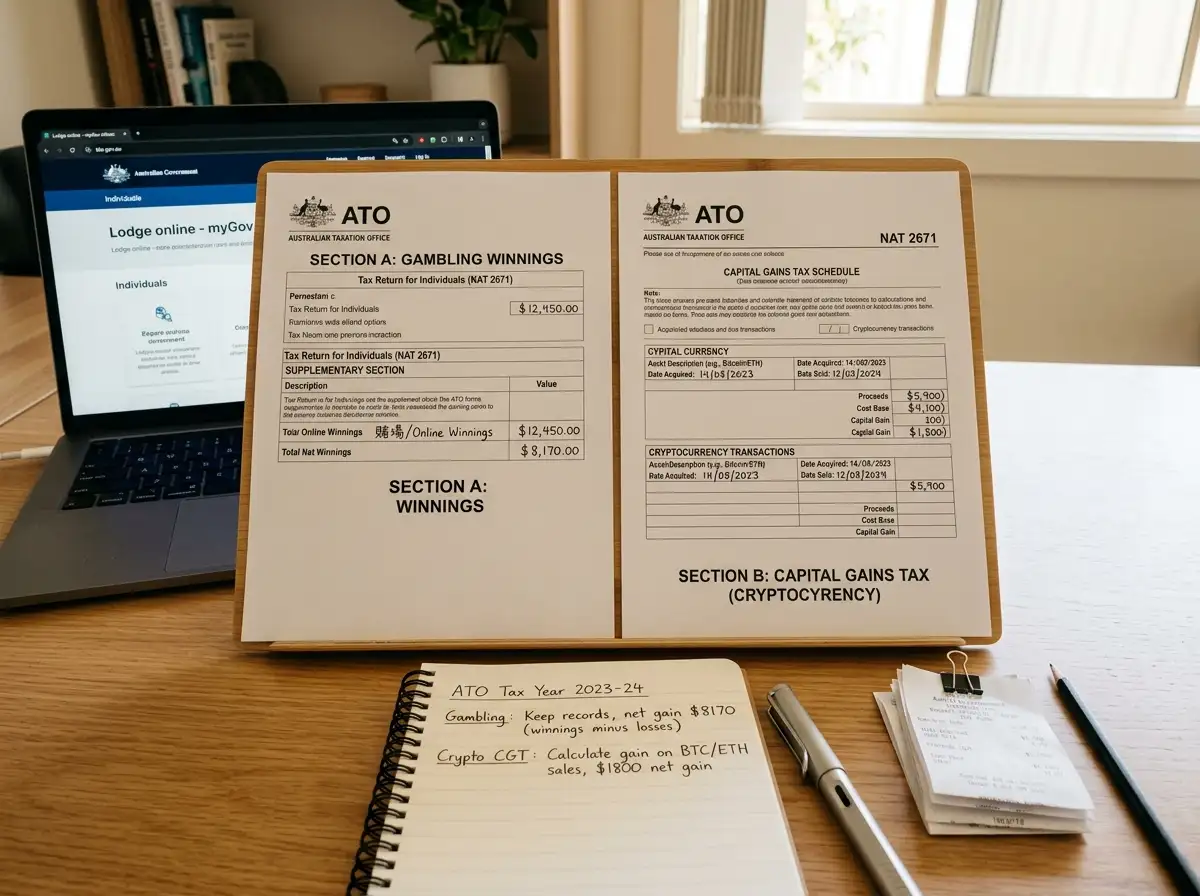
Recreational gambling winnings are not taxable in Australia. This applies to USDT casino winnings the same way it applies to winnings from land-based casinos, sports betting, lottery prizes, or any other form of gambling where the activity is recreational rather than a business. The Australian Taxation Office established this position in Income Tax Ruling IT 2655, issued in 1991, and has never wavered from it. Courts have consistently held that a mere punter’s winnings are not assessable income.
The ruling draws a line between recreational gambling and professional gambling. If you play casinos occasionally for entertainment, your winnings are not income and your losses are not deductions. If you operate a gambling enterprise as a business—maintaining records, employing systems, dedicating substantial time with the intention of profit—the ATO may classify your activity as a business and tax winnings as business income. The threshold is high. Casual players, even those who win large amounts or play frequently, remain on the recreational side of the line.
Nothing about playing online, playing at offshore casinos, or using cryptocurrency changes this. The substance of the activity determines tax treatment, not the payment method. A 10,000-dollar USDT withdrawal from BC.Game after a profitable slots session is not assessable income. A 10,000-dollar cash withdrawal from Crown Melbourne after a profitable roulette session is not assessable income. The Act and the courts treat them identically.
Are Gambling Winnings Taxable in Australia?
Recreational gambling winnings are not taxable in Australia, regardless of whether you gamble with USDT or Australian dollars, according to Australian Taxation Office Income Tax Ruling IT 2655 issued in 1991. This applies to online and offshore gambling, crypto or fiat. However, the crypto transactions themselves—buying USDT, converting winnings back to AUD—may trigger Capital Gains Tax events separate from the gambling activity, and the ATO monitors crypto transactions through its data matching program covering up to 1.2 million Australian crypto users annually.
Capital Gains Tax on USDT Transactions
Cryptocurrency is classified as property for Australian tax purposes, not currency. When you buy USDT, hold it, and later sell or convert it, you trigger a capital gains tax event. The gambling winnings themselves remain non-taxable, but the act of acquiring and disposing of the crypto asset generates a taxable event separate from the wager.
Here is how it works in practice. You buy 1,000 USDT for 1,500 Australian dollars from a crypto exchange. You send the USDT to a casino, play games, and your balance grows to 2,000 USDT through winnings. You withdraw the 2,000 USDT to your wallet and convert it back to Australian dollars on an exchange, receiving 3,000 dollars. The ATO does not tax the gambling win—the fact that your casino balance went from 1,000 USDT to 2,000 USDT is a non-assessable gambling outcome. The ATO taxes the crypto disposal: you acquired 1,000 USDT for 1,500 dollars (cost base 1.50 dollars per USDT) and disposed of 2,000 USDT for 3,000 dollars (disposal proceeds 1.50 dollars per USDT). Because USDT is a stablecoin pegged 1:1 to the US dollar, the capital gain or loss on the USDT itself is typically minimal unless exchange rate fluctuations between AUD and USD shifted during the holding period.
Where CGT becomes material is if you win in a volatile cryptocurrency. Imagine you deposit 1,000 USDT, convert it to Bitcoin inside the casino, win 0.05 BTC, withdraw the BTC, and later sell it for 5,000 Australian dollars. The gambling activity (winning 0.05 BTC) is non-taxable. The disposal of BTC for AUD is a CGT event. Your cost base for the BTC is whatever you paid to acquire it—in this case, the 1,000 USDT you converted, valued at the AUD exchange rate at the time of conversion. Your disposal proceeds are 5,000 dollars. The difference is a capital gain, and you pay tax on it at your marginal rate (with a 50% discount if you held the BTC for more than 12 months before selling).
For USDT specifically, most players see minimal CGT because the stablecoin tracks the US dollar closely and the AUD/USD exchange rate does not fluctuate wildly over short casino sessions. But the ATO still classifies each acquisition and disposal as a CGT event requiring record-keeping. If you buy USDT, send it to a casino, win, withdraw, and convert back to AUD across multiple transactions over a financial year, you must report each disposal on your tax return.
ATO Crypto Monitoring and Reporting Requirements
The ATO runs a data matching program for cryptocurrency that has operated continuously since the 2014-2015 financial year. The program obtains records from Australian and international cryptocurrency exchanges, payment processors, and wallet providers. The ATO estimates it collects data relating to up to 1.2 million Australian crypto users each financial year. This data includes transaction histories, wallet addresses, amounts, timestamps, and counterparty identifications where available.
The ATO matches this data against tax return lodgements. If you transacted in crypto during a financial year and did not report any crypto disposals on your return, the ATO may issue a please-explain notice asking why no CGT events were declared. The expectation is that most users who buy, hold, and sell crypto will have at least some disposals to report. Players who use USDT for gambling and convert back to AUD trigger disposals each time they buy or sell USDT, creating a reporting obligation even though the gambling activity itself is non-taxable.
You must declare crypto disposals in your annual tax return if you sold, traded, exchanged, or converted cryptocurrency during the financial year. You do not need to report holdings that you did not dispose of—buying USDT and holding it in a wallet is not a CGT event. Sending USDT from your wallet to a casino is not a disposal (you still own it, just at a different address). Playing with it at the casino and winning or losing is not a disposal (gambling winnings are non-assessable, losses are non-deductible). Withdrawing USDT from the casino back to your wallet is not a disposal. Converting USDT back to AUD on an exchange is a disposal and must be reported.
Do I Have to Pay Tax on USDT Casino Winnings in Australia?
Recreational gambling winnings are not taxable in Australia, regardless of whether you gamble with USDT or AUD, according to ATO Income Tax Ruling IT 2655. However, the crypto transactions themselves—buying USDT, converting winnings back to AUD—may trigger Capital Gains Tax events. The ATO monitors crypto transactions through its data matching program covering up to 1.2 million Australian crypto users annually, so even though the gambling win is not taxed, the act of buying and selling USDT must be reported as CGT events on your tax return.
USDT Casino Bonuses and Promotions
Welcome bonuses at USDT casinos range from 100% match offers up to one Bitcoin to multi-tier packages spreading 400% across several deposits. Wagering requirements typically sit between 30x and 60x the bonus amount, meaning a 100 USDT bonus with 40x wagering requires 4,000 USDT in total wagers before withdrawal. Some operators impose maximum bet limits during bonus play—commonly five dollars per spin on slots or 10% of the active bonus amount, whichever is lower—to prevent bonus abuse through single large-bet strategies.
Rakeback and cashback programs return a percentage of wagers regardless of outcome. Thrill offers 70% rakeback on all bets, paid daily. BetFury’s VIP system includes up to 10% cashback. Cryptorino pays 10% weekly cashback with no wagering requirement, the most generous structure among reviewed operators. Rakeback is calculated on gross wagers, not net losses, meaning you earn it whether you win or lose. Cashback is typically calculated on net losses, returning a percentage of what you lost during a given period.
VIP tiers unlock as wagering volume accumulates. BetPanda’s VIP program pays 5% daily rakeback at higher tiers. BC.Game’s loyalty system ties rewards to its BCD token, where staking BCD generates passive income at 10% annual yield. Wild.io’s VIP rewards include dedicated account managers, higher withdrawal limits, and birthday bonuses. FortuneJack runs recurring tournaments with prize pools reaching tens of thousands of dollars, accessible to VIP members.
| Casino | Welcome Bonus | Wagering Requirement | Max Bonus Amount | USDT-Specific Terms |
|---|---|---|---|---|
| Cloudbet | $2,500 welcome package | Not specified | $2,500 | No forced conversion; balance stays in USDT |
| BC.Game | 300% up to AU$20,000 | Varies by tier | AU$20,000 | BCD token rewards; clause 4.10.6 on low-fee deposits |
| Thrill | 70% rakeback or leaderboard | No wagering on rakeback | $75,000 weekly leaderboard | Rakeback paid daily in USDT |
| Wild.io | 400% up to $10,000 | Standard (30x-40x range) | $10,000 | Split across multiple deposits |
| CoinCasino | 200% up to $30,000 + 50 spins | Not specified | $30,000 | No-KYC model; no conversion |
| BetPanda | 100% up to 1 BTC | Not specified | 1 BTC equivalent | Lightning Network; 5% daily rakeback VIP |
| FortuneJack | Mission-based; up to $10,000 AUD + 250 FS | Up to 2x turnover even without bonus | $10,000 AUD | Free spins focus; turnover on all deposits |
| BetFury | Various; BFG token staking | Not published | Varies | 50 USDT monthly dormancy fee; forced conversion clause |
| Cryptorino | 100% up to 1 BTC + 50 FS | No wagering on 10% cashback | 1 BTC equivalent | 10% weekly cashback wager-free |
Read the full bonus terms before claiming. Maximum bet rules, game contribution percentages, and time limits vary widely. Slots typically contribute 100% toward wagering, table games 10-20%, and live dealer games often contribute nothing. Some bonuses lock withdrawals until wagering completes, others allow mixed play where bonus and real-money bets run concurrently. The free welcome offer is only free if you read clause 8.3 about withdrawal restrictions and clause 12.1 about forfeiture conditions. Casinos are not charities.
Games Available at USDT Casinos — Slots, Pokies, Live Dealer, and More
Offshore USDT casinos host between 3,000 and 13,000 games depending on provider partnerships. Game libraries draw from studios including Pragmatic Play, Hacksaw Gaming, NetEnt, Play’n GO, NoLimit City, BGaming, Betsoft, Push Gaming, Relax Gaming, Thunderkick, and dozens of others. Slots constitute 70-80% of most libraries, with live dealer games, table games, and specialty titles filling the remainder.
USDT Slots and Pokies
Slots are called pokies in Australian English, a term derived from poker machines. The gameplay is identical—reels, symbols, paylines, bonus features—but Australian players refer to them as pokies while the rest of the world says slots. Offshore casinos catering to Australian markets use both terms interchangeably in their interfaces.
Popular USDT pokies include Book of Dead, Gates of Olympus, Starlight Princess, Wolf Gold, Sweet Bonanza, Big Bass Bonanza, Dog House Megaways, and Gonzo’s Quest. These titles appear across most reviewed operators because they run on widely licensed provider platforms. Pragmatic Play and NetEnt slots dominate market share, with Hacksaw Gaming and NoLimit City gaining ground through high-volatility titles favoured by experienced players.
Return-to-player percentages range from 94% to 99% depending on title and operator configuration. Slots with 96% RTP return 96 dollars for every 100 dollars wagered over infinite spins, a theoretical long-term average rather than a per-session guarantee. High-volatility slots pay less frequently but deliver larger wins when they hit. Low-volatility slots pay more frequently with smaller amounts. Megaways mechanics, cluster pays, and cascading reels add complexity to base gameplay.
BC.Game and BetFury publish slots with RTP up to 99.28%, among the highest available offshore. Most operators land between 95% and 97%. Some providers allow operators to select RTP configurations from preset tiers—a slot available at 96% RTP on one casino may run at 94% on another. Check the game’s information panel inside the casino to see the configured RTP.
Live Dealer Games with USDT
Live dealer games stream real tables with human croupiers from studio locations in Malta, Latvia, Romania, or other jurisdictions where Evolution Gaming, Pragmatic Play Live, Ezugi, and Playtech maintain facilities. Players place bets through a digital interface while a physical dealer manages cards, dice, or roulette wheels. The experience replicates land-based casino atmosphere with the convenience of remote access.
Evolution Gaming dominates the live dealer market with titles including Lightning Roulette, Crazy Time, Monopoly Live, Dream Catcher, Immersive Blackjack, Speed Baccarat, and dozens of roulette and blackjack variants. Pragmatic Play Live runs Mega Wheel, PowerUP Roulette, and Boom City. Playtech’s live studios host Age of the Gods Roulette and progressive jackpot tables. Ezugi offers Turkish and Italian-language tables for regional players.
Stakes in live dealer games range from 50 cents to 10,000 dollars per hand or spin depending on table limits. VIP tables with 1,000-dollar minimums and 50,000-dollar maximums cater to high rollers. Cloudbet, BC.Game, Wild.io, and FortuneJack all offer live dealer sections powered by Evolution or Pragmatic. USDT bets are converted into table currency (typically EUR or USD) at the prevailing exchange rate, then converted back to USDT on payout.
Table Games — Blackjack, Roulette, Baccarat
RNG table games (random number generator, as opposed to live dealer) include digital versions of blackjack, roulette, baccarat, craps, and poker variants. These games use software algorithms certified by testing labs such as iTech Labs, eCOGRA, or Gaming Laboratories International to ensure fairness. The house edge is baked into the rules—European roulette has a 2.7% house edge, American roulette 5.26%, blackjack with optimal strategy around 0.5%, and baccarat roughly 1% on banker bets.
RNG games play faster than live dealer equivalents because there is no waiting for other players or physical dealing. A digital roulette spin completes in seconds. A digital blackjack hand resolves instantly. This speed makes RNG games suitable for bonus wagering where clearing rollover requirements benefits from high hand counts. Stakes are typically lower than live tables, starting at 10 cents and capping at a few hundred dollars per bet.
Provably fair variants use blockchain-based verification where the outcome is determined by a cryptographic hash generated before the bet, allowing players to verify after the fact that the result was not manipulated. BC.Game, Thrill, and several others offer provably fair dice, crash, and roulette games alongside traditional RNG titles. The fairness mechanism does not change the house edge—it only makes the randomness auditable.
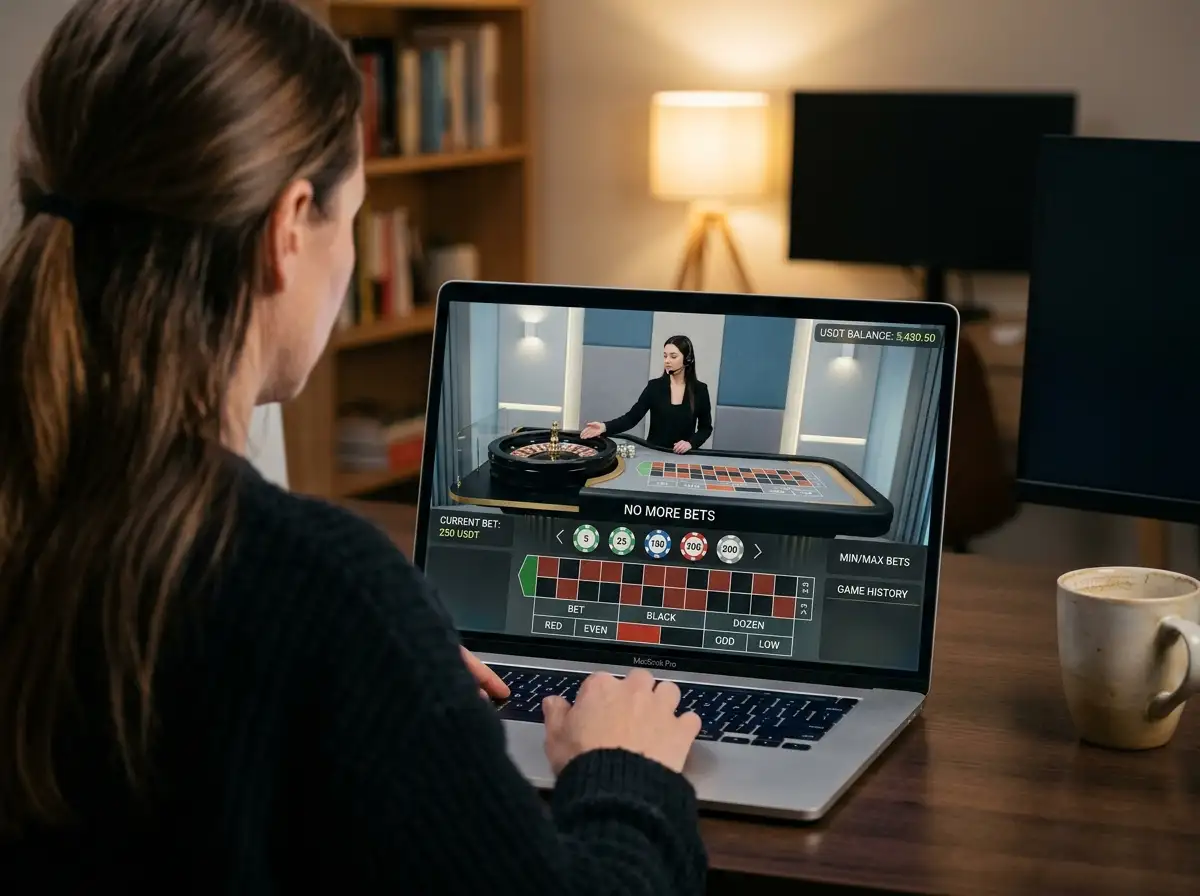
KYC, Anonymity, and No-KYC USDT Casinos
Know Your Customer regulations require casinos to verify player identity before processing large withdrawals, a compliance measure aimed at preventing money laundering and fraud. KYC typically involves uploading a government-issued photo ID, proof of address such as a utility bill, and sometimes a selfie holding the ID next to your face. The verification process takes anywhere from a few minutes to several days depending on the operator’s compliance team workload.
What Is KYC and Why Do Casinos Require It?
KYC stands for Know Your Customer, a regulatory requirement imposed on financial institutions and gambling operators to verify the identity of their clients. Casinos use KYC to comply with anti-money-laundering laws, prevent underage gambling, detect fraud, and satisfy licensing conditions set by regulatory bodies such as Curaçao Gaming Authority or the Malta Gaming Authority.
Most offshore casinos implement tiered KYC. Small deposits and withdrawals below a certain threshold (commonly 2,000 to 5,000 dollars equivalent) process without verification. Once cumulative withdrawals exceed the threshold, the casino requests KYC documents before approving further payouts. Some operators trigger KYC randomly as part of ongoing compliance checks or if unusual transaction patterns appear. High-value withdrawals, deposits from regions flagged for money laundering, or rapid turnover of large sums increase the likelihood of a KYC request.
No-KYC USDT Casinos for Australian Players
CoinCasino, Thrill, BetPanda, and Cryptorino operate no-KYC models for the majority of users, allowing registration, deposits, play, and withdrawals without identity verification below specified thresholds. CoinCasino markets itself as a genuine no-KYC casino where no verification is required at any level, though terms reserve the right to request documents at the operator’s discretion. Thrill lists zero minimum deposit and processes most withdrawals instantly without KYC for accounts below 5,000 dollars in lifetime withdrawals.
The no-KYC model appeals to privacy-conscious players who prefer not to submit personal documents to offshore entities. The tradeoff is reduced recourse if disputes arise. A casino with your verified identity has more incentive to maintain reputation and resolve complaints fairly because a blacklisted player can warn others using verified details. An anonymous player who loses a dispute has no external leverage—the operator can close the account and move on.
Cloudbet, BC.Game, Wild.io, FortuneJack, and BetFury may require KYC for larger withdrawals or when triggered by compliance reviews. The threshold varies but commonly sits between 2,000 and 10,000 dollars in cumulative withdrawals. First-time users often withdraw smaller amounts without verification, then encounter KYC on subsequent larger payouts.
| Casino | KYC Required | KYC Threshold | Verification Documents | Processing Time |
|---|---|---|---|---|
| Cloudbet | Yes, for larger withdrawals | Not specified | Photo ID, proof of address | 24-72 hours |
| BC.Game | Yes, for larger withdrawals or on trigger | ~$2,000-$10,000 cumulative | Photo ID, proof of address, selfie | 24-48 hours |
| Thrill | No, below threshold | ~$5,000 lifetime withdrawals | Not required below threshold | Instant below threshold |
| Wild.io | No, below threshold | Not specified | Requested above threshold | 24-48 hours when required |
| CoinCasino | No (claimed) | None stated | Not required (claimed) | N/A |
| BetPanda | No, below threshold | ~$2,000-$5,000 | Not required below threshold | Minutes to hours |
| FortuneJack | Yes, for larger withdrawals | Not specified | Photo ID, proof of address | 24-72 hours |
| BetFury | Yes, when triggered | Variable | Photo ID, proof of address | Variable |
| Cryptorino | No, below threshold | Not specified | Not required below threshold | Fast (claimed) |
Submit clear, legible copies of documents when KYC is requested. Blurred photos, cropped images missing corners, or expired IDs delay verification. Most casinos accept passports, driver’s licenses, or national ID cards for photo identification. Proof of address typically requires a utility bill, bank statement, or government letter issued within the past three months showing your name and residential address matching the one registered on your account.
Provably Fair Games and Transparency
Provably fair games use cryptographic algorithms to generate outcomes in a way players can verify after the fact. The casino publishes a server seed (a random string) in hashed form before the game round begins. The player provides a client seed. Both seeds combine with a nonce (a counter incremented per round) to generate the result. After the round completes, the casino reveals the unhashed server seed, allowing the player to recompute the result and confirm it matches what was displayed.
This mechanism prevents the casino from manipulating results retroactively because changing the server seed after seeing the client seed would produce a different hash, detectable by the player. It does not eliminate the house edge—a provably fair dice game with a 1% house edge is still a 1% house edge, just auditable. BC.Game, Thrill, and several operators offer provably fair Originals including Crash, Dice, Plinko, Mines, and Limbo. Traditional slots and live dealer games cannot be provably fair because they rely on external RNG systems or physical dealing.
Do USDT Casinos Require KYC Verification for Australian Players?
KYC requirements vary by operator. CoinCasino, Thrill, BetPanda, and Cryptorino operate no-KYC models for deposits and withdrawals below certain thresholds, typically between 2,000 and 5,000 dollars. Cloudbet, BC.Game, Wild.io, FortuneJack, and BetFury may require KYC verification for larger withdrawals or when triggered by internal compliance reviews. All operators reserve the right to request identity verification at any time per anti-money-laundering regulations, so no casino guarantees permanent anonymity.
How We Selected These USDT Casinos — Methodology
The nine casinos in this ranking were selected based on verifiable acceptance of USDT deposits from Australian players, offshore licensing status, and documented operational history. Each operator was evaluated across six criteria: licensing and regulatory credibility, USDT network support and fee transparency, withdrawal speed and limits, game library breadth and software providers, bonus terms and fairness, and Australian player accessibility in practice.
Licensing and Regulatory Credibility
Licensing verification involved checking each operator’s claimed license number against public registers maintained by Curaçao Gaming Authority, Anjouan Gaming Authority, and Malta Gaming Authority. Cloudbet, BC.Game, Thrill, Wild.io, and FortuneJack hold verifiable licenses on these registers. BetPanda and FortuneJack operate under Costa Rica company registration, which provides no gaming regulation but allows legal incorporation for offshore operators. BetFury’s licensing details could not be verified on public registers despite claims of Curaçao licensing. Cryptorino failed license verification—the domain does not appear under any license on Anjouan or Curaçao registers as of August 31, 2026, and the claimed license expired.
Operators with verifiable licenses have an external regulator to escalate disputes to, though enforcement quality varies. Curaçao and Anjouan licenses provide basic complaint mechanisms but are not as robust as Malta Gaming Authority or UK Gambling Commission oversight. Costa Rica registrations and unverified licenses leave players with no external recourse if the operator refuses a withdrawal.
USDT Network Support and Fees
Cloudbet supports seven USDT networks and publishes a transparent fee table before deposit confirmation, the only operator in this ranking to do so. BC.Game supports five networks across 165 total cryptocurrencies. Thrill, Wild.io, and BetPanda support three networks. CoinCasino and FortuneJack support two. BetFury claims five but specifics vary by user location. Cryptorino supports at least two based on available documentation.
Network support determines which blockchain options players can use. TRC-20 is universally supported. ERC-20 is near-universal. BEP-20, Solana, and Polygon are less common. Operators that support only TRC-20 and ERC-20 force players using other networks to convert through exchanges before depositing, adding an extra transaction and fee layer.
Withdrawal Speed and Limits
CoinCasino’s verified median withdrawal time of under 15 minutes for USDT-TRC20 payouts is the fastest in this ranking. Wild.io’s 10-minute average ranks second. BC.Game’s four-minute median ranks third. Cloudbet, Thrill, FortuneJack, and BetPanda all process instant crypto withdrawals once internal compliance approves the request, typically clearing within minutes for verified accounts. BetFury’s withdrawal speed varies, with some users reporting minutes and others hours. Cryptorino claims fast withdrawals but independent verification was not available.
Minimum withdrawals range from zero (Thrill) to game-specific minimums (FortuneJack, BetFury). Maximum withdrawal limits vary widely, from no stated cap (Cloudbet) to 300,000 dollars (BetFury). High rollers should verify withdrawal caps before depositing large amounts.
Game Library and Software Providers
BetFury hosts 13,000+ games, the largest library reviewed. BC.Game offers 8,500+ games. Wild.io and FortuneJack both exceed 7,000 titles. Cryptorino hosts 6,300+ games from 70+ providers. CoinCasino offers 6,000+ titles. Thrill fields 6,000+ games. Cloudbet’s 3,000-game library is the smallest but still substantive. BetPanda’s 5,500-game library sits mid-range.
Software providers determine game quality and variety. Pragmatic Play, Evolution Gaming, Hacksaw Gaming, NetEnt, Play’n GO, NoLimit City, and BGaming appear across most operators. BC.Game’s 50+ provably fair Originals and BetFury’s 99.28% RTP games distinguish them from competitors relying solely on third-party studios.
Bonus Terms and Fairness
Cryptorino’s 10% weekly wager-free cashback is the most generous bonus structure reviewed, paying withdrawable money with no rollover. Thrill’s 70% rakeback paid daily is the second-best ongoing reward. Wild.io’s 400% welcome bonus up to 10,000 dollars is the largest signup offer. BC.Game’s 300% up to 20,000 Australian dollars targets the local market specifically.
BetFury’s 50 USDT monthly dormancy fee and clause permitting forced USDT conversion are the harshest terms encountered. FortuneJack’s up-to-2x turnover requirement on all deposits including unmatched ones is above industry standard. Most operators impose 30x-60x wagering on bonuses, standard for the offshore market.
Australian Player Accessibility
All reviewed operators accept Australian players through their offshore licensing structures. None hold Australian licenses because no such licenses exist for online casinos. ACMA site blocking may affect primary domains, but mirror links and VPN access remain functional workarounds. Stake was explicitly excluded because its current terms of service name Australia as a prohibited jurisdiction, despite appearing in competitor rankings that ignore this restriction.
Mobile USDT Casino Access and New USDT Casinos in 2026
Every operator in this ranking offers mobile-responsive web platforms accessible through smartphone and tablet browsers. Dedicated native apps are less common—BC.Game and BetPanda offer Android and iOS apps, while most others rely on progressive web apps that install as home-screen shortcuts without App Store or Google Play distribution. Crypto casinos avoid traditional app stores because gambling app policies vary by jurisdiction and review processes are lengthy.
Mobile interfaces mirror desktop functionality. Deposits, withdrawals, game libraries, live dealer tables, and account settings work identically on mobile and desktop. Touchscreen controls replace mouse clicks. Game loading times depend on network speed and device processing power, with modern smartphones handling even graphics-intensive slots smoothly.
New USDT casinos launched in 2026 include Thrill (2025), though its mid-year license switch from Curaçao to Anjouan complicates the founding date. CoinCasino launched in 2023 and remains relatively new compared to veterans like Cloudbet (2013) and FortuneJack (2014). Cryptorino launched in 2024 but its license verification failure makes it a risky choice despite being new. Newer casinos typically offer aggressive welcome bonuses to attract initial users but lack the track record of established operators when it comes to handling disputes or large withdrawals.
Responsible Gambling and Player Protection
Gambling carries financial and personal risk. Offshore USDT casinos are not subject to Australian consumer protection laws, self-exclusion mechanisms are limited, and dispute resolution depends entirely on the operator’s willingness to cooperate or the foreign regulator’s enforcement capacity. Players should set deposit limits manually, track time and money spent, and recognise problem gambling signs before they escalate.
Setting Deposit Limits and Self-Exclusion
Most reviewed operators offer voluntary deposit limits set in account settings—daily, weekly, or monthly caps that prevent deposits above the specified amount. These limits are self-imposed and enforced by the casino’s system, not by external regulation. They can typically be reduced immediately but increases require a cooling-off period of 24 to 72 hours to prevent impulsive decisions during losing streaks.
Self-exclusion options vary. Some casinos allow account closure for a specified period (one month, three months, six months, or permanent). Once self-excluded, the account locks and cannot be reopened until the period expires. Other operators offer only permanent account closure with no temporary exclusion option. Email support to request self-exclusion if the setting is not available in your account dashboard. Reputable operators honour these requests within 24 hours.
The limitation of offshore self-exclusion is that it applies only to that single casino. Closing your account at Cloudbet does not prevent you from opening an account at BC.Game or Wild.io. Multi-operator exclusion systems like GamStop in the UK or OASIS in Germany do not exist for offshore casinos. Players must self-exclude from each operator individually.
BetStop National Self-Exclusion Register
BetStop is Australia’s national self-exclusion register for online wagering and telephone betting services licensed in Australia. As of the research date, 35,671 Australians had registered with BetStop. Registration prevents access to all licensed Australian betting operators, including sports betting sites and corporate bookmakers operating under state and territory licenses.
BetStop does not block access to offshore casinos because those operators are not part of the Australian licensing system. A player registered with BetStop can still access Cloudbet, BC.Game, or any other offshore USDT casino because these operators do not integrate with Australian regulatory systems. BetStop is effective for controlling access to domestic licensed operators but provides no protection against offshore gambling.
Recognizing Problem Gambling Signs
Problem gambling develops gradually. Early signs include spending more time or money gambling than intended, chasing losses by increasing bet sizes or depositing more after losing, neglecting responsibilities or relationships to gamble, borrowing money or selling possessions to fund gambling, and feeling anxious or irritable when not gambling. Advanced signs include lying to family or friends about gambling activity, gambling to escape stress or negative emotions, and experiencing financial hardship due to gambling losses.
If you recognise these patterns, take action before they escalate. Set strict deposit limits, self-exclude from all casinos where you hold accounts, and seek support from professional services. Problem gambling is a recognised behavioural addiction with effective treatment pathways available through counselling and peer support groups.
Where to Get Help
Gambling Help Online provides free, confidential support for Australians experiencing gambling problems. Access 24/7 counselling via phone at 1800 858 858 or online chat at gamblinghelponline.org.au. The service connects users with trained counsellors who provide immediate support and can refer to in-person treatment services.
Gamblers Anonymous Australia operates peer-support meetings in every state and territory, following a 12-step recovery model similar to Alcoholics Anonymous. Meetings are free and anonymous. Locations and schedules are listed at gaaustralia.org.au.
Lifeline Australia provides crisis support and suicide prevention services accessible 24/7 at 13 11 14. While not gambling-specific, Lifeline supports individuals in acute distress related to any issue including gambling-related financial or emotional crises.
Your state or territory government may operate additional services. Contact your local health department or search gambling help [your state] for region-specific resources.

Crypto Casino Australia 2026 — Bitcoin, Ethereum & Stablecoins Guide
Content created by the «Payment Methods» team