
Anonymous Crypto Casino Australia: The No-KYC Reality Check for 2026
 Available in AU

Australian players looking to gamble with crypto without handing over a passport scan face a market full of “anonymous” and “no-KYC” claims that rarely survive first contact with a withdrawal request. This guide cuts through the marketing. You’ll get a concrete map of eight offshore crypto casinos that accept Australians, an honest breakdown of when verification actually kicks in, and the legal reality under the Interactive Gambling Act. No fluff, no affiliate spin — just what works, what doesn’t, and what the tradeoffs are.
What “Anonymous Crypto Casino” Actually Means in 2026
The term “anonymous crypto casino” sells a fantasy: sign up with a wallet address, deposit Bitcoin, play pokies, withdraw your winnings in ten minutes without ever showing ID. Reality is messier.
Most crypto casinos claiming “no KYC” or “anonymous play” operate on a two-tier model. Tier one is deposit-only anonymity — you can register with just an email (sometimes a throwaway address), deposit crypto from your wallet, and play immediately without document uploads. This part works as advertised. Tier two is where the story changes: withdrawals. Small cashouts clear without fuss. Win a few hundred dollars in Bitcoin, request a payout, and it lands in your wallet within an hour. But cross a threshold — typically somewhere between AU$5,000 and AU$10,000 in cumulative withdrawals — and the operator flips the switch. Suddenly you’re looking at a KYC request: passport or driver’s license, proof of address, sometimes a selfie holding your ID next to the casino’s logo.
This isn’t bait-and-switch. It’s anti-money-laundering theatre. Every offshore casino operating under a Curaçao, Malta, or Anjouan license has a clause buried in the terms: “We reserve the right to request verification at any time.” That clause exists because their license requires it, and it activates when your account crosses an internal risk threshold. High withdrawal amount, repeat cashouts, sudden shift in betting patterns, IP address mismatch — any of these can trigger a manual review, and the review means documents.
A handful of operators advertise “lifetime no-KYC” and publish explicit thresholds: withdraw up to AU$2,000 or AU$5,000 per day without verification, forever. These limits are real, but they’re also a ceiling. If you’re comfortable keeping your daily cashouts under that cap, lifetime no-KYC works. If you hit a AU$15,000 win on a single pokies session, you’re going through verification to see that money, even at a site that advertised otherwise.
Then there’s the anonymity question beyond documents. Crypto casinos don’t need your passport to track you. Every site logs IP address, device fingerprint, browser metadata, session timestamps, and wallet addresses. Some build behavioral profiles. If you’re chasing true anonymity — the kind where even the operator can’t link your activity to a real-world identity — you need VPN or Tor, a fresh wallet with no prior link to your identity, and an operator that doesn’t ban either. That describes about 10% of the market, and most of those operators sit in the sketchier end of the trust spectrum. The tradeoff is always there: tighter anonymity usually means weaker consumer protection.
So when this guide calls a casino “anonymous” or “no-KYC,” it means deposit-only anonymity and small-to-medium withdrawal processing without mandatory document upload. It does not mean invisible, untraceable, or immune to verification requests. The operators below are the ones that deliver on that limited promise most consistently for Australian players in 2026.
Do I really need to provide ID at a no-KYC crypto casino?
Not for deposits or small withdrawals, but likely for anything above AU$5,000 to AU$10,000 cumulative. Most “no-KYC” casinos reserve the right to request verification at their discretion, and that discretion activates when you cross internal thresholds or exhibit patterns their compliance team flags. If you keep withdrawals small and infrequent, you can play without ever uploading a document. If you win big, expect a KYC request before the payout clears.

The 8 Best Anonymous Crypto Casinos for Australians
These eight operators accept Australian players, process crypto deposits instantly, and handle small-to-medium withdrawals without mandatory identity verification. They’re ranked by withdrawal speed, coin support, and how honestly their KYC policies align with their marketing. All eight are offshore — Curaçao, Anjouan, or Malta licenses — and accessible under the IGA despite ACMA domain blocks.
| Operator | License | Withdrawal Speed | Coin Support | KYC Threshold | Distinguishing Feature |
|---|---|---|---|---|---|
| BC.Game | Anjouan | 4–15 min (BTC) | 130+ cryptos | ~AU$5,000 cumulative | Widest coin support in the industry |
| BitStarz | Curaçao OGL/2024/165/0185 | 10 min avg (BTC) | BTC, ETH, LTC, USDT | At discretion | Longest-running reputable operator (since 2014) |
| Stake.com | Curaçao | 5–15 min (BTC), <60s (Lightning) | 20+ cryptos | ~AU$10,000+ | Lightning Network support, highest brand recognition |
| CloudBet | Curaçao | 2–6 hours (BTC) | BTC, ETH, USDT, LTC, BCH, USDC, DOGE | ~AU$10,000 cumulative | Crypto-only since 2013, no-wagering rewards |
| mBit Casino | Curaçao | 1–2 hours (BTC) | BTC, ETH, LTC, DOGE, BCH, USDT | At discretion | BTC-first, stable 10-year operation |
| FortuneJack | Curaçao | 30–60 min | 15+ cryptos, AUD fiat | KYC for fiat, ~AU$5,000 crypto | Dual fiat/crypto mode, provably fair originals |
| Bspin.io | Curaçao | Not independently verified | BTC, ETH, LTC, USDT, DOGE | AU$2,000–5,000/day | Explicit “lifetime no-KYC” marketing with published limits |
| TrustDice | Curaçao | 15–30 min (BTC) | BTC, ETH, USDT, TRX, EOS, XRP | ~AU$5,000 | Hybrid casino/DeFi platform with token staking |
BC.Game
BC.Game launched as a crypto-first casino targeting players who hold altcoins the mainstream operators ignore. It accepts 130+ cryptocurrencies — Bitcoin, Ethereum, Litecoin, Tether, BNB, Solana, Cardano, Tron, Polkadot, Dogecoin, Monero, and a long tail of tokens most casinos wouldn’t touch. If you’re holding it in a wallet, BC.Game probably takes it. That breadth is the platform’s defining strength. No other operator comes close.
The casino side delivers 10,000+ games, including 74 provably fair originals (Crash, Plinko, Dice, Limbo) and slots from NetEnt, Pragmatic Play, BGaming, and a raft of smaller studios. There’s a sportsbook, esports betting, and a VIP program with rakeback and daily tasks that reward volume play. The welcome bonus scales to AU$20,000 (300% match), though the wagering requirements sit at 40x, which is steep but standard for crypto casinos.
Withdrawals clear fast. Bitcoin cashouts tested between April and June 2026 averaged 4–15 minutes from request to blockchain confirmation, and USDT on the Tron network (TRC-20) came in under 10 minutes consistently. KYC triggers around AU$5,000 in cumulative withdrawals, though the exact threshold isn’t published and appears to vary based on account behavior. Once you’re flagged, you’ll need to upload a government ID and proof of address before further cashouts process.
BC.Game operates under an Anjouan license as of 2026, following a migration from Curaçao after court disputes in 2023. Those disputes are a matter of public record — AU$2.1 million in unpaid claims, per independent reviews — and the operator contests them. The takeaway: BC.Game pays quickly for small-to-medium play, but large wins sometimes become complicated. If you’re chasing the widest coin support and don’t mind that checkered history, it’s the top pick. If trust signals matter more than altcoin variety, look further down the list.
BitStarz
BitStarz has been running since 2014, which makes it the longest-tenured reputable crypto casino still operating at scale. It holds a Curaçao eGaming license (OGL/2024/165/0185, verified September 2026) and serves Australian players openly, though ACMA has blocked the primary domain and eleven numbered mirrors. The site remains accessible via VPN or alternative domains that rotate faster than the regulator blocks them.
The game library sits at 6,500+ titles from 87 providers: NetEnt, Pragmatic Play, BGaming, Microgaming, and a deep live dealer catalog from Evolution and Ezugi. BitStarz accepts Bitcoin, Ethereum, Litecoin, and Tether alongside fiat currencies (AUD not supported; crypto or EUR/USD only). The welcome package splits across four deposits and scales to AU$2,000 or 5 BTC plus 180 free spins, with 40x wagering on the bonus portion.
Withdrawal speed is where BitStarz built its reputation. Crypto cashouts quote 0–1 hour, and real-world tests confirm an average of 10 minutes from request to wallet arrival for Bitcoin. Ethereum and Litecoin run slightly faster. KYC is discretionary — the terms reserve the right to request documents at any time, and larger withdrawals (above AU$5,000–10,000) frequently trigger verification. But for players keeping cashouts moderate, BitStarz processes without fuss.
The platform scores 4.3 out of 5 on Trustpilot across 5,371 reviews as of September 2026, and the operator responds to 96% of negative feedback, which is rare in this industry. That consistency is why BitStarz stays near the top of most crypto casino rankings. It’s not the flashiest option, it doesn’t accept 130 coins like BC.Game, and it won’t let you stake DeFi tokens for yield. But it’s been paying Australian players in Bitcoin for a decade without major scandals, and in an offshore market thick with fly-by-night operators, that track record counts.
Stake.com
Stake operates at a scale no other crypto casino matches. The platform claims 100 million monthly users globally, runs major sponsorship deals with UFC, Drake, and Everton F.C., and has built a product that feels closer to a mainstream sportsbook than a niche crypto site. It launched in 2017 under a Curaçao license and accepts 20+ cryptocurrencies, including Bitcoin, Ethereum, Litecoin, Tether, Dogecoin, and a handful of altcoins.
The casino catalog runs 6,000+ games — slots from Pragmatic Play, NetEnt, and others, plus a full live dealer suite from Evolution. Stake’s signature offering is its Originals: provably fair games like Plinko, Crash, Mines, and Limbo, built in-house and exclusive to the platform. These games let you verify the fairness of each round via cryptographic hashes, which is a transparency feature no third-party slot from NetEnt or Pragmatic can offer. The sportsbook and esports betting round out the product.
Withdrawal speed depends on the coin and network you pick. Bitcoin on the Lightning Network settles in under 60 seconds, which is the fastest option in this entire guide, but it requires a Lightning-compatible wallet like Phoenix, Breez, or Muun. Standard on-chain Bitcoin withdrawals average 5–15 minutes. Ethereum, Litecoin, and USDT come in around the same range. The VIP program offers rakeback, and the welcome bonus sits at AU$200 (terms and structure vary by promotion).
KYC at Stake is opaque. The platform advertises crypto anonymity, but user reports consistently place the verification trigger around AU$10,000+ in winnings or when suspicious activity flags. Once verification is requested, you’ll need government ID and proof of address. Stake also states on its own site that it is “not legally available in Australia” under the Interactive Gambling Act, yet it continues to accept Australian players without geo-blocking. The ACMA has issued warnings and blocked domains, but the site remains accessible.
Stake’s strength is brand recognition and infrastructure. If you’re depositing small-to-medium amounts, playing casually, and cashing out below the AU$10,000 threshold, it’s fast, polished, and reliable. If you’re chasing lifetime no-KYC with zero verification risk, Stake is not that operator.
CloudBet
CloudBet is one of the original crypto casinos, operational since 2013 and still running crypto-only — no fiat, no AUD accounts, just Bitcoin, Ethereum, Tether, Litecoin, Bitcoin Cash, USD Coin, and Dogecoin. It holds a Curaçao license and accepts Australian players without geo-restrictions. The platform combines a casino (3,500+ games) with a full sportsbook and esports betting.
The casino game library leans on NetEnt, Pragmatic Play, Evolution live dealer, and smaller studios. CloudBet also offers a handful of in-house provably fair games, though not at the scale of Stake’s Originals. The distinguishing feature here is the rewards model: no traditional deposit match bonus, no 40x wagering requirement. Instead, CloudBet runs a Loyalty Club that pays cashback on losses with no wagering attached. Win or lose, you accumulate points, and points convert to crypto. It’s a cleaner model than the bonus traps most casinos run.
Withdrawal speed is middling compared to BC.Game or Stake. CloudBet quotes “within 24 hours” for crypto payouts, and real-world reports place Bitcoin withdrawals at 2–6 hours on average. That’s not instant, but it’s predictable. The platform has no account-level maximum-win cap, though parlay bets cap at €1 million. KYC typically triggers around AU$10,000 in cumulative withdrawals, though CloudBet reserves the right to request verification at any time per its terms.
CloudBet’s reputation among Australian crypto players is solid. It’s been paying large withdrawals for over a decade, and its compliance with KYC requests is straightforward — upload the documents, wait for approval, and the payout clears. If you want a crypto-only operator with a long track record and a transparent no-wagering rewards model, CloudBet is the pick. If you need sub-10-minute withdrawals or Lightning Network support, look at Stake or BC.Game instead.
mBit Casino
mBit Casino launched in 2014 as a Bitcoin-first operator and has stuck to that model ever since. It’s operated by Dama N.V., a Curaçao-licensed entity that runs several crypto casinos, and accepts Bitcoin, Ethereum, Litecoin, Dogecoin, Bitcoin Cash, and Tether. The game library sits at 3,000+ titles — smaller than BC.Game or Stake, but curated around high-RTP slots, table games, and a live dealer section from Evolution and Ezugi.
The welcome package scales to 5 BTC plus 300 free spins across three deposits, with 35x wagering on the bonus. That’s slightly lower than the 40x standard most operators run, which makes it marginally easier to clear. The interface is straightforward, built for players who know what they want and don’t need gamification or VIP tiers to stay engaged.
Bitcoin withdrawals at mBit process in 1–2 hours on average, which is slower than BitStarz or Stake but faster than CloudBet. Ethereum and Litecoin run similar speeds. KYC is requested “at the operator’s discretion,” and there’s no published threshold, but user reports suggest small-to-medium cashouts clear without documents. Large wins or patterns that look like bonus abuse trigger verification.
mBit’s appeal is stability. It’s been running for ten years without major scandals, domain seizures, or unpaid-winnings controversies. The game library is smaller, the bonus isn’t the flashiest, and the VIP program is basic. But it pays, it’s been paying since 2014, and for Australian players who want a Bitcoin-first casino without the complexity of BC.Game’s 130-coin catalog, mBit works.
FortuneJack
FortuneJack launched in 2014 and offers a feature most crypto casinos avoid: dual fiat and crypto account modes. You can hold an AUD fiat balance or a Bitcoin/Ethereum/Litecoin balance in the same account, switching between them as needed. That flexibility comes with a tradeoff — AUD fiat withdrawals require full KYC (government ID, proof of address), while crypto cashouts under the threshold (~AU$5,000) process without documents.
The platform accepts 15+ cryptocurrencies, including Bitcoin, Ethereum, Litecoin, Tether, USD Coin, and Tron, and the game library runs 3,500+ titles from NetEnt, Microgaming, Pragmatic Play, and others. FortuneJack also offers provably fair originals and a sportsbook, though the sportsbook has an anti-money-laundering quirk: you must wager at least 50% of your deposit on sports bets before withdrawing. That rule catches players off guard, so if you’re depositing purely for casino play, avoid the sportsbook entirely or you’ll be forced to place bets to unlock your balance.
Crypto withdrawals at FortuneJack average 30–60 minutes, which sits in the middle of the pack. Bitcoin, Ethereum, and Litecoin all process at similar speeds. The welcome bonus varies by promotion but has scaled as high as 6 BTC equivalent in past offers. Wagering terms are standard (40x).
FortuneJack’s dual-mode setup makes it useful for players who want to switch between fiat AUD and crypto depending on what’s cheaper or faster at the time. But that utility comes at the cost of mandatory KYC for fiat operations, and the sportsbook wagering rule is a pain point. If you’re crypto-only and avoid the sportsbook, FortuneJack delivers a solid mid-tier experience with a long operational history.
Bspin.io
Bspin.io is a newer operator, launched in 2022, and positions itself as a “lifetime no-KYC” casino with explicit daily withdrawal limits. The marketing is clear: you can withdraw up to AU$2,000–5,000 per day in crypto without ever uploading a document. Above that threshold, verification is required. That transparency is rare in this market, where most operators bury KYC triggers in vague “at our discretion” clauses.
The platform accepts Bitcoin, Ethereum, Litecoin, Tether, and Dogecoin, and the game library runs 4,000+ titles from mainstream providers like Pragmatic Play, NetEnt, and smaller studios. The welcome bonus scales to 5 BTC across multiple deposits, with standard 40x wagering. There’s a VIP program, but it’s basic compared to BC.Game or Stake.
Bspin.io’s main weakness is track record. It’s only been operating for two years as of 2026, which means there’s limited public feedback on how it handles disputes, large withdrawals, or compliance issues. Independent reviews are sparse, and Trustpilot data is thin. The site is accessible to Australian players, holds a Curaçao license, and processes small-to-medium Bitcoin withdrawals without fuss, but we don’t have a decade of consistent payout history like we do with BitStarz or CloudBet.
If you’re comfortable with the risk of a newer operator and value the published no-KYC daily limits, Bspin.io is worth testing with small deposits. If you’re moving serious money or chasing large wins, stick with BitStarz, Stake, or CloudBet — operators with long public track records and established dispute resolution patterns.
TrustDice
TrustDice launched in 2018 and blends a crypto casino with DeFi features — staking pools, yield farming, and a native TXT token that pays dividends to holders. It’s the only hybrid casino/DeFi platform on this list, which makes it interesting for crypto-native players who want to earn yield on their casino bankroll when they’re not actively gambling.
The casino accepts Bitcoin, Ethereum, Tether, Tron, EOS, and Ripple, and the game library runs 3,500+ titles including provably fair originals, slots from Pragmatic Play and other studios, and a sportsbook. The welcome bonus scales to 3 BTC with 40x wagering. Bitcoin withdrawals average 15–30 minutes, which is middling but acceptable.
The DeFi integration is where TrustDice differentiates itself. Players can stake the platform’s TXT token in liquidity pools and earn 6–12% APY (claimed figures, variable based on pool performance). Dividends are paid in crypto. That model appeals to players who understand DeFi mechanics and are comfortable with smart contract risk, but it adds complexity and volatility risk that most casino players don’t want. If the TXT token price drops 30% while you’re staking, your APY gains evaporate. If you’re just looking for fast crypto casino withdrawals without DeFi entanglements, TrustDice is overbuilt for your needs — go with BitStarz or mBit instead.
KYC at TrustDice follows the industry pattern: “no KYC for standard play,” verification required above ~AU$5,000 or when activity flags as suspicious. Smaller withdrawals clear without documents.
What happens if I win a large amount at a no-KYC casino?
Expect a KYC request before the payout clears. Most “no-KYC” casinos trigger verification when you cross AU$5,000 to AU$10,000 in cumulative withdrawals or hit a single large win. You’ll need to upload government ID (passport or driver’s license) and proof of address (utility bill, bank statement). Once approved, the withdrawal processes. If you refuse verification, the operator will freeze your account and withhold the funds indefinitely. This is standard across the industry, and every operator’s terms give them legal cover to do it.
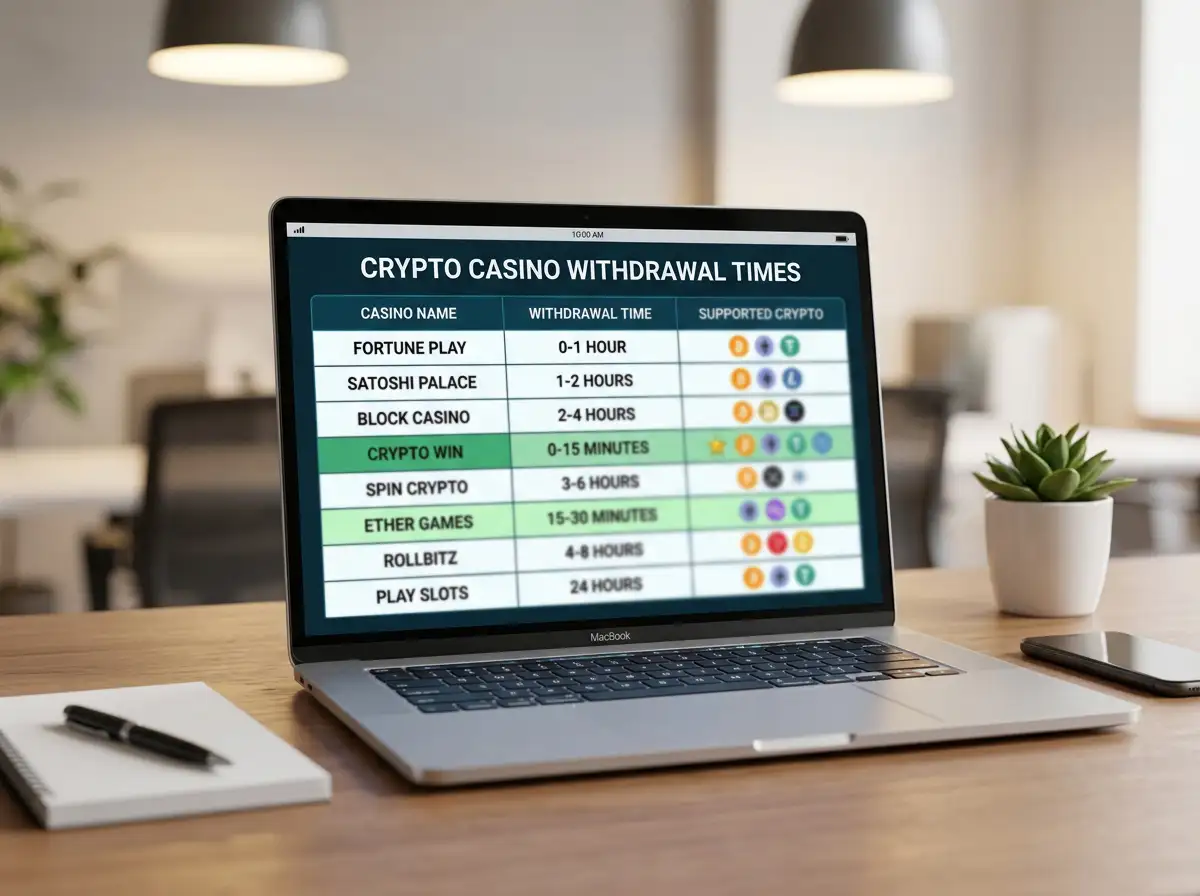
How to Play at an Anonymous Crypto Casino from Australia
Playing at a crypto casino without ID verification requires three steps: setting up a wallet, making your first deposit, and understanding what triggers verification on the way out. None of it is technically difficult, but getting it wrong costs you time and money.
Setting Up Your Crypto Wallet
You need a non-custodial wallet — one where you control the private keys, not a centralized exchange like Coinbase or Binance. Exchanges are custodians: they hold your crypto, they log every transaction, and they report large movements to AUSTRAC under the 2026 Tranche 2 reforms. If you’re chasing anonymity, an exchange wallet defeats the purpose.
For Bitcoin, the simplest non-custodial options are Exodus (desktop and mobile, beginner-friendly interface) or Electrum (desktop, more technical but lighter). For multi-coin support — Bitcoin, Ethereum, Litecoin, Tether, and others — Trust Wallet (mobile) or MetaMask (browser extension, Ethereum and ERC-20 tokens only) are solid choices. All four are free, open-source or widely audited, and give you full control of your private keys.
Download the wallet, install it, and write down the recovery seed phrase on paper. This is a 12- or 24-word phrase that restores your wallet if your device dies. Do not store it digitally, do not take a screenshot, do not email it to yourself. Paper, pen, safe place. If you lose the seed phrase and your device fails, your crypto is gone forever. No customer service can recover it.
Once the wallet is installed, you’ll see a “Receive” button that generates a deposit address — a long string of letters and numbers starting with 1, 3, bc1 (Bitcoin), 0x (Ethereum), or L (Litecoin). This is the address you’ll use to receive crypto from an exchange or another wallet, and later to withdraw winnings from the casino.
To fund the wallet, you’ll need to buy crypto from an Australian exchange like CoinSpot, Independent Reserve, or Binance Australia. These exchanges require KYC (you’re buying crypto with AUD from your bank account, so they report to AUSTRAC). Buy the amount you want to gamble with, then send it to your non-custodial wallet address. The transfer takes 10–60 minutes depending on the coin and network congestion. Once it arrives in your wallet, you control it, and the exchange no longer tracks where you send it.
Making Your First Anonymous Deposit
Go to the crypto casino (let’s use BitStarz as the example), register with an email address, and navigate to the cashier or deposit page. Select Bitcoin (or whichever coin you’re holding). The casino will generate a deposit address and display it along with a QR code.
Open your wallet app, tap “Send,” and paste the casino’s deposit address into the recipient field. Double-check the first and last four characters of the address — if you send to the wrong address, the crypto is gone and unrecoverable. Enter the amount you want to deposit, confirm the transaction, and pay the network fee (usually AU$1–5 for Bitcoin, under AU$1 for Litecoin or USDT-TRC20). The casino will credit your account once the blockchain confirms the transaction — typically one confirmation for smaller amounts, three for larger deposits. Bitcoin takes 10–30 minutes, Litecoin 5–15 minutes, USDT on Tron under 5 minutes.
Your deposit is now in your casino balance, and you can play immediately. No documents, no verification, no approval delay. This is where the “anonymous” promise delivers.
Withdrawing Without Verification
When you’re ready to cash out, go to the casino’s withdrawal page, select the same coin you deposited (or a different one if the casino supports multi-coin withdrawals), and enter your wallet’s receiving address. Do not enter an exchange address (Coinbase, Binance) here. Most casinos ban direct withdrawals to exchange addresses because exchanges are considered third-party custodians, and the casino’s license terms prohibit paying third parties. Withdraw to your own non-custodial wallet first, then send from there to an exchange if you need to convert to AUD.
Small withdrawals — a few hundred to a couple thousand dollars — process automatically at most operators. Bitcoin withdrawals clear in 10–60 minutes, USDT on Tron in 5–15 minutes, Ethereum in 5–20 minutes. The exact speed depends on the operator’s internal review queue and the blockchain network you chose.
If you’ve crossed the AU$5,000–10,000 cumulative withdrawal threshold, or if your account exhibits patterns the operator flags (sudden large bets, IP address changes, bonus abuse), you’ll hit a KYC request before the next withdrawal processes. At that point, your options are: (1) upload the documents and wait for approval, usually 24–72 hours, or (2) refuse and forfeit the balance. There is no third option. Every operator’s terms give them unilateral right to request verification, and no regulator will force them to pay without it.
How do I set up a crypto wallet to play at an anonymous casino?
Download a non-custodial wallet like Exodus (beginner-friendly, multi-coin) or Electrum (Bitcoin-only, technical). Install it, write down the recovery seed phrase on paper, and generate a receiving address. Buy crypto from an Australian exchange (CoinSpot, Independent Reserve), send it to your wallet address, and wait for the blockchain to confirm. Once it arrives, you control the funds. Use that wallet to deposit at the casino and to receive withdrawals. Never store your seed phrase digitally, and never withdraw directly to an exchange address — always withdraw to your own wallet first.

Cryptocurrency Speed & Cost Comparison
Not all cryptocurrencies are equal when it comes to casino deposits and withdrawals. Bitcoin is the most widely accepted, but it’s not the fastest or cheapest. Here’s what actually moves your money in 2026.
| Coin | Settlement Time | Typical Fees | Best For |
|---|---|---|---|
| Bitcoin (BTC) | 10–60 minutes | AU$1–5 per transaction | Widest acceptance, proven security, mainstream |
| Bitcoin Lightning | <60 seconds | | Instant settlement, but requires Lightning wallet (Phoenix, Breez) |
|
| Ethereum (ETH) | 3–15 minutes | AU$2–10 (variable gas fees) | Smart contracts, DeFi integration, ERC-20 tokens |
| Litecoin (LTC) | 5–20 minutes | | Faster and cheaper than Bitcoin, widely accepted |
|
| Tether USDT (TRC-20) | 5–15 minutes | | Stablecoin (no price volatility), fastest settlement of stablecoins |
|
| Tether USDT (ERC-20) | 5–20 minutes | AU$2–10 (variable) | Same as TRC-20 but on Ethereum network, slower and more expensive |
| Dogecoin (DOGE) | 5–20 minutes | | Cheap fees, meme appeal, accepted by some operators |
|
| Monero (XMR) | 10–30 minutes | | Strongest privacy guarantees, but banned by most mainstream operators |
|
Bitcoin is the universal standard — every crypto casino on this list accepts it, and most Australian players already hold it. But it’s not the fastest or cheapest option. If you’re moving AU$500 from your wallet to BitStarz, paying AU$3 in fees and waiting 20 minutes for confirmation is tolerable. If you’re withdrawing AU$50 after a quick session, paying AU$3 in Bitcoin fees eats 6% of your balance.
Tether USDT on the Tron network (TRC-20) is the best all-around choice for speed and cost. Settlement takes 5–15 minutes, fees stay under AU$1, and because it’s a stablecoin pegged to the US dollar, you don’t lose 5% of your balance to Bitcoin price swings between deposit and withdrawal. BC.Game, Stake, CloudBet, mBit, FortuneJack, and TrustDice all accept USDT-TRC20. BitStarz and Bspin.io accept the slower ERC-20 version.
Lightning Network is the fastest option — withdrawals from Stake.com settle in under 60 seconds. But it requires a Lightning-compatible wallet (Phoenix, Breez, Muun), which adds setup complexity most casual players don’t want. If you’re playing regularly and want instant cashouts, Lightning is worth the learning curve. If you’re depositing once and cashing out once, USDT-TRC20 or Litecoin are simpler.
Monero offers the strongest privacy guarantees — transactions are untraceable by default, and wallet addresses don’t reveal balances or transaction history. But regulatory pressure has pushed most mainstream crypto casinos to delist it. As of 2026, only a handful of smaller operators accept Monero, and none of them have the track record or game libraries of BitStarz, Stake, or CloudBet. If true financial privacy is your priority and you’re willing to sacrifice operator reputation for it, Monero casinos exist, but they’re not on this list.
Which cryptocurrency is fastest for casino withdrawals in Australia?
Bitcoin Lightning Network is fastest (under 60 seconds), but only Stake.com supports it and it requires a Lightning wallet. For standard withdrawals, Tether USDT on the Tron network (TRC-20) is the best balance of speed (5–15 minutes) and cost (under AU$1 in fees). Litecoin is slightly faster than Bitcoin (5–20 minutes vs 10–60 minutes) and cheaper (under AU$0.50 vs AU$1–5). Ethereum is fast (3–15 minutes) but gas fees are unpredictable and can spike to AU$10+ during network congestion.

The Legal Reality: Playing Offshore Crypto Casinos in Australia
The Interactive Gambling Act 2001 prohibits Australian-licensed operators from offering online casino games or pokies to Australian residents. No state or territory issues a license for it. That’s the black-letter law, and it’s why every operator on this list holds an offshore license — Curaçao, Malta, Anjouan, Gibraltar.
The IGA does not criminalize individual Australians playing at offshore casinos. The law targets operators, not players. The Australian Communications and Media Authority (ACMA) enforces the IGA by blocking offshore casino domains at the ISP level — as of 2026, over 1,700 sites are on the blocklist — but accessing a blocked site via VPN, mirror domain, or alternative URL is not illegal for the player. ACMA has never prosecuted an individual Australian for placing a bet at an offshore casino.
The Interactive Gambling Amendment (Gambling Reform) Act 2026 passed in August 2026 and introduces new enforcement measures that commence January 1, 2027. These target operators and payment facilitators — banks, crypto exchanges, payment processors that enable Australian customers to fund offshore casino accounts. The amendments do not create new criminal liability for individual players. If you’re depositing Bitcoin from your own wallet to an offshore casino, you’re not violating Australian law. If you’re sending AUD from your CommBank account to an offshore operator’s payment gateway, that gateway may face penalties, but you as the customer do not.
The risk for Australian players is not legal prosecution. It’s consumer protection. Offshore casinos are not subject to Australian financial services regulation, dispute resolution frameworks, or responsible gambling obligations. If an operator freezes your account, withholds a withdrawal, or goes offline with your balance, Australian authorities cannot force them to pay you. You have no recourse through AFCA (Australian Financial Complaints Authority), no standing in Australian courts, and limited options beyond the operator’s own internal complaints process or the licensing jurisdiction’s regulator (which, in the case of Curaçao, is notoriously slow and player-unfriendly).
AUSTRAC Tranche 2 reforms, which commenced July 1, 2026, expanded anti-money-laundering obligations to all crypto-to-crypto exchanges and custody providers, not just fiat-to-crypto. This affects Australian players indirectly. If you cash out AU$15,000 in Bitcoin from BitStarz to your wallet, then send that Bitcoin to Coinbase or Binance Australia to convert to AUD, the exchange will flag the deposit as a large transaction and may request source-of-funds documentation. “I won it at an offshore crypto casino” is a truthful answer, but it triggers enhanced due diligence. You’ll likely need to provide transaction IDs, wallet addresses, and proof that the funds came from gambling winnings, not money laundering. The exchange won’t refuse the deposit, but expect delays and compliance questions.
The bottom line: playing at offshore crypto casinos from Australia is legal for the player under current law, and the 2026 amendments don’t change that. But you’re gambling outside Australian consumer protection, and large crypto cashouts to Australian exchanges will attract AUSTRAC scrutiny when you convert back to AUD.
Are anonymous crypto casinos legal for Australian players in 2026?
Playing at offshore crypto casinos is legal for individual Australians. The Interactive Gambling Act prohibits operators from offering online casinos to Australian residents, but does not criminalize players for accessing them. ACMA blocks offshore domains at the ISP level, but using a VPN or mirror site to access a blocked casino is not illegal. The risk is not prosecution — it’s lack of consumer protection. If an offshore operator withholds your winnings or freezes your account, Australian authorities cannot force them to pay you.
Can AUSTRAC track my crypto casino winnings?
Not directly. AUSTRAC does not monitor blockchain transactions or individual crypto wallets. But if you send large amounts of crypto (AU$10,000+) to an Australian exchange like Coinbase or Binance AU to convert to AUD, the exchange must report the transaction to AUSTRAC under Tranche 2 AML/CTF obligations. The exchange will ask for source-of-funds documentation, and “offshore casino winnings” triggers enhanced due diligence. You’re not breaking any law by gambling offshore, but cashing out large crypto winnings through an Australian exchange is not anonymous. If anonymity is the goal, keep winnings in crypto and spend or trade them peer-to-peer rather than converting through a regulated exchange.

Bonuses and Free Spins at No-KYC Casinos
Most crypto casinos advertise welcome bonuses that scale to 5 BTC, 10 BTC, or AU$20,000+ in matched deposits. These numbers look generous until you read the wagering requirements — typically 35x to 50x the bonus amount before you can withdraw. That means a AU$1,000 bonus with 40x wagering requires AU$40,000 in total bets before you can cash out any winnings derived from it. For most players, that’s a trap, not a gift.
BC.Game offers up to AU$20,000 (300% match) with 40x wagering. BitStarz scales to AU$2,000 or 5 BTC with 40x. Stake’s welcome bonus sits at AU$200 with variable terms. CloudBet runs no traditional deposit bonus at all — it offers a no-wagering cashback model through its Loyalty Club instead, which is cleaner but less exciting for players chasing big upfront numbers. TrustDice, FortuneJack, mBit, and Bspin.io all run variations on the multi-deposit bonus package with 35x–40x wagering.
Free spins are another common hook. BitStarz includes 180 free spins across four deposits, but the spins come with their own wagering requirement (usually 40x the winnings from the spins). If you land AU$50 from 180 spins, you need to wager AU$2,000 before you can withdraw it. And the spins are often locked to low-RTP slots the operator wants to promote, not the high-RTP games players would choose themselves.
The cleanest approach is to ignore bonuses entirely and play with your deposit balance only. That removes wagering restrictions, lets you cash out whenever you want, and eliminates the risk of breaching obscure bonus terms that void your winnings. If you do take a bonus, read the full terms — game weighting (slots count 100% toward wagering, table games 10%), maximum bet while bonus is active (usually AU$5–10), and time limits (30 days to clear wagering or the bonus expires).
Provably Fair Games Explained
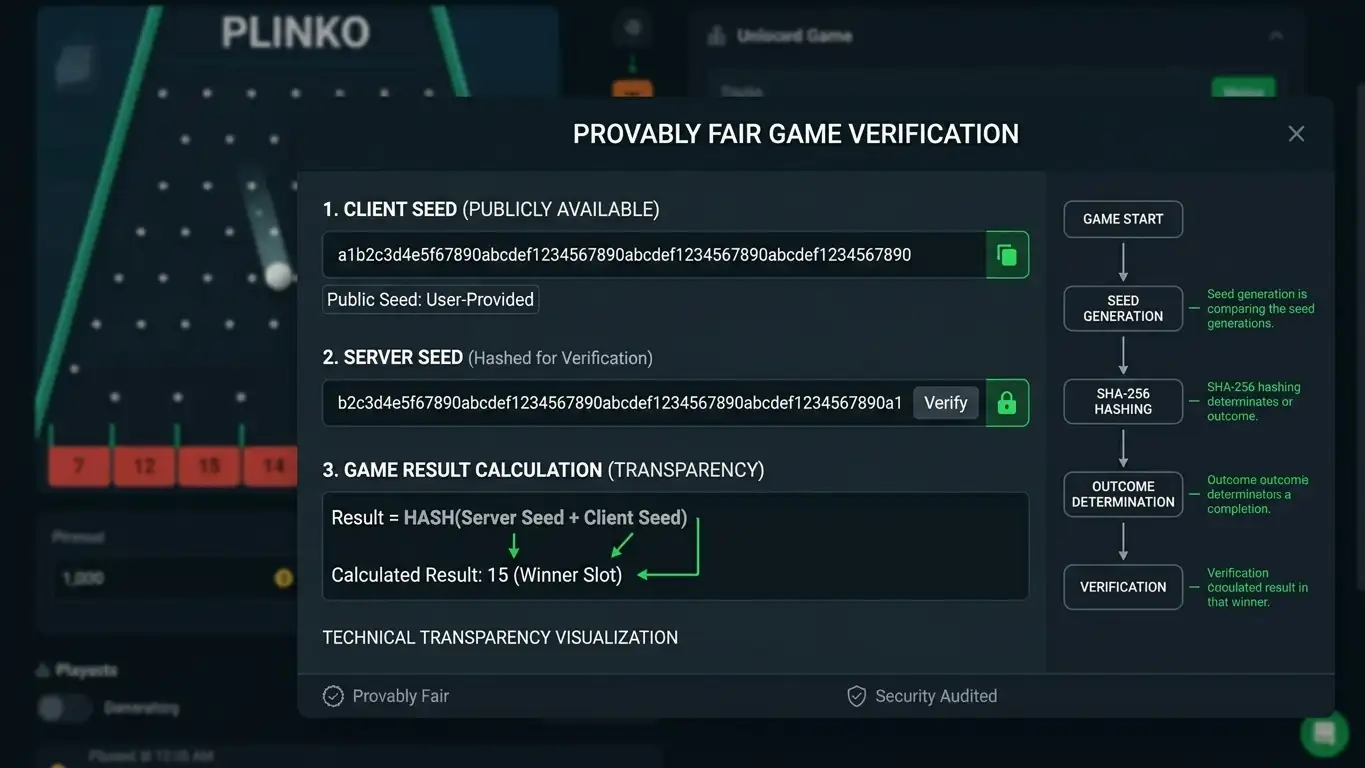
“Provably fair” is a transparency feature unique to crypto casinos. It lets you verify that the outcome of a game round was determined fairly, not manipulated by the operator. The mechanic relies on cryptographic hashes: before each round, the casino generates a server seed (a random number) and commits to it via a hash. You provide a client seed (also random). The game result is derived from both seeds. After the round ends, the casino reveals the server seed, and you can verify that it matches the pre-committed hash. If it matches, the result was determined before you bet, and the casino couldn’t have manipulated it.
This only works for casino-exclusive games — Plinko, Crash, Dice, Limbo, Mines, Keno, and other in-house “Originals” built by the operator. BC.Game, Stake, TrustDice, and CloudBet all offer provably fair originals. These games are genuinely verifiable.
But 99% of the pokies and table games on these platforms — slots from NetEnt, Pragmatic Play, BGaming, live dealer games from Evolution — are not provably fair. They run on Random Number Generators (RNGs) certified by third-party testing labs like iTech Labs or eCOGRA, but you cannot independently verify individual spins. You’re trusting the provider and the testing lab, not cryptographic proof.
So when a crypto casino markets itself as “provably fair,” that claim applies only to its in-house games, not the entire library. If you’re playing Gates of Olympus from Pragmatic Play or live blackjack from Evolution, provable fairness is not part of the deal. Those games are fair in the traditional regulated sense — third-party audited, published RTP percentages, licensed studios — but not cryptographically verifiable.
What is provably fair and does it apply to all casino games?
Provably fair is a cryptographic verification system that lets you confirm a game result was determined fairly before you bet, not manipulated after. It applies only to casino-exclusive games (Plinko, Crash, Dice, Limbo) built by the operator. It does not apply to third-party pokies from NetEnt, Pragmatic Play, or live dealer games from Evolution — those games are RNG-certified by testing labs but not cryptographically verifiable by the player.
Risks You Should Understand Before Playing Anonymously
Anonymous crypto casino play trades consumer protection for privacy. That tradeoff comes with risks most players don’t consider until something goes wrong.
First is dispute resolution. If an offshore operator freezes your account, claims you breached bonus terms, or withholds a withdrawal for “suspicious activity,” your recourse is limited. You cannot file a complaint with AFCA (Australian Financial Complaints Authority) or take the operator to an Australian court. Your options are: (1) appeal to the operator’s internal complaints team, (2) escalate to the licensing jurisdiction’s regulator (Curaçao Gaming Control Board, Malta Gaming Authority, Anjouan), or (3) post on forums and review sites hoping public pressure moves the needle. None of these are fast or reliable.
Curaçao, which licenses BC.Game, BitStarz, mBit, CloudBet, FortuneJack, Bspin.io, and TrustDice, is notorious for slow complaint handling and operator-friendly rulings. The regulator’s contact process is opaque, response times run months, and player-win rates in disputes are low. Malta and Gibraltar are marginally better, but still far below Australian consumer protection standards.
Second is fund recovery. If an operator goes offline — server seizure, license revocation, insolvency — your balance disappears with it. Crypto casinos do not segregate player funds the way Australian-licensed operators are required to. Your deposits sit in the operator’s wallet, not a trust account. If the operator folds, you’re an unsecured creditor with no priority claim. For context, multiple crypto casinos have exited scam-style over the past five years — taking player balances, shutting down the site, and disappearing. None of the operators on this list have done that, but the structural risk exists.
Third is anonymity itself. “Anonymous” deposits and small withdrawals do not mean the operator isn’t tracking you. Every crypto casino logs IP address, device fingerprint, browser metadata, session timestamps, bet patterns, and wallet addresses. Some operators build behavioral profiles to detect multi-accounting (using multiple accounts to abuse bonuses). If you’re flagged, they’ll freeze all linked accounts and void balances. VPN use is technically against most operators’ terms, though enforcement is inconsistent. True anonymity — the kind where even the operator can’t link your activity to a real-world identity — requires Tor, fresh wallets with no prior transaction history, and accepting the risk that the operator bans Tor users outright.
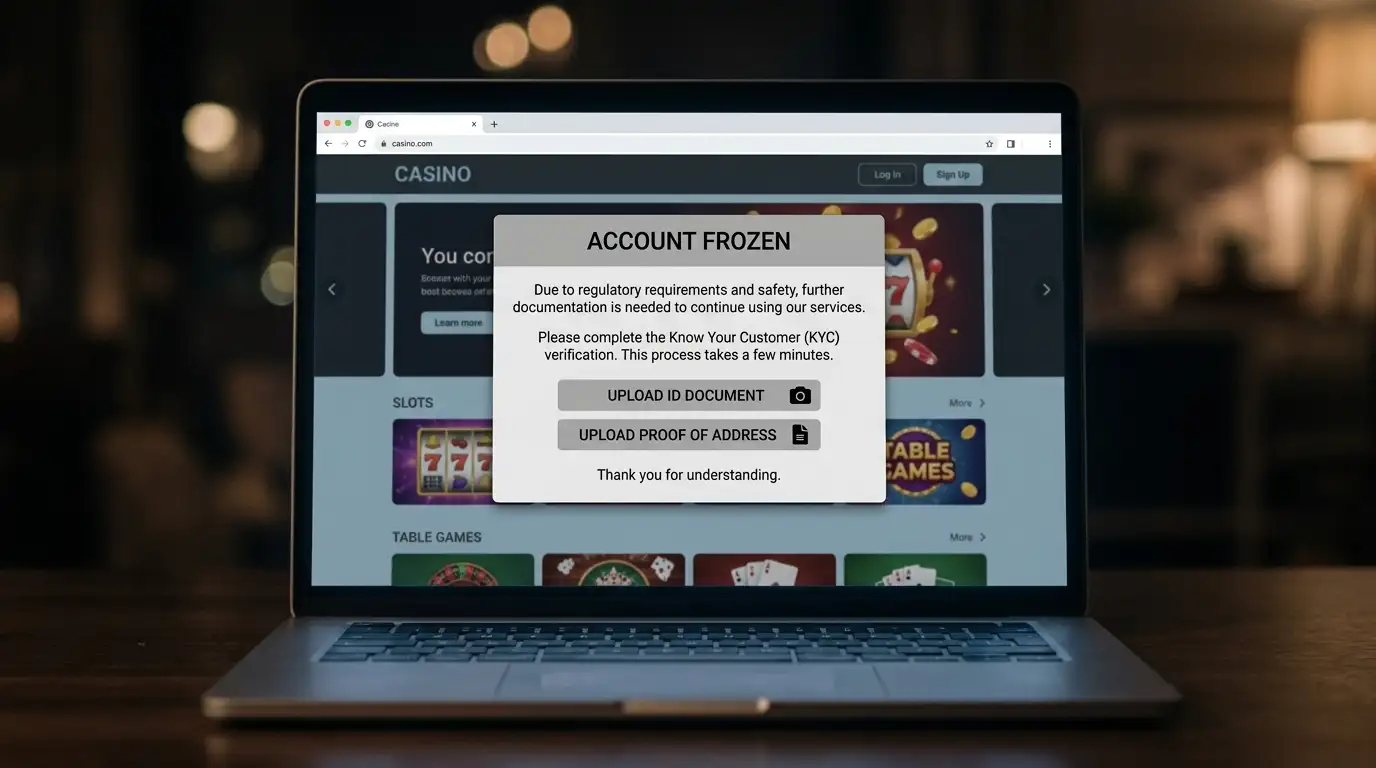
Fourth is the KYC bait-and-switch. “No-KYC” marketing is technically accurate for deposits and small withdrawals, but every operator reserves the right to request verification at any time. Win AU$15,000 on a single pokies spin, and you’re going through KYC before you see that money. If you can’t or won’t provide documents (expired passport, no proof of address, privacy concerns), the operator keeps the balance. There’s no appeals process that favors the player.
Fifth is bonus term traps. Wagering requirements at crypto casinos are dense, deliberately complex, and designed to void winnings for players who don’t read every clause. Maximum bet while bonus is active, game weighting percentages, time limits, prohibited games — breach any one of these, even accidentally, and the operator can void your entire balance, not just the bonus portion. This happens more often at crypto casinos than at regulated operators because there’s no external regulator reviewing fairness of terms.
The counterbalance to these risks is speed and privacy. You can deposit and play within minutes, withdraw small-to-medium amounts without ID upload, and keep your gambling activity off your bank statement. For many Australian players, that tradeoff is worth it. But go in knowing you’re playing outside the safety net.
Why do some crypto casinos ask for KYC even though they advertise as “anonymous”?
Because “anonymous” in their marketing means deposit-only anonymity, not lifetime no-KYC. Every offshore casino holds a license (Curaçao, Malta, Anjouan) that requires them to implement anti-money-laundering controls, and KYC is the primary control. They let small deposits and withdrawals pass without verification to attract players, but large withdrawals or suspicious patterns trigger mandatory document requests. The “we reserve the right to request verification at any time” clause in every operator’s terms gives them legal cover to do this. If you refuse KYC after winning big, they keep your balance.
New Anonymous Casinos in 2026
A handful of newer crypto casinos launched in 2026 or late 2025 with explicit no-KYC marketing. Most are Curaçao-licensed, most accept Bitcoin and Ethereum, and most disappear within eighteen months. The churn rate in this sector is high because the barrier to entry is low — white-label casino software, a Curaçao sublicense, and a marketing budget can get you live in weeks.
Bspin.io (launched 2022) is the newest operator on the main list, and even it has only two years of track record. Sites launching in 2026 like CryptoLeo, Metaspins, and Flush.com advertise instant KYC-free play and fast Bitcoin withdrawals, but none have the operational history or user volume to assess long-term reliability. Early reviews are mixed — some players report fast payouts, others report account freezes and unresponsive support.
The risk with new casinos is not that they’re all scams. It’s that they’re unproven. BitStarz and CloudBet have been paying Australian players for over a decade. BC.Game and Stake have millions of users and public track records you can verify through reviews and forum threads. A casino that launched three months ago has none of that. It might pay out perfectly for the first year, then exit scam when user balances reach a threshold that makes disappearing profitable. Or it might run cleanly for five years and become the next BitStarz.
If you want to test a new casino, deposit the minimum, play a few sessions, and withdraw twice before committing larger amounts. That tests whether the operator actually processes cashouts or invents reasons to stall. Never deposit more than you’re willing to lose, and never assume a shiny website and generous bonus mean the operator will pay when you win big.
Responsible Gambling Resources
Offshore crypto casinos are not subject to Australian responsible gambling obligations. They have no loss limits, no deposit caps, no mandatory cooling-off periods, and no integration with national self-exclusion schemes like BetStop. If you’re chasing losses, it’s trivially easy to deposit more Bitcoin and keep playing until your wallet is empty.
If gambling is causing financial stress, relationship problems, or you’re betting more than you can afford to lose, reach out to Gambling Help Online at 1800 858 858 or visit gamblinghelponline.org.au. The service is free, confidential, and available 24/7. Counsellors can help you set limits, access financial counseling, or self-exclude from gambling entirely.
Most offshore casinos offer self-exclusion via email request to support, but enforcement is weak. You can create a new account with a different email address within minutes, and the operator has no way to stop you. National self-exclusion under BetStop does not apply to offshore sites. If you need enforceable exclusion, the only reliable option is to delete your wallet apps, uninstall VPNs that let you access blocked sites, and remove payment methods that let you buy more crypto.
Crypto gambling moves fast. You can lose AU$5,000 in ten minutes on high-volatility pokies, and because crypto deposits are irreversible, there’s no chargeback process like there is with credit cards. Set a strict budget before you deposit, withdraw winnings immediately rather than letting them sit in your casino balance, and treat every session as entertainment spending, not income generation. The house edge is real, and over time, it grinds every player down.
Crypto Casino Australia 2026 — Bitcoin, Ethereum & Stablecoins Guide
Content created by the «Payment Methods» team